We remain fully operational. Our teams are working around the clock to ensure your deliveries continue safely.

下载应用程序



Buy anything from 5,000+ international stores. One checkout price. No surprise fees. Join 2M+ shoppers on Desertcart.
Desertcart purchases this item on your behalf and handles shipping, customs, and support to Malaysia.
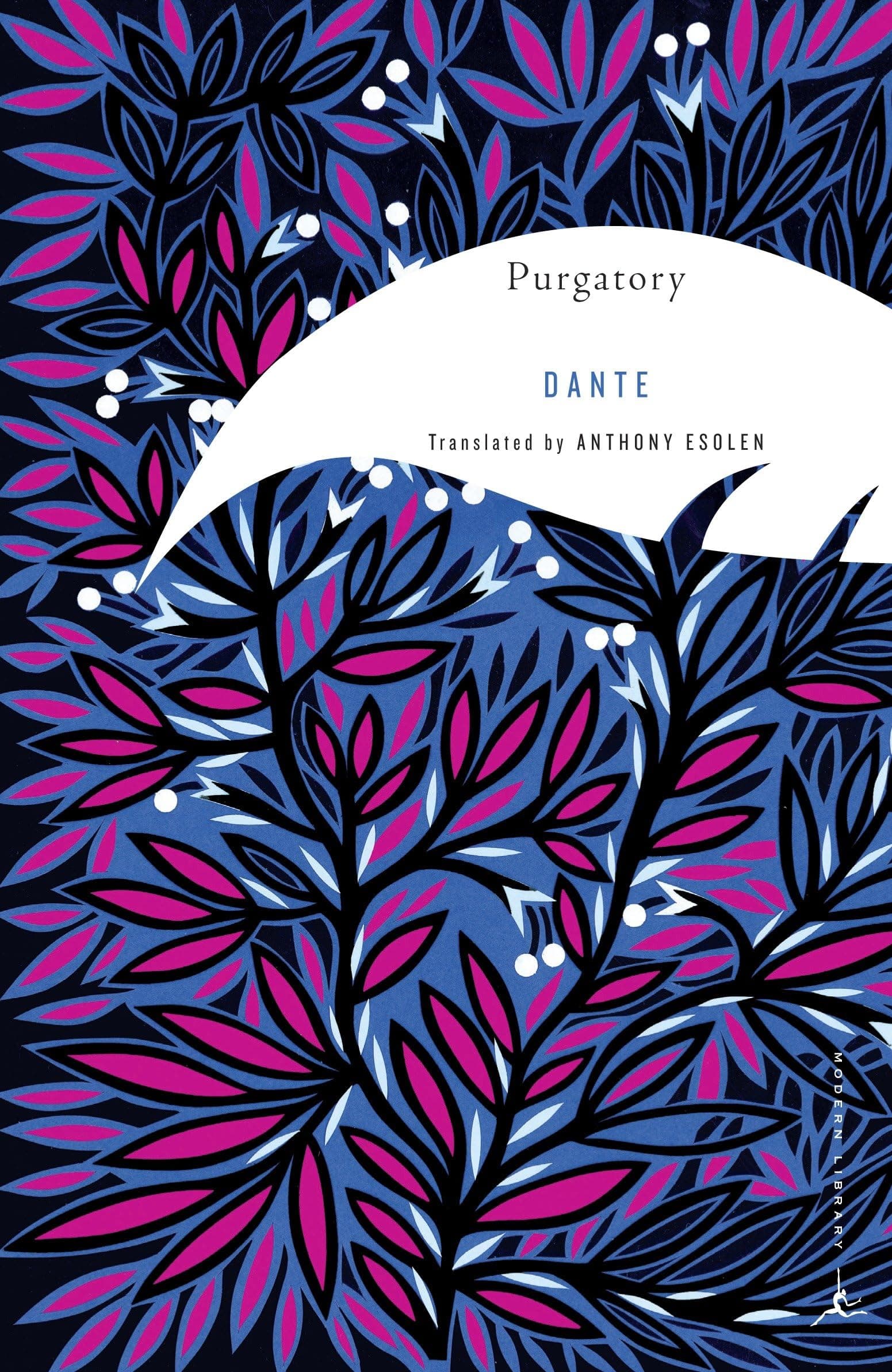
Buy Purgatory (Modern Library) (Modern Library Classics (Paperback)) (The Divine Comedy) New edition by Dante Alighieri, Anthony Esolen (Translator), Gustave Doré (Illustrator) (ISBN: 9780812971255) from desertcart's Book Store. Everyday low prices and free delivery on eligible orders. Review: classical Review: Anthony Esolen did a most excellent job translating. He captures the spirit of the text with a faithful rendering into an English that has grace and flow. He manages to break out of the stodgy translations I had when I was younger, but he didn't make the mistake of trying to make it too colloquial. He hits the mark perfectly. I suspect his Catholic devotion plays a significant role in his ability to bring the Inferno to us as it really is, without the irony of post-modernism--the text qua text--and it is a learning experience on at least two levels. One, you get to hear what good, epic poetry is supposed to sound like read aloud. Second, it is a living, breathing catechism of sorts. I know it's a bold claim, but I think it's the best translation of Dante out there. In terms of physical quality: sturdy paperback, thick paper, readable font. Great price for the volume.
| Best Sellers Rank | 488,742 in Books ( See Top 100 in Books ) 119 in Italian Poetry (Books) 426 in Epics 463 in Religious Poetry (Books) |
| Customer reviews | 4.8 4.8 out of 5 stars (238) |
| Dimensions | 13.21 x 3.05 x 20.32 cm |
| Edition | New edition |
| ISBN-10 | 0812971256 |
| ISBN-13 | 978-0812971255 |
| Item weight | 397 g |
| Language | English |
| Part of series | The Divine Comedy |
| Print length | 544 pages |
| Publication date | 15 April 2004 |
| Publisher | Modern Library Inc |
M**F
classical
M**S
Anthony Esolen did a most excellent job translating. He captures the spirit of the text with a faithful rendering into an English that has grace and flow. He manages to break out of the stodgy translations I had when I was younger, but he didn't make the mistake of trying to make it too colloquial. He hits the mark perfectly. I suspect his Catholic devotion plays a significant role in his ability to bring the Inferno to us as it really is, without the irony of post-modernism--the text qua text--and it is a learning experience on at least two levels. One, you get to hear what good, epic poetry is supposed to sound like read aloud. Second, it is a living, breathing catechism of sorts. I know it's a bold claim, but I think it's the best translation of Dante out there. In terms of physical quality: sturdy paperback, thick paper, readable font. Great price for the volume.
J**.
Many readers enjoy the Inferno but proceed no farther. Late in the Inferno (canto xxx), Virgil admonishes Dante to stop watching and enjoying the brawling damned. Rather than fixate on the entertainment of hell, readers also should lift their attention and go with the poets to Purgatory. The Purgatorio "is arguably the product of Dante's most brilliant poetic conception," Esolen says, because although "there were visions of Hell before Dante's, however far they fall short of his[, t]here were no visions of Purgatory." Dante captures well the meaning of the doctrine of Purgatory, the efficacy or prayers for the dead, and joyful suffering, portraying them with great understanding, artistry, and depth. Esolen's notes are respectful and explanatory, complementing and complimenting Dante. Purgatory is an easier read than is the Inferno, and it should be as we move from the heavy darkness of hell into the light. While Esolen's translation of the Inferno would have benefited from a schematic of hell, the ascent of Mount Purgatorio is more easily visualized and needs no such aid. I found The Dore Illustrations for Dante's Divine Comedy (136 Plates by Gustave Dore) (a few small examples from Dore are in Esolen's volume) a valuable aid in reading the Inferno, but the illustrations added less benefit to Purgatory; the black and white illustrations that helped capture the sense of the darkness in hell were even a bit of a handicap when considering the symbolism of the colors in Purgatory. I wouldn't however go as far as Ciardi did in his translation, where he cautions readers "to visualize Dante's scenes in terms of Dante's own details rather than in terms of Dore's romantic misconceptions." (Ciardi note to Canto xiii, l. 61-66.) Permit me a quibble. In his note to canto xxiv, l. 124-125, Esolen says that when Gideon separated his troops at God's instruction before routing the Midians, those who cupped their hands to drink were sent away and that those who lapped like dogs were selected. But Judges 7:4-7 says that those who cupped their hands were the same ones who lapped like dogs and were the ones selected; those who were sent away were those who knelt or laid down to drink.
D**N
This is a wonderful translation of the Purgatorio, with Italian facing English. Esolen's translations of the Inferno and Paradiso are also excellent.
E**.
If I'm being honest, I like this part of the Divine Comedy the most, and Anthony Esolen's translation definitely helped me understand it better. Dante's masterwork of a poem is not only formidably long, but also dense in allusion, and while I understood probably 95% of the classical side of that, I was quite lost on the implications of the internecine Florentine politics he was so much a part of. That's where Esolen's extensive footnotes and appendices helped shed light. I highly recommend this translation.