We remain fully operational. Our teams are working around the clock to ensure your deliveries continue safely.

下载应用程序


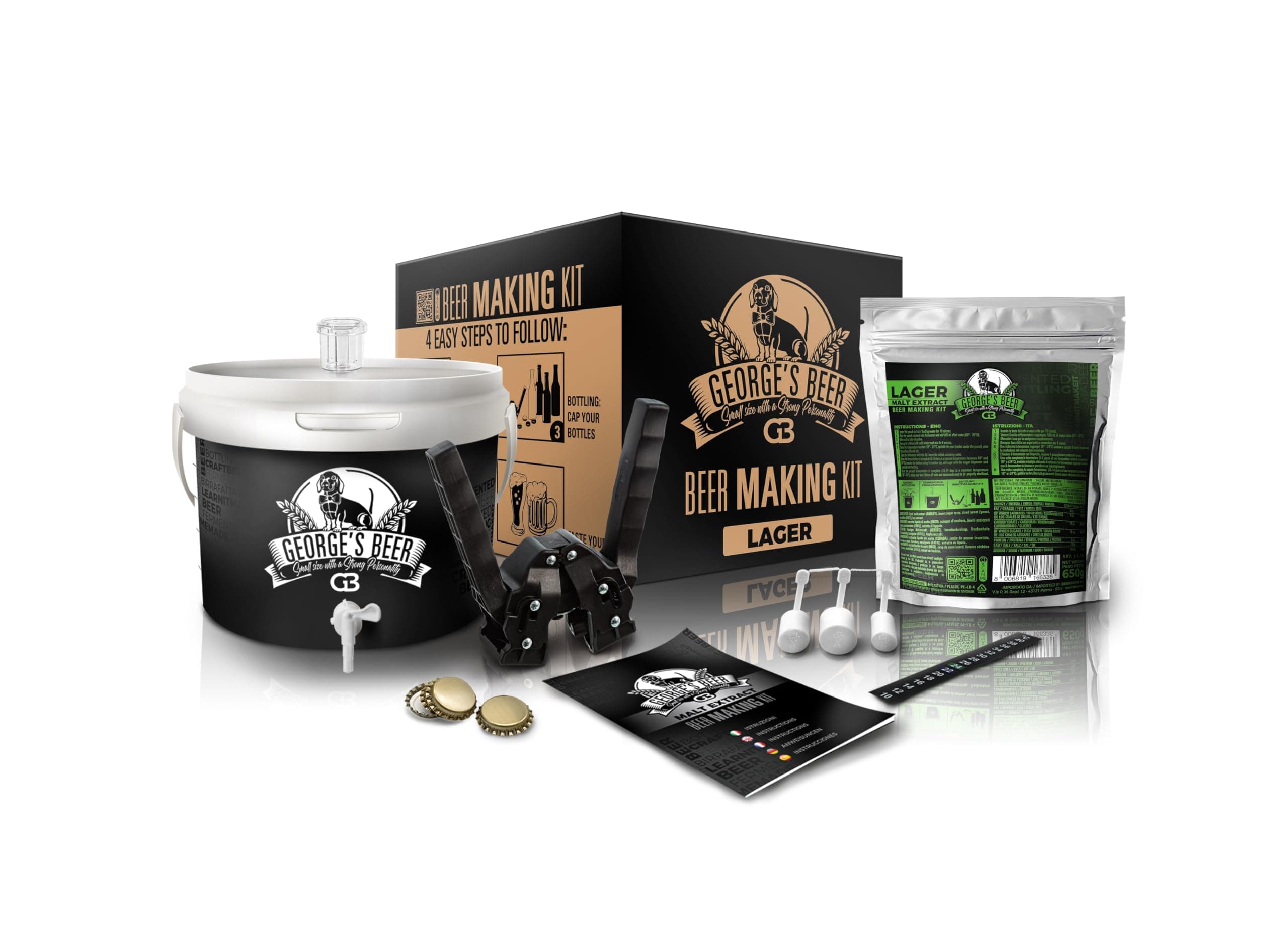
🍻 Craft your own crisp lager and join the homebrew revolution!
George's Beer Fermentation Kit - Lager lets you brew up to 5 liters of fresh, crisp lager in just 14 days. This all-inclusive kit features everything from fermenter to capper, making it ideal for both beginners and seasoned homebrewers. With a balanced flavor profile and easy instructions, it’s the perfect way to experience the art and science of beer making at home.


| Customer Reviews | 4.5 out of 5 stars 30 Reviews |
A**R
Nice easy brew
Will buy again. Easy mix
P**E
Greater starter kit, but need helps
Not the easiest LME to use on the market, but certainly not the hardest. Has a low ABV and bitterness, so I use these kits when making my own spec recipes.
E**E
Easy to follow instructions.
This beer kit comes with almost everything you need to brew your own beer. It comes with an instruction booklet that has instructions in multiple languages. The English instructions are British English, so all the measurements are using the metric system. So if you are in the US you'll want to make sure you have a way to measure ml before you get started. The instructions are pretty straight forward. i suggest reading through them all before you start the process. i ordered this kit quite a while ago and just finally got around to trying it out. i was very happy to see that the malt and yeast have a long expiration date , and so if you order you don't have to feel like you have to make the kit immediately. The kit comes with the bottler and caps, which is really nice. Our beer is not yet ready to bottle, so i haven't tried it out yet, but it feels like a heavy duty quality product. i'm really looking forward to tasting our beer, but it is still in the fermenting process. i will update my review if the finished product isn't satisfactory, but the kit itself is fun and easy to use. It's a good introduction to home brewing. i like that the store offers refill kits, so once we finish this batch we might try another. This would make a good gift for anyone interested in homebrewing.
A**R
Everything you need except bottles and sanitizer
I had no prior experience with homebrewing, so I had no idea what to expect from this kit. Now that I’m about halfway through the 12-pack of tasty pseudo-craft beers that resulted, I’m sharing my experience and some tips for success. The major selling point of kits like this is that you get all the equipment you need and the really tedious part of homebrewing, i.e. making wort, has been done for you. I gather the process of making wort from scratch goes something like this: obtain wheat and barley in your desired proportion, spread the grain over cloth and keep it damp but not wet until it sprouts, dump the grain into a large pot with hot but not boiling water, maintain the temperature for several hours to let the natural enzymes in the grain turn starch into maltose, and filter the mixture to obtain wort. With this kit, you just mix the contents of a pouch with hot water, keep mixing for a few minutes to aerate the mixture, and you’re done. This literally saves you days while you’re setting up the fermentation. The equipment makes the initial cost outlay a bit higher than I’d like, but it’s all fully functional, doesn’t feel cheap, and will last for a good long while. You do have to supply your own bottles, but that shouldn’t be a problem for most. Once you’ve made the wort, you transfer it into the fermentation vessel, which in the case of this kit is a plastic bucket. At first, I was put off by the relatively small size of the bucket and the fact that it wasn’t made of glass. But I did some reading and it turns out that putting large 5-gallon glass fermentation vessels through repeated heat and pressure cycles makes them prone to shattering or exploding without warning. In fact, plenty of aspiring homebrewers have lost fingers or worse when they least expected it. Knowing that, I’d call the 5-liter size of the fermentation vessel manageable, and its plastic construction a safety feature. After there’s 5 liters of wort in the bucket, you sprinkle in yeast from the provided packet. Don’t be like me and make sure to check the temperature of the wort to ensure it’s low enough for the yeast to survive the addition. Lucky for me, enough of the yeast survived, but if I hadn’t left the kitchen for a few minutes on some distraction or other right before I added the yeast, my homebrew adventure would have ended right then. Use the stick-on thermometer included in the kit to check temperature. With the yeast sprinkled into the wort, the lid on the bucket, and the airlock installed, you put the bucket in a cool place and wait. In my case, I started my batch at the very end of spring and the ambient temperature was just a little higher than the maximum recommended in the instructions, so I had to set up what is known as a swamp cooler. The form this traditionally takes is a wet towel wrapped around the fermentation vessel with one corner in a bowl of water. My version was to place the bucket in a plastic bag with a hole cut in one side for the spout, press an ice pack against the other side of the bucket (using the plastic bag to hold it in place), and swap the ice pack for a fresh one twice a day. Temperature control is apparently the single most important factor in homebrewing success, so I should really have started during winter. But whatever, it worked. Once the fermentation gets started, it’s most vigorous within the first few days. In my case, a large amount of krausen (foam composed of carbon dioxide and yeast biofilm) formed on top of the beer during this time, so much so that it made its way into the airlock and then through the airlock onto the bucket lid. I ended up having to remove the airlock a couple of times to clean and reinstall it. I learned the hard way that if you have to pull out the airlock, you must uncap it first, and when you reinstall the airlock, you must recap it last. Eventually, I hit upon the solution of not reinserting the airlock all the way, leaving about 2/3" of leeway, and this coupled with the fermentation becoming less vigorous meant I didn’t have to touch the airlock again after about the first week. Strictly speaking, an airlock is not necessary; a layer of carbon dioxide forms on the surface of the beer while fermenting, which explains why beer can be fermented in giant open-air vats as it was historically and end up fine. I think the krausen wouldn’t have been an issue for me if the ambient temperature had been lower. An alternative would be to fill the bucket with more concentrated wort to brew less of a higher-proof beer, but I didn’t know that going in. Although the instructions give a timeframe of a couple of weeks for the initial/primary fermentation, I left my wort in for a full month. My reasoning was to wait until bubbling had stopped completely to use that as a marker for the end of fermentation, but it turns out that there can still be bubbling at a very slow rate long after all the sugars in the fermentation vessel have been consumed. While I am going to try three weeks next time, leaving it in that long didn’t hurt the results. It might even have been beneficial, as I’ve read that one month for the primary fermentation isn’t too long for modern yeasts and leaving it for that long will only help the yeast clean up any unwanted byproducts towards the end. By the way, it seems secondary fermentations (not to be confused with bottle conditioning) aren’t necessary these days, and this kit doesn’t have you perform one either. After the fermentation, you bottle the beer with a bit of table sugar. There are three sizes of measuring spoons for sugar volume appropriate for common bottle sizes included in the kit for this purpose, along with fifteen standard bottle caps and a bottle cap press. The press is a welcome addition from North Mountain Supply, the US-based reseller of this (originally Italian) homebrewing kit. It was a little finicky to figure out, but I got the hang of it quickly. The point is for each bottle to undergo a mini-fermentation of its own as residual yeast consumes the sugar (and slightly raises the alcohol content) and the carbon dioxide thus generated is dissolved into the beer to carbonate it. Finally, the beer is ready to drink about a week later once bottle conditioning completes. To recap the timeline and effort involved now that I understand the process, assuming the correct ambient temperatures, it’s about an hour to get a bucket fermenting and another hour 2-4 weeks later to bottle the beer for drinkable results in 3-5 weeks. That’s not too much effort, but it’s also not nothing. Considering the pricing compared to the quality of the resulting beer, you aren’t saving anything unless you value your labor at zero. But this kit is proof that homebrewing as a commodity is viable. If a complete beginner like me can beat macrobrews despite poor technique while learning something in the process, that’s a win. The price of refills is downright reasonable on a per-drink basis, so I’m definitely going to try this again once the temperature’s cooler later this year. Maybe I’ll even try before that with a high-temperature tolerant kveik yeast, or branch out into non-beer drinks like cider or mead. The only oversight - and it’s arguably both minor and not at the same time - is that no sanitizer is included in the package. I didn’t really understand how important sanitation was throughout, and the fact that I ended up with decent results anyway just means I dodged a bullet (and my equipment was all new, which makes things more forgiving the first time). An ounce of no-rinse sanitizer powder and some usage instructions would round this kit out nicely, and I hope future versions of the kit include them.
Z**K
Time your order with care. Heat kills yeast.
I sent this to my son-in-law for his birthday. He is not a novice brewer, but this was his first beer. Sadly, shipping a beer kit in June is not a good idea. The included yeast was DOA and the batch never fermented. Adding bread yeast, which was all he had on hand, couldn't get the brew going. He ended up dumping it after two weeks - still sweet and still unfermented. Maybe this makes a decent beer, but if you want to try this kit, do yourself a favor and only order these kits during the cold parts of the year when the included yeast will have a fighting chance to survive the trip. Or have a backup supply of beer yeasts you've 1) purchased locally, (not an option for him) or (2) had sent with cold packs or (3) had shipped in the winter months.
R**D
Fun kit
Good little kit to get you started and spark the excitement of brewing. Tastes good but the key is temp control during fermentation. Not very large but enough for you to decide if you want to invest in the equipment to go to the next level.
M**X
Good for a beginner to try brewing
I got the whole kit, which includes the syrup concentrate, bucket with lid, spigot and air lock, instruction pamphlet, bottle capper, and bottle caps. I do brew wine and mead in small, 1 gallon batches, make Kimchi and fermented pickles, so I am generally familiar with the fermentation process. I have never tried beer though, so I got the whole kit to give it a try. I do have a friend who is really into beer and hard cider brewing and is member of a brew club, and another friend who owns a local beer brewery, so I have access to some good advice. :-) With that, I will try this George's formula and see how it comes out - I assume it will taste fine as long as I use clean, sanitized containers for the whole process. This review is mostly about the accessories in the whole kit, which add to the price of the syrup about $40 currently. The bucket is a thin plastic, which should work OK. The lid does not seal tightly though, which I think you want to keep oxygen out. The air lock does fit tightly into a supplied, rubber grommet in the lid. So it would be nice to have the lid seal a little better around the edge. The spigot is plastic and functions OK. So overall, the bucket assembly will serve it's purpose, but if you want to continue in this hobby you will upgrade to a better (probably glass) fermenter at some point. For small batches I just use a 1 gallon jug like this 1 Gallon Glass Fermenting Jug with Handle and it works great. You can of course get 3 or 5 gallon jugs as well. The included bottle capper and caps is fine. You can find them separately on Amazon as well, like this Double Lever Hand Beer Bottle Capper with 150 Black Oxygen Barrier Crown Caps]. If you get serious about brewing and storing in capped bottles, you might want to upgrade to a benchtop capper, like [[ASIN:B0CGVVLSPD this one . You can reuse and recap commercial beer bottles (not the twist-off ones) or buy bottles like these 12 Ounce Long-neck Amber Beer Bottles - you would want bottles that are a thicker glass just for safety. Personally, I will be using swing top bottles which will work fine for beer or kombucha, so I don't need the capper. Instructions are simple and easy to follow. Not much is needed on your part other than about a gallon of clean water and some table sugar for the second fermentation inside the bottles. I would suggest sanitizing anything the brew will come in contact with though. You will need to get something like Star San to sanitize your equipment and bottles. Do not use bleach or other chemicals that might either leave a taste behind or kill the yeast. Overall, I think the whole kit is worth it if you want to bottle and cap your finished beer. If you already have fermentation equipment and/or want to use swing-top bottles or a larger container, then just buy the malt extract w/ yeast and save some money. “Beer is proof that God loves us and wants us to be happy.”
D**N
Very nice for anyone who wants to give it a try!
I'm hooked, I am going to get more. This is also a good gift for guys, from guys because this is something they will actually enjoy. It's a great side hobby to get into and then celebrate with your buds, letting them know you made the beer yourself. I always wondered what the process is and after getting this kit, and getting to make one myself, I didn't realize how easy and fun it would be! I'm already excited and looking forward to my brothers birthdays because I know what to get them now :) This is good for beginners, not sure if there are better options since its my first but definitely happy with this purchase!
TrustPilot
1 个月前
1天前