
下载应用程序


🔆 Power your freedom with smart solar control — anytime, anywhere!
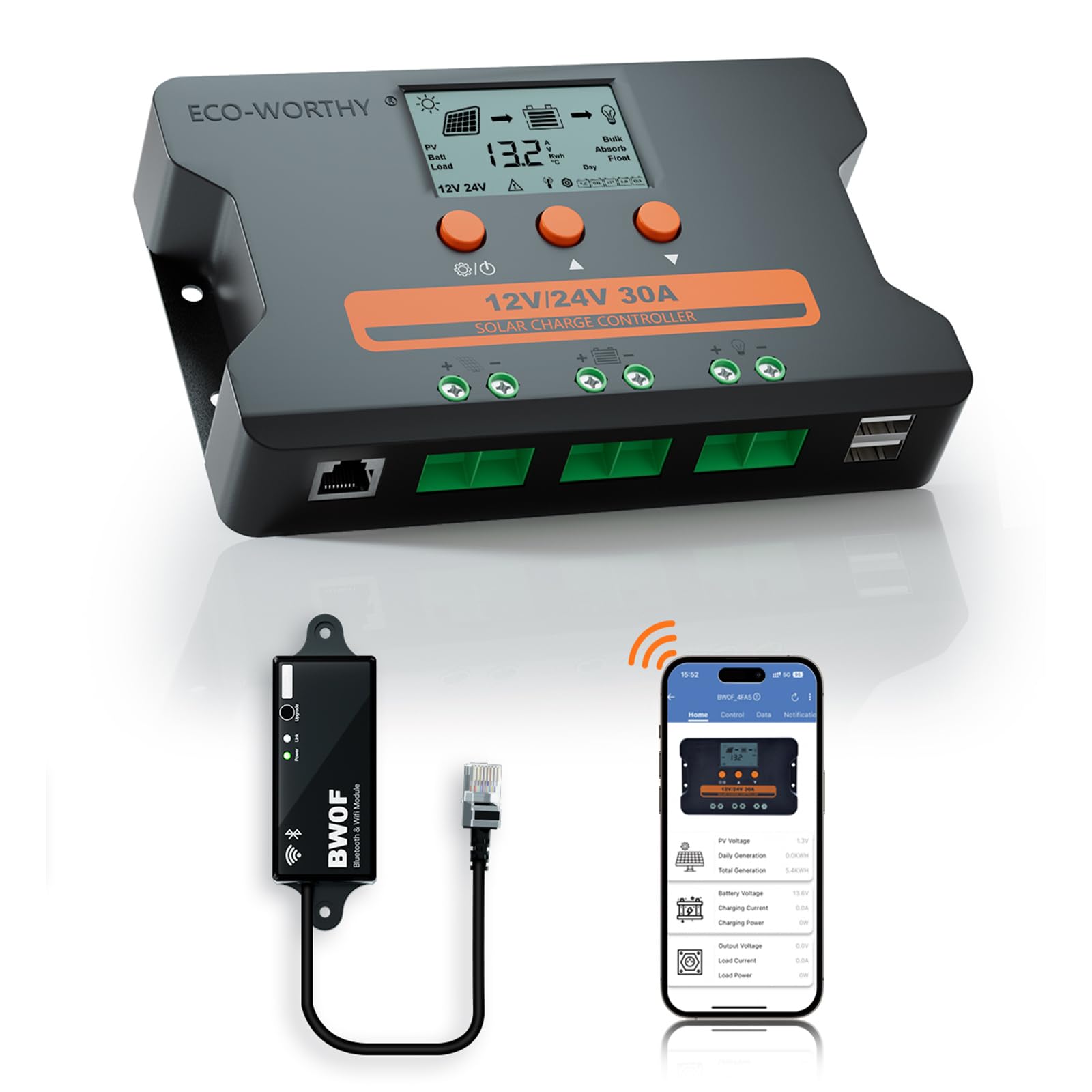
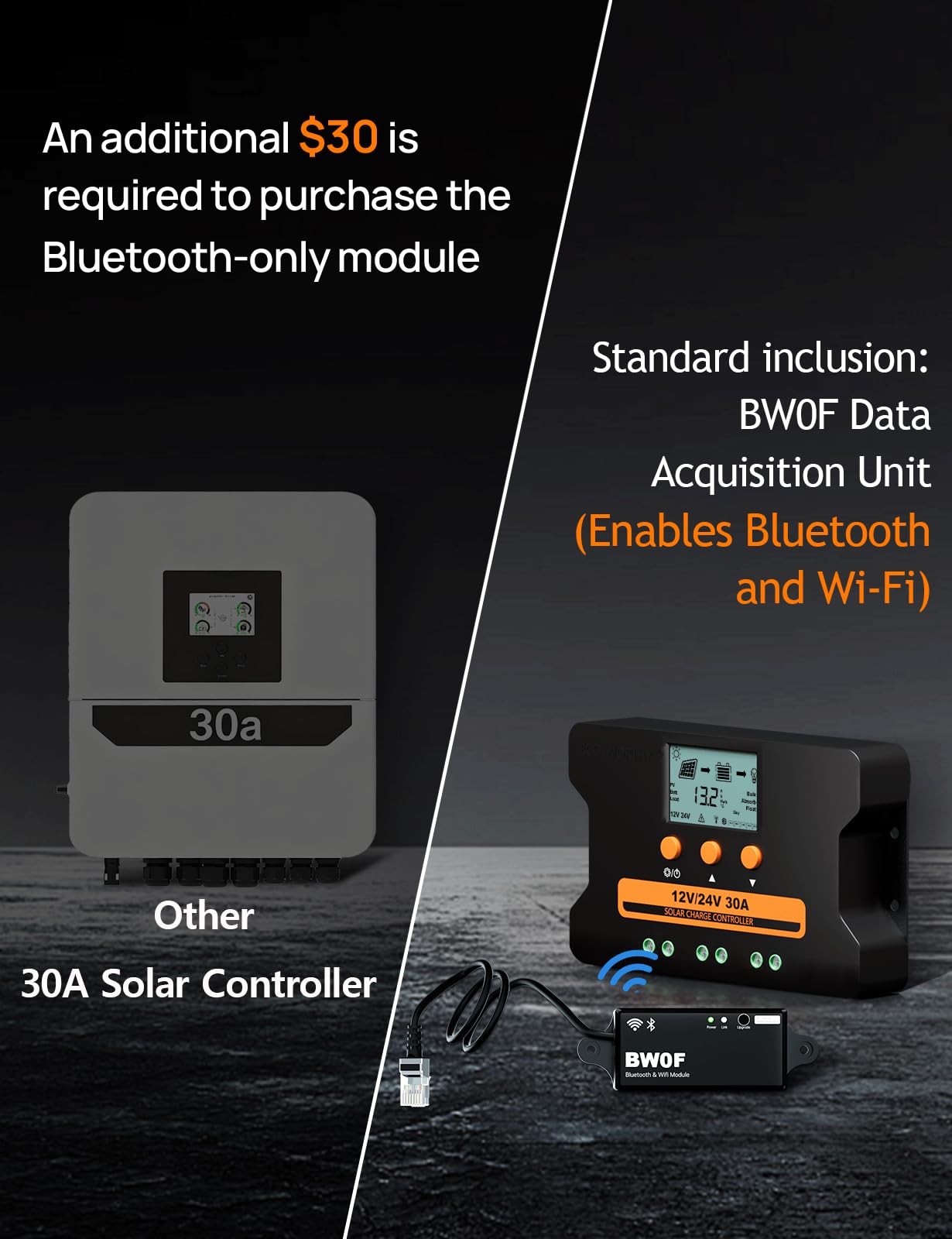
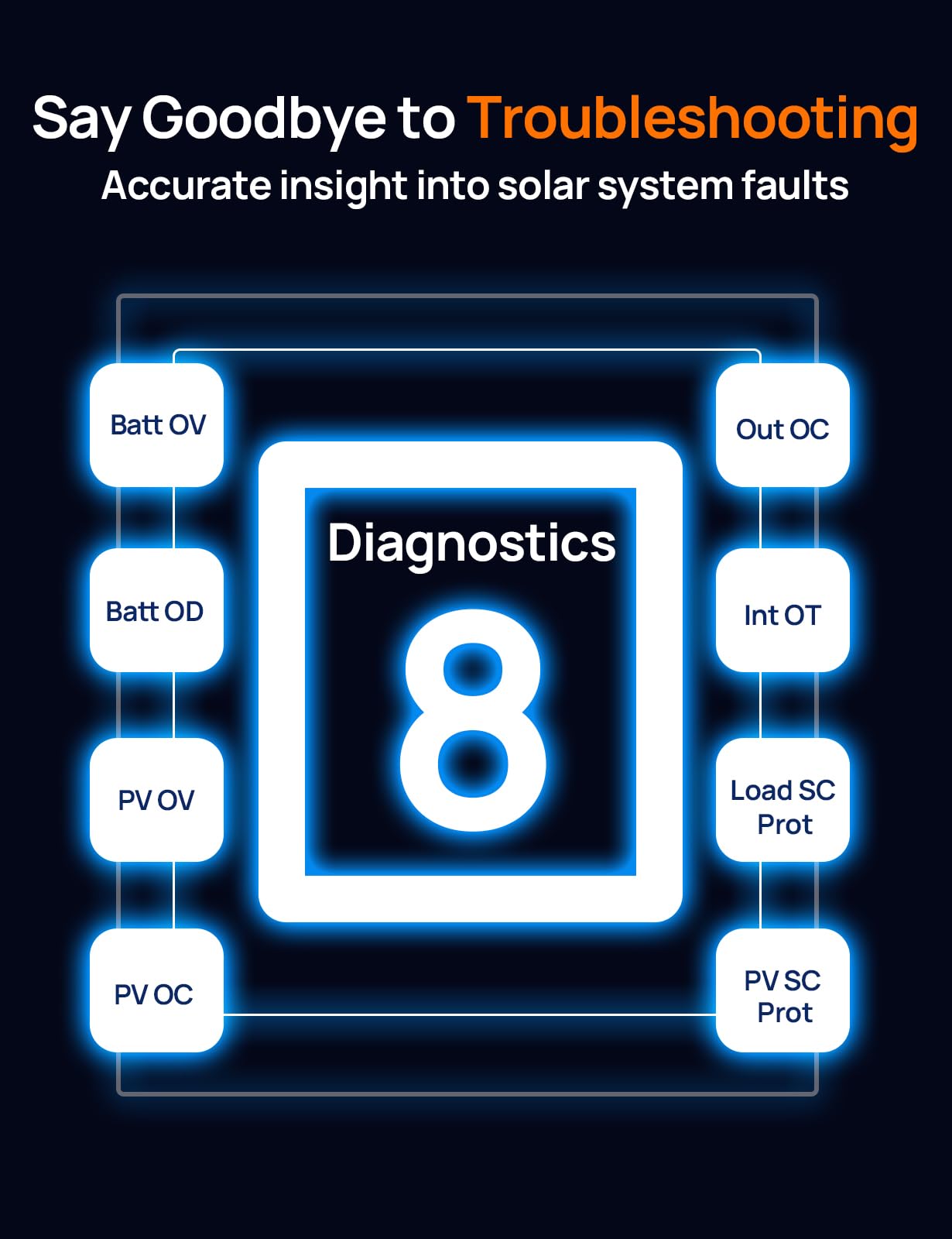
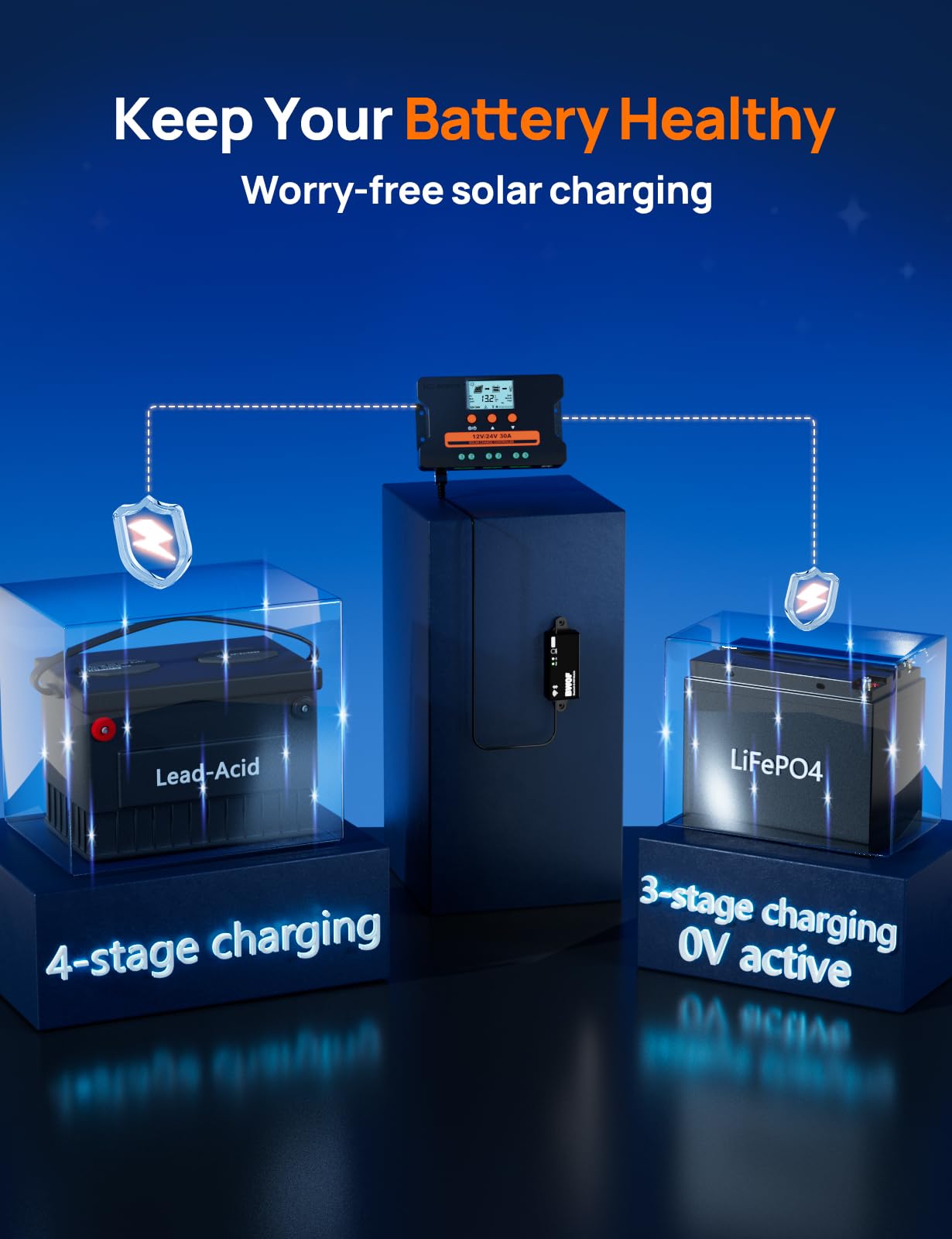
The ECO-WORTHY 30A Solar Charge Controller is a compact, metal-encased PWM regulator designed for 12V/24V solar systems. Featuring Bluetooth and WiFi connectivity via an external dongle, it enables remote monitoring and control through a dedicated app. Compatible with multiple battery chemistries including LiFePO4 and GEL, it offers customizable charging modes and a 3-stage charging process to optimize battery health. Dual USB ports provide fast device charging, while built-in safeguards protect against common electrical faults. Ideal for RVs, boats, and off-grid setups, it balances advanced features with an accessible price point for millennial professionals seeking reliable, smart solar management.


| Best Sellers Rank | #28,949 in Patio, Lawn & Garden ( See Top 100 in Patio, Lawn & Garden ) #18 in Renewable Energy Controllers |
| Brand | ECO-WORTHY |
| Color | Black |
| Customer Reviews | 4.2 out of 5 stars 563 Reviews |
| Item Weight | 0.53 Pounds |
| Material | Metal |
| Product Dimensions | 5.91"L x 3.68"W x 1.29"H |
| Voltage | 24 Volts |
S**H
Very small footprint but powerful features & connectivity
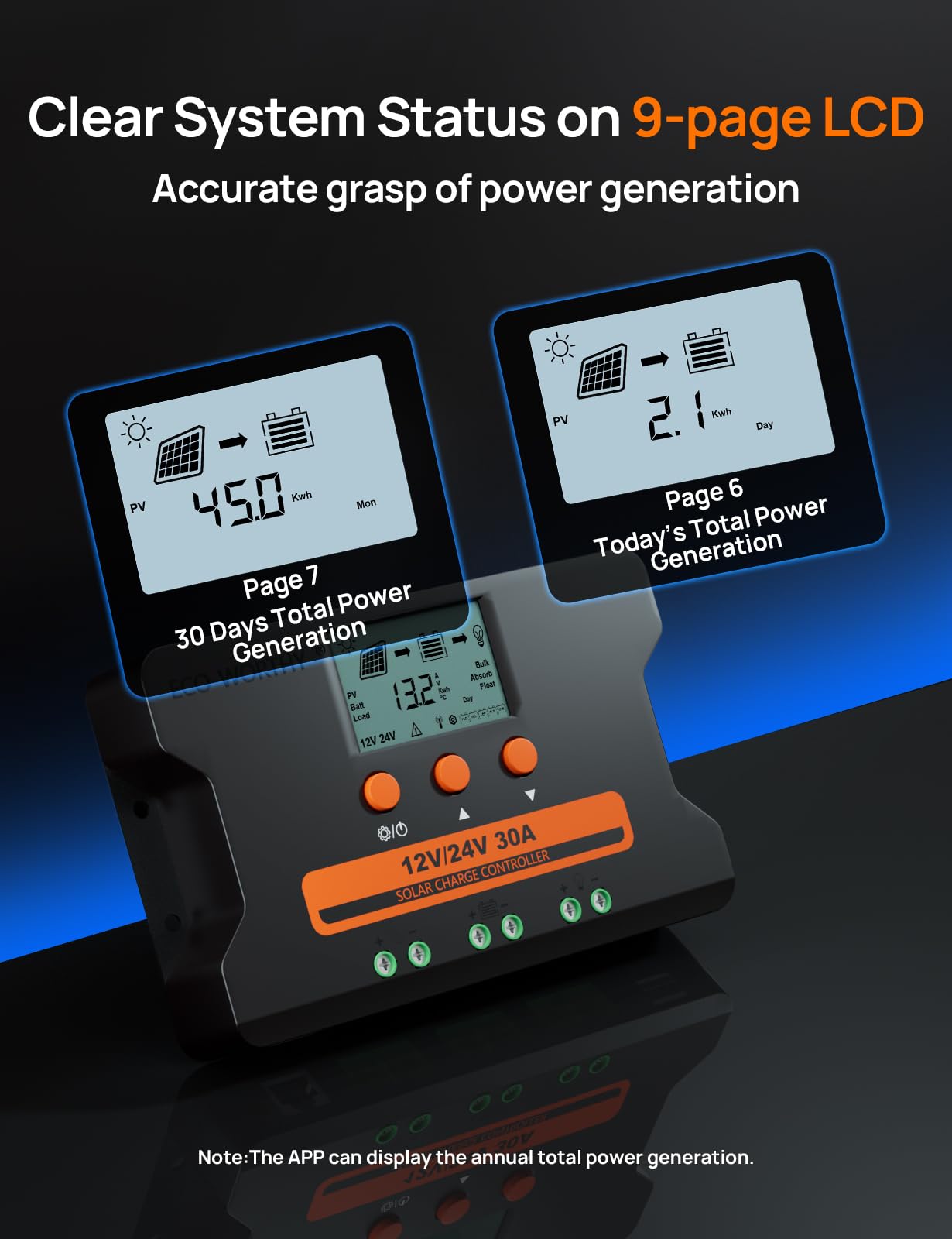
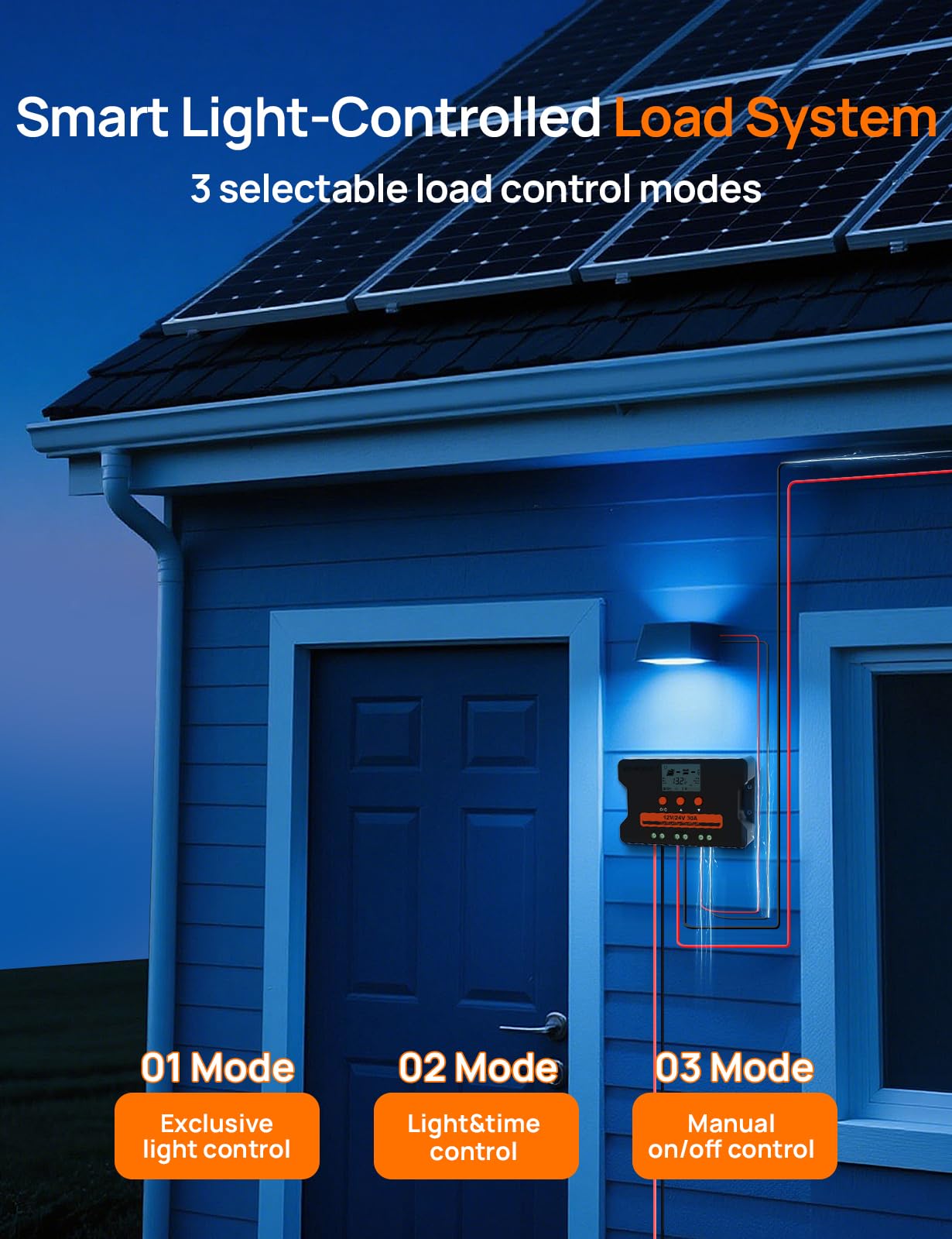
Solar Charge Controllers come in two varieties, low-cost PWM (Pulse Width Modulation) and the more efficient and much more expensive MPPT (Maximum Power Point Tracker) models. This Echo-Worthy 30A PWM Charge Controller while not as efficient is a great solution for smaller 100W-400W solar deployments using 100-200Ah batteries. A key rating is the maximum amount of current (in Amps) that the controller can send from the solar panels to the battery. Also the voltage of the battery system being charged as well as the voltage that can be accepted from the solar panel/array of panels are critically important. The Echo-Worthy 30A PWM Charge Controller also features a controlled DC Load output which makes it ideal for controlling loads such as lighting without the need for any other equipment such as light relays for dusk-to-dawn control. It also features wide battery support voltages making it very flexible and allowing for growth or system design changes. At its 30A capacity, as an example, one could connect multiple solar panels in parallel to get 24V @ 30A max in any other combination. The LCD panel of the Echo-Worthy 30A PWM Charge Controller allows for at-a-glance review of most of the real-time data, including Battery type, Battery SOC, Voltage and Amperage from the Solar panels and info on the DC Load. This unit can accept up to 75V DC from the solar panels and can charge 12V or 48V Lead-Acid or Lithium battery systems. Its low profile with dimensions of 5.9” W x 3.68” H x 1.29” D and it weighs in at barely 8.5 ounces, while using a nice solid enclosure with pre-drilled holes for easy mounting. Overall it is small and practical for a well-performing PWM controller. One of its great features is the RJ45 removable external Bluetooth and WiFi dongle. This allows for initial setup via Bluetooth, and then with registration in the Echo-Worthy App, the Wi-Fi can be enabled for full remote access and management from anywhere. Not just PWM but even most expensive MPPT controllers just come with Bluetooth but not WiFi, so this is great to see at this excellent price point. By having the dongle external of the controller case, the communication range and reliability are improved, and it also makes it easy to replace the dongle if ever needed, so overall this is a nicely engineered design. While the remote functionality via the App is easy to setup and works quite well, the management app itself is not very polished when compared to other proprietary software, with a very basic interface, no daily data capture just month and year, however the company seems determined to improve it over time and I hope that happens soon. One must ensure to always connect the Battery to the charge controller 1st and program it, BEFORE connecting Solar Panels! This assures that the controller is setup and works as expected and there is no inrush of current or improper output voltage before it is programmed to accept the correct solar input and charge voltages and amperages for the correct battery type. Thankfully the management software make it very easy to choose the battery type and then auto-sets all the charge parameters, but it is also flexible enough to allow for a custom configuration if so desired. For my current test solution I am using a single rigid 100W Solar Panel that outputs about 20V in open circuit and maxes out at about 5-7A in full direct sun. I connected the solar panel through this controller to a 40Ah LiFePo 12V battery that charges during the day and provides power for landscape lighting all night while using about 50W right now, but which I plan to grow. Since my lighting works with either AC or DC from 12v to 24v, the controlled Load output of the Echo-Worthy allowed for a much simplified and easier to control setup, as the controller has a feature to turn the Load ON at night and OFF at daybreak automatically! The battery SOC reported is not very accurate since there is no shunt in place, but that is not critical to this controller and I do plan to grow my solar panels count/input and battery capacity, possibly go to a 24V battery system to use thinner wires and less efficiency loss, as the higher the voltage the more efficient the system and thinner the wiring, so this controller will allow me to do that all the way to 48V batteries without having to replace it anytime soon. Overall I am very happy with this Echo-Worthy 30A MPPT Charge Controller given it was a lot less expensive than other brands for the feature-set and connectivity options, and it is working really well for me, but I will be sure to provide an update to this review should that change…
D**D
So far So Good! It does the Charging Thing
The ECO-WORTHY Solar Charge Controller has been a solid addition to my DIY solar power bank, offering reliable performance with a few areas for improvement that are mostly for other folk without a BMS. After some testing, I've found that it effectively regulates and protects my custom battery system. The controller’s 30A capacity handles multiple solar panels with ease as I have 4 100 watts, and I’ve consistently seen efficient charging and stable voltage levels. I have not gotten it to 30A via Solar yet though, but everything has been in the green so far. One of the features is the user-friendly interface. The screen's values are very close to accurate. The LCD screen provides clear readings of voltage, current, and battery status, which I can see as very helpful if you don't have a battery management system of some kind. However, the included instructions could be more comprehensive. During setup, I had to rely on online resources to fully understand the correct settings for my battery type, which at least to me, added some unnecessary complexity. In terms of build quality, the controller feels robust, but I did notice that the mounting holes are quite small, requiring precise alignment during installation. I was just making a small DIY power bank with this, so this made the setup a bit fiddly, especially in the tight spaces. On the positive side, the controller comes with essential protections against overcharging, short-circuiting, and reverse polarity, which have worked in my testing. In my tests, I only used LiFePO4 batteries which it does support. In fact, it supports various battery types, but it’s crucial to ensure the settings are correctly configured to avoid potential issues! During my tests, I observed that it maintained a stable charge and effectively prevented overcharging, even under varying sunlight conditions. (From Rain to Heatwave) Overall, this Solar Charge Controller is a dependable choice for managing a small solar power portable system. While the setup could be more straightforward, and the instructions more detailed, its performance and features make it a worthwhile especially for my DIY Power Bank. If you’re prepared to spend a little extra time on installation and configuration, this controller offers excellent value and reliability.
E**D
hassle free replacement
Worked for 9 months, has 1 yr warranty, but they won't respond, although they claim they will respond in 24 hrs they do not! ****************UPDATE******************** They did try to contact me, but it was pushed to spam, they are going to honor their warranty and send out a new one, hopefully lasts longer I will update later.8-17-24 ****************UPDATE********************8-25-24 got the replacement in 3 days, it worked for about 1 day and now keeps showing error. ****************UPDATE********************9-4-24 Customer service has been great trying to help me resolve the issue with the charger, So far apparently my electrician who wired the system wired 6 100 watt panels all in parallel and the controller was overheating. It has been suggested to me by tech support I should have wired the 3 panels in series to create 2 separate banks then combine the 2 banks parallel to the controller. So far for 2 days every thing has functioned normal. I will post an update if that has resolved the issues.
J**.
Good solat controller
So far so good, easy install wifi and blue tooth work well
I**L
Not sure
I love this brand but I'm not happy with this controller. When I received it I was immediately skeptical and boy did that prove to be true. DISCLAIMER: I never used this product because I have a feeling this is just a re branded version of the 9$ - 25$ "solar charge controller" you see everywhere. This to me looks and feels exactly like that controller but with a higher price tag. I didn't want to take a chance on this because I'm just going to to finally switch to a true MPPT controller. This is not a MPPT controller, I know that. It is a 30A PWM controller and PWM controllers like Amps == Parallel panels vs Panels in Series. A can over panel a PWM controller like this one very quickly with just 3, 100w panels. It will not accept that muc VOC input and will probably fry or throw and error code some controllers just fry. Hopefully this one is protected but I'm not about to throw out 30$. So, your only option for PWM is to turn your panels into add BIGGER array using <= 10 gauge wire at 3x the cost to support the AMPS you need to get to 30A. NOTE: I have many eco-worthy panels 3 from bi facials to battery tenders and they are all awesome. I love this brand and stand behind it which is why I'm so upset about this controller. This just doesn't seem to live up to the other high quaility of the eco-worthy brand. That's my .002$ opinion.
D**Y
Best inexpensive PWM controller I've found
I bought this solar charge controller after going through a couple of cheap PWM controllers for the solar panels providing power to the battery in my woodshed (for lights and speakers). The cheap ones worked in the summer, but in the PNW winters, the charge controllers were not producing enough power to get my battery charged back up in the daytime. Plus the last one I tried was very inaccurate. This controller was a dramatic change. Nearly identical readings for the battery voltage compared to my multimeter, and the amps being produced matched what my clamp meter was showing. I was looking for an inexpensive controller that could use my two 100 watt panels to keep the woodshed battery charged, as well as showing the amps being produced and the amps being used. This controller fits the bill at the right price point. This controller is also programmable, as you can set the cutoff point for the load (which I wanted to protect the battery from getting drawn below 50%). Forget the cheap controllers for less than $20. This is the best PWM controller I've found. The next jump would be to an MPPT controller, but those will cost at least $50 more. Some have commented that the terminals are too small for the wires--they are a little small, but they work with the cables that come with the solar panels. I didn't try to wrap the wire around the screw, but just loosened the screw as far as I could without it coming out and poked the wire along one side of the screw and tightened it back down. Worked fine for all 6 wires.
K**S
It can do more than the terminals allow
I used this with a 48v pv system that is rated at 1.2kw. Charging a 12v battery bank, the wires get REALLY hot. So make sure if you are charging a 12v system you have the thickest wires you can cram in those terminals. For 60 amps charging output, you'd need at least 6awg. However, I highly doubt that would fit in the terminals. I've been able to fit 8awg battery connectors in the terminals. Other reviews have mentioned 10, But when charging, the biggest size is best. 8 is probably the maximum. So this little charger works great for some modest 12v set ups, and slightly less modest 48v battery setups. Just keep in mind that lower voltage battery banks need more amps, and that little port can only handle so much. There is a thermometer that plugs into it. Maybe I didn't read the instructions, but I can't seem to find where the reading on the thermometer shows? Likewise after stress testing the thermometer with some heat, it doesn't seem to shut off or impact charging at all. If you are using a couple hundred watts of load on your 12v batteries, this does absolutely fine. Its a solid unit. If you are powering an inverter, be careful. Too much power draw and you'll cook the little wires that fit in the terminal. I believe this is capable of charging a 48v battery bank. That would be far more appropriate given the terminal sizes.
C**H
Has timer and can automatically turn lights on at dusk. But exposed wiring and it could run hot.
Bought this solar controller as part of an outdoor solar-powered lantern project at my home. I selected this controller vs others because it can automatically turn the lantern lights on at sunset and can be set to turn them off a number of hours later. You can also turn the lights on and off manually from the panel. I'm dinging it one star because as designed the wiring connections are all exposed. I wanted the controller accessible for use and I also wanted a clean look when mounted on a wall, so I modified the controller so the wiring exits out the rear. However if you need to use this controller at anywhere near the vendors' specified maximum current it gets quite hot, so dinging a second star for that. The metal rear panel is all that's used to dissipate heat from the internal components, and those components are only lightly attached to it. I am using it to control just 1 amp of current, so I don't have a heat problem. If I needed to control more current, then I'd modify the controller so its internal components are more firmly attached to larger piece of metal. Despite only 3 stars, this was the most suitable controller for my particular application.