We remain fully operational. Our teams are working around the clock to ensure your deliveries continue safely.

下载应用程序


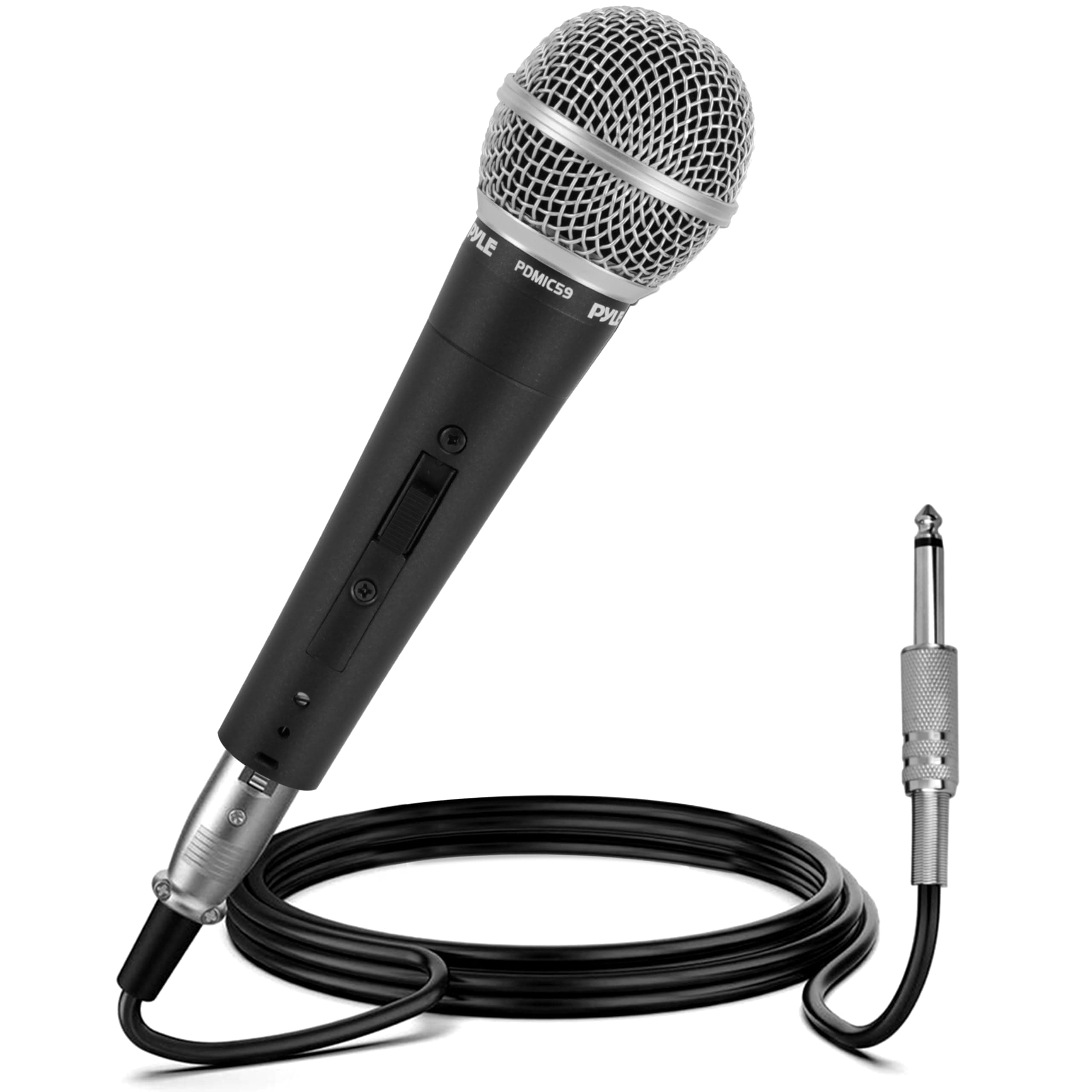
🎙️ Own the spotlight with pro-grade sound and rock-solid reliability!
The Pyle Professional Dynamic Vocal Microphone combines a unidirectional cardioid pickup pattern with rugged all-metal construction and an ultra-wide frequency response (80 Hz - 15 kHz) to deliver clear, punchy vocals with minimal background noise. Equipped with a 4.5-meter professional XLR cable and an integrated pop filter, this handheld mic is perfect for live performances, karaoke, and studio recording. Its durable design and convenient ON/OFF switch make it a reliable choice for musicians and speakers seeking professional sound quality at an unbeatable price.


| ASIN | B01B1JHEX4 |
| Antenna Location | Karaoke |
| Audible Noise | 59 Decibels |
| Audio Sensitivity | 59 Decibels |
| Best Sellers Rank | 158 in Musical Instruments & DJ ( See Top 100 in Musical Instruments & DJ ) 4 in Dynamic Microphones |
| Box Contents | Handheld Microphone |
| Brand Name | Pyle |
| Colour | Black |
| Compatible Devices | Camera |
| Connectivity Technology | XLR |
| Connector Type | XLR |
| Country of Origin | China |
| Customer Reviews | 4.4 4.4 out of 5 stars (3,887) |
| Enclosure Material | Alloy Steel, Metal, Zinc |
| Frequency Range | 80 Hz -15 kHz |
| Frequency Response | 15 KHz |
| Global Trade Identification Number | 00068888762533 |
| Hardware Platform | Television |
| Impedance | 600 Ohms |
| Item Dimensions | 25.4 x 8.9 x 12.7 centimetres |
| Item Type Name | Pyle |
| Item Weight | 454 g |
| Manufacturer | Dana Trading |
| Manufacturer Part Number | PDMIC59 |
| Microphone Form Factor | Handheld |
| Model Name | Pyle |
| Model Number | PDMIC59 |
| Number of Channels | 1 |
| Polar Pattern | Unidirectional |
| Power Source | Corded Electric |
| Product Warranty | 1 year warranty. |
| Signal-to-Noise Ratio | 76 |
| Special Feature | Mute Function, Voice Activated Recording |
| UPC | 068888762533 |
| Unit Count | 1.0 count |
S**I
Amazing Quality Components
Very long lead. Cable quality is excellent, I've bought alot of cheaper microphones and the shielding always breaks and wire snaps, this one is very heavy duty. Great sound quality and no loop back. Metal construction. This was for my son btw who is very heavy handed and it's by far tge best mic in this price range that I've ever bought.
S**R
Great quality
Can't fault the quality for the price. It's solid and sounds great (depending on who is singing of course)
P**R
Microphone
Fantastic item
N**Y
Simple, Robust Microphone
Tested in earnest just recently as a kick-drum microphone at a punk concert! Worked well, and sounded rather more convincing than the rather tired Shure SM58s that had been lined up for the purpose. Excellent at this price point.
M**K
Microphone is clear
Inexpensive microphone which works well and is very clear. Long cables included
H**E
Great Microphone
Great value. good sound , ideal for kids at home as it is not very loud
A**N
Great Value, Sturdy, lacking in sound quality on the higher end.
Does the job. The mic feels good in your hand and carries a bit of weight to it. Plug and play with no issues and the on/off switch works well. The mic seems sturdy and should last. Price is great compared to other similar items and I got the item the next day which was a must. The only drawback with this mic was how it picks up the Mid and High notes. The low notes are picked up well albeit you need to give it the beans. My two daughters struggled to have the mic pick up properly due to their higher pitch. All in it done the job as a last minute replacement for a broken Karaoke mic, but I would advise you to try other options if you have more time and money because it's far from perfect.
J**G
Great
Great product and fast delivery
L**Y
I don't like the sound.
D**.
An inexpensive solution for karaoke. The mic has great sound! I would buy it again.
G**S
Yes like
R**A
We purchased this Pyle Microphone for a PA system we set up at work . Kinda a DIY project and we are really happy with it . The microphone has clear sound with no static . We like that it has a on / off switch . It is well built and stands up to dusty industrial conditions . We have dropped it many times with our damage or performance being an issue . The cord is think and resists tangling , we’ll still being super flexible . It is simple to use with no learning curve . Very affordable, rugged , microphone .
B**K
Ich habe das Mikrofon nur gekauft, um eine Vorstellung davon zu gewinnen, wie und wo die 7 Mikros (5 dynamische und 2 Kondensator) des typischen Mikrofonsatzes für drumsets zu positionieren sind. Ergebnis ist, dass ich auf ein solches set (wie etwa Behringer BC1200) schlicht verzichten kann. Nur lose auf der bass drum abgelegt, produziert dieses Pyle Mikrofon nämlich (mit vernünftigen EOM abgehört) ein umfassendes und makelloses Klangbild von der bass drum über Snare, cowbell, HiHat hoch bis zu allen Becken - dies allerdings in einem kleinen und schallisolierten Raum. Tut mir leid, aber dafür kann es nur 5 Sterne geben.
TrustPilot
2 周前
2 周前