We remain fully operational. Our teams are working around the clock to ensure your deliveries continue safely.

下载应用程序


Buy anything from 5,000+ international stores. One checkout price. No surprise fees. Join 2M+ shoppers on Desertcart.
Desertcart purchases this item on your behalf and handles shipping, customs, and support to Malaysia.
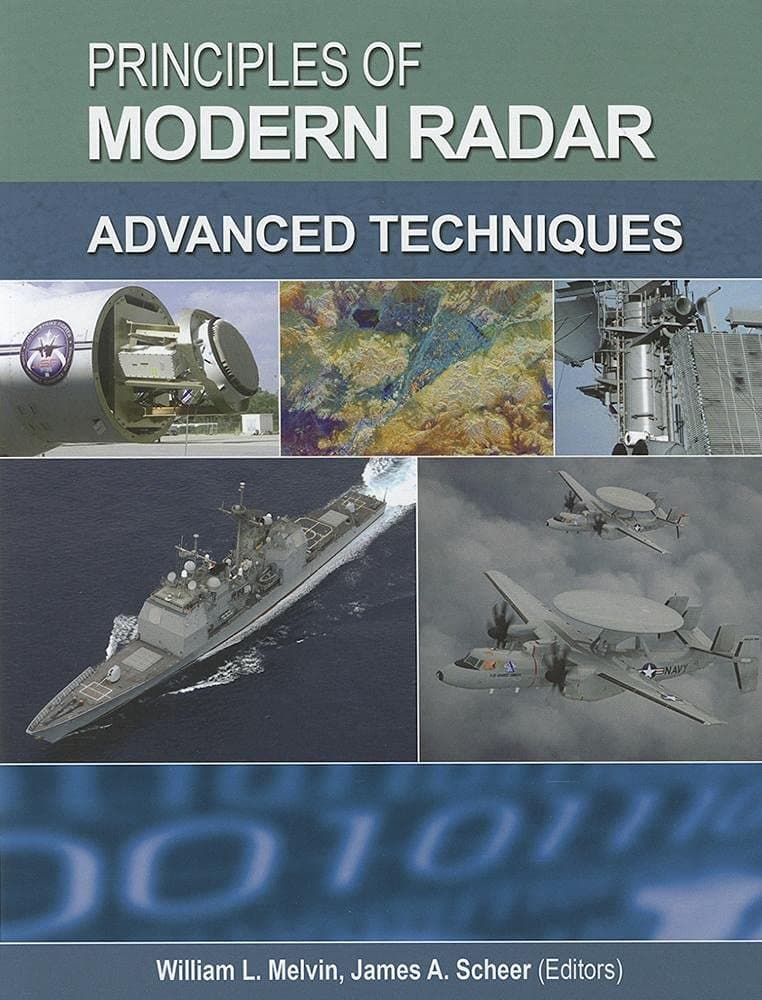
Principles of Modern Radar: Advanced techniques (Radar, Sonar and Navigation) [Melvin, William L., Scheer, James A.] on desertcart.com. *FREE* shipping on qualifying offers. Principles of Modern Radar: Advanced techniques (Radar, Sonar and Navigation) Review: Very braod introduction with little depth - This book is suited for those seeking a first exposure to radar. It provides a very broad overview of many aspects with almost no detail. The mathematical level of detail is very low about high school algebra. This set of three books is not an engineering text, but more an summary. Review: Obvious mistakes - I was surprised the first time I used this textbox that I found so many obvious mistakes. I've taken their (Georgia Tech) many short courses (including STAP and Adaptive Array) and most materials came from those lecture slides. But as a textbook I would hope that they will check their equations more carefully, since some of the same mistakes were in both lecture notes and in this textbook (plus more added ones). The first volume is a lot better than this one. I would not recommend buying it until the next iteration.
| ASIN | 1891121537 |
| Best Sellers Rank | #1,390,799 in Books ( See Top 100 in Books ) #69 in Radar Technology #4,521 in Technology (Books) #94,001 in Textbooks (Special Features Stores) |
| Customer Reviews | 4.6 4.6 out of 5 stars (9) |
| Dimensions | 8.3 x 2 x 10.1 inches |
| Edition | Illustrated |
| ISBN-10 | 9781891121531 |
| ISBN-13 | 978-1891121531 |
| Item Weight | 8.4 ounces |
| Language | English |
| Print length | 872 pages |
| Publication date | October 16, 2012 |
| Publisher | Scitech Publishing |
L**R
Very braod introduction with little depth
This book is suited for those seeking a first exposure to radar. It provides a very broad overview of many aspects with almost no detail. The mathematical level of detail is very low about high school algebra. This set of three books is not an engineering text, but more an summary.
S**U
Obvious mistakes
I was surprised the first time I used this textbox that I found so many obvious mistakes. I've taken their (Georgia Tech) many short courses (including STAP and Adaptive Array) and most materials came from those lecture slides. But as a textbook I would hope that they will check their equations more carefully, since some of the same mistakes were in both lecture notes and in this textbook (plus more added ones). The first volume is a lot better than this one. I would not recommend buying it until the next iteration.
D**S
This is an exceptional book advancing the theory of radar developed in volume 1 of the POMR Series. I am using the book as course reader for an advanced MSc course in radar being developed at City University London. The work is advanced and therefore I would recommend first reading Volume 1 carefully. It might also be necessary to have a copy of advanced mathematical methods at hand to help with the calculus used.
TrustPilot
1 个月前
2 周前