下载应用程序


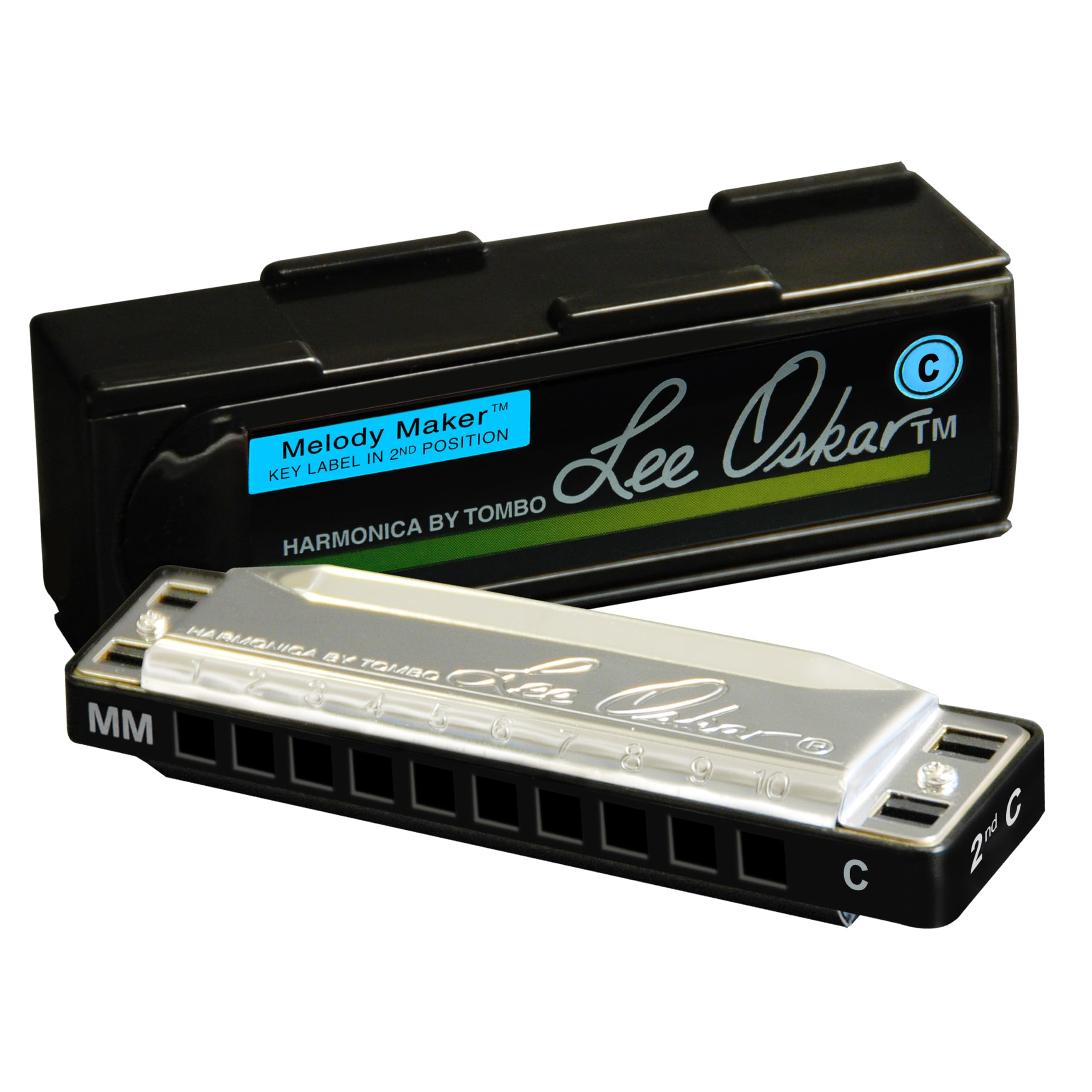
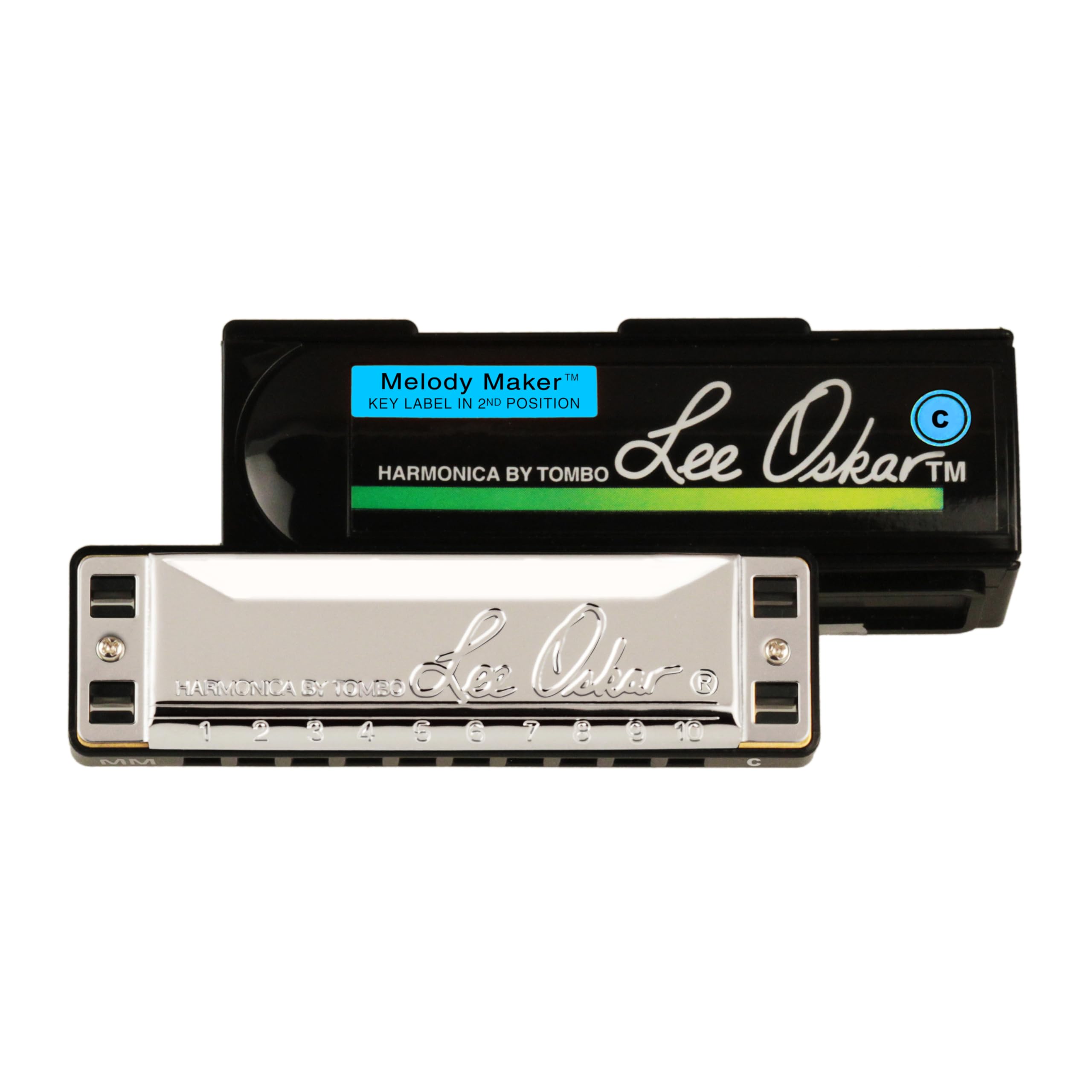

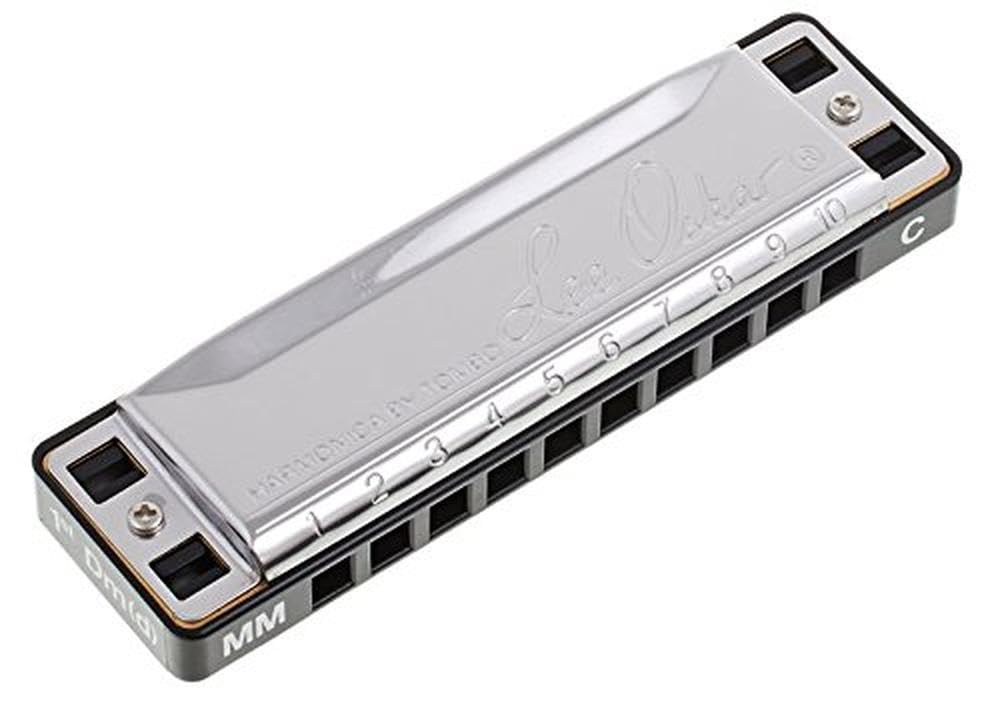


🎶 Elevate your sound, own the moment with Lee Oskar Melody Maker!
The Lee Oskar Melody Maker in Key of C is a premium brass harmonica designed for expressive, fluid play in Cross harp tuning. It offers a complete major scale for easy single-note melodies across genres like pop, reggae, and R&B. Lightweight and durable, it’s praised for clear sound quality and effortless playability, making it a top choice for both beginners and seasoned musicians.
| ASIN | B0002H0RQS |
| Body Material | Brass |
| Color Name | Blue |
| Customer Reviews | 4.5 4.5 out of 5 stars (316) |
| Date First Available | July 16, 2004 |
| Instrument Key | C |
| Is Discontinued By Manufacturer | No |
| Item Weight | 0.32 ounces |
| Item model number | Lee Oskar 1910MM-C Harmonica |
| Material Type | Brass |
| Musical Style | Pop |
| Product Dimensions | 2.2 x 5 x 2.2 inches |
J**L
Wherever you’re at when you need a tune!
Great, even sound, easy to play for beginners and experts alike.
D**C
Awesome harmonica! I currently own the Lee Oskar diatonic ...
Awesome harmonica! I currently own the Lee Oskar diatonic C. I also own a Hohner diatonic C ,and a Hohner bluesband A. I've been an active musician for 40 years. The Lee Oskar harmonica is amazing! In comparison, the Lee Oskar is so much easier to blow and draw, sound quality is much more clear, and more so on single notes. I like my Hohner harmonicas, but when you spend a few more bucks for quality, you will love the results! I'm sure the higher end Hohner's are probably equally amazing. But I would consider the Lee Oskar harmonicas to be very affordable and mid range in price, but high end in quality, construction and performance. I highly recommend Lee Oskar harmonicas.
M**T
Solid Harp with a Fresh Sound
Lee Oskar's are simply reliable. They have good sound and long lasting design. The plastic combs really hold up and are much easier to keep clean comparted to wood combs. The price is very good for a serious harp. But the coolest thing are the variety of tunings you can get. This Melody Maker is wonderful for really different chords for minor keys. Friends keep asking me, How are you playing that chord on a harp?!"
J**S
The best. Period
I have twelve Lee Oskars. They play because they're well-thought out designs. Sound great too. They come in all keys, and scales. Really world class.
B**N
Gotta love harmonica
It is a blast
G**R
Maybe Lee Oskar could use some music lessons...
This harp sounds great, and I like the fact that it doesn't waste a reed by doubling that low fifth like other diatonics. However, I do wish somebody at the company would pick up a copy of "Music Theory For Dummies" and brush up on their Modes. A respectable musical instrument maker just can't go around screwing up the info they give their customers this badly. This would be an easy 5 stars if not for the incorrect labeling and the glossy fold-up sheet full of misinformation it includes. The worst part is that the left end of the comb is clearly labeled "1st F#m [d]" to indicate that in first position it plays F# Dorian, which is just plain wrong. A Melody Maker in E plays A Lydian, not F# Dorian. And the "m" is doubly inaccurate because not only is Dorian NOT "minor" [though it's grouped in the "minor family" since the only difference is a major sixth], but since it's Lydian it's in the "Major family" [the same except for an augmented fourth]. Dorian is "Greensleeves", "Scarborough Fair", and "Eleanor Rigby"; Lydian is the theme from _The Simpsons_. Even a tin-eared musophobe would never confuse the two. It DOES play F# Dorian in 4th position [like you'd use to play minor on a standard harp], though according to the info sheet it plays C# minor there; don't know where they got that one. At least they figured out 3rd position correctly [starting from 4 draw, which plays Dorian on a regular Major harp], though mostly just jazz musicians [and apparently Lee Oskar] call Mixolydian mode by the alternate term "Dominant." [Mixo is Major with a minor seventh, what you actually get when playing a regular harp in 2nd position and good for a lot of blues and rock.] In jazz they call it "dominant" because a Mixolydian tonic 7th chord is dominant, like the fifth chord in a major scale; Jazz musicians don't even START calling them chords until they're at least a 7th, but there's only one 7th chord that's even possible on a diatonic harmonica, and while it just happens to be that dominant low fifth, it's only dominant on a standard major-tuned harp anyway! The rest of the info on alternate tunings is just as bad. The Natural Minor harpa are marked correctly only for 1st and 2nd postion.. 3rd is labeled "Major" but actually plays Phrygian a wholetone above 1st [Phrygian is like minor except that it uses an actual minor second; "minor" uses a Major second], while 4th position plays in Locrian mode a wholetone above 2nd, rather than the "Dominant" it claims. [Locrian is something of an oddball mode fitting neither "family" that's been declared useless by just about every composer for 2 thousand years, though I rather like it. Aristotle declared that it "makes men sad and grave" and I have to agree; it's particularly mournful when played descending as the ancient Greeks generally did.] And I don't know WHY, unlike the Melody Maker, they didn't bother giving it a proper sixth insteady of just doubling the fifth on 3 blow, especially since they focus on playing 2nd position from 2 draw rather than 6 blow as I've always done. It would have made them about twice as desirable the way I figure it. And then there's the Harmonic Minors, labeled correctly ONLY in 1st postition. The harmonic minor scale's Major seventh, right after the minor sixth, makes it simply incompatible with ANY other mode, so ALL other positions are mislabeled. I'm sure someone could find something clever to do with other positions anyway, since there are after all lots of "exotic" scales that don't fit the standard western modes, but the other three columns of that chart are still just plain all wrong.] [Hopefully this Wall O' Text will help someone figure out what they're actually getting with their order... unfortunately I'm really disinclined to copypasta it to EVERY OTHER Lee Oscar Melody Maker, Natural Minor or Harmonic Minor harmonica and reedplate. 58 separate listings is just too much even for me.]
D**R
Perfect harp for a lot of songs
Compared to a regular (Richter) tuning, the third blow hole is a tone higher instead of repeating the 2nd draw note (the key note in 2nd position) and the 5th draw is a half note higher (although you can bend it down) which lays out perfectly for a whole bunch of songs and changes the chords you can play. Just be aware that, like Oskar's natural minors, they call it a G (the second position key) rather than a C. Annoying, but you can deal with it. When we learn a new song in G I will often switch between a regular C and this in 2nd position and a G in 1st position to see which one works best. Haven't bought any other keys (unlike the natural minors which I love for a lot of songs) as it seems like the rock, pop, country and folk songs that lay out well with this harp seem to always be in "The People's Key of G". Being able to play in the 2nd position enables you to bend most of the bluesy notes if you so choose, although these are NOT made for standard blues songs.
B**E
Best you can get . End of story.
I love these harps , I have been playing since I was 12 (50 yr.’s) when I grabbed a harp from my dads top shelf and started playing , putting it back before he got home . He knew , he liked the idea that I thought he didn’t know . These newer types are so very interesting to me as a songwriter now , the melody maker sounds like an accordion to me when your making those larger chords with these , always brings new ideas into the song . I have played in a million blues bands and to tell you the true , I got bored with the same riffs that standard harps give you. , to me it’s the soul you give the harp not how many notes you play , blues traveler stuck it in a jet engine as far as I’m concerned , if your beginning : key of D standard will get you those blues bends A is good too. Later get one of these .
S**E
Love it
C**N
Je vais désormais opter pour les Oskar Fluide léger et qualitatif. Excellent instrument
M**O
ottima qualita' professionale
C**N
You can play absolutely lots of tunes with this harmonica
V**S
Tutto ok
TrustPilot
1 个月前
1 个月前