We remain fully operational. Our teams are working around the clock to ensure your deliveries continue safely.

下载应用程序



🎯 Stay sharp, stay protected, and never miss a beat with Walker's Razor Slim!
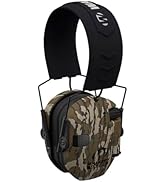
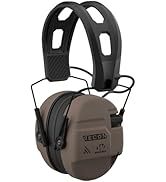
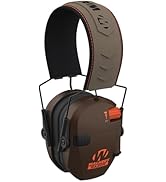
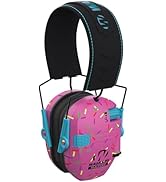
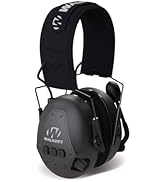
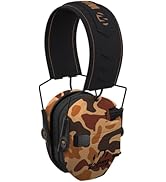
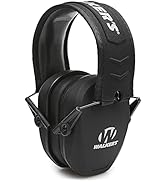
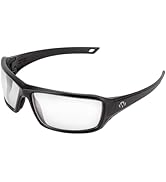
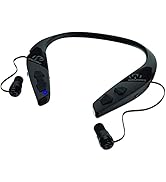
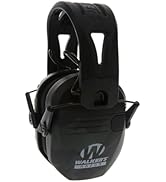
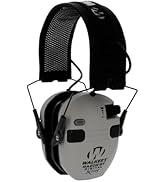
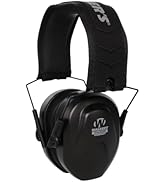
Walker's Game Ear Razor Slim offers professional-grade hearing protection with an ultra-slim, low-profile design that fits securely and comfortably. Featuring dual hi-gain microphones, it amplifies safe ambient sounds with natural clarity while blocking hazardous noise. Its rugged rubberized composite housing and padded metal headband ensure durability, while user-friendly recessed volume controls and an audio input jack transform these muffs into versatile hearing enhancers perfect for shooting, hunting, or noisy environments.


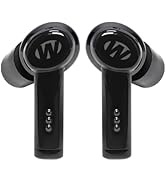
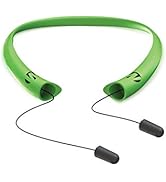
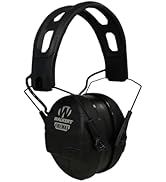

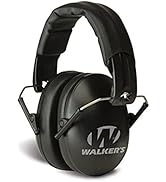
| Care instructions | Hand Wash Only |
| Fabric type | Plastic |
| Origin | Imported |
I**M
Comfortable with great function
These ear muffs are great. I love the fact that you can hear in the distance and others talking around you without feeling that you have to yell to be heard. Noise canceling function is great. I like the fact that they fold up compacted to store without taking up a lot of space
S**M
Which brand is best? Full comparison for: Walker, AKT1, Howard Leight, Peltor, MSA Sordin
To start I would like to say that I have paid full price for every piece of digital hearing protection that I possess, and am not receiving anything for this/any review! I have been rather obsessed with finding the best protection over the years because I care about my hearing, will never stop shooting guns, and want to be comfortable while enjoying guns :) . I own every single one of the hearing pro sets that I discuss. If you don't want to/have time to read the whole review, I'm putting my conclusion at the top. Feel free to read the rest to figure out why I answered this way. But here is the quick bottom line: Do not buy a knock off brand. I do not own any of them, but have tried them. Not worth saving a few dollars. Of the more affordable name brands: Walker, 3M, or Howard Leight... The Walkers are by far the best and most comfortable. But if you have a tiny bit more $ to spend, search for the "AKT1 Sport". Are they worth the extra money? Yes, absolutely - buy the AKT1's if you can afford them. If you already own some 3M's, Howard Leight's or Walker's and are looking for a major upgrade without breaking the bank, go for the AKT1's. I have not noticed a difference in sound or comfort (just design) between different Walker models, but I did notice the difference in sound and comfort when I got the AKT1's! Should you just save your money and buy the "Gucci" of ear pro, ComTacs or MSA Sordins? Probably not, but maybe depending on need. The details: In the $50 - $100ish range I own 5 models: Walker's Razor Slim & XCell, Howard Leight's Impact Sport, 3M's Peltor Sport Tacs, and the AKT1 Sport's. The best hearing protection does two things. 1 - it protects your hearing, 2 - it should not be a burden or painful to wear. Walker's, Howard Leight's, and 3M's are not very comfortable for shooting after about an hour, and on my wife (smaller head) they are actually painful to wear for more than about 10 minutes. Each of them also make you sweat because of the material of the cup pads. Howard Leight - I put HL in 5th place because the sound quality is quite "electronic-y", and they are just downright uncomfortable for any period of time. The sound amplification of quiet sounds is quite substantial and impressive at times, however the quality of the sound itself is lacking. I don't need to hear a whisper from across the room if I can't determine whether the whisper came from a robot or a human. (Robots, although friendly looking, are usually evil, so it's important to know the difference) 3M's Peltor Sport Tacs - are in 4th place because their price point was a little higher, they are still uncomfortable for long periods of time, and they are also a bit bulky for shooting rifles. The cheek plate on a rifle is almost guaranteed to nudge these muffs and cause your shooting ear to have decreased protection. They still have a bit of an artificial electronic sound, but seem to have the best overall hearing protection in this price range when shooting larger calibers or indoors (as long as you can avoid the cheek plate nudge). Walker's - The XCEL and Razor models are tied with each-other for 3rd and 2nd place. They beat out HL's & 3M's just because they are a bit more comfortable. But they are tied with each-other because they don't really have a noticeable difference in sound quality or protection. I think they are both the same Walker tech, just different designs and price points. They are both a little more comfortable, and noticeably less "electronic-y" sounding than the Howard's or 3M's. The sound amplification of quiet sounds is pretty impressive. But in order to make them comfortable for extended shooting times you'll have to spend $ on upgraded gel pads. The AKT1's - take first place. I found these on Amazon and never heard of them prior to that. But I am very happy to have found them! There are only 2 little negatives: 1- they are still a bit bulky (although light weight) so the cheek plate of a rifle does nudge them, and 2 - the amplification of quiet sounds is not quite as dramatic as the other brands. However they take first place because the fit is incredibly better on the AKT1 than any of the models mentioned previously. This is true for both large and small heads actually. I think this simply because the band seems to have had a lot of thought/development put into it, and the pads on the ear cups are either real leather or really nice fake leather. Unlike the other models listed above, these are comfortable out of the box. You don't have to upgrade the pads because they are super soft and that alone is quite impressive. The sound quality is also remarkable. They may lack in magnitude of amplification, but the microphone & speakers work together to provide the least artificial sounds of any other headset I have worn (including ComTacs and Sordins). It is sometimes hard to tell if they are even turned on when someone is talking to you, because the sound quality is so good it sounds like their real life voice. Lastly the $200-$400 range: Peltor ComTac's and MSA Sordin Supreme Pro-X's are pretty equivalent to eachother - I cannot decide which of these are actually better. I can say that I like the sound quality of the the speakers in the AKT1's better than both of these high dollar headsets. However they both feel more durable than the AKT1's, and the sound dampening tech in the ComTacs and Sordins are noticeably more advanced than any of the lower priced sets. If you can afford the $200-400 price, then go for them. If you need to use coms while wearing ear protection, buy them. They are the only brands that have a substantial amount of radio/mic/helmet mounting accessories readily available - and the only two that I would trust for coms reliability. The major benefit is the platform they provide. Most (if not all) come with the gel padded cups and I would buy a set with the genuine leather band cover if you use the top headband style. I prefer the Sordins, as they just seem to fit my head better than any other brand, and I am a fan of the brand name. I have not tried the newest Sordin model yet though... so I may have to update this. Are they that much better than the cheaper models? For very specific reasons yes... but if you are not actually needing the coms platform, then buy the AKT1's. Yeah, I think the AKT1's are that good!
J**Y
Definitely worth getting for hearing protection.
Works wonderful. very adjustable and super comfortable. Price point is perfect. Sound is super clear. Does not slide around on your head during the shooting.
T**R
Excellent Hearing Protection — Comfortable and Effective
We purchased two pairs of the Walker’s Razor Slim Ultra Low Profile Compact — one for me and one for my husband — and used them during a very loud Monster Jam event. We couldn’t be happier with how well they performed. The sound reduction was excellent and made the event enjoyable without feeling overwhelming. They’re very comfortable to wear for extended periods and feel durable and well-made, not flimsy at all. I also like the slim profile since they don’t feel bulky or heavy and the foldable feature! I personally haven’t tried the Bluetooth features yet, but my husband has and he gives them great reviews for sound clarity and convenience. We will be using theses for their upcoming intended use “gun range” and we don’t foresee any concerns. Overall, great quality, reliable protection, and very comfortable. Definitely a purchase we’re glad we made.
J**D
Love these and they work perfectly
I work at at an indoor shooting range so good quality hearing protection is a must. These work perfectly. There was one shooter yesterday that was firing a 500 magnum. You could feel the overpressure from the weapon but it was still at a tolerable volume. When customers have to ask me a question when I'm on the range I just make a quick adjustment to the volume and can hear them very well. They are comfortable and tit me very well. Simple to adjust one size fits all. (even my fat head!) If you shoot, you need these. If you work in construction, you need these. A very small price to pay to preserve your hearing.
T**D
Great solution
This is a review of two related items: ~ Walker's Razor Slim Electronic Muff (RSEM) light teal color (ASIN: B076HG138S; item model number: GWP-RSEM-LTL; price on 2025/05/23: $32.79; price 2025/05/30: $46.46) ~ Walker's Walkie Talkie (WT) attachment (ASIN: B07QFCP93T; item model number: GWP-RZRWT; price on 2015/05/23: $26.20; price today: $28.99 down from $49.99) I've used the Howard Leight Impact Sport (HLIS) electronic earmuffs for years, so some portion of this review will be in comparison to the HL. The Walker's RSEM is very similar to HLIS in design and in function. The headband, the muffs, and the general construction is very similar as if they copied each other's design. The RSEM (just like the HLIS) has a Noise Reduction Rating (NRR) of low to mid 20s. For hearing protection while shooting, I don't consider 20 dB of reduction to be adequate, and I usually wear NRR 30 disposable foam earplugs under the muffs. Because the amplified electronic earmuff volume can be turned up, NRR 30 earplugs would be fine to wear underneath. In a traditional non-electronic earmuff, wearing foam ear plugs underneath maybe too much attenuation if you want to have a conversation with someone. The RSEM (just like the HLIS) has a slim design. Collapsed, they are moderately compact, and do not take up a lot of space in the shooting bag. The RSEM (just like the HLIS) has an auxiliary headphone jack, so you can plug in an audio plug to listen to music, or use this jack to plug in a two way radio attachment. Walker's makes the WT attachment which is affordable and easy to use. Meanwhile, I'm not able to easily find a simple solution for the lay shooter using the HLIS. There is no active noise cancellation, however, I could say this offers active noise reduction with passive noise isolation; noise isolation from the ear muffs, and noise reduction from the microcircuit that selectively amplifies ambient noise except for loud noises. The RSEM comes in many colors and designs, and while they retail for $79.99 on Amazon, some can be found on sale for around $32. It's hard to find them all and compare priceson Amazon because they're not all on the same Amazon page. Currently, it looks like the Razor Tacti-Grip Slim Electronic muff (ASIN: B08LXS9B9M; item model number: GWP-RSEMRH) is the least expensive at $34.45. The Howard Leight does offer some color and design options, but far fewer than Walker's does. These retail for $90 to $110 on Amazon, and some can be found as low as $60. The RSEM (just like the HLIS) is not that comfortable to wear, but it's tolerable for a few hours. They can be worn over a baseball cap. They won't fit very well over a normal thickness beanie. Now, onto the Walker's WT attachment. This is thing that sets the RSEM apart from the HLIS. This attachment is affordable, easy to install, easy to use, and requires no other equipment. (In contrast, I did come across two way radio adapters that turn a handheld radio and the HLIS into a communication device, but that's not quite affordable or easy to use.) After I installed three AAA batteries into the WT attachment, I attached it to the RSEM. The instructions didn't mention removing the rubber cap to the headphone jack, but I felt this was necessary for a good fit. I was initially unable to hear any received transmission. After a few moments, I found that this was because the WT attachment didn't fit onto the muff very well, and the plug wasn't fully seated into the jack. With some force, I was able to mate the WT attachment to the RSEM, and was able to hear received transmission. The mic seems a little short, but it picks up well even with VOX. Three is a little bit of delay from the time I start speaking until VOX turns l activates, but the solution is to talk like an airline pilot. "Uhhhhhhhh, this is your captain speaking...." The only adjustments to the VOX sensitivity is "HI" or "LO," so fine tuning may be necessary to talk louder or softer, or adjust the microphone placement away or closer to the mouth. I wish it had infinite sensitivity adjustment using a dial. Being able to use the full list of 22 FRS frequencies is nice, unlike cheap walkie talkies that only offer 10 or so. The priority channel feature nice and could come in handy at a large event when users on different frequencies: this is basically a scam feature. The audio quality is OK, but this is a $50 toy radio, I guess. The 99 sub channels are not really sub channels, but by using CTCSS, transmission from radios not using the same CTCSS is not heard on the handset. Wikipedia has a good explanation: "CTCSS tone codes are sometimes referred to as sub-channels, but this is a misnomer because no additional radio channels are created. All users with different CTCSS tones on the same channel are still transmitting on the identical radio frequency, and their transmissions interfere with each other; however; the interference is masked under most conditions. Although it provides some protection against interference, CTCSS does not offer any security against interception or jamming, and receivers without CTCSS enabled will still hear all traffic." Being an FRS radio, if you use this in a busy area, you may unfortunately have to hunt for an open frequency. My only concern with the WT attachment is wether the WT attachment would stay properly mated to the RSEM during movements. I can pull on the bottom of the WT attachment and partially unplug it moderately easily even with the top clamp on. It may be that the plastic moulding of the RSEM or WT attachment is inconsistent, and some reshaping or modification is needed. I'll continue to monitor, and see if I can identify an easy solution. Overall, this is a great solution for on the shooting range.
D**W
Good Choice for Power Tools
Great product; very effective at noise reduction. I use these in my shop to mute power tools like saws and grinders. I appreciate the low profile and the way it folds for storage. A well built product at a very reasonable cost. Worth it!
K**N
Perfect Ears that don't break the bank
Bought these because they wouldn't break the bank but we're still from a reputable brand and I wasn't disappointed. The fit is nice and tight and they compress to fit easily in a range bag. The external audio amplifier works really well.