We remain fully operational. Our teams are working around the clock to ensure your deliveries continue safely.

下载应用程序


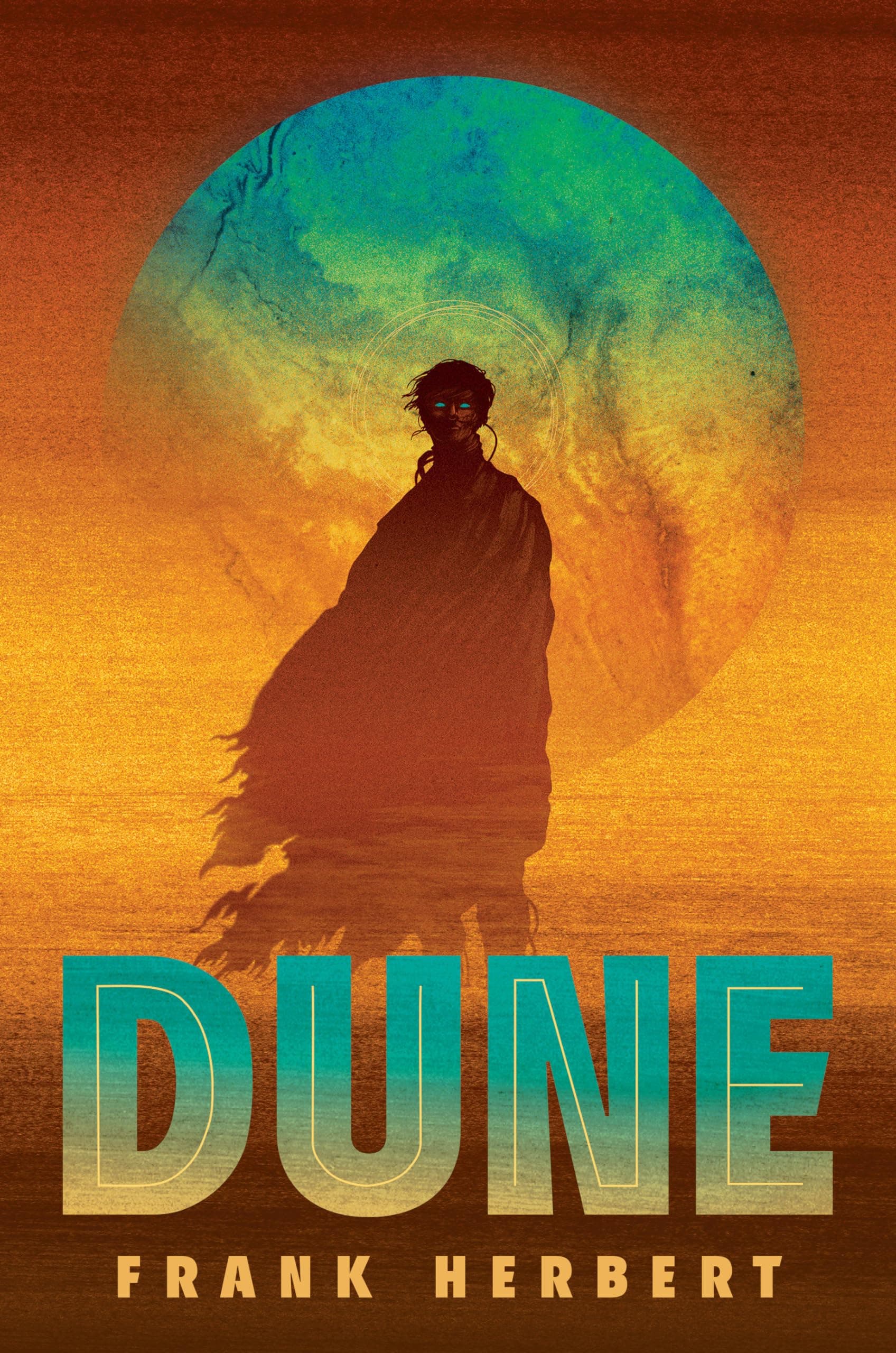
desertcart.com: Dune: Deluxe Hardcover Edition: 9780593099322: Herbert, Frank: Books Review: I highly recommend it to all readers - Dune A book review by Nathan Poulson Written by Frank Herbert in 1959, “Dune” is an epic adventure of political betrayal, ecological brinkmanship, and messianic deliverance. It won science fiction’s highest awards—the Hugo and the Nebula—and went on to sell more than twelve million copies during Herbert’s lifetime. The mantel piece of sci-fi, Star Wars, owes many of its’ widely popular ideas to Dune. To this day, it is still acclaimed by readers and critics alike as a “science-fiction masterpiece”. I highly recommend it to all readers, as I believe it will put a new perspective on things, deepen your understanding, and excite you to the edge of your seat. Dune follows the 15 year old boy Paul Atriedies and his mother, Jessica Atriedies in the very distant future. He is an only child of the duke of the Royal house of Atriedies. The house is given the stewardship over the desert planet of Arrakis or “Dune”, which controls the most valuable resource in the universe, the spice. On the planet where water is more valuable than gold, desert sand worms that are bigger than spaceships, life is lived to the extreme. With the spice comes a longer life span, increased perception, and in some cases prediction of the future, but at the cost of being highly addictive. The Harkonens, a noble house that previously owned the planet is intent on revenge and recapturing the spice. The spacing guild, which relies on the spice for navigating their spacecraft, is also intent on preventing anyone restricting or destroying their monopoly on space travel. Paul finds himself thrown into the mystery of Dune and its fierce natives, the Fremen. They think he is the savior their prophecy speaks of - is he destined to be the great preserver of their world or a false prophet to be purged? With multiple factions fighting, deceiving, and pulling strings, you never know quite what to expect in this awesome futuristic battleground. One side I really like about Dune is that it is not just a distant sci-fi to be enjoyed, but a book to learn and understand from. I really enjoy the themes Herbert establishes in the plot; one of them including the danger of entrusting too much power to a super being. Although his themes might be very serious and almost depressing, I admire that he has the courage to end the story based in reality, instead of a unrealistic Hollywood ending with no depth. Although the plot was very engaging, at some times the writing style really dragged things down. This can be a real turn off for even patient readers as Frank ambles around in unimportant details describing made up words and the very boring thought process of the characters. This is the one thing that made this otherwise a perfect book. Even though I thought the plot was almost pulling me down, somehow I still enjoyed it through the few sparks of almost perfect harmony when the style actually worked for the story. What makes Dune so special is the pure atmosphere. You can really tell that Frank put in a lot of effort into his fictional world and society. Even though the story is set in another universe, the planets, the characters, and the motives seem very real. He had the worlds built before he set the plot on them; you can see he studied Greek and Near East history extensively to make this book really come to life. Most books have characters that you can easily relate to. With Dune, it is a little bit harder to do that. In it, you have a story that instead of a personal account, it is more like a “retelling” and it is sometimes a little harder to relate to the feelings and values of the characters. My favorite character Paul is the most distant character for most of the book. Most of this isolation comes from the fact that people look to him as an idol, even though he still has human flaws. Throughout the book Paul is the character with the most burdens, and in constant pressure that he doesn’t measure up to other’s expectation of him. “They think they have a God, but I am only a man”. In reality he is a character we can all reflect from, he just has some layers in his personality that you have to peel away to really get to the core. This book is near from perfect, but it still hits home. Frank Herbert has done a difficult thing that combines ancient myths and stories with laser guns and mind control. He was the first one to do it, and the last to do it so well. Even without its deeper meanings, this is still a great read to just casually absorb. I cannot explain to you how amazing this book really is; so experience it yourself and pick up a copy, you will be surprised to what it has to offer. Review: A Sci-Fi masterpiece - Dune never ceases to amaze no matter how many times it is read or viewed. Its content is relevant for both when it was written and when it is viewed. It is one of the most extraordinary and exciting books I have ever had the privilege of reading.


| Best Sellers Rank | #8,469 in Books ( See Top 100 in Books ) #4 in Space Operas #5 in Classic Literature & Fiction #31 in Epic Fantasy (Books) |
| Customer Reviews | 4.7 out of 5 stars 102,446 Reviews |
C**Y
I highly recommend it to all readers
Dune A book review by Nathan Poulson Written by Frank Herbert in 1959, “Dune” is an epic adventure of political betrayal, ecological brinkmanship, and messianic deliverance. It won science fiction’s highest awards—the Hugo and the Nebula—and went on to sell more than twelve million copies during Herbert’s lifetime. The mantel piece of sci-fi, Star Wars, owes many of its’ widely popular ideas to Dune. To this day, it is still acclaimed by readers and critics alike as a “science-fiction masterpiece”. I highly recommend it to all readers, as I believe it will put a new perspective on things, deepen your understanding, and excite you to the edge of your seat. Dune follows the 15 year old boy Paul Atriedies and his mother, Jessica Atriedies in the very distant future. He is an only child of the duke of the Royal house of Atriedies. The house is given the stewardship over the desert planet of Arrakis or “Dune”, which controls the most valuable resource in the universe, the spice. On the planet where water is more valuable than gold, desert sand worms that are bigger than spaceships, life is lived to the extreme. With the spice comes a longer life span, increased perception, and in some cases prediction of the future, but at the cost of being highly addictive. The Harkonens, a noble house that previously owned the planet is intent on revenge and recapturing the spice. The spacing guild, which relies on the spice for navigating their spacecraft, is also intent on preventing anyone restricting or destroying their monopoly on space travel. Paul finds himself thrown into the mystery of Dune and its fierce natives, the Fremen. They think he is the savior their prophecy speaks of - is he destined to be the great preserver of their world or a false prophet to be purged? With multiple factions fighting, deceiving, and pulling strings, you never know quite what to expect in this awesome futuristic battleground. One side I really like about Dune is that it is not just a distant sci-fi to be enjoyed, but a book to learn and understand from. I really enjoy the themes Herbert establishes in the plot; one of them including the danger of entrusting too much power to a super being. Although his themes might be very serious and almost depressing, I admire that he has the courage to end the story based in reality, instead of a unrealistic Hollywood ending with no depth. Although the plot was very engaging, at some times the writing style really dragged things down. This can be a real turn off for even patient readers as Frank ambles around in unimportant details describing made up words and the very boring thought process of the characters. This is the one thing that made this otherwise a perfect book. Even though I thought the plot was almost pulling me down, somehow I still enjoyed it through the few sparks of almost perfect harmony when the style actually worked for the story. What makes Dune so special is the pure atmosphere. You can really tell that Frank put in a lot of effort into his fictional world and society. Even though the story is set in another universe, the planets, the characters, and the motives seem very real. He had the worlds built before he set the plot on them; you can see he studied Greek and Near East history extensively to make this book really come to life. Most books have characters that you can easily relate to. With Dune, it is a little bit harder to do that. In it, you have a story that instead of a personal account, it is more like a “retelling” and it is sometimes a little harder to relate to the feelings and values of the characters. My favorite character Paul is the most distant character for most of the book. Most of this isolation comes from the fact that people look to him as an idol, even though he still has human flaws. Throughout the book Paul is the character with the most burdens, and in constant pressure that he doesn’t measure up to other’s expectation of him. “They think they have a God, but I am only a man”. In reality he is a character we can all reflect from, he just has some layers in his personality that you have to peel away to really get to the core. This book is near from perfect, but it still hits home. Frank Herbert has done a difficult thing that combines ancient myths and stories with laser guns and mind control. He was the first one to do it, and the last to do it so well. Even without its deeper meanings, this is still a great read to just casually absorb. I cannot explain to you how amazing this book really is; so experience it yourself and pick up a copy, you will be surprised to what it has to offer.
A**R
A Sci-Fi masterpiece
Dune never ceases to amaze no matter how many times it is read or viewed. Its content is relevant for both when it was written and when it is viewed. It is one of the most extraordinary and exciting books I have ever had the privilege of reading.
K**L
A Fair and Balanced Review from an Unashamed Fan
Frank Herbert's Dune is simultaneously one of the most sublime and frustrating works of literature ever produced. I gave this novel a 5/5 rating outright for two reasons: it's my favorite novel, one I never tire of re-reading; and it's a book that should be read at least once by anyone interested in science fiction, fantasy, history, political science, economics, mysticism, or narrative. Regardless of whether or not someone actually enjoys Dune, every reader can glean something from it. That said, were it not for the latter two points, I would likely give this novel a lower rating, and here's why: Dune sacrifices storytelling for story. What in the name of Thor am I talking about? Let me explain. The world-building of Dune is outstanding, and I mean, REALLY outstanding. Tolkien can't hold a candle to Herbert's work in this regard - sure, he came up with a number of artificial languages, but from a narrative perspective that's actually one of the less productive things you can do to flesh out a setting. In Dune, every story element has relevance and connection to every other story element. The political reality of the galaxy depends on economic power, which is derived from trade, which is made possible by the Spacing Guild, who uses the spice, which exists only on Arrakis, whose administration depends upon the political climate. Paul's character is related to the mystical aspects of the story, but also brings relevance to the ecological and historical aspects. And so on, and so on. There isn't a loose thread here, no equivalent of the Fellowship of the Ring's Barrow-wights; nothing here could be removed from the whole package without substantially diminishing it. Tapping into all of these fundamental spheres of thought and creativity gives Dune the feeling of being a real history, and it gives the reader the feeling they're witnessing a change in the axis of civilization - something more subtly epic than big battles, of which we only get one (and an indirectly described one at that). That said, because Herbert is so dedicated to giving us as much material to work with as he can, in many instances this novel misses out on what might have been effective dramatic elements. An important plot point early on in the book is the supposed presence of a traitor in the midst of the Atreides, a traitor who will make the Harkonnen plot possible. Ordinarily I wouldn't mention this for spoiler concerns, but the novel basically comes out and tells you who the traitor is from the beginning, a while before it even comes into play in the events of the story. The reason this is problematic is because in a story which is so dependent upon political intrigue, it makes the decisions of the characters more powerful when we share in the mystery of the information around them. Another narrative problem is Paul himself. Though he is unquestionably the central character of the story as well as its protagonist, Paul starts off as a precocious fifteen-year-old and ends as a major player in galactic politics. In other words, he starts of as unrelatable and becomes less relatable as time goes by. In fact, several of my friends told me they stopped reading after a while because they didn't like Paul. This is an entirely fair criticism. In fact, the only character with whom a reader could form a true emotional connection would be Paul's mother, the Lady Jessica, whose problems are much more grounded in humanity. Now Paul's nature is basically vital to the fabric of the story, so it would diminish the story's complexity for him to become a more human character; but Dune would undoubtedly have been an easier reading experience had the novel chosen to focus on Jessica. This should give you a taste of what I mean. Dune isn't a novel that really engages a reader on an emotional level; because it reads so much like a history, it engages you on intellectual and thematic levels - but again, not emotionally. This is still my favorite novel, because measured against the standards of what it's trying to accomplish it succeeds beautifully; but potential readers should know what sort of undertaking they're facing when they pick this up.
J**S
Dune: Science-Fiction's A Song of Fire and Ice
I am a Star Wars fan. Anyone who knows me knows I grew up watching the Original Trilogy by George Lucas, Irwin Kirshner, and Richard Marquand. I watched the Dune movie by David Lynch back when I was in sixth grade and had nightmares, mostly because of the Vladimir Harkonnen scenes, and that traumatized me enough to keep me from really reading the book for years. I checked out John Harrison's mini-series for the SyFy Channel, found it to be pure awesomeness, but lacking in spectacle and the epic feel of the novel, so I read the book and saw it was pretty much the same as the mini-series, save for a couple of changes here and there to the plot. I left Dune alone until 2015 when I heard there was a fascinating documentary about some guy named Alejandro Jodorowsky (whom I had never heard of) who had attempted to make Dune back in the early 70s, about three years prior to Star Wars coming out. It inspired me to work on a little project: reading the entire Dune Series. Now, what can I tell you about Dune that hasn't been said already? It really is a ground-breaking novel. Very much the Game of Thrones of Outer Space with its focus on political intrigue and three-dimensional characters. A truly incredible novel that set the standard for novels before it, and much like Stephen King's monolithic saga, The Dark Tower, you might find a bunch of cliche's everywhere, before you realize that this novel created those cliches, just like Dark Tower. The only thing I have a problem with in the book is that Frank Herbert reveals nearly everything at the beginning of the book with a few key sentences, mainly who the traitor in House Atreides is or who Lady Jessica's father is or the eventual fate of Paul's dad, which makes the novel a little troubling to read. The book still is great, but from what I have heard, you really need to read the prequels and sequels to really understand the novel. It's a good novel, but oddly written. However, if you open your mind a bit and keep an active imagination, you will find method to this tale of madness. I very much consider it to be an R Rated equivalent of Star Wars or Star Wars the PG-13 equivalent of Dune, which makes it more accessible to a wider audience. Star Wars actually borrows a lot from Dune, primarily with the Force/Weirding Way thing. The story is set about 10,000 years into the future in a time when AI tried to rebel and almost successfully wiped out humanity, so now Humanity has reverted to a more feudal society similar to Medieval Europe. A new form of traversing outer space is developed called Folding Space where you can nearly transport a ship instantaneously through the usage of a highly-developed mind, but the necessary fuel for such things is an incredibly rare spice found on only one planet: Arrakis, which (as Richard Stanley on Jodorowsky's Dune puts it) is pretty much the Galactic version of the Afghanistan or the Middle-East and Oil. The spice, known as Melange, heavily increases the mental capacity of a human's mind, almost exactly like the movie Lucy by Luc Besson. The control of the spice is controlled by the Barony of Harkonnen, but now has been given to the Duchy of Atreides. Unfortunately, the Harkonnens want to keep control and start to fight with their enemies to control Arrakis, and nearly successfully wipe out the Atreides House in a devastating battle. Now, the young ducal heir and his allies much locate the desert-based population of Arrakis, the Fremen, to begin a war against the Harkonnens to reclaim Arrakis. Frank Herbert was a genius writing this book, since there is a whole Philosophy and religions inside this series, much like Tolkein and Middle-Earth. And, like I said, the novel is a bit hard to follow and requires a few read-throughs before you can start on the sequels and prequels by Herbert and his son, Brian. After you read these books, watch Jodorowsky's Dune, and you will be amazed. It's probably the greatest experience of film you will ever see.
B**D
God created Arrakis to train the faithful.
Being as long as it has been since I've last read Dune, eight or nine years or so, I had a small worry that my extremely high opinion of the book was at least slightly inflated by time's passage and fond memory. The first chapter alone was enough to dissuade me of that. I sit here now, having just finished, with full confirmation that Dune remains on the throne my thirteen-year-old self set it upon; that of my favorite book. Herbert's writing is sharp, his ideas are powerful, and he is willing to dive deep immediately. He asks much of the reader, providing a glossary and gently insisting we keep up. Those types of stories are the most rewarding, I've found. Forgive me but most of this review, all of it perhaps, will be unfiltered praise. This book means a lot to me; it has for a long time. And revisiting it, in light of all the exciting movie news with Denis Villeneuve, was more than a treat. I will refrain from summarizing the story; it's likely you know what it's about. If not, Goodreads has neatly summarized it better than I will. The book, and the prose in general, holds up extremely well for having been written over fifty years ago. Admittedly the character thoughts and some dialogue is a little stiff in areas. But not so much so that it hindered my enjoyment in any way. Additionally I'm not used to omniscient narration; you just don't see it that often currently. I don't at least. So the POV hopping without chapter or line breaks took just a little getting used to. Having said that, I am so impressed by Herbert's expertise at moving his story using the art of conversation, and all its minutiae. This is especially true when Fremen are in conversation with non-natives, and the culture clash is on display. If you hold it in your hand, what you hold is more than a mere science fiction novel. It breaks through those boundaries as a worm broaching the desert surface. This is a space-fantasy, and a heady mixture. The story is wrapped up as much in mysticism and religion as it is in technology; more so even. It is as concerned with ecological prediction and deep, flowing political undercurrents as it is with a well-written fight scene. It is the perfect mixture of odd-future strangeness, vast cosmic scope, and spiritual involvement that stitches the story up at the seams. Prophecy, and psychedelic consciousness-expansion through the addictive spice melange, are as much the heart of this story as laser guns and space ships. So much so that one wonders just how many mushrooms Frank Herbert was eating as he penned this thing in the 1960's. And I'm only kind of kidding. Herbert, with this first story alone, never mind the sequels, displays an absolute mastery of world-building. He has just the right flavors of real-world inspiration and influence to make it all feel familiar; especially in the touches of Eastern influence, down to the broken remnants of Sanskrit appearing in the Fremen language. It all just feels so feasible. Like you're at once reading a manual of our distant future and texts of our ancient past. Meeting in the now. That ethereal, dream-like moment of present time. The now. It's clear I've been infected by the mood of the story. And beyond anything else, the story is itself is just so interesting. I found it hard to put down even for a moment. Even the epigraphs are worth a session of deep thought, and clearly lead the way for popular usage in things like Sanderson's Cosmere stories. Dune influenced so much that followed it it's just undeniable. I can't help but draw parallels with the Wheel of Time, which I'm in the middle of. I drew comparisons with the Aiel/Fremen immediately when I started reading WoT, and that comparison is reinforced. As are other little things that hint at direct homage (Shaitan being the name for Satan in Dune, for example). I remember, all those years ago in Frogtown Books, the quote on the back that caught my eye. 'I know nothing comparable to it except the Lord of the Rings.' What higher praise? Here is a book that transformed the landscape of science fiction; just as it transformed, for me, what fiction can be. Something like Dune is extremely hard to review for me, so forgive my love affair in the form of language. I just can't say enough good things. Dune shaped my reading life growing up, and now I remember why. I can do nothing more but urge you to read it.
L**R
The Spice of Spices
Royal intrigue, infighting among the various "Houses" of the Galactic Empire and The Spacing Guild that controls all space travel through the use of the "spice" Melange. And the only source of all Melange is on Arrakis, the planet known as Dune. At the heart of the story is young Paul Atreides son of Duke Leto and his "formal" concubine Lady Jessica. The Atreides are the ruling House on planet Caladan, a planet rich in water. But the Emperor has other plans for them; in a plot hatched between the Emperor and House Harkonnen, the Atreides House will be transferred to planet Arrakis and there, set up for failure. In this complex, finely crafted novel author Frank Herbert proves himself to be a master story teller. Filled with intricate plans, betrayals and hidden "plans within plans" this amazing novel will have you on the edge of your seat. Published in 1965 Dune went on to win both the Hugo and Nebula awards for best novel in 1966. Followed by 5 sequels and several follow up novels by Frank's son Brian, this is probably one of the best selling series of all time. In the first novel, Dune, Paul and his mother Lady Jessica, a member of the Bene Gesserit Sisterhood, find themselves betrayed and alone in the desert. With Harkonnen agents hunting them and wild desert Fremen lurking in the shadows, the odds of survival are against them. I don't want to go to far into the details of the story line, that's been covered pretty well by other reviewers and this novel is something you need to experience for yourself. If you've read it before then you need no introduction. If this is your first read then go into it like I did, cold and not knowing what to expect. Herbert's writing is amazingly detailed and rich with hidden elements, his descriptive passages make you feel like you're on Arrakis. For insights on Dune's natural history, including it's geology, ecology and biology of the sand-worms read Appendix 1. In Appendix's 2 & 3 you get background on the various religions and the history of the Bene Gesserit's. Herbert provides an extensive glossary for unfamiliar terms and a break down of the various Houses of the Empire. All this supplemental material gives you some idea how much planing and forethought went into the writing of this novel. You may notice some similarity between Dune's Fremen society and our own Middle Eastern cultures, I'm sure this is not accidental and Herbert's research was extensive. Paul's greatest fear was that he could end up leading the Fremen on some kind of religious "jihad" that would sweep through the Empire and cost millions of lives. Whether you're reading Dune for the first time or just revisiting an old friend, this is a novel you don't want to miss. Like reading "20 Thousand Leagues Under the Sea" or "Lord of the Rings" you can't go wrong in reading a classic and Dune is not only a classic, it's The Classic science fiction novel. I had no technical or formatting problems with this Kindle edition. Last Ranger
J**E
A must read epic that leaves you hanging a bit
Right off the bat, this is one of the most enjoyable and thought provoking books I’ve ever read. I’ve always struggled with books this long, but this book was such a page turner that I looked forward to getting back to it night after night for about 10 days. Two very different types of work, but the only time I’ve ever felt like this about a book of this magnitude in volume was with the lengthier Harry Potter books. Despite all the made up terms that Mr. Herbert created to delineate this massive interplanetary world, which can be a bit confusing in the beginning, you’re sucked into the vortex that is Dune from 1st chapter. Some of the most enjoyable aspects of this book for me were constant flow of inner perspectives from one character to another in beautiful prose, timeless characterization of human society, religion, politics, technology, etc., and the sheer scale of this universe which goes much beyond the planet of Arrakis where the majority of this 1st book takes place. From the beginning, the reader gets very much invested into the main character of Paul Atreides. Early scenes make you excited about the potential of his power and influence, you ride along with early trials and tribulations that include massive loss of loved ones, and you see the ascension of his power and stature from the lowliest of place. But things aren’t all rosy, along the way, you see the boy becoming a man while giving up his innocence. The sense of righteousness and compassion for people that he’s held so dearly seem to fade in the process as he wades his way through the realization of his extraordinary power, though you don’t really see how those inner transgressions manifest themselves down the road. On a related note, the sole downfall of this book for me is the abruptness of the ending. Up until the very end, you’re treated with a barrage of character and story development, but Mr. Herbert throws a changeup at the end with a very economic conclusion to the story. You’re left hanging wondering what in the world the ending means for the plethora of characters you’ve become invested in. You wonder whether Paul will walk in the light, or in the darkness in his new position. I don’t know whether this was done intentionally to introduce a sense of comic irony, or whether a sense of cliffhanger was placed to get people to read the subsequent books. If the latter was the case, I must admit my disappointment. This was such an amazing book for me until the end. The subsequent books should’ve been recognized on their own merit, and not rely on the momentum of this first book. But I could be wrong, I’m just a casual reader, and perhaps this sort of ending is a pure touch of genius to the experts. But as a casual reader, I felt left hanging, grasping for something that’ll never be fulfilled….like life (and perhaps that was the author’s point too).
A**E
Considered to be the best science fiction novel ever written.
This book is often considered to be the best science fiction novel ever written and for good reason. _Dune_ is a 1960s-era science fiction novel, published on the cusp of the Golden Age and the New Wave. Science Fiction of the time was in a transitional period influenced by the periodical _Galaxy_. SF at the time emphasized what some would call soft science fiction, a genre dealing with psychology, sociology, and sociopolitical commentary, with the bonus of one or more unique original ideas and a Sense of Wonder. Within these domains, _Dune_ hits every note a book of its genre could possibly hit and does so brilliantly. This is not anything like what passes for science fiction today, as the genre has been heavily-influenced by the Modernist movement and is now characterized by meandering fiction with long atmospheric narrative descriptions and no idea content other than politically-correct gender diversity, as is often found in a Gardner Dozois Year's Best anthology. This novel seems more nuanced and cogent to me today as an adult than it did when I first read it as a teen. The explorations of preternatural consciousness, mind control, economics, religion, and political intrigue are fascinating. But _Dune_ was also revolutionary in its use of what was then called Ecology (now called Environmental Science) as a hard science. This book is a high mark in the achievement of hard-science worldbuilding. After all these years it is still the most well-thought out and well-fleshed out worldview in the entire SF canon. Its complex, logical worldbuilding is presented in what was the then-prominent Science Fiction protocol of revealing the world little by little through contextual clues rather than inserting infodumps of description. As such it takes more work to read than a more modern book with infodumps. Readers who find the book boring aren't reading it with Science Fiction reading protocols and apparently most of them are too callow to resonate with some the book's political, economic, and sociocultural commentary. The genre was about ideas, not literary modernism, so you will not find the book filled with metaphors and literary allusions such as one might find in a Creative Writing MFA's workshopped short story, although Paul's story is clearly the Hero's Journey and he is obviously a Messiah figure as well as a military/political leader. The characters may not be as well-rounded as in a Dostoevsky novel but in case you missed it, the main character isn't really Paul. The main character is the planet Arrakis. Read this book with that in mind and you'll be amazed. For those expecting a Hollywood superhero comic-book style movie with action scenes and high-definition special effects, there is some of that in here too, but that is not the main point. This is a Frank Herbert novel of ideas, not a David Lynch film of striking visuals.