We remain fully operational. Our teams are working around the clock to ensure your deliveries continue safely.

下载应用程序


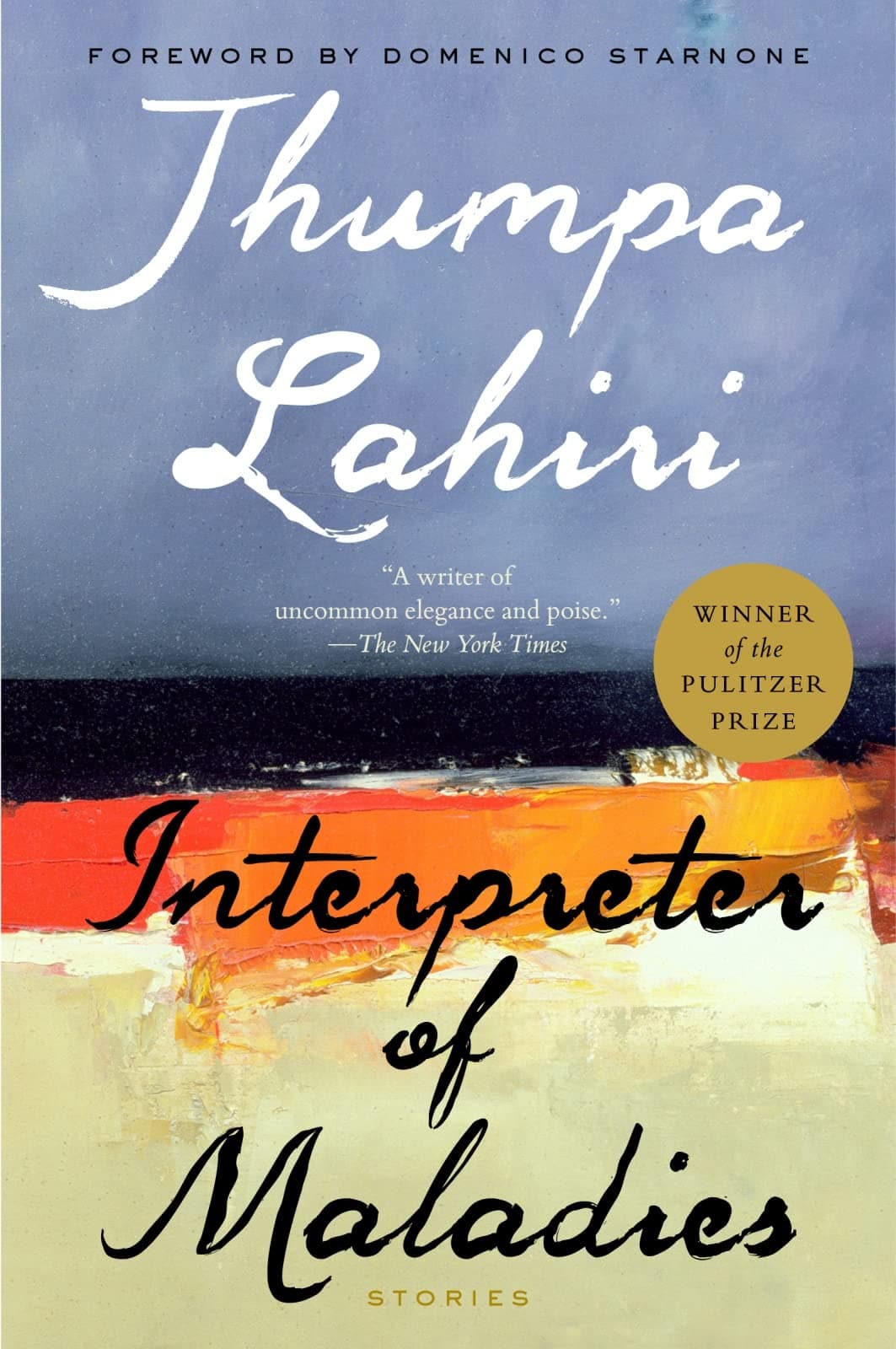
Interpreter Of Maladies: A Novel [Lahiri, Jhumpa] on desertcart.com. *FREE* shipping on qualifying offers. Interpreter Of Maladies: A Novel Review: The Sizzle of True Writing (by Ana O'Quin) - “Brimming bowls and colanders lined the countertop, spices and pastes were measured and blended, and eventually a collection of broths simmered over periwinkle flames on the stove.” (p. 117) With the sizzling descriptions of Indian food and eye-opening moments portraying the juxtaposition of American and Indian culture, the award-winning Jhumpa Lahiri crafts a collection of 9 breathtaking stories that make up the Interpreter of the Maladies. With its beautiful writing, plot twists, and personal significance in my own life, I fell in love with the novel. Its craftminship and cultural significance outweights the minor flaws it has. Beautiful writing and twists in the plot, along with its personal significance in my own life, adds to my love of the book, outweighing the minor flaws it has. Throughout the story Lahiri uses clever imagery and diction to both capture moments in the novel and reveal underlining problems of dysfunctional relationships. As Shoba, the newly miscarried wife of Shukumar, refuses to put her shoes in the closet Lahiri tells of her reluctance to continue living as a wife. Mr. Pizarda, a Bengali man stuck in America as his wife and children suffer from the Pakistan war, gives a young girl Lilia a “steady stream of honey-filled lonzenges, raspberry truffles, slender rolls of sour pastilles”, telling bounds about his grief and longing for his own children (p. 29). Spot-on descriptions of the daily life of both Americans and Indians combine together in her stories yet are made fresh and insightful in their shocking endings. Her shrewd, but not judgmental tone, captures both the flaws and perfection of Indian culture, creating a true page-turner. The stories, in their individuality, are weaved together in their themes of accepting American culture and loving Indian culture. This thread of unification continues in the stories’ emphasis on love, and the toll that these moves take on relationships. Throughout the novel, characters such as Mrs. Das deal with the guilt of having a boy after an affair, Miranda choose to stop her affair with the married Dev, and Elliot struggle to adapt to life with the carefree Twinkle.The couples struggle with the stress of adapting to a chaotic and forein life in America in contrast to the culturally rich and slow life of India. Yet the relationships born from love, lust, and arrangement overcome their flaws at the end of each story either with a tough ending or a rebirth. Personally, this stress deeply resonates with my own life. I’ve also had to face this move from a foreign country to America. This chaos and unfamiliarity easily can take a toll on all of my relationships, with both family and friends. My favorite story in the book, The Third and Final Continent, reflects this move in my life as a man moves from India to England and then to America. He struggles with noise “constantly distracting, at time suffocating” with “the simply chore of buying milk”, and with very new relationship of an arranged marriage (p. 175) While reading the chapter I couldn’t help but smile as I identified with his adjustment to America. As the story progresses, he develops a relationship with an old women, Mrs. Croft, yet is grieved by her death. Even so he pushes on and becomes closer to his wife, taking steps every day to love his new life in America; it became an inspiration for me to take life “one meal” at a time(p. 198). Every relationship has its flaws, as does every book. Even with its beautiful and smooth writing,the Interpreter of the Maladies at times can drone on. The emphasis of describing settings and one broken relationship after another can at times cause the stories to feel as they were, in the words of a customer on desertcart, “written from recipe.” Shocking endings can leave readers in confusion. Personally I cannot think of a sentence that describes exactly what Jumpha Lahiri was trying to convey or reveal in her book; true themes and meanings are very hard to find. Her diction and stirring statements can distract from the plot add to this confusion. “Still, there are times I am bewildered by each mile I have traveled, each meal I have eaten, each person I have known, each room in which I have slept. As ordinary it all appears, there at times when it is beyond my imagination.” (p. 198) Even with its minor flaws, Jumpa Lahiri’s beautiful description of Indian cultures, the struggle of living in America, and truths of relationships along with its personal significance inmy life adds it to my list of my favorite books. Ending with this impactful sentence that gives me personal motivation, I recommend it for anyone with a love for truth, relationships, and culture. Review: Some great stories, others not memorable - I liked most of these stories. The first story, "A Temporary Matter," made me cry and lament a tragic failure of people to communicate and understand one another. The last story, "The Third and Final Continent," was equally moving, and restored my faith that there is innocence in love. Overall, Lahiri's keen understanding of the nuances of relationships is impressive. In her brief stories, the complicated relationships between the characters are remarkably well-developed. She is equally deft at capturing the nuances of the human personality- her characters often can't be labeled as protagonists or antagonists. Rather, they exist in the same gray moral area as the typical reader. The main fault I find with this collection, however, is a lack of consistency. It is easy for me to pick out the stories that were extraordinary in the book and, as for the rest, they tend to be somewhat forgettable. To be honest,I was also a bit put off by the sparsity of Lahiri's writing and the absence of figurative language which, for me, is a beautiful and important element of short fiction. Metaphor and other figurative techniques can add, succinctly, a deeper layer of meaning which Lahiri's stories lack somewhat.


| Best Sellers Rank | #18,238 in Books ( See Top 100 in Books ) #112 in Short Stories (Books) #649 in Classic Literature & Fiction #1,061 in Literary Fiction (Books) |
| Customer Reviews | 4.5 4.5 out of 5 stars (9,312) |
| Dimensions | 5.31 x 0.52 x 8 inches |
| Edition | Reprint |
| ISBN-10 | 0358213266 |
| ISBN-13 | 978-0358213260 |
| Item Weight | 2.31 pounds |
| Language | English |
| Print length | 208 pages |
| Publication date | October 22, 2019 |
| Publisher | Mariner |
M**O
The Sizzle of True Writing (by Ana O'Quin)
“Brimming bowls and colanders lined the countertop, spices and pastes were measured and blended, and eventually a collection of broths simmered over periwinkle flames on the stove.” (p. 117) With the sizzling descriptions of Indian food and eye-opening moments portraying the juxtaposition of American and Indian culture, the award-winning Jhumpa Lahiri crafts a collection of 9 breathtaking stories that make up the Interpreter of the Maladies. With its beautiful writing, plot twists, and personal significance in my own life, I fell in love with the novel. Its craftminship and cultural significance outweights the minor flaws it has. Beautiful writing and twists in the plot, along with its personal significance in my own life, adds to my love of the book, outweighing the minor flaws it has. Throughout the story Lahiri uses clever imagery and diction to both capture moments in the novel and reveal underlining problems of dysfunctional relationships. As Shoba, the newly miscarried wife of Shukumar, refuses to put her shoes in the closet Lahiri tells of her reluctance to continue living as a wife. Mr. Pizarda, a Bengali man stuck in America as his wife and children suffer from the Pakistan war, gives a young girl Lilia a “steady stream of honey-filled lonzenges, raspberry truffles, slender rolls of sour pastilles”, telling bounds about his grief and longing for his own children (p. 29). Spot-on descriptions of the daily life of both Americans and Indians combine together in her stories yet are made fresh and insightful in their shocking endings. Her shrewd, but not judgmental tone, captures both the flaws and perfection of Indian culture, creating a true page-turner. The stories, in their individuality, are weaved together in their themes of accepting American culture and loving Indian culture. This thread of unification continues in the stories’ emphasis on love, and the toll that these moves take on relationships. Throughout the novel, characters such as Mrs. Das deal with the guilt of having a boy after an affair, Miranda choose to stop her affair with the married Dev, and Elliot struggle to adapt to life with the carefree Twinkle.The couples struggle with the stress of adapting to a chaotic and forein life in America in contrast to the culturally rich and slow life of India. Yet the relationships born from love, lust, and arrangement overcome their flaws at the end of each story either with a tough ending or a rebirth. Personally, this stress deeply resonates with my own life. I’ve also had to face this move from a foreign country to America. This chaos and unfamiliarity easily can take a toll on all of my relationships, with both family and friends. My favorite story in the book, The Third and Final Continent, reflects this move in my life as a man moves from India to England and then to America. He struggles with noise “constantly distracting, at time suffocating” with “the simply chore of buying milk”, and with very new relationship of an arranged marriage (p. 175) While reading the chapter I couldn’t help but smile as I identified with his adjustment to America. As the story progresses, he develops a relationship with an old women, Mrs. Croft, yet is grieved by her death. Even so he pushes on and becomes closer to his wife, taking steps every day to love his new life in America; it became an inspiration for me to take life “one meal” at a time(p. 198). Every relationship has its flaws, as does every book. Even with its beautiful and smooth writing,the Interpreter of the Maladies at times can drone on. The emphasis of describing settings and one broken relationship after another can at times cause the stories to feel as they were, in the words of a customer on Amazon, “written from recipe.” Shocking endings can leave readers in confusion. Personally I cannot think of a sentence that describes exactly what Jumpha Lahiri was trying to convey or reveal in her book; true themes and meanings are very hard to find. Her diction and stirring statements can distract from the plot add to this confusion. “Still, there are times I am bewildered by each mile I have traveled, each meal I have eaten, each person I have known, each room in which I have slept. As ordinary it all appears, there at times when it is beyond my imagination.” (p. 198) Even with its minor flaws, Jumpa Lahiri’s beautiful description of Indian cultures, the struggle of living in America, and truths of relationships along with its personal significance inmy life adds it to my list of my favorite books. Ending with this impactful sentence that gives me personal motivation, I recommend it for anyone with a love for truth, relationships, and culture.
K**E
Some great stories, others not memorable
I liked most of these stories. The first story, "A Temporary Matter," made me cry and lament a tragic failure of people to communicate and understand one another. The last story, "The Third and Final Continent," was equally moving, and restored my faith that there is innocence in love. Overall, Lahiri's keen understanding of the nuances of relationships is impressive. In her brief stories, the complicated relationships between the characters are remarkably well-developed. She is equally deft at capturing the nuances of the human personality- her characters often can't be labeled as protagonists or antagonists. Rather, they exist in the same gray moral area as the typical reader. The main fault I find with this collection, however, is a lack of consistency. It is easy for me to pick out the stories that were extraordinary in the book and, as for the rest, they tend to be somewhat forgettable. To be honest,I was also a bit put off by the sparsity of Lahiri's writing and the absence of figurative language which, for me, is a beautiful and important element of short fiction. Metaphor and other figurative techniques can add, succinctly, a deeper layer of meaning which Lahiri's stories lack somewhat.
J**L
Excellent Stories with Splendid Character-Portrayals
This is a collection of stories about the lives of Indian and Indian-Americans who are nostalgic for their home on the other side of the world but are also trying very hard to adjust to their life in their adopted country. The book was first published in 1999 and it won the Pulitzer and the Hemingway /PEN award. The nine stories in the book are: 1. A Temporary Matter : A happy couple, Shukumar and Shoba who are hard-working Indian-Americans, lose their baby, and through their grief, they are alienated from each other. Environment in the background, such as the electrical power, the candles, and Indian food, provides the mood of this story. 2. When Mr. Pirzada Came to Dine: This story reflects the feelings of innocent people from a personal level on both sides of a complicated political struggle. Told from the ten-year old Lilia’s point of view, this story tells of the concerns of immigrants for their old countries. Mr. Pirzada, from Pakistan, is friends with Lilia’s parents and visits them often, bringing sweets to the girl. He is concerned of the safety of his daughters back home, as things can go awry during a war. Since Lilia is a second-generation American, she views all this with deep emotion, yet childish understanding, and she misses Mr. Pirzada when he leaves for Pakistan. 3. Interpreter of Maladies: An Indian-American couple visit their old country and hire a tour-guide as their driver. The driver talks about his other job as an interpreter in a doctor’s office. Something resembling a romance starts to develop between the wife and the driver. In the story each character is flawed in some way and sees the others from a mistaken angle, and each character ends up feeling disappointed. 4. A Real Durwan: The Durwan, a stair-sweeper of an old apartment building who is an old woman, attracts the pity and the kindness of the residents, since she does this work without expecting anything. The old woman feels just as strongly about the residents and the building, as well. When a sink in the stairway is stolen, however, the residents turn their backs on the old woman, kick her out of the building and start looking for a “real Durwan.” 5. Sexy: Miranda and Laxmi work for a public radio station in Boston. Miranda is having an affair with Dev, an older, married Indian man. At work she hears Lami’s phone calls through her cubicles. Laxmi’s cousin’s husband is having an affair, and the grief of it has made the cousin unable to care for her son. When The cousin comes to visit Laxmi, Miranda babysits for her son, Rohin. Laxmi’s cousin is the victim of infidelity. It is through her stories that Miranda starts to feel and then face her own guilt and aimlessness. 6. Mrs. Sen's: An eleven year-old boy is babysat by Mrs. Sen in her own home. Mrs. Sen is a university professor’s wife who is homesick for her native land and is obsessed with objects like her special vegetable cutting blade and fish from the market. She also resists to attempt to the new country and learning to drive. One day, on a whim, she drives to the market on her own and has an accident with the boy in the car. Afterwards, the boy stops staying with her. 7. This Blessed House: An Indian-American couple, newly married, try to adjust to each other and their new house, which was owned by a fanatically religious Christian people who left artifacts hidden inside the house. The clash of cultures and the young couple’s ineptitude to accept each other’s different qualities are highlighted in this story. 8. The Treatment of Bibi Haldar: Bibi Haldar is a twenty-nine year-old spinster who has a strange ailment. From the descriptions of her symptoms in the story, she suffers from seizures. The cure is marriage, the doctors have said, and that’s what Bibi Haldar wants, but despite all the efforts, she lacks the qualities of being marriage-able. Bibi keeps the inventory of her brother's cosmetics stall, but when the brother’s wife becomes pregnant, she is afraid Bibi will infect her unborn child. When a daughter is born to her and the child becomes ill, a seriously prejudiced treatment of Bibi begins. Women of the community sympathizing with Bibi stop their purchases from the brother, causing the brother to go bankrupt, leave his store, and move out. Bibi is left to live in the storage room, which she fixes to make it livable. Then it is discovered that Bibi is pregnant, but the father of the baby is a mystery for she might have been attacked during a seizure. The women help her with the care of her son and Bibi starts her own business with the old wares of his brother’s store and manages to raise her son on her own, with her ailment now cured. 9. The Third and Final Continent: An Indian-descent young man, a newcomer to the United States from London, rents a room from a quirky old woman in Cambridge, Mass. After living with her for six weeks, he feels attached to her. When the young man’s new wife arrives from India, he moves out to an apartment in the campus of MIT. As he is trying to adjust to his wife, whom he doesn’t know well, the old woman dies. After a while, the young man starts feeling love for his wife, but he also remembers the old woman, as she was the first person he liked in the new country, which started his adaptation process to USA. This book not only it gives a glimpse into another culture, but also, it is a learning experience if the reader can analyze and interpret it with a discerning eye.
C**I
'The Interpreter of Maladies' is a collection of 9 stories that explore the lives of 9 different sets of people across Bengal and Boston - natives and immigrants, refugees and migrants, family and friends, and touches upon a myriad of relationships and themes. Written with attention to the smallest details of life but without burdening the reader with too much information, these open-ended stories were all bittersweet and melancholic. A recurring theme I observed in the stories was the sense of discomfort that comes from being in an alien land, even if it's in your own country. Most of the characters were displaced from their safety nets and adjusting to life. The stories themselves were diverse, ranging from a married couple dealing with the birth of a stillborn baby, to a taxi driver observing an expat family while guiding them through Konark, to a Caucasian woman caught in an affair with an Indian man, and an Indian man reminiscing on his life in Boston. The stories were effortless to read and I breezed through them. There wasn't a single one that didn't evoke some reaction from me. Since all the stories were open-ended, it felt as though we were given a peephole to look into the characters' lives for a minute and then it was shut forever, and you were left wondering what really happened to them. If you're a reader who enjoys their narrative threads tied in the end, you may not enjoy this book as much. Otherwise, I'm sure that you would appreciate her writing and characters at the very least.
U**M
この本は、凄い。 英語の小説で、ここまでのめりこんだのは久しぶり。 短編集なんだけど、基本的な設定は殆ど一緒。 外国(アメリカ)に暮らすインド人の話。 多分、俺が読解した範囲ではメインテーマは「関係性」だと思う。 夫婦の話であったり、喪失した(かもしれない)故郷であるインドとの関わりだったり、或いはアメリカとの関わりだったり。 登場人物たちは全員、そういった蜃気楼のような「関係性=関わり」に悩み、思い出し、とらわれたりしている。 作者自身のアイデンティティがインドにあるからこそ書ける話しなんだろう。日本人には明らかに書き得ない。 英語が分かるなら、是非英語で読んで欲しい。 勿論、翻訳されたものも素晴らしいクオリティだ。
C**N
Nice book
E**S
For me, the common theme of this book is “Longing”. I like her lack of sentimentality - she neither judges nor makes excuses for her characters. She takes us on a journey from the self inflicted misery of her characters to later stories where her characters get it together. Her writing is fluid like an essay but without the cold smart ass intellectuality that haunts many “literary” novels. She has a gift to make the ordinary extraordinary. Now for a few splashes of vinegar. The opening stories are far too long and my attention wandered. Maybe her editor asked her to pad it out. Some of her description of clothes were too detailed and bordered on the tedious. Clothes descriptions should be enough to fit the character. I like the descriptions of food - they added to the ambience and were appropriate. Finally her use of rhetoric is very effective and writers should learn those valuable tools. So an excellent read and a masterclass in how to craft a short story.
O**.
Het is onaanvaardbaar dat het boek beschadigd aankomt.