


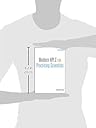
Modern HPLC for Practicing Scientists First Edition
Product ID: 9222232
Buy anything from 5,000+ international stores. One checkout price. No surprise fees. Join 2M+ shoppers on Desertcart.
Desertcart purchases this item on your behalf and handles shipping, customs, and support to Malaysia.
Full description not available
A**R
Good for intro, but if you have any expereince you'll need to go elsewhere
I'll start by saying I think the book is okay for what it is, and that is a primer, more like 'HPLC lite'. To its credit, it does have a brief overview of most any topic, but this amounts to an ocean of knowledge that is one inch deep. I think users will quickly have to move on to more elaborate texts like High Performance Gradient Elution by Dolan and Snyder, or Trace Quantitative Analysis by Mass Spectrometry by Boyd, Basic and Bethem. For instance, there is only one chapter on ADME and pharmaceutical analysis, and that topic alone could easily fill a book. I appreciate that the author is trying to make a general overview, but the topic is so broad and LC is becoming so specialized that it seems like a quixotic quest to try to condense all of that knowledge down into an introductory text. Might be good for new hires in the lab, but I don't see much use for more experienced scientists. On the plus side, the Best Practices sections in the operation guide is a great resource for someone new in the field who needs to know the 'rules' of HPLC.
H**A
Modern HPLC
The book is well organized, with a very practical sense. There is a section dedicated to troubleshooting that is very usefull. Overall, it tries to bring close together the theoretical and the practical aspects of modern HPLC.
B**A
Five Stars
NICE book, easily understandable.
E**N
fun
great product!!!
G**.
Decent Intro and Refresher
I agree with other reviewers. Actually, to clarify, I agree with all parts of the other reviewers comments. This book is handy for those who are new to HPLC or want refreshers. However, this does not add or rather excludes details that maybe more advanced practitioners would like. I use HPLC in my work regularly. I found this book helpful to jog my memory on certain things from College. I also found it to provide a nice overview. However, parts of this were very simplified. It is a good and bad thing.GOOD:* very short* quick read* easy to carry around* easy language* refreshers given on concepts such as theoretical plates and resolution* includes graphicsBAD* written by only one author / not really comprehensive* a few typos found, which were distracting to me* makes certain assumptions that you will have a very basic understanding of HPLC conceptsIn summary, I think this book tries to do something very ambitious but it ends up trying to be too many things for too many people. It would be better for a book of this size to be dedicated to just novices or just intermediates or just be an overview for advanced practitioners. It tries to cater to too many in a short volume. Therefore, it does not satisfy all needs. It could also be better served by having more editing. Perhaps, additional contributors could be able to help strengthen the text.
F**N
MOdern HPLC for Practicing Scientists
HPLC has become one of the most widely applied chemical analytical techniques in the pharmaceutical industry. Dr Dong's book, Modern HPLC for Practicing Scientists, provides excellent source of information and knowledge for both beginners and highly experienced professionals who utilize this analytical tool. Chapter 1 presents an overview of chromatographic principles while the 2nd chapter deals with fundamental aspects of HPLC and considerations that enhance efficient separation. In chapter 3, Dr. Dong discusses the chromatographic column both from theoretical perspectives and applications. This is very valuable to practicing scientists.In Chapter 4, the book provides a concise overview of HPLC instrumentation, operating principles as well as recent advances in instrumentation such as Waters Acquity UPLCTM (Chapter 11). A lot of information is provided on practical issues associated with the use of HPLC systems and the pictures and illustrations make their understanding much easier.Chapter 5 provides a hands-on approach to HPLC analysis including mobile phase preparation and parameter optimization. This is a great chapter for a novel analyst who is often saddled with numerous options on the choice of HPLC parameters. Dr. Dong's attention to details makes it possible even for the novice chromatographer to undertake a full HPLC procedure with little or no supervisionAlthough Chapters 6 and 7 deal with applications in the pharmaceutical, food and environmental industries, the practicing scientist who this text is best suited for, would benefit more by integrating information from these chapters with the fundamental and practical concepts documented in the earlier chapters.The inclusion of method development and regulatory issues with respect to HPLC techniques and applications in chapters 8 and 9 is particularly commendable. Industrial R & D scientists who are not only challenged to develop and optimize methods but also work within the constraints of regulatory agencies would find these chapters immensely rewarding. These chapters provide hands-on guidance for laboratory scientists in the pharmaceutical and other regulatory industries.Chapter 10, dealing with troubleshooting is one of the special attributes of this book. This chapter provides quick fix approach to resolving some of the HPLC's often encountered problems. This chapter is bound to save some cost because more often than not, the HPLC analyst tend to vainly envisage and explore more catastrophic problems ignoring the simple remedies that are succinctly documented in Chapter 10.Overall, Dr. Dong's book is very well written. Each aspect of the text is clearly and succinctly presented, making it easy to understand. The chapter on maintenance and troubleshooting guide (Chapter 11) should be a great asset. Dr. Dong has managed, in a very basic but meticulous manner, to produce an essential text for both the novice and experienced HPLC practitioner in the pharmaceutical industry.
L**S
A User's Guide for All Levels
In this concise and very affordable book, Dr. Dong has compiled the most important concepts for anyone interested in the fundamentals of HPLC. He has also taken great care to provide clear illustrations to bring across these concepts, which, like many images, speak a thousand words. In a world inundated with almost too much information, it is very refreshing to have a text in hand that one can read through, understand, and put to use in a short amount of time. As a former research scientist turned Technical Sales Rep, I appreciate that I can put this book to work for me. Every chromatographer, new or experienced, needs to have this book on their shelf, or better yet, on top of the lab bench.
W**R
A great reference/guide for HPLC practitioners
This is quite a comprehensive treatise on the topic of HPLC. The intended audience is the novice/intermediate and it certainly hit the mark. It is quite apparent that the wealth of recommendations/pointers/guidelines comes from someone very familiar with this topic. This book should be of great help to many aspiring LC chromatographers and should also serve as a valuable reference to those that are already comfortable in this field. - Wilhad M Reuter (PerkinElmer LAS)
Trustpilot
2 weeks ago
1 month ago