
Buy anything from 5,000+ international stores. One checkout price. No surprise fees. Join 2M+ shoppers on Desertcart.
Desertcart purchases this item on your behalf and handles shipping, customs, and support to Malaysia.
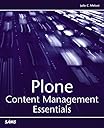
Plone Content Management Essentials is a practical and thorough hands-on guide to using the powerful open-source content website publishing system, Plone. With this book as your guide, you will thoroughly understand how and when to utilize Plone, as well as how to install, configure and maintain a Plone-based website. You'll also be able to download the latest Plone installation from our website so that you can apply what you learn in the book. No prior knowledge of Plone is required to learn from this book, but it will enhance what you takeaway. Review: "Getting started..." kind of a book - I bought this book together with McKay "The Definitive Guide to Plone" and all I can say is that they fit together nicely. In the old days when software was delivered to you in a nice box with accompanying manuals, one of them was hopefully titled as "Getting started...", "Introduction to..." or "Quick guide to...". Julie's "Plone Content Management Essentials" is by all means *that* kind of the book in a 'missing box' for Plone. As a complete Plone (Zope) newbie on my way to migrate some stuff from Movable Type intranet site, I needed quick, concise guide to get the general feeling about Plone features and the level of complexity involved (I already knew that Zope behind the Plone is a "beast" in it's own if compared to simple packages like MT) . With just 200+ pages this book helped me grasp the basic concepts behind the Plone CMS in a way, that I could build my prototype site in a few days. The chapters that I liked the most are chapter "4. Additional Plone Elements" describing Plone add-ons of immediate interest to me (CMFBoard, CMFPhotoAlbum and CMFWeblog) and chapter's 5 and 6 on customizing plone and implementing custom skin. The only objection that I have about the book is Appendix A., imho it's completely useless attempt on introduction to python language (it would make more sense to just publish the links to python online resources). Book is geared towards complete Plone newbie's, even non-techies will not be easily lost, thanks to step-by-step approach and numerous screenshots. Nevertheless, I would strongly recommend that you also consider McKay "The Definitive Guide to Plone" which is in my opinion the most complete book about Plone on the market (but you'll certainly need more than a few days to digest it). Thank you for reading this review! Review: Not recommended, maybe six pages of useful info - This book has maybe six pages of useful info. It tells how to make a custom portlet. Much of what it describes is obvious from looking at the Plone interface. Moreover, I suspect that the author may not know Plone or Zope very well. Save your money. The other Plone books are better.
| Customer Reviews | 3.1 out of 5 stars 8 Reviews |
A**K
"Getting started..." kind of a book
I bought this book together with McKay "The Definitive Guide to Plone" and all I can say is that they fit together nicely. In the old days when software was delivered to you in a nice box with accompanying manuals, one of them was hopefully titled as "Getting started...", "Introduction to..." or "Quick guide to...". Julie's "Plone Content Management Essentials" is by all means *that* kind of the book in a 'missing box' for Plone. As a complete Plone (Zope) newbie on my way to migrate some stuff from Movable Type intranet site, I needed quick, concise guide to get the general feeling about Plone features and the level of complexity involved (I already knew that Zope behind the Plone is a "beast" in it's own if compared to simple packages like MT) . With just 200+ pages this book helped me grasp the basic concepts behind the Plone CMS in a way, that I could build my prototype site in a few days. The chapters that I liked the most are chapter "4. Additional Plone Elements" describing Plone add-ons of immediate interest to me (CMFBoard, CMFPhotoAlbum and CMFWeblog) and chapter's 5 and 6 on customizing plone and implementing custom skin. The only objection that I have about the book is Appendix A., imho it's completely useless attempt on introduction to python language (it would make more sense to just publish the links to python online resources). Book is geared towards complete Plone newbie's, even non-techies will not be easily lost, thanks to step-by-step approach and numerous screenshots. Nevertheless, I would strongly recommend that you also consider McKay "The Definitive Guide to Plone" which is in my opinion the most complete book about Plone on the market (but you'll certainly need more than a few days to digest it). Thank you for reading this review!
M**M
Not recommended, maybe six pages of useful info
This book has maybe six pages of useful info. It tells how to make a custom portlet. Much of what it describes is obvious from looking at the Plone interface. Moreover, I suspect that the author may not know Plone or Zope very well. Save your money. The other Plone books are better.
D**O
good, but outdated and unsupported
If you're looking to buy this book now for use with a modern incarnation of Plone, you may want to rethink your decision and look elsewhere. Aside from being written against Plone 2.0 (Plone is currently at version 2.5.1, with 3.0 looming in a few months), and thereby having some tips and instructions that no longer work as originally intended, the book includes some typographical errors (as do many books), a few of which are horrible and misleading. I've actually done everything from inquiring with the publisher regarding errata (you won't find any on the publisher's site for the book) and writing to volunteer the corrections myself (which went unanswered). The book is an excellent introduction to Plone and quite helpful as a kick-starter, but I would not by any means recommend it for use as a "bible" for what Plone is, can do, and can be customized to do today.
๏ฟฝ**๏ฟฝ
Good introductory book
A good introduction to Plone. But, there are a few typographical errors in code samples that will send you on minor troubleshooting trips. The author also covers some add-ins that cause errors when you try to remove them, again, causing you to do some troubleshooting. Not all bad. A little troubleshooting helps you learn the system.
F**O
Ok for general concepts, outdated for specifics
The book starts out promising, with the first chapter being a very good quick intro to CMS and Plone and the types of things that CMS can do for you. However, once you start getting into the specifics, it quickly become clear that this book is now outdated. Many of the examples are hard to follow because the current version of Plone has different options or features. Also, the examples cover only the "low hanging fruit" - the easiest of tasks, many of which you can figure out on your own just by sitting in front of a browser and navigating Plone using common sense. (Which I ended up having to do, since the examples in the book are outdated.) You won't find the real-world answers you need in this book. Need to authenticate the users based on some authentication you already have, such as LDAP? This isn't the book for you. Only 1 page is dedicated to user and group admin, and that is basically a rehash of what you see on the screen in that admin panel. Want to know how to allow users to publish their own work rather than wait for the admin to approve it? Not in the book, you have to just figure it out by experimenting. This book does have its moments but a large portion of it is easy to learn just by playing with Plone on your own.
L**A
Excellent book for an excellent CMS
This book is extremely readable. Concise and to the point. It gave me only the information I needed to do what I wanted to do. Perfect. All the other documentation I've found on Plone has been mostly geared towards coders and developers. I've found it a headache wading through it all. This book explained how to do exactly what I wanted to do with plone - get my website up and running, with the content I wanted and the look I wanted. A lifesaver, and an end to the headaches.
B**Z
It means well but has typos
The premise of the book is very good. The book gets you up and running on Plone if you're a beginner, and explains concepts and features well. That until you hit one of the many snags. There are several parts where the instructions are missing, vague, or utterly contradictory. It will definitely send you on a "troubleshooting trip" or you might just have to skip the section altogether. Just a warning.
W**E
Make wikis and blogs
A popular open source Content Management System. Meloni suggests here in her book why it has proved so useful. If you read her book and have some familiarity with Microsoft's Office suite, then you can see what Plone offers. The various Microsoft applications, like MSWord, have very rich toolkits. But each application essentially handles single documents. Meloni shows that Plone's remit is at a higher level of organisation. More to do with workflow between several users. Plus, these users need not be in one physical location. Plone lets a group distributed over the Internet work together. Plone can help enable new types of dispersed "multinationals" of just a few people. The book also has merit in showing how to use Plone to construct wikis and blogs. Two topical subjects. And very closely related. So both are described in the same chapter. Daresay that some of you will find this the most useful section of the book.
Trustpilot
2 weeks ago
2 days ago