
DOWNLOAD THE APP


Customer Services
Copyright © 2025 Desertcart Holdings Limited
DOWNLOAD THE APP

desertcart.in - Buy Beyond Good & Evil book online at best prices in India on desertcart.in. Read Beyond Good & Evil book reviews & author details and more at desertcart.in. Free delivery on qualified orders. Review: The cover is incredible - I am happy. The book came sealed. It contains a translation from R.J. Hollingdale Review: Satisfied


| Customer Reviews | 4.5 4.5 out of 5 stars (951) |
| Dimensions | 19.76 x 13 x 1.42 cm |
| Generic Name | BOOKS |
| ISBN-10 | 014044923X |
| ISBN-13 | 978-0140449235 |
| Importer | Penguin Random House India Pvt Ltd |
| Item Weight | 182 g |
| Language | English |
| Net Quantity | 500.00 Grams |
| Packer | Penguin Random House India Pvt Ltd |
| Paperback | 240 pages |
| Publisher | Penguin; Reissue edition (27 February 2003); Penguin Random House Ireland Limited; [email protected] |
A**A
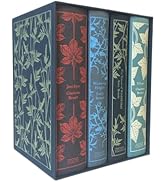
The cover is incredible
I am happy. The book came sealed. It contains a translation from R.J. Hollingdale
A**R
Satisfied
M**R
Life-changing book..
One of the book that one would visit again n again n learn a different thing everytime..
A**R
Four Stars
Simply put it is beautifully expressed criticism.
S**A
Shut the ffff up Nietzsche
He is real, he is rude, he is straight forward. The true nature of human emotions, values, and morality. It's here. I wish the language was easier but then again its all about the feelings.
T**A
it flew right over me🤷♂️🤷♂️🤷♂️
this book helped me realise that i shouldn't think too deep like the author...else hardly neone will undrstand me😂
P**T
Nietzsche at it's best.
A great book for those who are novice to the concept of philosophy. It will broaden your aspect of reality and world. Kudos to amazon for providing such a quick delivery.
R**H
Critical of women
I didn't know he is a misogynist. And the funny thing is that he blames women for everything they have been conditioned to do (or say or behave like, etc.) but he has the same problem with males, as he is critical of almost everything that the male politicians, philosophers, etc. do. So now I am more confused as to the quality of his philosophy, though he does make some excellent observations about human life in general :)
T**N
great
F**Y
Beyond Good and Evil" by Friedrich Nietzsche is a powerful and thought-provoking exploration of morality, truth, and individuality. Nietzsche challenges traditional values and urges readers to question societal norms, embrace intellectual freedom, and create their own values. His poetic and bold writing style, combined with deep insights, makes this a timeless philosophical masterpiece that continues to inspire and provoke thought. A must-read for anyone seeking to break free from conventional thinking!
V**V
Hi, this is more about this particular print of the book. The quality of paper, printing, fonts, and spacing is extremely poor. I highly do not recommend exactly this print. Choose some other publisher.
E**K
Do not read this author’s book. If you want to read philosophy books you should start to read Meditations by Marcus Aurelius , and Epictetus’s books.
P**O
This book is somewhat difficult to rate and describe, no wonder it gets so many polarized reviews. The first thing is the form: it’s literally a collection of paragraphs (296 actually) that range from a couple of lines to two or three pages. In the middle of the book there’s a section of aphorisms and it ends with a poem. The paragraphs are mostly self-contained, with some thematic similarity on each chapter. However, they do not necessarily follow a logical order, and Nietzsche doesn’t seem very fond of clearly stating each argument and counter-argument in a more logical, “mathematical” way us modern readers may have grown accustomed in such texts due the massive influence of Descartes (no wonder, since Nietzsche doesn’t seem to be a big fan of the guy). This structure leads you back and forth throughout the text, as old themes are discussed again and again through a new point of view, but he rarely bothers to summarize or state all the points he tries to reach. The themes are varied and, frankly, I couldn’t understand every meaning that he’s trying to get into. When he hits home he hits hard, however, that would be roughly 50% of the book. 30% of it is somewhat foggy to me. I believe that, aside from the unusual structure of the work, he makes tons of references and allegories when arguing which are lost in the text if you are not familiar with such works (another way to say I should read more broadly, but the book’s notes - Penguin Classics - didn’t offer that much help either). Nietzsche likes to compare things that seem different but, at closer inspection, are not that much. However, aside from the allegories and references, he frequently uses sarcasm and irony, which I understand to be somewhat lost in translation. Finally, the remaining 20% of the book amounts to babbling: he usually makes statements without any argument to back them up in these passages (which seem to contradict his criticism of blind faith on narratives) and in no theme this is more pronounced than when he speaks about women. I refrain from judging works of the past with our current moral views, but his affirmations in these segments are not only misogynist but come out of nowhere, which I speculate may have to do with his failed relationships. The best chapters of the book for me were “On the Natural History of Morals”, where he questions the existence of inherent moral values (and argues that we decide what we want to do and “reason around it); “What is Noble?”, where he discusses at length his concept of “master and slave morality”, of being good versus being weak, the human condition of suffering and that freedom demands responsibility (which may be why some people prefer to defer decisions to others); and “The Religious Nature”, where he questions our faith in narratives, beginning with Christianity but also poking at science and even philosophy itself as ways to cope with reality. The “Maxims Interludes” section, the collection of 123 aphorisms in which he discusses a variety of themes in a more direct form, makes clear his predilection for irony. Here the phrases are more simple and direct, he relies less on references (but no less on allegories) and the text is crammed with meaning. This segment and the last poem (From the High Mountains), which is surprisingly good in getting his message across, serve very well as good summaries to the themes of the books and I would recommend them to be read at the end of it. Despite somewhat mixed views on the book as a whole, his ideas in the segments that “work” are very good, good enough to entice my interest to read more of his works (and maybe those allegories he’s so fond of).
Trustpilot
1 week ago
1 month ago