
DOWNLOAD THE APP


Customer Support

Desert Online General Trading LLC
Warehouse # 7, 4th Street, Umm Ramool, Dubai, 30183, Dubai
DOWNLOAD THE APP
Customer Support
Desert Online General Trading LLC
Warehouse # 7, 4th Street, Umm Ramool, Dubai, 30183, Dubai
Full description not available
R**S
A well written definitive narrative of the Sioux Indian wars
I have read many books about the development of the West and the complicated if not tragic interactions with native American populations. This book is by far the best information you will find about the background of the ongoing conflicts between the different Plains Indian tribes and the U.S. Government. The book is one of a kind because it uses the recently found Red Cloud's autobiography as a primary reference and also includes a mountain of well researched information about all the players involved during the 19th Century Western Indian wars. Very well written and a fascinating read.
L**Y
Red Cloud: Leader, Warrior, Visionary
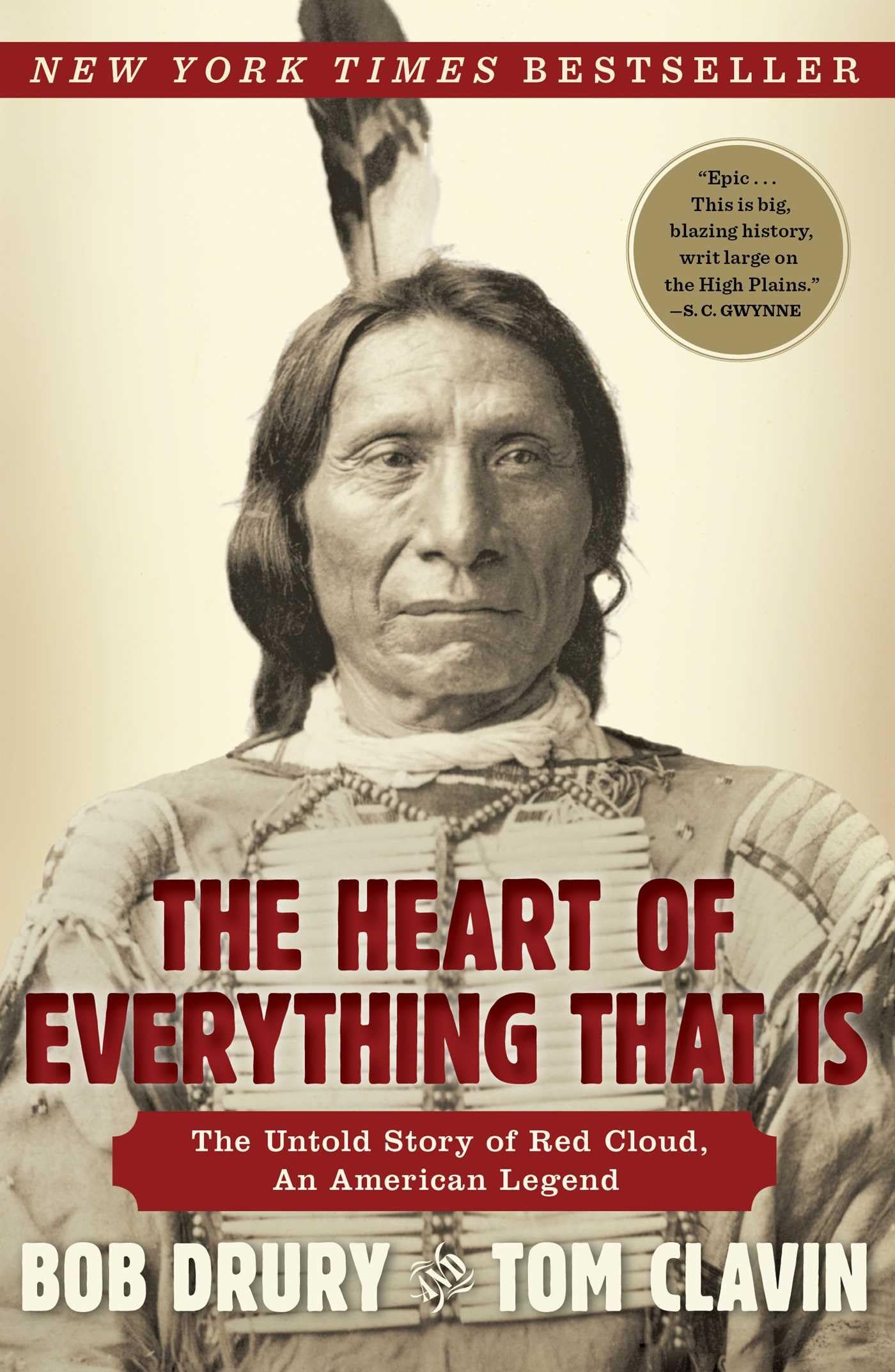
For the nonscholar and curious reader, like me, you’ll find this book fascinating, compelling, informative. “The Heart of Everything That Is: The Untold Story of Red Cloud, An American Legend” does a deep dive into the years when Red Cloud, one of the most famous chiefs of the Plains Indians, rose to unite the Sioux against the instrusive whites, who lied, infiltrated and fought their way west. Many books cover the entire Indian wars, from the South to the North, and West, but this one focuses intensely on Red Cloud’s war, which culminated in the Fetterman Massacre. This is a story often give just a few paragraphs in other books. I honestly knew nothing about all this, so I appreciated the book. Son of an alcoholic, Red Cloud, a Brulé Indian, “taught himself to lead, to suppress his snarl and his personal rage and remain still when he wanted to strike out. He had developed a steely self-discipline, enabled him to become the first warrior chief to transfigure an Indian military culture that had stood for centuries.” He united the splintered Lakota, as well as many other of the Plains Tribes to stand up against the swelling white army. The book focuses on his leadership skills and strategic thinking.By now I’ve read 10-11 books on the subject and can see inconsistencies and biases in some authors’ writings. I agree with many other reviewers that the authors paint a portrait of the Plains Indians as “savages,” a word they love to use, with over-the-top descriptions of torture. Here is a prime example: “The arrival of horse amplified the Stone Age culture of Lakota, extended their savage and relentless subjugation of neighboring tribes.”I did learn a lot; there are so many facts, places, people. The influence of horses and guns on the direction of Sioux history, the various tribes, rituals, all the various trappers, mountain men and generals who played on this scene. Drury and Clavin mention that Crazy Horse always dismounted to fire at the enemy, which everyone agrees on, but I also read it was not with arrows, as the authors say, but with a gun. It gets a little confusing at times when the authors refer to Red Cloud as “the Lakota war chief’s Oglala Head Man,” or “Bad Face warrior chief.” And yes, they actually write that Casper is the state capital of Wyoming!But I did enjoy this book and learned a tremendous amount.
A**N
Well-balanced Narrative
I became interested in this book after reading "Bury My Heart at Wounded Knee" and I'm glad I read this one to further expand my perspective. First, the narrative of this book is nice to follow, gently laying out more and more of the story of Red Cloud as it unfolds, only deviating momentarily to introduce new characters, or give deeper context to something that is about to unfold.Also, the level of detail given about every character and event is definitely satisfying. It doesn't reach the same depth as DW Donald's "Lincoln", but it is more akin to Hillebrand's "Unbroken". At least for me, the are no big questions that are left unanswered with a decent amount of evidence. For further info on this, the reader can skip to the end and read "Notes and Bibliography" which discusses some of the imperfect sources, such as the Red Cloud autobiography, and how they came to light.Lastly, and probably most important, I found this book to be a very balanced take. It doesn't gloss over details on either side, but doesn't put conclusions in your face about how bad or good or heroic some person or thing was. The book leaves to you to decide those things, which I greatly appreciate. For example, none of the details of what the Sioux did to their prisoners or even their own women are left out, but they are presented in a fair light; and at the same time the book gives very clear picture of how idiotic and brutal the US Military was without simply saying "Sand Creek was an example of how depraved the US Military had become". Speaking of Sand Creek, I learned more essential information about that massacre in this book than I did from "Bury My Heart", although the latter provides more of the heart wrenching details. It was interesting to see how Sand Creek fit in with the bigger picture of Red Cloud's War.Overall I came away from this book realizing that neither side of the conflict was free from the stains of innocent blood, as contrasted to "Bury My Heart" which really focuses largely on the atrocities of the US Military and doesn't leave you feeling anything besides anger towards that party (obviously different book, not saying it takes the wrong stance, I highly recommend that one as well). But fair warning, this is not a G-rated book, there are very gruesome descriptions (such as what happened on Lodge Trail Ridge, or what certain US soldiers did to women's corpses, and so on). I wouldn't want my 11 year old son reading some of this stuff.
Trustpilot
2 weeks ago
1 week ago