Buy anything from 5,000+ international stores. One checkout price. No surprise fees. Join 2M+ shoppers on Desertcart.
Desertcart purchases this item on your behalf and handles shipping, customs, and support to Malaysia.
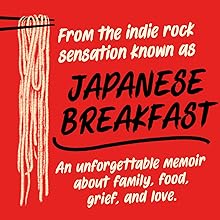
#1 NEW YORK TIMES BESTSELLER • From the indie rock sensation known as Japanese Breakfast, an unforgettable memoir about family, food, grief, love, and growing up Korean American—“in losing her mother and cooking to bring her back to life, Zauner became herself” (NPR). • CELEBRATING OVER ONE YEAR ON THE NEW YORK TIMES BESTSELLER LIST In this exquisite story of family, food, grief, and endurance, Michelle Zauner proves herself far more than a dazzling singer, songwriter, and guitarist. With humor and heart, she tells of growing up one of the few Asian American kids at her school in Eugene, Oregon; of struggling with her mother's particular, high expectations of her; of a painful adolescence; of treasured months spent in her grandmother's tiny apartment in Seoul, where she and her mother would bond, late at night, over heaping plates of food. As she grew up, moving to the East Coast for college, finding work in the restaurant industry, and performing gigs with her fledgling band--and meeting the man who would become her husband--her Koreanness began to feel ever more distant, even as she found the life she wanted to live. It was her mother's diagnosis of terminal cancer, when Michelle was twenty-five, that forced a reckoning with her identity and brought her to reclaim the gifts of taste, language, and history her mother had given her. Vivacious and plainspoken, lyrical and honest, Zauner's voice is as radiantly alive on the page as it is onstage. Rich with intimate anecdotes that will resonate widely, and complete with family photos, Crying in H Mart is a book to cherish, share, and reread. Review: Honesty, Grief, and Kimchi: Reviewing Crying in H Mart - Crying in H Mart is a beautifully written memoir that left a deep impression on me. I truly appreciated Michelle Zauner’s raw honesty throughout the book. It’s clear she isn’t trying to hold back or hide the pain she experienced while watching her mother go through an excruciating battle with illness. As she cares for her mom, Michelle also struggles to fill the void left in their household—especially in the kitchen—by trying to recreate the dishes that once brought them together. I admire Michelle’s strength and resilience in finding her own way through such a difficult time. She quickly realized that traditional therapy wasn’t helping and was instead becoming a financial burden. In a powerful turn, she redirected her energy into something positive: starting a YouTube channel where she began experimenting with cooking Korean food. It became not only a creative outlet but also a meaningful way to stay connected to her heritage and her mother. I lost my grandmother when I was 17 years old. She raised me from the time I was eight months old and passed away from blood cancer at the age of 62. Reading this memoir, I could deeply relate to the pain of losing a loved one. But more than that, it was inspiring to see how Michelle found a constructive and heartfelt way to cope with her grief. This book is a moving reminder that even in our most painful moments, we can find positive ways to heal and honor those we’ve lost. Review: Great memoir with cultural elements and centered on food - This had been on my list for a while, and it became available as a skip-the-line copy at my library, so I grabbed it. I wasn’t really sure what it was about, just that it was a memoir of some kind. Once actually reading the “about” of the book, it hit closer to home, as my sister-in-law, Tiffany, is also Korean and recently lost her mom to cancer. This book touches a lot on the cultural differences, food differences, and is raw and emotional. I learned about many of these foods and funeral arrangements from my sister in law, so I was familiar with what happens after a matriarch passes away. The difference with my sister in law, she knew how to make much of the foods that were in this book, as her mom taught her before she got sick. Her mother always made extra food on their holidays, so Tiffany could bring it so we could try it, which I love! I love learning about different cultures and their customs and food. In the book, Michelle talks about how being a 1st generation immigrant, she felt less connected to her Korean side. Mainly the areas she lived in didn’t have large Korean populations, she only really got to explore her Korean side with her parents or her aunts and cousins in Korea when she visited. I feel like this is normal for 1st generation immigrants, and as they become more Americanized, the more they lose those connections back to their culture. But in Michelle’s case, she really did want to reconnect with her Korean side, and learn to make Korean dishes, etc. I loved how raw this memoir was, how she started to explore her Korean heritage as her mother was dying and even after when she could afford to go back, see where her mom grew up, visit her aunts and uncles, etc. The main thing I gained from reading this is to learn about your culture and your heritage before it’s too late. I’ve been thinking about starting back up on my genealogy now after reading this book. Learn what you can now before your parents or grandparents aren’t here anymore.


| Best Sellers Rank | #2,268 in Books ( See Top 100 in Books ) #1 in Asian & Asian American Biographies #3 in Grief & Bereavement #7 in Culinary Biographies & Memoirs |
| Customer Reviews | 4.4 4.4 out of 5 stars (30,635) |
| Dimensions | 7.94 x 5.2 x 0.76 inches |
| Edition | Reprint |
| ISBN-10 | 1984898957 |
| ISBN-13 | 978-1984898951 |
| Item Weight | 12.6 ounces |
| Language | English |
| Print length | 256 pages |
| Publication date | March 28, 2023 |
| Publisher | Vintage |
A**B
Honesty, Grief, and Kimchi: Reviewing Crying in H Mart
Crying in H Mart is a beautifully written memoir that left a deep impression on me. I truly appreciated Michelle Zauner’s raw honesty throughout the book. It’s clear she isn’t trying to hold back or hide the pain she experienced while watching her mother go through an excruciating battle with illness. As she cares for her mom, Michelle also struggles to fill the void left in their household—especially in the kitchen—by trying to recreate the dishes that once brought them together. I admire Michelle’s strength and resilience in finding her own way through such a difficult time. She quickly realized that traditional therapy wasn’t helping and was instead becoming a financial burden. In a powerful turn, she redirected her energy into something positive: starting a YouTube channel where she began experimenting with cooking Korean food. It became not only a creative outlet but also a meaningful way to stay connected to her heritage and her mother. I lost my grandmother when I was 17 years old. She raised me from the time I was eight months old and passed away from blood cancer at the age of 62. Reading this memoir, I could deeply relate to the pain of losing a loved one. But more than that, it was inspiring to see how Michelle found a constructive and heartfelt way to cope with her grief. This book is a moving reminder that even in our most painful moments, we can find positive ways to heal and honor those we’ve lost.
M**X
Great memoir with cultural elements and centered on food
This had been on my list for a while, and it became available as a skip-the-line copy at my library, so I grabbed it. I wasn’t really sure what it was about, just that it was a memoir of some kind. Once actually reading the “about” of the book, it hit closer to home, as my sister-in-law, Tiffany, is also Korean and recently lost her mom to cancer. This book touches a lot on the cultural differences, food differences, and is raw and emotional. I learned about many of these foods and funeral arrangements from my sister in law, so I was familiar with what happens after a matriarch passes away. The difference with my sister in law, she knew how to make much of the foods that were in this book, as her mom taught her before she got sick. Her mother always made extra food on their holidays, so Tiffany could bring it so we could try it, which I love! I love learning about different cultures and their customs and food. In the book, Michelle talks about how being a 1st generation immigrant, she felt less connected to her Korean side. Mainly the areas she lived in didn’t have large Korean populations, she only really got to explore her Korean side with her parents or her aunts and cousins in Korea when she visited. I feel like this is normal for 1st generation immigrants, and as they become more Americanized, the more they lose those connections back to their culture. But in Michelle’s case, she really did want to reconnect with her Korean side, and learn to make Korean dishes, etc. I loved how raw this memoir was, how she started to explore her Korean heritage as her mother was dying and even after when she could afford to go back, see where her mom grew up, visit her aunts and uncles, etc. The main thing I gained from reading this is to learn about your culture and your heritage before it’s too late. I’ve been thinking about starting back up on my genealogy now after reading this book. Learn what you can now before your parents or grandparents aren’t here anymore.
B**E
Warning: Do not read while hungry!
If you aren’t hungry when you pick up this book, you soon will be. Zauner describes Korean food with the passion of a zealot! I’ve never heard of most of the dishes she described in lush and mouthwatering detail but now I want to find the nearest Korean restaurant and dive in. I want to try all the different flavors of kimchi! I loved so many things about this book, truly. I think I read it too fast and I already want a re-read. I lost my own mom to cancer at 22, such a tender age when you are just getting past all the teenage moodiness and resentment towards your mother and begin finding yourself in her and building a relationship again. Michelle’s deep love for her mom and how she waded through the months of watching her mother fade and deteriorate struck a deep chord in me. It was hard to read but powerful and vital. I loved how vulnerable and honest this memoir was. It wasn’t preachy or given to justifying or explaining death. Michelle just told the story with straightforward and direct words that highlighted the realness of her experience and mostly lets you do your own interpreting of what it all means. I do love one section in particular where she goes all little off that script and gives some food for thought when she intertwines the relationship between kimchi and death, describing how cabbage could rot into nothing but with the right ingredients, the rotting process turns into a delicious dish that is integral to Korean culture. She chose to find the beauty in her mother’s death and instead of letting it rot, instead become a source of healing and sustenance. Overall this is a remarkable book about a very human experience that many will face in some form or another when they lose someone vital to their life. Michelle told her story with raw candor and the added depth of her mixed heritage and love of Korean food that bound her to her mother was so compelling that I read the whole book in a day! This is a great book to explore death, culture, food and the power of the mother-daughter relationship.
M**E
This book… was magic
A pure magic memoir that spoke about mother/daughter relationships, working through grief and our relationships with the dying (while they are still alive) as well as touching layers of searching for your own cultural identity and what you have to offer the world. Saw this book on Tik tok a few months ago, and so so happy I snagged it when I did. I studied religious studies in college as one of my programs, and wrote my thesis on death and dying and the battle with grief. This was such a special book to read and it truly makes you feel close to the author, her family and her band. (Listen to Japanese Breakfast by the way- I’m obsessed with that, too!). Also growing up in the Bay Area, I witnessed a lot of friends and their family traditions honoring their Asian cultures. This book reminded me of things I had forgotten during my years away for college, and also taught me so many new things that I can’t wait to observe and pay better attention to. Overall, a masterpiece and truly one of a kind. Michelle is thoughtful, funny and informative while being ever so vulnerable with her readers. I have already passed this book on to friends and can’t wait to hear what they think about it!
B**Y
One Woman's Search for Identity
Growing up as one of the few kids who is different from everyone else can be difficult. It can be tough to fit in, and it can be a challenge for parents of such children to reign- in their child’s tendency to possibly become rebellious. Indie rock star Michelle Zauner knows what this feeling is like and it forms the basis of her memoir, Crying in H Mart. What you get with this book is a memoir about a Korean American girl, growing up in Eugene, Oregon and trying to find her identity. The author struggles at times to communicate with her parents and extended family, while taking comfort in things that she and her Korean relatives can relate to, like food. In fact, this book is very much about food, with references to baking and creating familiar Korean food dishes found throughout the read. The other important part of the book is the relationship the author had with her mother and how it developed from childhood through young adulthood. There were difficult times of understanding during her youth, which is common among most children. But the real test came later, when Zauner’s mother was diagnosed with cancer and had little time to live. Her attempts to reconcile with her mom, take care of her and provide comfort, all the way to her final days form a large portion of the book and the grief she feels following her mom’s death lingers on, from chapter to chapter. It's always fun to read books like this, detailing a celebrity’s roots and what they overcame during their younger days. But there are aspects of Crying in H Mart that I found a little off- putting and difficult to relate to. For one, the overwhelming feeling of grief and the time it took for the author to get over this grief was exhausting. I also lost my mom to cancer, but the grieving period didn’t drag on for this long. It could be a cultural difference, I suppose. Also, as much as I love to eat, the emphasis on food as comfort was a little over the top. Another disappointment that I had with the book is that there is very little mention or talk about the author’s band, Japanese Breakfast. I would have liked to know more about the forming of the band and its success. Instead, it is only mentioned sporadically, almost like it’s an unimportant side hustle. Maybe a sequel is in the works, one that focuses on the author’s success with her band. Life can be difficult when you stand out in the crowd. Crying in H Mart is a book about identity and coping; family relationships; food; and grief. It’s a good book overall, but not as compelling as I had hoped, as I was unable to relate to much of it. Still, it’s worth a read, especially if you’re someone who has had to cope with a similar upbringing.
R**S
Found in Translation
Philip Roth opens his memoir Patrimony: A True Story with a long and detailed description of his father's health that sets the stage for what is about to come: "My father had lost most of the sight in his right eye by the time he'd reached eighty-six, but otherwise he seemed in phenomenal health for a man of his age when he came down with what the Florida doctor diagnosed, incorrectly, as Bell's palsy, a viral infection that causes paralysis, usually temporary, to one side of the face." Michelle Zauner does the same, but in a much more concise way: "Ever since my mom died, I cry in H Mart." They are different, but they are the same: they are sparked by pain and suffering, they pay their respects to the ones who have gone and are missed, and they intensely connect with their roots, Jewish and Korean, respectively. And through them, Philip Roth and Michelle Zauner strive to heal their pain, using writing as therapy, no matter how different their success in that endeavor may have been. Michelle Zauner's writing may not be as ornamented as Philip Roth's, but her book is a treat all the same. Crying in H Mart is like listening to a candid confession from a close friend late at night, when everybody else has already left and you stay with her, a glass of wine and many stories. It is intimate, sincere, funny and sad, bittersweet, generously emotional. At the same time, it is also a gastronomic trip: Michelle meticulously uses traditional Korean food to connect and reconnect with her mother and her mother's relatives in Korea, and some descriptions of dishes, ingredients and dish preparations are as detailed as in a recipe book with mouth-watering pictures. There is even an almost literal transcription of one of Maangchi's tutorial videos, specifically the one where she prepares soothing jatjuk. By doing that, I think Michelle also tried to find roots in Asian references: take the Studio Ghibli movies with their beautiful scenes of food preparation, the importance of food in Haruki Murakami's novels or Bong Joon-Ho's movies. From my part, I am now a Maangchi fan. The text is extremely fluid, moving from the main plot involving Michelle's mother to flashbacks of her childhood and adolescence in a very logical and well-connected way. Up to mid-book (when the main plot sort of resolves itself), the text is so thought-of that it even sounds excessively edited--it is like a perfectly engineered, scientifically-paced Hollywood story: there is the punchline at the end of each chapter making reference to an idea cited before and causing a shiver to run up your spine, there's the perfect pacing from funny and comfy moments to describing delicious Korean food and then back to dramatic scenes, there is suspense and plot twists, all smooth and seamless. The last half of the book loses some of its stamina (except for a poignant scene at her parents-in-law's house in Bucks County, all Cinema Paradiso-like), but it is still charming, lyrical and beautiful. Philip Roth concludes his memoir concisely and in a rather bitter tone, with a short and dry sentence: "You must not forget anything." Michele grants us with a fluid, energetic and dreamlike last scene in a karaoke (noraebang), whose atmosphere made me think of Bill Murray and Scarlett Johanson in the karaoke scene in Lost in Translation, a strange simultaneous state of happiness and sadness. Indeed, this book is a testimony of Michelle's own "finding herself in translation", a funny feeling of being awkwardly out of context but even so pertaining, which is why this book seems to have resonated so much with many mixed-race children. Michelle trying her best to sing along Pearl Sister's Coffee Hanjan with her aunt Nami is indeed a beautiful image to conclude and summarize her search for her own identity by not denying but strengthening her Korean roots.
N**I
An Essential and Relevant Memoir
I generally do not read non-fiction because my primary purpose for reading is escapism. I want to go places and meet people that are far removed from my reality- where I know there will always be a happy ending. So, when a trusted friend suggested Crying in H Mart, I put it on my TBR without reading the synopsis or any reviews. I needed a non-fiction book to to earn a badge for my Prime Reading Spring Challenge, so I decided that this book would check that particular box. I had absolutely no idea just how much I needed to read this emotionally raw and poignant memoir. I have no knowledge of what growing up half-asian child in America feels like. But, as a black child of emigrant parents, I can identify with the disenfranchisement and the longing to fit in which Michelle Zauner so eloquently describes in this novel. As a daughter of a Mother who was brutally honest and lovingly hypercritical, I understood this writer's point of view. As a child whose mother's love language was cooking and serving food to feed as well as heal the soul, I loved experiencing the gastronomic journey Michelle and Chongmi traveled. As an woman who has lost her mother to the beast that is cancer, I appreciated the way that this author laid her most brutally painful feelings and memories bare for us, more than Ms. Zauner will ever know. I found myself reading this book and crying in the booth at Starbucks, overwhelmed with emotions that were latent and unresolved in the almost four years since my mother's death. I felt seen and understood for the first time in so many ways. Michelle Zauner writes with blatant honesty, humor, and humility. Her prose is so lyrical that I found myself flipping back to the cover in oder to make sure I was indeed reading a memoir. Her words are all necessary and cathartic for those who have ever served as care-givers for a treminally ill person. Any one who has had their family dynamic devastated by an unexpected malignant medical diagnosis will appeciate the care and detail that is used by this writer to describe the complete eviscerated that occurs when a loved one succumbs to the ir battle with a terminal disease. Crying in H Mart is a testimony that life and love do not end with the loss of a loved one. It is a true life reminder that the transformative power of love exceeds the human capacity to demonstrate it in mortal ways. I will recommend this book to others because its relevance transcends time and any other parameters influenced when a loved one physically leaves us to live life without them.
G**A
I can't listen to some of her songs without a lump in my throat and tear in my eye...
I was a casual fan of Michelle and Japanese Breakfast a few years back then when her newest album came out, For Melancholy Brunettes (& Sad Women), I was hooked and went back and listened to her earlier work and found more of an appreciation for her talent. When searching for more information about her and the band I found out she wrote this book. I'm not a reader, I may have read five books in my lifetime and the first three chapters of ten other books and I'm 62, but I thought I'd give this a shot. I was hooked from the first sentence of "Every since my mom died, I cry in H Mart". Don't worry I'm not giving anything away. It turns out me and Michelle have something in common when it comes to our mother. Very different, yet similar. Both of us cared for our mother while they suffered from a horrible disease. This book is so well written and so personal and so honest about the people in her life. It speaks of her rebellious childhood and lack of appreciation of her mother and through heartache and pain how she realized how much her mother meant to her and made her who she is toady. It talks about her Korean heritage and the fear of losing it with an American father and Korean mothing living in of all places, Oregon. It didn't overly touch on her music career but mostly about dealing with her and her mother's struggle with cancer. At the end of every chapter I had grab a tissue. I don't want to say too much but now going back and hearing her early work with Japanese breakfast, I can't listen to some of her songs without a lump in my throat and tear in my eye since a bunch of those songs are about her mother. I guess this book was going to be made into a movie but COVID hit and it was shelved. I really hope they reconsider. She's also writing another book about learning the Korean language. She states in this book that she understands some Korean but she wants to be fluent in it. I'm looking forward to it and I hope someday she writes a book about her and the band. If you can keep me interested past the third chapter of a book, that's better than a recommendation from The New York Times Best Seller List .
D**O
Top
Top d+
R**L
Finding love and navigating loss through the discovery of oneself
An emotional memoir that shows how we view food and culture as a point where we can meet our loved ones. This book takes us on a poignant journey of discovery, guilt, sadness, love, devotion, sacrifice and the raw memories that stay with us for a long time even after losing our loved ones. A must read for those who want to understand the nuances of relationship and how different generations show their love each other. Bonus- Those who are familiar with Korean culture, music and food, this book will open deeper meaning to all that you've known.
J**A
Korean culture is everywhere.
Anybody who is close to an Asian immigrant or is second-gen should read this book. Heartbreaking. Mandatory education.
A**M
Disappointed
The book wasn't in the best condition
V**A
Lindo
Llego en gran estado, graaaan libro y aún más bonita su presentación
Trustpilot
3 weeks ago
2 weeks ago