![Zulu Dawn [DVD]](https://m.media-amazon.com/images/I/91LecT3E1CS._AC_SL3840_.jpg)
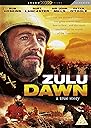
Zulu Dawn [DVD]
Product ID: 49020477
Details
- FormatPAL
- ContributorAnthony Storey
- LanguageEnglish
- Runtime1 hour and 53
- ColourColour
Desertcart purchases this item on your behalf and handles shipping, customs, and support to Malaysia.
The story of the 1879 battle of Isandlhwana, one of the worst defeats in British colonial history, 'Zulu Dawn' describes the diplomatic errors and ill-advised military decisions which led to a confrontation between 1,500 British soldiers and a 25,000 strong Zulu army. A prequel to the 1963 classic (and schoolboy's favourite) 'Zulu', the emphasis is again placed upon huge, awe-inspiring battle scenes and the brave stand the soldiers take against unsurmountable odds. Review: Historical accuracy - Outstanding cinema Review: A stunning prequel to Zulu - Zulu with Stanley Baker and Michael Caine is one of my favourite films, and I think some make the mistake of judging Zulu Dawn against Zulu. Though they are about the battles with the Zulu on the same day, they should not be judged against the other, but used as companion pieces. Zulu was the story of a small band on British Soldiers, barely 100, who held out against over 4000 Zulu warriors. It is a more personal film, looking at the triumph for Chard and Bromhead against such odds. At the start of Zulu, you see the Zulu walking through the British dead. That is the aftermath of Zulu Dawn. Zulu Dawn is much less person, more sweeping in statement and scope. Cy Enfield co-wrote Zulu Dawn with Anthony Story, some 15 years after Zulu,(Enfield half of the Baker-Enfield team that produced ZULU - and interesting to note Anthony Story was the biographer of Stanley Baker), depict the British Colonialism 'Little England' policy and arrogance that contributed to the downfall of the British troops left on the face of Ishlandlwana in January 1879, the greatest defeat of a modern army by natives. Chelmsford, played perfectly by Peter O'Toole, made the first mistake: divided his forces in the face of the enemy, especially when he had no idea where the enemy was. Secondly, the same arrogance left them to camp nearly 1500 and native levees on the open slope of Isandhlwana without forming any sort of defencive works for protection, despite warnings. They ignored Boer sightings of Zulu in the Valley just beyond, because Chelmsford had it set in his mind they were at Ulundi. The stupid rationing of bullets, the way the quartermaster passed them out, saw the unprotected Brits left without any means of defending themselves. Zulu Dawn is more depressing, because it shows the whole loss of life was so futile, but the film is a beautiful tribute to the soldier of Queen Victoria's Wars, warts, arrogance, stiff upperlip, valour and all. Utterly mesmerising, deeply moving.
| Contributor | Anthony Storey, Bob Hoskins, Burt Lancaster, Cy Endfield, Denholm Elliott, Douglas Hickox, Freddie Jones, James Faulkner, John Mills, Michael Jayston, Nate Kohn, Nigel Davenport, Peter O'Toole, Peter Vaughan, Ronald Lacey, Simon Ward Contributor Anthony Storey, Bob Hoskins, Burt Lancaster, Cy Endfield, Denholm Elliott, Douglas Hickox, Freddie Jones, James Faulkner, John Mills, Michael Jayston, Nate Kohn, Nigel Davenport, Peter O'Toole, Peter Vaughan, Ronald Lacey, Simon Ward See more |
| Customer Reviews | 4.4 out of 5 stars 1,663 Reviews |
| Format | PAL |
| Global Trade Identification Number | 05027035005379 |
| Language | English |
| Manufacturer | Arrow Video |
| Number of discs | 1 |
| Runtime | 1 hour and 53 minutes |
P**Y
Historical accuracy
Outstanding cinema
D**Y
A stunning prequel to Zulu
Zulu with Stanley Baker and Michael Caine is one of my favourite films, and I think some make the mistake of judging Zulu Dawn against Zulu. Though they are about the battles with the Zulu on the same day, they should not be judged against the other, but used as companion pieces. Zulu was the story of a small band on British Soldiers, barely 100, who held out against over 4000 Zulu warriors. It is a more personal film, looking at the triumph for Chard and Bromhead against such odds. At the start of Zulu, you see the Zulu walking through the British dead. That is the aftermath of Zulu Dawn. Zulu Dawn is much less person, more sweeping in statement and scope. Cy Enfield co-wrote Zulu Dawn with Anthony Story, some 15 years after Zulu,(Enfield half of the Baker-Enfield team that produced ZULU - and interesting to note Anthony Story was the biographer of Stanley Baker), depict the British Colonialism 'Little England' policy and arrogance that contributed to the downfall of the British troops left on the face of Ishlandlwana in January 1879, the greatest defeat of a modern army by natives. Chelmsford, played perfectly by Peter O'Toole, made the first mistake: divided his forces in the face of the enemy, especially when he had no idea where the enemy was. Secondly, the same arrogance left them to camp nearly 1500 and native levees on the open slope of Isandhlwana without forming any sort of defencive works for protection, despite warnings. They ignored Boer sightings of Zulu in the Valley just beyond, because Chelmsford had it set in his mind they were at Ulundi. The stupid rationing of bullets, the way the quartermaster passed them out, saw the unprotected Brits left without any means of defending themselves. Zulu Dawn is more depressing, because it shows the whole loss of life was so futile, but the film is a beautiful tribute to the soldier of Queen Victoria's Wars, warts, arrogance, stiff upperlip, valour and all. Utterly mesmerising, deeply moving.
P**N
Zulus, fousands of 'em
1979's Zulu Dawn depicts the battle of Islandlwana, a major defeat of a modern British army by Zulus under King Cetshwayo whose troops were armed with shields and spears. The late 1960's and 1970's was the absolute worst time for historical film-making exemplified by the likes of, Anzio [1968], The Charge of the Light Brigade [1969], Little Big Man [1970], The Life and Times of Judge Roy Bean [1972], Buffalo Bill and the Indians [1976] and A Bridge Too Far [1977]. Revisionist history and a cynical eye was 'in' so you'll get a character like a newspaper man - in this case, Ronald Lacey - sneering at the idea of Empire and taking the side of the enemy. Believe it or not, the Empire was quite a popular thing. A liberal of the 1970's BBC plonked straight into a film depicting the 1870's. It's difficult to be revisionist about Islandlwana because it was an unmitigated disaster unless you're saying that the British lured the Zulu's into sacrificing all their best men. That clever Lord Chelmsford. There is some more recent history depicted here i.e. the Zulus deliberately luring away Chelmsford's main force in order to attack the weakened camp. Whether you believe that or not is up to you. We'd better start with what's good - the intrigues of Bartle Frere [John Mills], the somewhat chaotic invasion of Zululand, the great folds of earth in front of them, the grassland and the dongas - dry gullies - typical of Zululand, the supply wagons drawn by teams of oxen, the brooding and foreboding majesty of Islandlwana mountain, the skirmishes with Zulu scouts, the British idea of sport or adventure, the discovery of the main Zulu impi and its instant attack, the speed of the Zulu warriors, the overrunning of the rocket battery, the guns turning over, the odd gun in the hands of the Zulus, Durnford's [Burt Lancaster] stand on the river bank, Pulleine [Denholm Elliot] moving the guns to support Durnford, the quartermasters only giving ammunition to their own men, the collapse of the firing line, Melville and Coghill's attempted rescue of the colours and the Zulus carting off the captured guns to Ulundi [during the final credits]. Props too, that the film portrays the settler irregulars, the native irregulars and the native foot-soldiers with their traditional weapons and a red band around their heads. Now what's bad. The aged, Burt Lancaster. He is really terrible with his corny Oirish brogue and any one of the supporting actors - Davenport, Pickup, Jayston - would have done a better job. Durnford would've had a cut glass English accent, not sound like he was from a Dublin council estate. The rest of the cast are fine, even O'Toole. The direction by Douglas Hickox is workmanlike. The film has such a great British cast and yet, most are only in it for a few minutes and Davenport is utterly wasted in this. Next, the inaccuracies: Durnford's men held the Zulus for a while in the river bed but in the film they evacuate it virtually straight away, the firing line would've been even further out and apart than depicted in the film and each company would've stretched out over several hundred yards and they would've been in whatever position they were comfortable in e.g. standing, kneeling or lying down. They were not in a front rank, rear rank formation. If you're being really picky, the cannons are wrong and the rifles are more like carbines but you'd have to be a military historian to notice. One of the two battalions [1/24] had been fighting the Xhosa for a few years and their uniforms would have been faded and constantly repaired not look like they'd come straight off a sewing machine. Veterans also dyed their helmets with tea because bright white helmets made tempting targets for the few Zulu sharpshooters. Lastly, the idea of a 'final sol ution' for the Zulus as spouted by Mills as Bartle Frere is crass in the extreme. There was never any intention of gen ociding the Zulu. The aim was the reduction of Zulu military power and the bringing of Zululand into a South African Confederation. Like all films purporting to be historical, Zulu Dawn has its exaggerations, conflations and inexactitudes [usually for dramatic purposes]. It's not as bad as Cromwell [1970] though and it does give you the gist of the battle, the logistics, the machinations, the arrogance, the over-confidence and the incompetence of what happened that day. It'll never be as good as Zulu [1964] and one feels that if Cy Endfield hadn't died a year or so earlier, he would've made a better job of it than Hickox. Nevertheless, it's a decent watch. Look out for Simon Ward's horse doing a poo. I'd have done one if I'd seen that many Zulus armed to the teeth. The Arrow Academy DVD is in widescreen, not the 4:3 stated on the back of the box. The sound is quite low. Trailer. No English subtitles.
J**N
By far the best version that I've seen
I feel I must redress a few negative reviews that I've seen regarding this movie. I received this two days ago. I've seen it a number of times before on TV and DVD but never in this quality. Firstly, the picture size is full cinematic mode, in the 'letterbox' format with significant black areas above and below the intended image on a widescreen TV. Any modern tele could reduce or remove the black areas but who would want to do that? The image quality is about as good as is it can possibly be for HDTV, especially when one considers that it's an 'oldish' film. It looks pristine to me. The soundtrack is good, clean and clear. I don't have a fancy (probably considered 'old hat' these days) 5.1 surround sound or better, just a nice tele with its native speakers. Just for Info, according to the DVD cover:- This is from "Arrow Films" 2009. The aspect ratio is described as 4:3. IT IS NOT on my copy. As already described by me it is full cinematic. I expected to be disappointed by this purchase but wanted it on DVD so bought anyway due to the price. I am surprisingly satisfied that it's so good. Will be watching it in irresistible tandem with its pre-sequel (??) "Zulu". If you buy this, I hope it's of the same quality as mine. Happy viewing all.
S**T
Zulu Dawn
Good classic film. Well worth watching.
C**G
Not a bad little movie
The only reason for buying this (and also the DVD of "Zulu") was because I am going on a visit to the battlefields of Kwazulu Natal and I wanted a little help understanding the history and was told these films would be of interest as a part of my research. Whilst the movies are very old fashioned in the way they are filmed they nevertheless do tell the story in an interesting way and I did find them to be useful in developing my understanding of the time when used alongside the context of genuine history accounts. Although this was the second movie to be made you should watch this one prior to viewing "Zulu" as this film is about the first battle to be fought.
T**.
Import dvd
This blue ray dvd was not that great the picture was ok but the sound was terrible and out of sink with the characters when saying there lines or part in the film, it felt like you were two steps behind if you were a actor in this movie or scene.
M**T
A good companion film to the original Zulu film, although this one stands alone
**THIS MAY CONTAIN SPOILERS** In 1879, the British Colonies, in response to the perceived threat of the Zulu nation, deliver a deliberately unacceptable ultimatum to the King who responds by putting his people on a war footing. Confident in their weapons technology and organisational ability to crush the seemingly outclassed primitive enemy, the British invade Zululand. General Lord Chelmsford sends in hundreds of British troops in order to squash the spear-carrying Africans with superior fire power. The sheer number of Zulus, however, overwhelms the British infantry. Featuring an all-star cast in Peter O'Toole, Burt Lancaster, Denholm Elliott and Sir John Mills, the film was originally intended as a companion piece to the 1964 classic Zulu. However, this tense drama stands alone as one of the finest historical action movies ever made, accurately re-telling the military disaster of the British invasion of Zululand. Zulu Dawn is a prequel (not a sequel) to Zulu, released in 1964, which depicts the historical Battle of Rorke's Drift later the same day, and was written and co-directed by Cy Endfield. Despite having a large budget and being designed to complement the hugely successful film Zulu, Zulu Dawn was not well received and did not fare particularly well at the box office. When watching this film, after it finished I noticed that at the end of the closing credits the copyright details were amended so that it read "Copyright 2004" instead of the original "Copyright 1979". I'm not sure why that was done but I'm guessing that the film might have been remastered that year, although I could be wrong about that. I did like this film and I would watch it again, but I did very slightly prefer the original Zulu film with Michael Caine for some reason, perhaps as Zulu Dawn is a prequel maybe I should have watched that before Zulu. Very often prequels and sequels don't always work, but this prequel is pretty good too. Highly recommended.
S**E
Fascinating look back through time
Zulu Dawn tells the story of the British invasion of the Zulu kingdom in 1879, and the battle of Isandlwana. It was filmed in 1979, so take that into consideration concerning the quality of the movie compared to what people expect in the 2020s. I don't want to dive into the plot. I figure that if you are looking at buying this movie, you know what happened at Isandlwana. The film itself highlights the utter stupidity of the British at that moment in time, and how they stirred up a wasp nest. It does an extremely good job of capturing the terror and confusion that the British soldiers must have felt when the Zulu Army appeared. The acting is ace, and the script is fast moving. If you are interesting in military history, then this movie is for you. Watch it, and then watch Zulu (Rorke's Drift).
W**F
Great Movie and Great Product
Was not Packed very well
D**Y
excellent example of Military arrogance
First off DO NOT compare this to the Stanley-Baker 1964 epic. This is different kettle of fish entirely. I made that the mistake the first time I watched it and I came away dissatisfied. If you are familiar with Zulu, you go in with preconceived expectations. The comparison off the bat can make you prejudice against a fine work. Cy Endfield co-wrote the epic prequel Zulu Dawn 15 years after his enormously popular Zulu. It was intended to be a trio of films - with a third movie Ulundi to round out what Cy had to say about British imperialism - the "Little England" mentality. From point one the contracts are seen. In Zulu you have a small pocket of a few over 100 Brits holding out against 4,400 Zulu - fresh from Islandlwana (the story told in Zulu Dawn). This is a story of courage, will and determination. Is a positive movie. Zulu dawn on the other hand is a heart-rendering movie. Nearly 1400 soldiers and native levies were slaughter in a a matter of hours by over 10,000 Zulus. Why because of Brit arrogance. Lord Chelmsford (Victoria's cousin by the way - which may be why he wasn't punished for this fiasco!!) Treated the Zulu campaign as a lark in the park. He divided his forces in the face of the enemy, not once, but several times, resulting in the disaster at Islandlwana, as well as leaving other pockets of solders held up in the fashion you saw Baker and Caine - for months, in some cases over a year. These death had to fall on Chelmsford's head. The second contracts Zulu saw is a picture of the whole army under Chelmsford. A contrast into the Brits lifestyle vs the Zulu. The contrast of arrogance vs might and true military genius. So the story is less focused on just one or two individuals such as Chard and Bromhead, but only the various commanders and officers. So the personal involvement isn't there. Beautifully filmed, is a a good companion piece to Zulu and Shaka Zulu. Some of my favourite films. Just don't compare it to Zulu and you will find you enjoy the film. However, it does tear the heart, instead of uplifting it as Zulu does. It's a very a very realistic look at the worse military blunder until modern times, and likely STILL the worst defeat by a "modern" equipped army against native warrior warmed with only spears. Just so sad the third film was never completed.
N**A
Perfetto
Perfetto
C**N
Livres
Livraison rapide et bonne état
Trustpilot
1 month ago
3 days ago