
DOWNLOAD THE APP


Customer Services
Copyright © 2025 Desertcart Holdings Limited
DOWNLOAD THE APP
🎯 Sharpen your view, align like a pro!
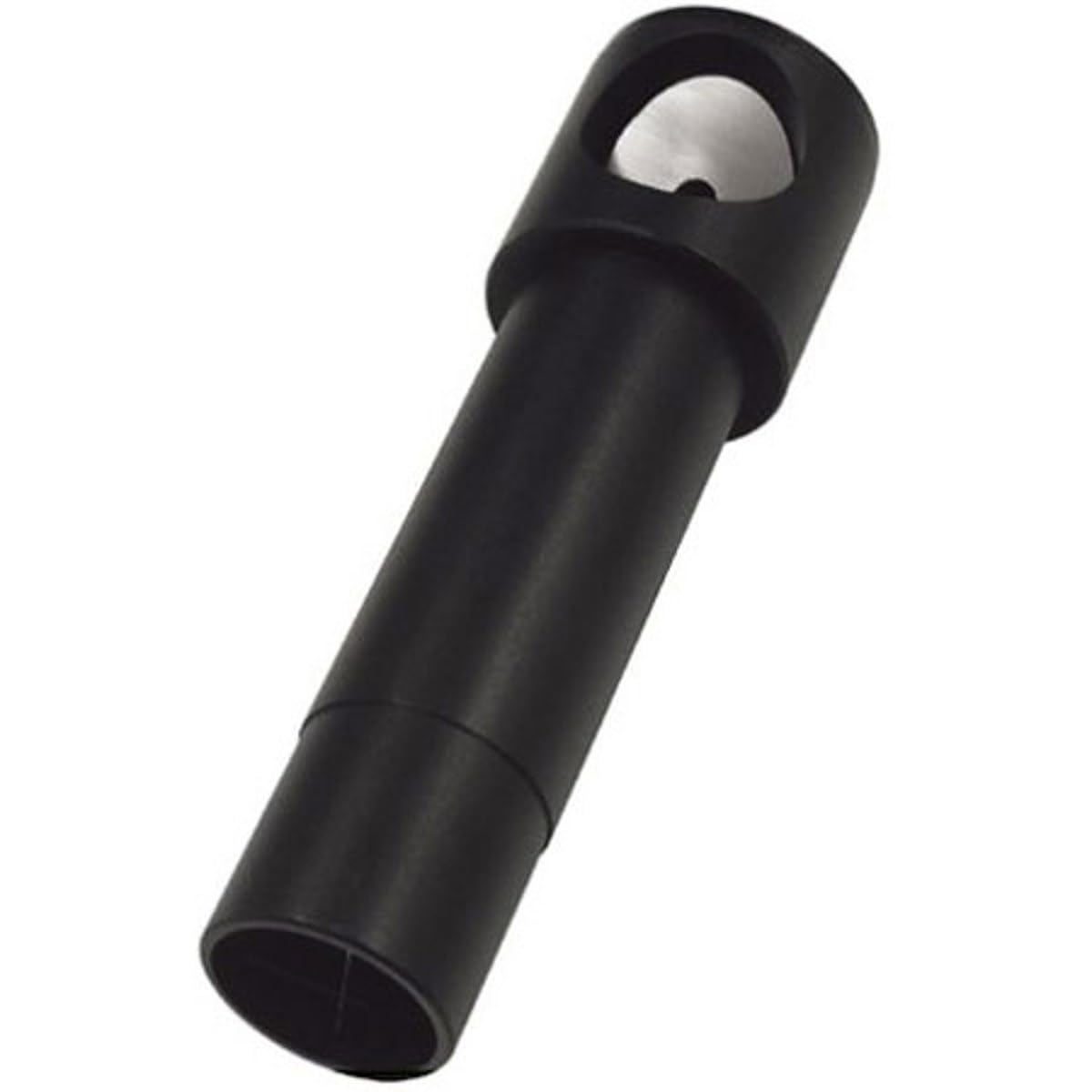
The Celestron 94182 Cheshire Collimation Eyepiece is a precision tool designed for accurate alignment of Newtonian and Schmidt-Cassegrain telescopes. It fits standard 1.25" focusers or diagonals and features a small aperture with thin crosshairs, enabling easy and superior collimation compared to basic tools.

A**L
Good collimation tool
Great tool to collimate your newtonian, it takes some trail and error, but once you get the hang of it is a breeze. If you have a Bird-Jones telescope like me (short tube newtonian reflector telescope that have a lens at the end of the focuser) you can't really use a laser to collimate (unless you use the aspirin cap method which makes the laser less accurate) so this is a good and cheaper alternative for it. If you learn to collimate a Bird-Jones telescope you will probably be able to collimate any newtonian. And yes you can collimate at night just shine a smal light into the side opening. Good tool overall.
M**R
Works for its intended purpose
This works well for collimating your telescope, which was rather intimidating. I had read there can be problems with laser collimators, so I bought this. After reading and watching numerous instructional tutorials, I tackled my scope and successfully collimated it.
K**
Great Product, poor directions for use.
I purchased this to help with the collimation of a few telescopes I have, thought it would improve the process. Was hoping to be able to take this out of the package and with a few directions it would be a simple task. Unfortunately the directions were a little hard to follow for the first timer that I felt like I was. After finding some internet help, I was able to Collimate my scopes and the tool does make it a simple process.I shared this with some of my friends who have experience in this. They found the eyepiece to be very helpful. If you know what you are doing it is out of the box great, if you are a novice like myself it takes a little playing. While I ultimately managed to complete the process, it was a little frustrating at first.If you are planning on transporting your scope regularly, I would recommend this tool. When finally completed, it did a great job.
B**B
Well worth the money
I own a Celestron 10" Newtonian and used this tool to perform my very first collimation. I was pleasantly surprised when I saw it, it's very solid and well made, the pics don't do it justice because they make it look like it's made of plastic instead of sturdy aluminum. Since it was my first time I read the directions through twice before I used it, but the diagrams are very self explanatory. Once you collimate your telescope and get to know the procedure, it will only take a few minutes the next time. Overall, I'm very pleased with this purchase.
C**S
Good and bad. Your results may vary.
It’s built well, I’ll give it that. I’ve never successfully used it, however. I’m guessing it’s operator error, but the instructions are not good. One day I’ll take the telescope and this contraption to someone smarter than me and I’ll figure out how to do it.
T**S
Most Precise Tool for Collimating a Newtonian or Dobsonian Telescope!
If you have a Newtonian or Dobsonian telescope, you can purchase all manner of complex thingy me do's to align your primary and secondary mirrors, (many of which often work poorly) or you can just buy this combo tool for a great deal less. This eyepiece is a both a sight tube and a Cheshire eyepiece rolled into one. You then simply align your secondary mirror under the sight tube and then align the crosshairs reflection on the primary with the crosshairs at the bottom of the sight tube and bang, you are done. If you have never done a collimation before it might take up to ten minutes the first go, but after that, it takes less than two minutes. Absolutely essential tool that just flat out works. Five stars.
V**N
Great tool / utility to have...
We recently purchased a Celestron AstroMaster 130EQ telescope for my son's 10th birthday. While the moon looked great in the 'out of the box' configuration, we noticed that Saturn and Mars looked, well, 'fuzzy'. My initial thought was that we needed a more powerful eyepiece than the 20mm and 10mm ones that came with the telescope.A couple of weeks later, we attended an open house the observatory on the campus of the university that I work for. We were visiting with one of the astronomy professors and I described our 'problem' we were having with our new telescope. After finding out that it was a Newtonian, he immediately asked if I had collimated the telescope. Naturally, I had no idea what he was talking about, so I set out to Mr. Google to learn about collimation.After a little research, I ordered this eyepiece and was amazed at how much adjustment we needed to make to bring the mirrors into proper alignment. In less than 30 minutes, I had the telescope fully collimated and now distant objects look MUCH more crisp. My son and I even got up early one morning to see Venus and Jupiter, and both of those appeared crisp/sharp. Venus was in a crescent phase and we were able to see Jupiter and two of its moons, and this made for one happy 10 year old!So, I would recommend this to any beginner/novice astronomer like myself and my son.
I**E
Works, easy to use (once figured out) but instructions not very clear..
Easy to use, once you figure it out. The instructions were not really clear as to how/where to insert it. So.. here you go.Insert it where you would normally place your 9mm or 25mm lens. Turn the opening towards a light source, then just look into the end (like you would as if it were a regular lens. You'll see your secondary and primary lens and can adjust them from there.Good luck on figuring out where those are too. I have the Celestron 130 and was pleased to find I only needed to slightly adjust the 3 large, easy to reach and turn, hand screws on the bottom of the scope.
Trustpilot
2 weeks ago
2 weeks ago