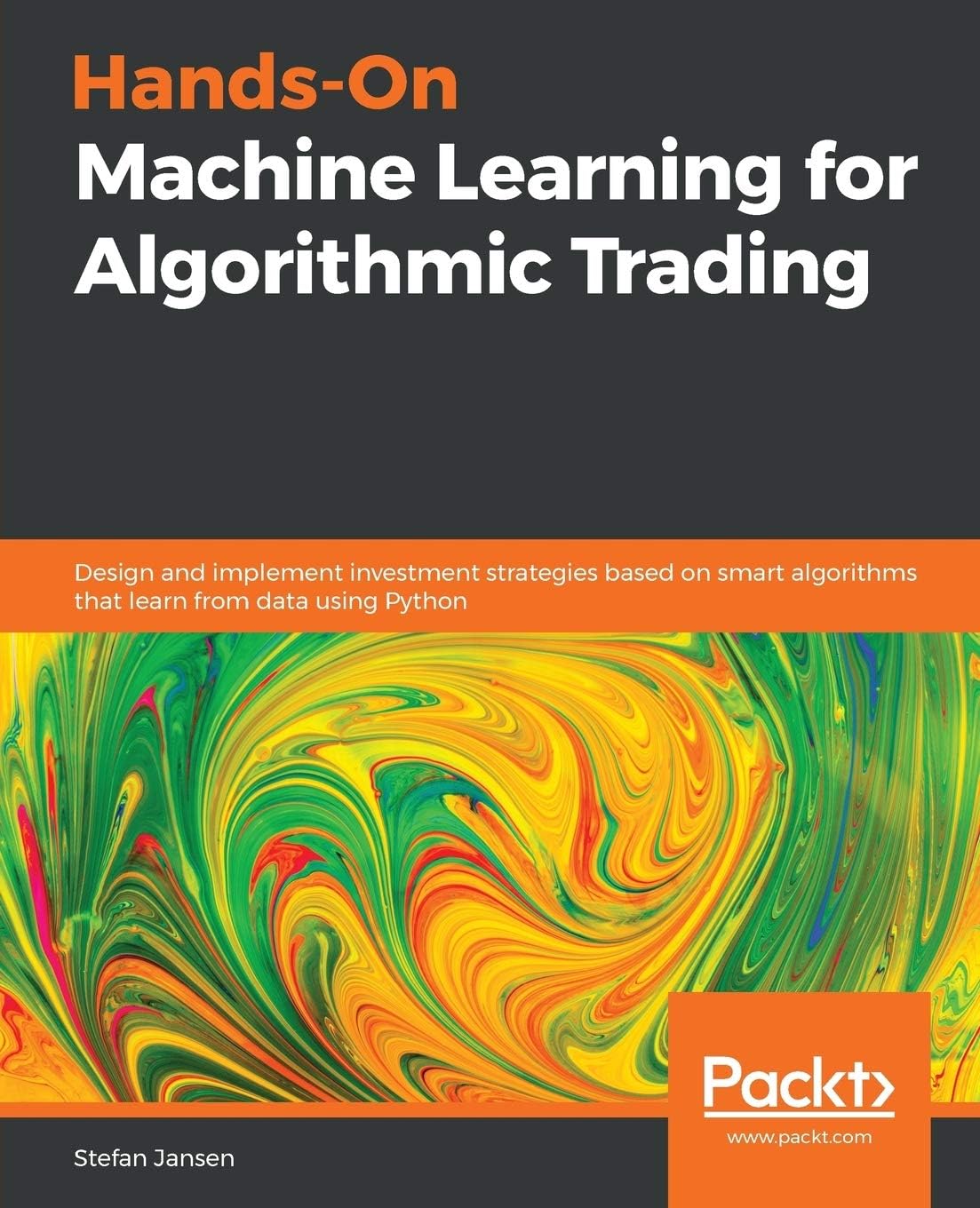
Packt Hands-On Machine Learning for Algorithmic Trading: Design and implement investment strategies based on smart algorithms that learn from data using Python
Product ID: 431759953
Buy anything from 5,000+ international stores. One checkout price. No surprise fees. Join 2M+ shoppers on Desertcart.
Desertcart purchases this item on your behalf and handles shipping, customs, and support to Malaysia.
Buy Packt Hands-On Machine Learning for Algorithmic Trading: Design and implement investment strategies based on smart algorithms that learn from data using Python by Jansen, Stefan online on desertcart.ae at best prices. ✓ Fast and free shipping ✓ free returns ✓ cash on delivery available on eligible purchase. Review: I love all Stefan's books, which are all well written and logically organized - very easy to follow. They not only provide detailed information on the theories behind, but also provide many practical examples and even Jupyter Notebooks that can be used in real life situations. They also covered almost all areas of Machine Learning in trading. They are just like THE bibles of Machine Learning in trading to me. Highly recommended! Got both "Hands-On Machine Learning for Algorithmic Trading" and "Machine Learning for Algorithmic Trading", if you want to master Machine Learning in trading! Review: Actually I found this book very useful. However, you do need to be experienced in Python and machine learning fundamentals. Yes, the scripts have errors even from the latest github download, but if you know Python, you can easily fix those errors yourself. I usually hate Jupyter Notebook, which is a very bad way to demonstrate Python coding, as in general you always run a standalone piece of code for any real world applications. So what I did was I set up a PyDev project in Eclipse, created a package, then modules for the Jupyter notebooks. Then I manually copied the script fragments from jupyter to my PyDev modules, which allowed me to see the errors immediately and I then fixed them instantly. BTW, I also do not like Anaconda, which messed up my macOS env entirely, so I just installed Jupyter and all Python libraries with pip without using anaconda. These are one-time setups, so really no big deal. If you have not warmed yourself up on machine learning, check out Machine Learning: A Quantitative Approach , which has a comprehensive coverage of both statistical machine learning and artificial neural networks, with many good working examples in Python, C++ and C. The same author published another book Forecasting and Timing Markets: A Quantitative Approach , which is worth to check out as well. Note that the author is not supposed to teach Python and ML in great detail in this book, which are the skills we audience need to grab ourselves. Once you followed the above suggestions I shared, you should be good to go. The author is a well-recognized expert in the field, and we should all be able to learn from him a lot.
| Customer reviews | 3.9 3.9 out of 5 stars (32) |
| Dimensions | 19.05 x 3.94 x 23.5 cm |
| Edition | Standard Edition |
| ISBN-10 | 178934641X |
| ISBN-13 | 978-1789346411 |
| Item weight | 1.16 Kilograms |
| Language | English |
| Print length | 684 pages |
| Publication date | 31 December 2018 |
| Publisher | Packt Publishing |
J**G
I love all Stefan's books, which are all well written and logically organized - very easy to follow. They not only provide detailed information on the theories behind, but also provide many practical examples and even Jupyter Notebooks that can be used in real life situations. They also covered almost all areas of Machine Learning in trading. They are just like THE bibles of Machine Learning in trading to me. Highly recommended! Got both "Hands-On Machine Learning for Algorithmic Trading" and "Machine Learning for Algorithmic Trading", if you want to master Machine Learning in trading!
Y**N
Actually I found this book very useful. However, you do need to be experienced in Python and machine learning fundamentals. Yes, the scripts have errors even from the latest github download, but if you know Python, you can easily fix those errors yourself. I usually hate Jupyter Notebook, which is a very bad way to demonstrate Python coding, as in general you always run a standalone piece of code for any real world applications. So what I did was I set up a PyDev project in Eclipse, created a package, then modules for the Jupyter notebooks. Then I manually copied the script fragments from jupyter to my PyDev modules, which allowed me to see the errors immediately and I then fixed them instantly. BTW, I also do not like Anaconda, which messed up my macOS env entirely, so I just installed Jupyter and all Python libraries with pip without using anaconda. These are one-time setups, so really no big deal. If you have not warmed yourself up on machine learning, check out Machine Learning: A Quantitative Approach , which has a comprehensive coverage of both statistical machine learning and artificial neural networks, with many good working examples in Python, C++ and C. The same author published another book Forecasting and Timing Markets: A Quantitative Approach , which is worth to check out as well. Note that the author is not supposed to teach Python and ML in great detail in this book, which are the skills we audience need to grab ourselves. Once you followed the above suggestions I shared, you should be good to go. The author is a well-recognized expert in the field, and we should all be able to learn from him a lot.
W**F
book has very good and quick contents but graphs miss colors which made them impossible to read
J**S
This book is horribly written. It is very hard to follow the authors point, and why he does certain things. The code snippets are rushed with the author often explaining how he has done something rather than why. I think there is some good information buried in this book, but it really makes you work for it.
M**N
I bought a number of books on the subject and this one really approaches the subject in a clear, concise and logical way. For the content of the book and for the way it is presented, this book deserves a five-star rating. The book is excellent. The author is clearly extremely well versed in the field and covers the main topics well. Python code in the text is used to demonstrate how the topic at hand is codified - however, the bulk of the rest of the code is in the Github repository (where it can be kept up-to-date). On the flip side, 5 of the most important chapters of the book were not present in the printed version!!! These chapters covered subjects that are touted on the jacket and were my main reason for buying the book. On this issue, Packt deserves major scorn, as it appears to left the chapters out, in an effort to save on printing costs. Apparently, the chapters are available on the Github repository. In my case, I landed up communicating directly with the author (who has been more than helpful), and the missing chapters have been provided - and they are as good as the rest of the book. Apparently, a reprint of the book will include all the missing material, so later purchasers of the book should get the whole book, which, as mentioned before, is excellent.
Trustpilot
2 weeks ago
2 months ago