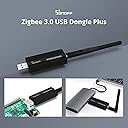
🚀 Elevate your smart home game with the ultimate Zigbee USB gateway!
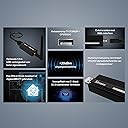
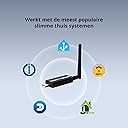
The SONOFF Zigbee 3.0 USB Dongle Plus Gateway is a compact, high-performance USB adapter featuring the TI CC2652P chipset, 20dBm output power, and an SMA antenna interface. Pre-flashed with Z-Stack 3.x.0 firmware, it offers seamless integration with popular platforms like Home Assistant and IoBroker. Its aluminum housing reduces interference, ensuring reliable wireless Zigbee 3.0 connectivity across large, multi-floor homes. Compatible with Windows, macOS, Linux, and more, it’s designed for easy setup and robust smart home control.


| ASIN | B09KXTCMSC |
| Best Sellers Rank | #186 in USB Computer Network Adapters |
| Brand | SONOFF |
| Color | Black 1Pack |
| Customer Reviews | 4.6 4.6 out of 5 stars (5,212) |
| Date First Available | December 7, 2021 |
| Hardware Platform | Mac, PC |
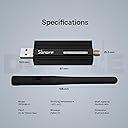
| Item Dimensions LxWxH | 4.37 x 1.61 x 0.75 inches |
| Item Weight | 1.3 ounces |
| Item model number | ZBdongle-P |
| Manufacturer | SONOFF |
| Operating System | Windows, Raspbian, Ubuntu, macOS |
| Product Dimensions | 4.37 x 1.61 x 0.75 inches |
| Series | ZBdongle-P |
| Voltage | 5 Volts |
| Wireless Type | 802.11a |
R**Y
Works well with Home Assistant + Synology / Docker setup
Good little USB coordinator that works everything I've tried so far... I am using one of these in 3000 sqft on 2 floors, using Sonoff smart plugs and a few Aeotec range extenders for network stability. It is stuck in a closet so antenna placement isn't ideal, but nonetheless I was able to get a good mesh net going to control lights on both floors. Will be trying some smart blinds next... In case the headline means something to you, consider this one for good compatibility. It uses the Texas Instruments CC2652 chipset which is well supported in Linux systems, including Synology. So if you have a similar setup, consider this as your coordinator. I was able to pass this device through to Home Assistant in a Docker on DSM7.2 (using Portainer to compose the device layer). That lets the USB device show up inside of ZHA without doing anything additional. Haven't tried MQTT but I assume it's similar...
V**V
Godd working product
Easy out of the box install in HA. All is as expected. Covers the house as good as other hubs.
A**N
Works great for adding zigbee for home automation!
added zigbee to my home assistant on a VM server on my synology NAS. Worked flawlessly! Took just a few minutes to setup.
L**C
A MUST HAVE!
“I couldn’t be happier with this purchase! The quality is outstanding, and it’s clear a lot of thought went into the design and functionality. This product has exceeded my expectations in every way, offering a perfect balance of performance, durability, and style. What truly sets this product apart is how well it delivers on its promises. It’s incredibly easy to use, and you can tell it’s built to last. Whether you’re looking for something reliable for everyday use or a high-performing option for special occasions, this is it. On top of all that, the value for the price is unbeatable. It feels like a premium product without the hefty price tag. If you’re on the fence about getting this, don’t hesitate—trust me, you won’t regret it. This is one of those rare finds that ticks every box!”
C**B
Works in Linux, not painless tho
This was easy to install - sort of. I'm using Home Assistant in VMware running on a debian host. It was showing up in the host (debian) just fine. It was not passing through to the VM though. After a LOT of fumbling around with permissions, USB versions in VM settings, hardware searches in the VM cmd line etc. I used an AI to help diagnose the pass-through failure. The fix was to blacklist the Sonoff hardware in modprobe. I also added generic.usb lines in a hidden .vmx file in the VMware config before that. That didn't hurt I'm sure. Do the blacklist first and go from there. I hope this helps others using a similar setup. Once all that was done it popped right up front and center in the integrations tab and installed without a hiccup. Pairing the first device was painless after that.
K**M
No frills method for controlling your zigbee devices
Connected to my HPE DL380 G9 server running unraid with a home assistant vm in my basement. It was detected after passing through the usb device to the HA VM. Works well with the Devices I need it for. Next up is a zwave adapter!
E**H
Upgrade from ConBee II
Would I upgrade to this if I had to do it again -Yes. My previous install a ConBee II running on HA Blue (and before that an old NUC). Now why did I choose to upgrade? Well, I didn’t originally plan to - the ConBee II was working well (had nothing to compare too). Then not long ago during a routine update to HA something just broke. My regular backups didn’t help and the ConBee II decided to just refuse to communicate. So I ordered the Sonoff as a replacement. But by the time it arrived I had managed to get the ConBee II working. I was going to send this back. But, I had to open the box didn’t I?! The Sonoff is in a aluminum case and feels so nice, and the external antenna had me wondering :) so of course I had to try it out. I went in to HA and removed the 20+ devices I had connected through the ConBee II. Yeah - I was committed:) I used ZHA instead of zigbee2mqtt - why - because it was just quicker to test. So one connected (obviously ZHA just picked it up instantly). I thought let’s see how well this picks up my six halo zigbee recessed lighting. Damn. It detected them a lot faster than the ConBee II. I was a little shocked. I then went on to create a group to see how well it’d control the lights - and damn again. The thing was way more smooth and responsive than the previous setup. Note: I installed this is the same spot I had the ConBee II. I’m not saying the ConBee II sucked. Not at all, it did it’s job and I would have been as happy as I was. But after using the Sonoff - definitely glad to have upgraded. Plus it was an excuse to muck around with nerdy stuff for an afternoon. Some other things - yes I had to add all my zigbee devices again - but that really isn’t as big of a pain if you do it in stages. Secondly a lot of my automations are in Node Red and use IEEE which doesn’t change so a majority of those still worked. Overall - I wasn’t planning to upgrade, but happy I did. Now I just have to explain to the wife why it was a good idea - and that might not be as easy :)
R**Y
It worked relatively easy
I brought this for my Home Assistant running on a raspberry pi. Home Assistant is not the easiest to get up and running and is not for the faint of heart. However, once I plugged it in it immediately discovered it. I hooked up some Zigbee devices and had some trouble configuring. I brought the ZigBee device closer, and it discovered it. I was then able to move it back, I would recommend a USB extension. I was unable to plug it in to my Home Assistant without it. It did not fit.
G**N
I got this to create a Zigbee network in Home Assistant after finding that many of the devices and sensors that I wanted to use made use of this protocol. So far, I have only positive things to say. It was detected right away after rebooting my Home Assistant host, and configuring the first few Zigbee devices was a painless experience, including Ikea globes and remotes too. It is a bulky case, so if you are plugging it directly into your machine, you might find some clearance issues, but a small extension can fix that easily. I would definitely recommend this device based on my own experiences so far.
R**S
Werkt uitstekend plug & play op Home assistant. Goed bereik
J**Z
Hub Zigbee para Home Assistant , conectar , configurar y listo. Para los amantes de la domotica sabemos que Sonoff no defrauda, y a buen precio.
S**N
Works!
S**E
Il Dongle Plus (CC2652P) è senza dubbio uno dei migliori coordinatori Zigbee disponibili per chi utilizza Home Assistant o sistemi domotici avanzati. L’ho scelto per sostituire hub proprietari e il miglioramento in termini di stabilità, reattività e controllo della rete è stato evidente fin da subito. Basato sul chip TI CC2652P, offre una potenza di trasmissione elevata e una gestione eccellente della rete mesh Zigbee. Anche con numerosi dispositivi collegati (sensori, prese, interruttori, ripetitori), la rete resta solida e reattiva, senza perdite di nodi o ritardi nei comandi. Le automazioni scattano in modo immediato, segno di una comunicazione molto efficiente. L’installazione è semplice: collegato via USB al server Home Assistant, viene riconosciuto subito e funziona perfettamente sia con ZHA che con Zigbee2MQTT. Un grande vantaggio è la compatibilità universale, che permette di usare dispositivi Zigbee di brand diversi senza dipendere da hub chiusi o cloud esterni. La presenza dell’antenna esterna migliora notevolmente la copertura, soprattutto in case su più piani o ambienti complessi. In confronto a chiavette Zigbee più economiche, la differenza in termini di portata e affidabilità si sente eccome. Altro aspetto fondamentale: zero cloud, zero dipendenze esterne. Tutto gira in locale, con maggiore velocità, sicurezza e controllo totale del proprio impianto domotico. In uso quotidiano è estremamente affidabile: – nessuna disconnessione – rete stabile anche nel tempo – aggiornamenti e gestione senza problemi In conclusione, se si utilizza Home Assistant e si vuole una rete Zigbee seria, scalabile e professionale, questo dongle è praticamente una scelta obbligata.
Trustpilot
3 weeks ago
3 weeks ago