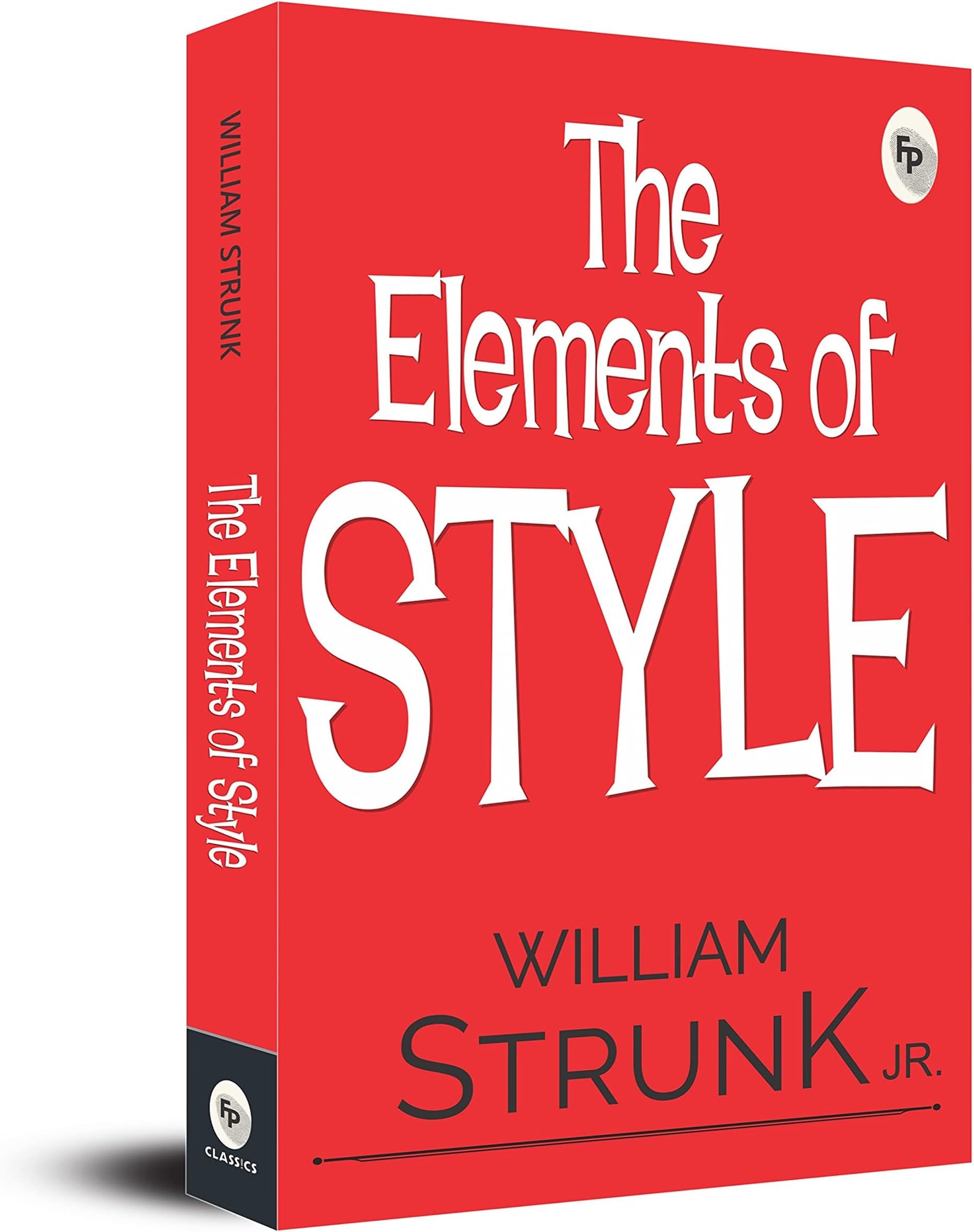
The Elements of Style
Product ID: 296195388
Desertcart purchases this item on your behalf and handles shipping, customs, and support to Malaysia.
Master the art of concise and powerful writing with The Elements of Style by William Strunk Jr. This timeless guide offers indispensable advice on grammar, punctuation, and style. A must-have for writers, students, and anyone seeking to enhance their communication skills. William Strunk Jr.'s timeless guide to effective writing Indispensable advice on grammar, punctuation, and style Enhance your communication skills A must-have for writers and students Unlock the secrets to concise and powerful writing with this essential reference tool. Review: A classic guide with surprising depth - If you love words and writing, this is a sweet, elegant, and intense book with many valuable insights. It deals with grammar, spelling, punctuation, and the principles of composition. Although it is introduced as setting out the “principal requirements of plain English style,” I find it surprisingly deep and detailed. Inspiring in any case. Review: "The Elements of Style" remains a foundational text in the world of writing - The book The Elements of Style is a timeless manual for writing with clarity, precision, and grace. Initially penned by William Strunk Jr. and later expanded by his former student E.B. White, this slim volume has profoundly influenced writers for decades. The book's lasting popularity stems from its ability to distill the principles of effective writing into straightforward rules, making it a go-to reference for anyone striving to improve their prose. Structure and Content The book comprises a few concise sections, each focusing on a specific aspect of writing: 1. Rules of Usage: This section covers the basic details of grammar, such as the proper use of commas and possessives. Strunk's approach is direct and leaves little room for ambiguity. For example, he stresses the importance of consistency in pronoun use and clarity in sentence structure, providing practical rules that help writers avoid common errors. 2. Principles of Composition: Here, Strunk and White explore the art of constructing sentences and paragraphs. His advice is centered on clarity and brevity, urging writers to "omit needless words" and keep their sentences simple. This part of the book is especially valuable for those who tend to write verbose or overly complex sentences, as it reminds them to prioritize the message over flowery language. 3. Form: This section deals with more technical aspects of writing, such as paragraph structure, quotations, and active versus passive voice. The guidance is practical and aimed at helping writers maintain consistency and flow throughout their work. 4. Words and Expressions Commonly Misused: This section contains frequently misused words and expressions, a treasure trove for anyone looking to fine-tune their word choice—Strunk and White critique overused phrases, redundant expressions, and other pitfalls, encouraging precision in language. 5. An Approach to Style: In this final section, E.B. White adds a more personal touch, discussing style as an individual expression. White emphasizes the importance of finding one's voice while adhering to the foundational rules laid out by Strunk. He balances the technical nature of earlier sections with a reminder that writing is ultimately a creative act, and style should serve the message rather than obscure it. Style and Tone The book's tone is authoritative yet approachable. Strunk's original writing style is clear-cut and unyielding, reflecting his belief in strict adherence to rules. White's contributions, however, soften some of these rigid edges, making the book more accessible to modern readers. White's own style shines through in his humor and thoughtful reflections on the craft of writing, adding warmth to what might otherwise seem like a dry manual. Strengths 1. Clarity and Brevity: True to its own advice, The Elements of Style is concise, wasting no words and providing concrete examples illustrating each point. This advantage makes it an easy book to consult when needing quick guidance. 2. Timeless Principles: Although published over a century ago, many rules remain relevant. The focus on clarity, precision, and simplicity transcends changes in writing trends, making the book applicable to various writing styles, from academic papers to creative works. 3. Balancing Rule and Creativity: Strunk's rigid rules and White's more flexible approach combine to make the book valuable for beginners who need guidance and experienced writers seeking to refine their craft. Weaknesses 1. Prescriptive Approach: Some critics argue that *The Elements of Style* is too prescriptive, favoring strict rules over the evolving nature of language. In a time when language is becoming more inclusive and less bound by rigid rules, the book's insistence on specific traditional structures needs to be updated 2. Simplistic at Times: While brevity is one of the book's strengths, it can also be a limitation. Some sections could benefit from more nuanced explanations or discussions of exceptions to the rules. Writers seeking a deep dive into grammar might find the book too basic. 3. Cultural and Linguistic Bias: The book is rooted in American English and its conventions so that it may be less helpful for those writing in British English or other dialects. Additionally, some of its examples and references can feel dated, reflecting a particular cultural context that may not resonate with contemporary audiences. Conclusion "The Elements of Style" remains a foundational text in the writing world. Its emphasis on clarity, precision, and effective composition has guided generations of writers. While some of its rules may feel rigid or old-fashioned, its core message—to write with intention and to respect the reader's time—continues to resonate. This book is a worthy addition to any bookshelf for writers who want a concise, no-nonsense guide to effective writing. Its advice may be as old as Strunk's original classroom notes, but in a world where words matter more than ever, *The Elements of Style* still has much to teach.


| Best Sellers Rank | #7,661 in Books ( See Top 100 in Books ) #16 in Writing Guides (Books) #18 in Grammar (Books) #24 in Vocabulary, Slang & Word Lists |
| Customer Reviews | 4.3 out of 5 stars 3,336 Reviews |
S**W
A classic guide with surprising depth
If you love words and writing, this is a sweet, elegant, and intense book with many valuable insights. It deals with grammar, spelling, punctuation, and the principles of composition. Although it is introduced as setting out the “principal requirements of plain English style,” I find it surprisingly deep and detailed. Inspiring in any case.
C**R
"The Elements of Style" remains a foundational text in the world of writing
The book The Elements of Style is a timeless manual for writing with clarity, precision, and grace. Initially penned by William Strunk Jr. and later expanded by his former student E.B. White, this slim volume has profoundly influenced writers for decades. The book's lasting popularity stems from its ability to distill the principles of effective writing into straightforward rules, making it a go-to reference for anyone striving to improve their prose. Structure and Content The book comprises a few concise sections, each focusing on a specific aspect of writing: 1. Rules of Usage: This section covers the basic details of grammar, such as the proper use of commas and possessives. Strunk's approach is direct and leaves little room for ambiguity. For example, he stresses the importance of consistency in pronoun use and clarity in sentence structure, providing practical rules that help writers avoid common errors. 2. Principles of Composition: Here, Strunk and White explore the art of constructing sentences and paragraphs. His advice is centered on clarity and brevity, urging writers to "omit needless words" and keep their sentences simple. This part of the book is especially valuable for those who tend to write verbose or overly complex sentences, as it reminds them to prioritize the message over flowery language. 3. Form: This section deals with more technical aspects of writing, such as paragraph structure, quotations, and active versus passive voice. The guidance is practical and aimed at helping writers maintain consistency and flow throughout their work. 4. Words and Expressions Commonly Misused: This section contains frequently misused words and expressions, a treasure trove for anyone looking to fine-tune their word choice—Strunk and White critique overused phrases, redundant expressions, and other pitfalls, encouraging precision in language. 5. An Approach to Style: In this final section, E.B. White adds a more personal touch, discussing style as an individual expression. White emphasizes the importance of finding one's voice while adhering to the foundational rules laid out by Strunk. He balances the technical nature of earlier sections with a reminder that writing is ultimately a creative act, and style should serve the message rather than obscure it. Style and Tone The book's tone is authoritative yet approachable. Strunk's original writing style is clear-cut and unyielding, reflecting his belief in strict adherence to rules. White's contributions, however, soften some of these rigid edges, making the book more accessible to modern readers. White's own style shines through in his humor and thoughtful reflections on the craft of writing, adding warmth to what might otherwise seem like a dry manual. Strengths 1. Clarity and Brevity: True to its own advice, The Elements of Style is concise, wasting no words and providing concrete examples illustrating each point. This advantage makes it an easy book to consult when needing quick guidance. 2. Timeless Principles: Although published over a century ago, many rules remain relevant. The focus on clarity, precision, and simplicity transcends changes in writing trends, making the book applicable to various writing styles, from academic papers to creative works. 3. Balancing Rule and Creativity: Strunk's rigid rules and White's more flexible approach combine to make the book valuable for beginners who need guidance and experienced writers seeking to refine their craft. Weaknesses 1. Prescriptive Approach: Some critics argue that *The Elements of Style* is too prescriptive, favoring strict rules over the evolving nature of language. In a time when language is becoming more inclusive and less bound by rigid rules, the book's insistence on specific traditional structures needs to be updated 2. Simplistic at Times: While brevity is one of the book's strengths, it can also be a limitation. Some sections could benefit from more nuanced explanations or discussions of exceptions to the rules. Writers seeking a deep dive into grammar might find the book too basic. 3. Cultural and Linguistic Bias: The book is rooted in American English and its conventions so that it may be less helpful for those writing in British English or other dialects. Additionally, some of its examples and references can feel dated, reflecting a particular cultural context that may not resonate with contemporary audiences. Conclusion "The Elements of Style" remains a foundational text in the writing world. Its emphasis on clarity, precision, and effective composition has guided generations of writers. While some of its rules may feel rigid or old-fashioned, its core message—to write with intention and to respect the reader's time—continues to resonate. This book is a worthy addition to any bookshelf for writers who want a concise, no-nonsense guide to effective writing. Its advice may be as old as Strunk's original classroom notes, but in a world where words matter more than ever, *The Elements of Style* still has much to teach.
A**B
Dissatisfied
5 stars for the book itself is very insightful and helps you to hone your writing skills but 2 star for book condition. I'm utter DISAPPOINTED with the delivery and quality of the book. Firstly it took 17days to get it delivered by Post. And moreover the book i recieved was damaged and looks old. Pages were yellow and both the cover and spine was damaged. Paying 184, 75 for delivery and getting this I'm UTTER DISSATISFIED WITH THIS BOOK.
S**I
Very good
It's a guide for author, scholers etc
P**A
Mediaeval English problem
Purchased the book with high hopes, but disappointed completely. Language not easy to understand, left after a few pages.
G**U
Review
Precise edition
A**M
Great Book.
Great Book.
S**L
Nice
Nice books Its good
F**I
COme una buona grappa invecchiata
Molto utile. Sapienza centellinata come una buona grappa. E' un libro da studiare e analizzare, perché è molto conciso, ma la persona saggia sa fare tesoro di queste regole generali
M**N
A classic still standing
I figured I originally read this in college and I have a faulty memory of it boring me to tears. Faulty, because I am amazed at how much it resonates and repeated in my mind throughout my writing. This is a must read and an irreplaceable editors companion. If you have any ambition to be a writer, please read this. You will be amazed at how it changes your habits. M.
I**N
Un joya
Este clásico es una joya, dejé mi copia en un storage en USA y fue un alivio conseguirlo en Amazon Mexico. Lo recomiendo enormemente a estudiantes y/o profesionales quienes deban escribir en inglés. Hace toda la diferencia del mundo y sus lectores les agradecerán su nuevo estilo de escritura.
A**O
Elements of style
Libro útil para aprender a escribir en inglés en los diferentes estilos, enfocado al ámbito laboral
A**ー
詐欺商法です。
詐欺です。商品説明と、売られている商品が異なります。これだけの定番・有名書籍に関して、こういう売り方をするというのは、信じられません。
Trustpilot
2 days ago
1 month ago