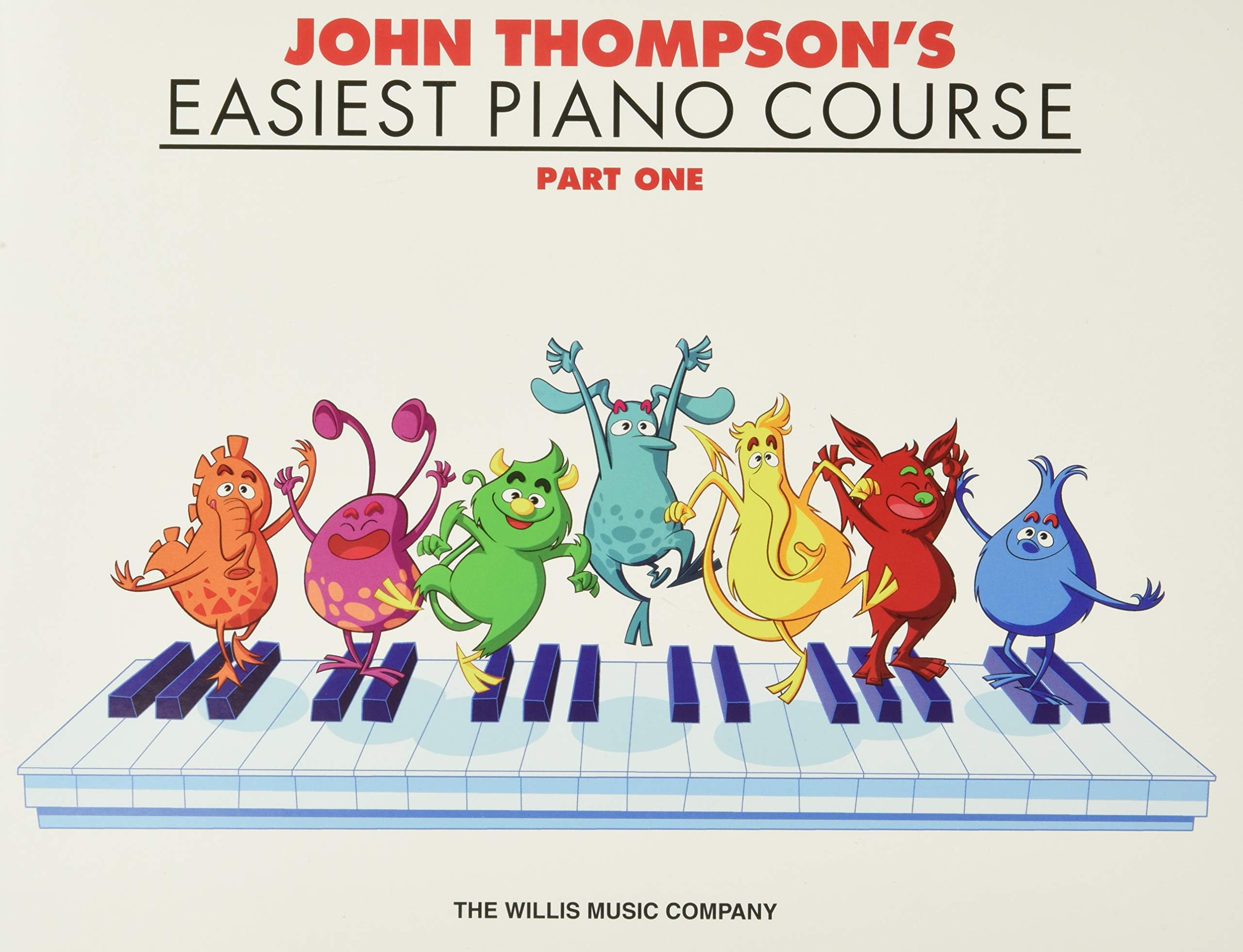
John Thompson's Easiest Piano Course Part 1
Product ID: 228136
🎹Elementary piano/keyboard focus
📄40 pages of structured learning
📚Step-by-step beginner-friendly lessons
Desertcart purchases this item on your behalf and handles shipping, customs, and support to Malaysia.
🎶 Unlock your child’s musical genius with the easiest, most joyful piano start!
John Thompson's Easiest Piano Course Part 1 is a 40-page elementary piano book designed for young beginners. It features clear notation, engaging illustrations, and step-by-step lessons that develop note reading, rhythm, and technique. With teacher accompaniments and a balanced mix of exercises, it’s a globally trusted resource that makes learning piano accessible, motivating, and fun.


| Best Sellers Rank | #7,043 in Books ( See Top 100 in Books ) #13 in Piano & Keyboards #50 in Music Instruction & Study (Books) |
| Customer Reviews | 4.7 out of 5 stars 3,602 Reviews |
N**.
Nice Starter Book for Learning Piano
Bought this for my daughter when she was starting to learn how to play on the keyboard. It was a nice beginner book and gave her something easy to follow while she was learning. A good choice for a child just getting started with piano or keyboard lessons.
D**M
Makes teaching easy and fun
I’ve been teaching a couple of people piano, and have been using this book with one of them and another well known book for the other person who I had begun teaching earlier. Comparing the two approaches, I much prefer the Thompson book. It introduces notes on the staff immediately, instead of floating note icons with finger numbers, which just made for an unnecessary transition later on to actually reading notes on the staff. In Thompson the student does that from the get-go in an easy way. With the other approach, the student also becomes wedded to starting a piece with a particular set finger position on the keyboard, such as C position or G position, and then becomes so used to that that they find it hard to switch to being able to begin a song with their fingers positioned just according to where the notes on the staff are. Thompson’s approach avoids such confusion. I highly recommend it.
D**E
Finally! After years and years, I'm finally in love with a piano book for beginners!
Oh my heck. Where has this piano course been my whole life? (Okay, I knew it existed, but I thought I "knew" John Thompson, so I never opened it up) Thanks to a happy accident, now all of this year's new students are using this book and these beginning piano students LOVE this book unlike I've ever seen before (and I thought I had taught with every single piano course out there). It's been three months that I've been using this course. It's SO much better than the old John Thompson's Courses. The BEST BEST BEST BEST BEST (x200) thing about this book are the rich, lovely, and FINALLY wonderful teacher accompaniments. My own children who are late intermediate and advanced players want to come in and play with me on the accompaniments. Weird, I know. But they are that good. Thank you to whomever finally gave us piano teachers something worthwhile to play along with. My enthusiasm about playing the teacher duets rubs off on the kids. I can't attest to the longterm results of this course, and I just yesterday received the other books in this course yesterday, so I don't know for sure if they are as good, but as for this book, it has the benefit I loved in Music Tree curriculum, which is that is combines ALL the different books you need into one, i.e. technique, theory and piano pieces. It has the benefits from some of the other "late" beginner courses in that the kids are reading moving lines of music very early, which keeps the interest high. It has a benefit that I've have been complaining about and hoping for forever (which sort of coincides with the Suzuki method), which is that it uses well-known tunes and songs frequently so that the kids can self correct their practice at home and "know" if they are playing something correctly. You probably need to add a "performance" type book, flash cards, and possibly a technique book, such as Dozen a Day or some sort of Finger Power type book by the time you get to Book 2, but for Book 1, just enjoy having everything in one book.
A**A
A delightful First book for a future Pianist!
A delightful First book for a future Pianist! 35 years ago, my mother bought this book for me and I had a wonderful time learning from it. With such a wonderful experience, I had to purchase it for my son age 5 as his first book. It teaches you the very basics of learning the notes on the keys and it has some pages for theory practice. However, if you are looking for a book that teaches you to count and number the fingers (such as Faber or Alfred's method), this isn't the book for you. This does not show fingering via a diagram. Therefore, it may delay your learning by a few lessons, but you will mostly certainly learn. Another point is that some people may find some of the accompanying images offensive as they depict segregation era. Remember this was printed in 1955. John Thompson has an updated version of this very book and doesn't have any of these images.
M**C
Great for beginners of all ages
I'm a piano teacher, and I love this book! I find that students as young as 5 or 6 can understand it, and my 3 and 4 year olds are usually ready for this book after a few months of preparatory "games." I use this for all my beginners who are teenagers or younger (teenagers usually don't appreciate the "monster" characters, but they get over it). I'm also thinking about starting all new adult beginners with this book, since I haven't found an adult book I like as well. Many other books start with "pre-reading" songs, which use note symbols combined with finger numbers, then move to note symbols with letter names, then finally to notes on a staff. This book uses the "begin the way you intend to continue" theory, and starts students off reading notes on the staff right away instead of confusing them by making them learn 3 different systems of notation. Other books also teach "position playing," where students may learn to read notes in C position, then notes in G position, then F position, and so on. The danger of position playing is that students just learn to recognize patterns, and some of my transfer students who had used this method can't play anything unless they are first told where to put their hands. Part One of this John Thompson series stays in one position, but right away in Part Two they have to start learning new notes and moving their hands around, so if they can't read the notes they can't play the song. I love how Part One introduces one note at a time, and simplifies the first song that uses a new note or concept, so students truly learn all of the notes and concepts but aren't overwhelmed. There are a few things I don't like about this series. Part One is very good, and I can't complain too much about it--the first few songs are very boring without the CD, but I can't find any way to make them more interesting without also making it more difficult. Part Two introduces eighth notes too early for many students, and key signatures are introduced right after sharps and flats, which confuses most students. Part Three introduces new notes early in the book, but then doesn't use them in any of the songs that follow. Overall though, it's a great series and I intend to keep using if for all of my future beginners.
S**G
Finally found it!
I tried multiple piano books that were recommended in US through my own google search (step by step, Alfreds basic, etc) but it was packed with information from the beginning, made my confusing, and wasn't easy for me to understand. Because of that I couldn't enjoy learning piano at all (I self learn). Gave up all the time. I saw a youtube about piano books used in UK and this one was recommended to learn from the basics! I love it! This is the only one that was so helpful to understand from the basics for someone like me who never learned piano! It explains every little thing from what is clef, what does the number means next to clef, what is measure, what is C, which you use right hand, what is tie, what is rest etc but ONE by ONE! Every page you flip, they teach you new notes or thing like that. It wont try to teach you all at once. One by one. My 5 and 7 years old does well with this book because its so user friendly!
K**0
Love it
Love this
M**Y
This series is a classic!
My students are intrigued by the colorful artwork in this piano book. I use it even for beginner adults due to its common sense introduction to propter playing of the piano (and keyboard).
映**ン
練習が苦にならなくなる
メロディは奏でたいけど、基礎練習の繰り返しはどうも、と思ってましたが、この教則本は、見て楽しく遊び心で、いつの間にか鍵盤を指が・・・ということで練習が苦にならなくなりました。
M**R
Bueno
Este libro ha sido utilizando desde hace mucho tiempo para enseñar niños pequeños pero esta versión no tiene el CD o link para bajar la música de compañía y practicar en casa.
I**O
todo perfecto
mi higa de 4 años a pasado el verano tocando este le a encantado llego todo muy bien aunque biene en ingles
C**N
Livre
Top
P**R
I love it!
You wouldnt believe, I'm able to teach my 5 year old kid with this book! In an hour we covered whole notes, half notes, quater notes, how to write them including exercises and fun pictures! We covered C and D!
Trustpilot
5 days ago
1 week ago