
Buy anything from 5,000+ international stores. One checkout price. No surprise fees. Join 2M+ shoppers on Desertcart.
Desertcart purchases this item on your behalf and handles shipping, customs, and support to Malaysia.
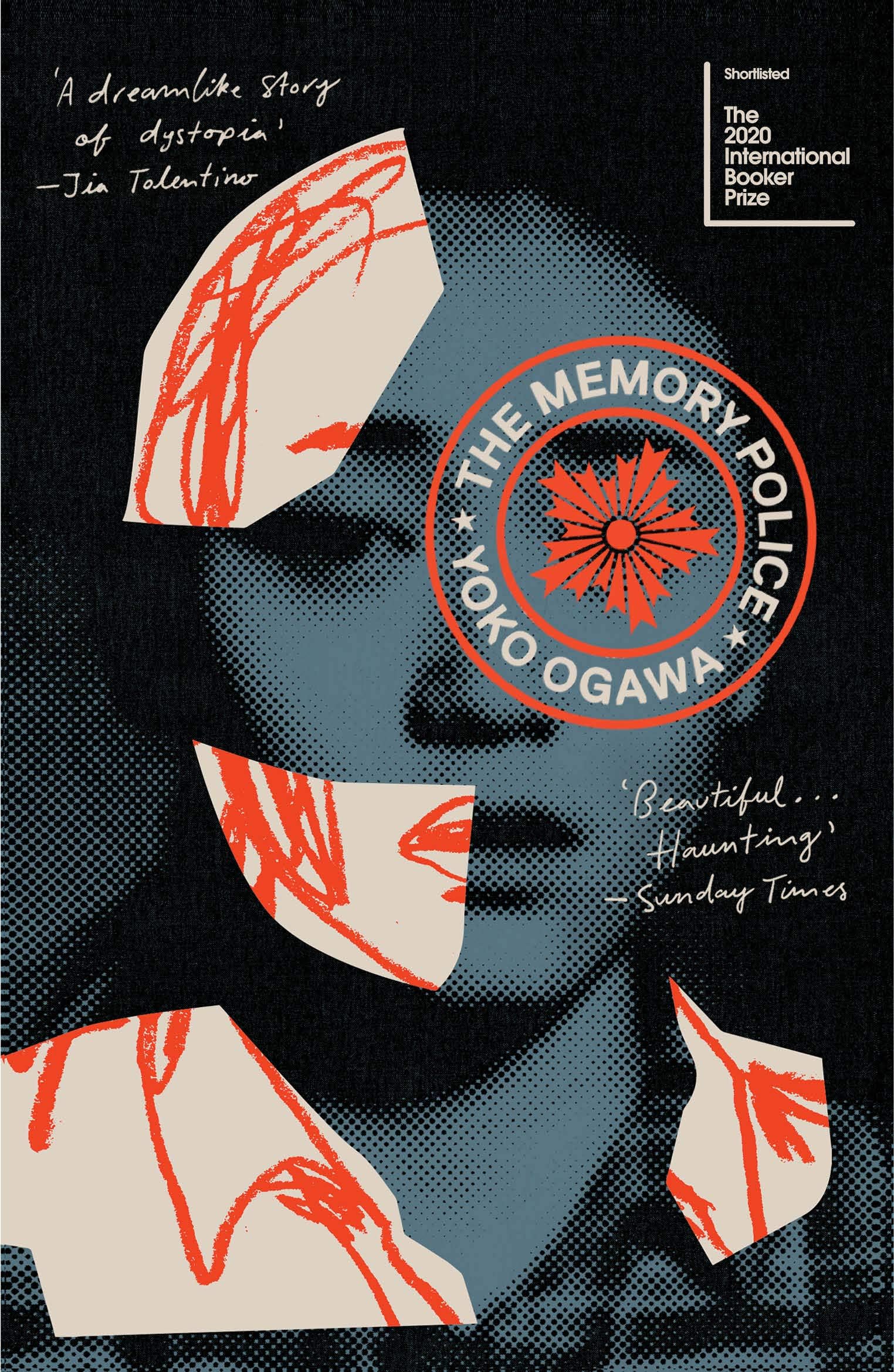
**Shortlisted for the International Booker Prize 2020** On an unnamed island, objects are disappearing: first hats, then ribbons, birds, roses. . . Most of the inhabitants are oblivious to these changes, while those who remember live in fear of the Memory Police. To the people on the island, a disappeared thing no longer has any meaning. It can be burned in the garden, thrown in the river, or handed over to the Memory Police. Soon enough, the island forgets it ever existed. When a young novelist discovers that her editor is in danger of being taken away by the Memory Police, she desperately wants to save him. For some reason, he doesn't forget, and it's becoming increasingly difficult for him to hide his memories. Who knows what will vanish next? 'Beautiful... Haunting' Sunday Times 'This timeless fable of control and loss feels more timely than ever' Guardian Review: Breathtakingly beautiful. - BOOK REVIEW THE MEMORY POLICE BY~ YOKO OGAWA ⭐⭐⭐⭐⭐ ______________________ 🍂The memory Police written by Yoko Ogawa and translated by Stephen Snyder is an exemplary work of translated fiction. The text was haunting, heavy-hearted, thought-provoking & beautiful. I'm grateful to the people who took the initiative to make this amazing piece of work available to us in the English language. 🍂I could care less about the plot as the writing itself had all my attention. But our protagonist here is A writer. Her memories are hindered by the losses of things that have disappeared from the island. And those who are in charge of making the disappearances possible were 'the memory police', robot-like people with measured & sure movements. After losing her parents to this plague, she didn't care much about the frequent unannounced visits and summons from the memory police, until she decides to do something to save the few people left in her life whom she loved and was her only mean to cling to any kind of hope so that her heart doesn't forget the things that no more exist. even though the meaning and emotions attached to them were long gone from her memory. Review: Nice but not that amazing! - Nice book but somehow a little dragged within the pages. The story has a good beginning and the end, but in the middle it could not invoke strong thrill or emotions. May be not as per my expectations. Come what may, it can be picked up.


| Best Sellers Rank | #5,899 in Books ( See Top 100 in Books ) #12 in Dystopian Fiction #106 in Thrillers and Suspense #179 in Action & Adventure (Books) |
| Customer Reviews | 4.4 out of 5 stars 9,399 Reviews |
P**B
Breathtakingly beautiful.
BOOK REVIEW THE MEMORY POLICE BY~ YOKO OGAWA ⭐⭐⭐⭐⭐ ______________________ 🍂The memory Police written by Yoko Ogawa and translated by Stephen Snyder is an exemplary work of translated fiction. The text was haunting, heavy-hearted, thought-provoking & beautiful. I'm grateful to the people who took the initiative to make this amazing piece of work available to us in the English language. 🍂I could care less about the plot as the writing itself had all my attention. But our protagonist here is A writer. Her memories are hindered by the losses of things that have disappeared from the island. And those who are in charge of making the disappearances possible were 'the memory police', robot-like people with measured & sure movements. After losing her parents to this plague, she didn't care much about the frequent unannounced visits and summons from the memory police, until she decides to do something to save the few people left in her life whom she loved and was her only mean to cling to any kind of hope so that her heart doesn't forget the things that no more exist. even though the meaning and emotions attached to them were long gone from her memory.
S**A
Nice but not that amazing!
Nice book but somehow a little dragged within the pages. The story has a good beginning and the end, but in the middle it could not invoke strong thrill or emotions. May be not as per my expectations. Come what may, it can be picked up.
M**N
Thought proviking
As if written for current times
S**R
A dystopian done right.
To be very brief,it follows the life of three people in an isolated island that are ruled by 'memory police'that can make things,memories, living or non-living disappear from time to time .The protagonist is a young girl who is dealing with this constant loss of things and her attachment to those ,the old man who has seen a lot of disappearances and has taken it as a way of life and the last but not least,the editor (R) who does'nt forget anything at all.The pacing might be slow but hold on till the end because it's worth your read.I really enjoyed it.It shows the complexities of society that a single power head can bring and horrors of not losong your memory as the process follows.
P**I
Understated
Our narrator is a nameless young woman who lives on a nameless island in a dystopian world controlled by the Memory Police where objects keep disappearing. The course of disappearance is random and with it the associated memories also disappear. People recalibrate their lives to this loss. The narrator was born to a sculpture artist and an ornithologist, both of whom are no longer around, is working on a novel. R is her editor. There is also a nameless old man who was a friend of the narrator’s parents. With the cascading events, these three come together and form an intimate bond. The narrator’s mother was among the few who could retain her memories. Later, we come to know that before the Memory Police had detained her, she hid certain seemingly 'disappeared' items in a secret chest of drawers and some in her sculptures too. Like her mother, R was also someone who could remember things. Finding this out, the narrator and the old man take it as an imperative to hide him from the Police. They build a secret arrangement for him in the narrator’s house and try their best to maintain a semblance of normalcy. Things keep disappearing, language is punctured as words lose meaning and existence. Many professions also become expendable. The Memory Police keeps sniffing and raiding. It raids the narrator’s house and in a highly dramatic stroke of luck, they don’t find R. ‘Novels’ also disappear and with it, the narrator's memory of her own manuscript. People collectively burn books. The narrator and the old man too. R has saved a few books he considers important in his secret chamber. He implores her not to burn the manuscript and she agrees even though for her, uttering the world ‘novel’ becomes difficult. The narrator and the old man try to keep R connected to his family. They act as secret messengers. The kindness which this trio displays in whatever possible ways, is exemplary especially when kindness has become dispensable. R keeps urging the narrator and the old man to hold onto their memory. His life is an act of defiance. He believes in the resilience of memories. He pushes the narrator to work on her manuscript, to give shape to her story about the typist who has lost her voice. She forces herself to remember but writing appears almost impossible. The meta story, which she was working on, unfolds. She has been able to retrieve her lost string of thoughts and with great difficulty, completes it. The meta story, on the surface, does not contribute much to the main narrative, but it echoes the same feelings of control, fear, alienation and voicelessness. I liked the juxtaposition where the narrator is reclaiming her voice as she finishes writing about her voiceless protagonist. Eventually, body parts too begin to disappear. They disappear figuratively leaving just the weight of a cavity. The person forgets its function. The narrator has lost her limbs but R assures her that they are still intact. The world keeps crumbling and there seems no end to this. The book which first came out in 1994 translated much later, has garnered attention ever since. It is compared with Orwell’s 1984 and Huxley’s Brave New World but I feel thats an overestimation. Ogawa’s book perhaps intentionally leaves certain inconsistencies and doesn’t tell the backstories that have led to her dystopia. We don’t know how the Police rose into power, what keeps their mechanism at place and their ultimate purpose. Certain things needed explaining, the lack of which makes the world building brittle while 1984 and BNW are known for their extremely detailed worlds. On second thoughts, given that the story is more allegorical, certain explanations do not feel necessary. More than believability, this book asks questions about memory. Questions like whether memory is integral or corruptible, how much of memory is reliable, what happens when collective memory is erased and whether its loss is indeed unfortunate, whether one regrets or fights its loss or moves on recalibrating themselves, whether the loss is filled by apathy, whether there ever can be complete erasure of memory, how does memory constitute one's identity. The book is gloomy for the most part and a little monotonous too. A ray of hope shines only in few sections. When the narrator expresses her silent resistance overcoming the foisted handicap. Second, the three characters choosing kindness over all adversities. Such moments are heartwarming. Third, when they discover the narrator’s mother’s hidden objects, which are quite commonplace and insignificant. The objects don’t lead to revealing information. They were just thoughtfully preserved to help the discoverer rekindle memories of tenderness, a bridge to a fogged but not a distant past. Ogawa tells the immensity of the difficulty in beaing and creating in an extremely unfavourable world. The story stokes some visceral feelings but it did feel dragged. I am also assuming the translation is not upto the mark which may have dimmed the story’s intent but it is certainly worth a read.
M**I
Go for it!!!
I was stuck to the book like a glue. You wouldn't be able to keep it down after a point. One of the top tier dystopian books out there.
J**Y
The Memory Police - A war against people's memory and remembrance
"In those days everyone could smell perfume. But no more". What if they could erase things from the collective memory ? Everyone forgets the thing or event at the same time, and boom, with a single stroke against memory, it is history. Oh sorry, there is no history without remembrance. How do people cope up with such a collective loss. 𝐁𝐨𝐨𝐤 : 𝐓𝐡𝐞 𝐌𝐞𝐦𝐨𝐫𝐲 𝐏𝐨𝐥𝐢𝐜𝐞 𝐛𝐲 𝐘𝐨𝐤𝐨 𝐎𝐠𝐚𝐰𝐚 Some dystopias shout. The Memory Police whispers in silence, mystery and suffocation. A typical Japanese novel - minimalist and simple, but it delivers it's version of dystopia without telescreens, big brother, chasing agents & laboratories. Yoko Ogawa’s dystopia isn’t built on grand revolutions or tech surveillance. It unfolds quietly, on an unnamed island, where things begin to vanish, one by one - roses, ribbons, ferries, birds, books, legs - first from the world, then memory. What’s left behind is a strange, aching emptiness that no one dares to question. Terror is quieter; the ease with which people surrender memory. There is silence, but no revolt. The assault is on collective memory, and remembrance is a death sentence. Amid this slow erasure lives a novelist who tries to write as her world dissolves around her. When she discovers that her editor still remembers what the rest have forgotten, she hides him in her home - from the Memory Police, and from a society that can no longer bear remembrance. Their fragile act of resistance - of remembering when forgetting is law - is the book’s tender heart. Unlike most dystopias, The Memory Police doesn’t explain who the oppressors are or how they operate. Its terror is silent. The memory is quietly surrendered, every time the world becomes one thing less. Ogawa’s prose feels like snow falling on memory - soft, cold, and quietly chilling. This is a novel not about rebellion, but about endurance. Not about victory, but about the quiet, human instinct to hold on - to love, to remember, even as everything fades, to carry on with loss. You don’t read "The Memory Police" for answers, but for the haunting silences amid the losses, one after another.
Z**Y
A must read
The story follows 5he protagonist who is herself an author and how the story unfolds in an island where things disappear without any explanation. The memory police is a military group who are incharge of putting away anybody who can keep the Memory alive. A very captivating story based in dystopian society. It shows the pain of losing things ,your live ones and how we must cherish the small thing in life.
H**A
Love it
It is actually great ,twisted storyline
H**H
very original
a haunting dystopian tale from the nineties, by an interesting japanese writer
S**A
A Japanese take on totalitarian erasure
I enjoy dystopian novels, and I also love discovering Japanese authors, so for those two reasons, I picked up The Memory Police by Yōko Ogawa. The story intrigued me right away — it’s set on an unnamed island where objects begin to “disappear.” But these aren’t just physical disappearances; they vanish from memory too. Birds, perfume, photographs, hats — once something is declared gone, it becomes meaningless. The island’s residents forget what the object even was. The Memory Police enforce this forgetting, ensuring all remaining traces are destroyed, and punishing those who resist or remember. The unnamed narrator is a young novelist who continues to write even as the world around her slowly erodes. When she discovers that her editor, R, still remembers the disappeared things, she hides him in a secret room in her home to protect him. I won’t say much more about the plot — I think it’s better experienced than explained. I noticed that around 70% of reviews give it four stars or higher, while about 30% rate it lower. I can understand both sides. As for me, I appreciated the themes: the slow erosion of freedom and identity, the effects of individual and collective amnesia, the systematic erasure of culture and society and how memory preserves meaning and love. It’s a quiet kind of dystopia, more emotional than action-driven. Some say the pacing is slow — and it is — but I think it works. Totalitarianism doesn’t always arrive with a bang; it creeps in quietly, and that’s the kind of tension this story captures. The translation reads well, and the writing builds the necessary atmosphere that draws us into the world that the narrator lives in. Overall, I found it enjoyable and also unsettling too — if enjoyed is the right word for something so dystopian. 5/5 for me
M**I
prescient and contemporary
It took me almost 2 years to appreciate the insight and prescience of Ogawa Yoko in this story. My first impression was, 'Oh, another version of 1984, Fahrenheit 451, and etc. in a setting of Anne Frank's Diary'. Then, the extraordinarily coercive measures enforced by a number of governments during the pandemic and the subsequent conflicts on a global scale made this seemingly an out-of-touch dystopian story more imminent one to which I can heartily relate. It is a surprise that young Ogawa created this poignant story almost three decades ago when the western world was immersed in a state of euphoria celebrating an open and free society, audaciously declaring 'the End of History' and before the arrival of such words as algorithm, digital ID, disinformation, and virtual reality to average citizens minds. What would happen to your own existence, if your cognitive world is forcibly infiltrated and manipulated by uncontrollable forces? We are now witnessing the answers unfolding in digital sphere when quite a few dissident voices are being banned/cancelled from the platforms for, among other reasons, challenging official narratives. They simply cease to exist in the matrix. With their archives too being taken down, there remains no trace of the very existence in digital world and thereby in minds of other people as well. What else could be more an appropriate title than 'Memory Police' in this age of online censorship? A touch of forlornness of 'Never Let Me Go' by Kazuo Ishiguro and helplessness of 'Snow' by Orhan Pamuk. To me, however, this Ogawa's work reflects more philosophical and insightful than those of two Nobel laureates. A monotonous style and slow development of the story may deter non-Japanese readers. I recommend prospective readers to read patiently to the last page.
I**O
Muito bom! A luta contra o esquecimento
Escrito no mesmo estilo calmo, pausado e profundamente lírico de seus outros romances, A Polícia da Memória se passa em uma ilha sem nome dominada por uma polícia secreta que em muito lembra a “Companhia” de José J. Veiga, responsável pelos sumiços de objetos como mapas, rosas, barcos, caixinhas de música, frutas, etc. Esses sumiços, completamente arbitrários e insólitos em sua escolha e execução, já se tornaram parte da rotina dos habitantes da ilha, os quais, ao acordarem e perceberem que um novo objeto desapareceu, se livram deles o mais rápido possível, ajudando os objetivos da polícia. Assim que os objetos são completamente destruídos, todos não demoram para se esquecer de que um dia sequer existiram, e com isso não são capazes de sofrer suas perdas, seguindo suas rotinas diárias sem perceber o que mudou. Porém, há os que não conseguem esquecer, que preservam a memória dos objetos desaparecidos, e por conta disso são perseguidos pela polícia, precisando viver na clandestinidade, em esconderijos ou fingindo não lembrar. A narrativa de A Polícia da Memória acompanha uma romancista cuja mãe foi levada pela polícia e que, após presenciar a truculência com que a polícia busca e sequestra os que conseguem se lembrar, passa a tentar preservar não apenas as pessoas, mas também as memórias que vão desaparecendo ou sendo desaparecidas. Por lidar com a imaginação e o registro do mundo ao seu redor, o ato da escrita toma um papel muito mais central nessa ilha, e não demora para, também, ser visto como uma ameaça pela polícia secreta. Apesar de publicado originalmente no Japão em 1994, A Polícia da Memória somente chegou ao Oeste a partir de 2019, após ser traduzido para o inglês e chamar a atenção da crítica, ficando entre os finalistas do prestigiado International Booker Prize de 2020. E não é de se surpreender que, neste estranho mundo pandêmico da pós-verdade, a leitura do romance de Yoko Ogawa ganha significados e interpretações profundas e inquietantes. Resenha completa aqui: https://porcoespinho.com.br/livros/a-policia-da-memoria-de-yoko-ogawa-nos-alerta-para-os-perigos-do-esquecimento/
Trustpilot
2 months ago
3 weeks ago