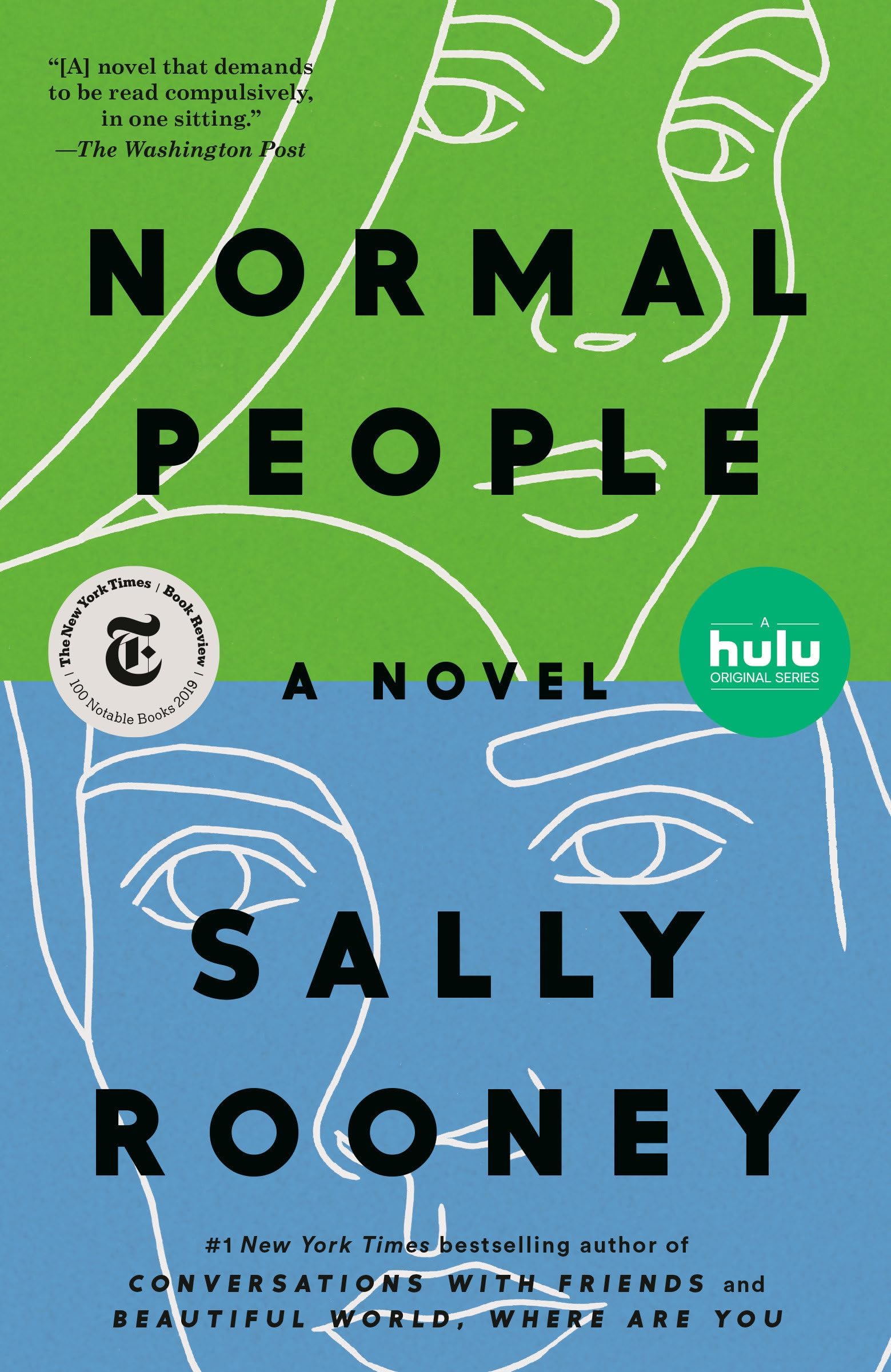
Normal People: A Novel
Product ID: 177123257
Buy anything from 5,000+ international stores. One checkout price. No surprise fees. Join 2M+ shoppers on Desertcart.
Desertcart purchases this item on your behalf and handles shipping, customs, and support to Malaysia.
NOW AN EMMY-NOMINATED HULU ORIGINAL SERIES • NEW YORK TIMES BESTSELLER • LONGLISTED FOR THE BOOKER PRIZE • “A stunning novel about the transformative power of relationships” ( People ) from the author of Conversations with Friends, “a master of the literary page-turner” (J. Courtney Sullivan). “[A] novel that demands to be read compulsively, in one sitting.”— The Washington Post ONE OF ENTERTAINMENT WEEKLY ’S TEN BEST NOVELS OF THE DECADE TEN BEST BOOKS OF THE YEAR: People, Slate, The New York Public Library, Harvard Crimson Connell and Marianne grew up in the same small town, but the similarities end there. At school, Connell is popular and well liked, while Marianne is a loner. But when the two strike up a conversation—awkward but electrifying—something life changing begins. A year later, they’re both studying at Trinity College in Dublin. Marianne has found her feet in a new social world while Connell hangs at the sidelines, shy and uncertain. Throughout their years at university, Marianne and Connell circle one another, straying toward other people and possibilities but always magnetically, irresistibly drawn back together. And as she veers into self-destruction and he begins to search for meaning elsewhere, each must confront how far they are willing to go to save the other. Normal People is the story of mutual fascination, friendship, and love. It takes us from that first conversation to the years beyond, in the company of two people who try to stay apart but find that they can’t. WINNER: The British Book Award, The Costa Book Award, The An Post Irish Novel of the Year, Sunday Times Young Writer of the Year Award BEST BOOKS OF THE YEAR: The New York Times , The New York Times Book Review, Oprah Daily, Time, NPR, The Washington Post, Vogue, Esquire, Glamour, Elle, Marie Claire, Vox, The Paris Review, Good Housekeeping, Town & Country Review: A masterfully-written novel about young love in the 21st Century - Do you ever consider the profound impact significant others have on your life? Decades ago, when our son was toddlerish, my husband and I took him into the country for a weekend. We rented a tiny, Eskom-free stone cottage in a dark valley. One night, with the boy asleep, we sat outside, dazzled by the night sky, and drank a bottle of wine. We’d been a couple for more than a decade by then and somehow began talking about how being together had shaped us as individuals and influenced our life decisions. It was a gentle, but remarkably illuminating discussion for both of us and about both of us. It's a conversation I regularly replay to myself to remember how lucky I am. I thought a great deal about that night as I read Sally Rooney’s novel, Normal People last week. Normal People tells the story about Marianne and Connell’s relationship, which begins when they’re at school in a small town in West Ireland and continues – on and off – for another four years while they’re at college in Dublin. It’s a tale with so many layers that, while my experience of reading it bordered on compulsive, I find it difficult to analyse – suffice to say that it’s not about the plot; it’s about the characters and their inner lives, and the writing. Rooney, who is 27-years-old, is widely feted as the next best thing, “one of the most exciting voices to emerge in an already crackerjack new generation of Irish writers”, and a “Salinger for the Snapchat generation”. I don’t dispute the praise. Her writing is extraordinarily elegant. Confident and uncluttered, it conveys an immediacy and ingenuousness that drew me in and held me from beginning to end, which came too soon. The story, I felt – shocked to discover I'd reached the final full stop – was unfinished, there were loose ends to tuck away. But, once I recovered, I realised the way it ends is part of its magic. Real relationships are forever evolving, eternally incomplete, and so it figures that a novel about relationships will be too. Normal People is told from both Marianne’s and Connell’s points of view. It reminded me how, no matter how well you think you know a person, your perceptions and understanding of what they say and mean can be skewed. The novel also shows how our identity, self-esteem and who we become as adults are bound to our upbringing – indefinitely. Marianne is from a wealthy, but unloving and dysfunctional family. Connell is from a poor, but loving family. It largely shapes who they are and how they relate to the world. The novel also examines the impact of bullying – both on victims and perpetrators. Ironically, I might not find the book easy to analyse, but I could go on forever, waffling about the many layers in Normal People. I daren’t though because then you might not feel compelled to read the book yourself, which would be a pity. A huge pity. Here’s a tiny sample of the writing to demonstrate what a humungous pity it would be: “Helen has given Connell a new way to live. It’s as if an impossibly heavy lid has been lifted off his emotional life and suddenly he can breathe fresh air. It is physically possible to type and send a message reading: I love you! It had never seemed possible before, not remotely, but in fact it’s easy. Of course if someone saw the messages he would be embarrassed, but he knows now that this is a normal kind of embarrassment, an almost protective impulse towards a particularly good part of life. He can sit down to dinner with Helen’s parents, he can accompany her to her friends’ parties, he can tolerate the smiling and the exchange of repetitive conversation. He can squeeze her hand while people ask him questions about his future. When she touches him spontaneously, applying a little pressure to his arm, or even reaching to brush a piece of lint off his collar, he feels a rush of pride, and hopes that people are watching them. To be known as her boyfriend plants him firmly in the social world, establishes him as an acceptable person, someone with a particular status, someone whose conversational silences are thoughtful rather than socially awkward." I’m not sure I feel changed after reading Normal People, but I do feel upgraded. And reminded about how life is a series of relationships, and how a few of them help shape who we are and how we live our lives. And that thinking about that and acknowledging those who positively influence us is important. And yes, Sally Rooney has a fan in me. My current read is her first novel, Conversations with Friends. Review: Unexpectedly Moving - Here is one instance in which having seen the series before reading the book was NOT a conflict. The Hulu series almost completely honored the content and format of the book. The advantage of the book was understanding the thoughts going through the characters' minds in their moments of silent examination of one another. I really enjoyed the series, and I enjoyed the book even more. As is nearly always the case, the book offers more depth to the characters, but I think the casting was perfect and it was gratifying to see a book and a series so in line with one another. Anyway, this is a review about the book, not the show. I've seen some unflattering reviews that say the book is meaningless and fluffy drivel, and that the characters are flat and dull. I wholeheartedly disagree. I think that the characters and the story successfully convey what it means to feel isolated and different. They're not lively and bubbly because the book is all about being abnormal and unable to fit in. The whole point is that they are people who don't fall into many of the facets of standard social norms and therefore they cling to each other and keep going back to each other throughout the years. Rooney covers topics of mental, physical and sexual abuse with discretion and respect, and never once makes it exploitative for the sake of conflict and building tension. I love that she doesn't use the standard form of dialogue with breaks and quotation marks. I've seen some complaints about that stylistic choice, but I think it was the perfect choice for a book about people who are so much in their own heads and unable to properly convey themselves to anyone but each other. I've also seen some complaints about Rooney's prose, or lack thereof. I'm flabbergasted by that. There are some bits that are nearly poetic in their beauty, and some bits that so perfectly capture the human condition and the frail psyche of the depressed and downtrodden. It was not a perfect book, but it's one that I would confidently recommend and likely one that I will read again.



| Best Sellers Rank | #1,547 in Books ( See Top 100 in Books ) #26 in Coming of Age Fiction (Books) #43 in Psychological Fiction (Books) #105 in Literary Fiction (Books) |
| Customer Reviews | 4.1 out of 5 stars 135,598 Reviews |
P**Y
A masterfully-written novel about young love in the 21st Century
Do you ever consider the profound impact significant others have on your life? Decades ago, when our son was toddlerish, my husband and I took him into the country for a weekend. We rented a tiny, Eskom-free stone cottage in a dark valley. One night, with the boy asleep, we sat outside, dazzled by the night sky, and drank a bottle of wine. We’d been a couple for more than a decade by then and somehow began talking about how being together had shaped us as individuals and influenced our life decisions. It was a gentle, but remarkably illuminating discussion for both of us and about both of us. It's a conversation I regularly replay to myself to remember how lucky I am. I thought a great deal about that night as I read Sally Rooney’s novel, Normal People last week. Normal People tells the story about Marianne and Connell’s relationship, which begins when they’re at school in a small town in West Ireland and continues – on and off – for another four years while they’re at college in Dublin. It’s a tale with so many layers that, while my experience of reading it bordered on compulsive, I find it difficult to analyse – suffice to say that it’s not about the plot; it’s about the characters and their inner lives, and the writing. Rooney, who is 27-years-old, is widely feted as the next best thing, “one of the most exciting voices to emerge in an already crackerjack new generation of Irish writers”, and a “Salinger for the Snapchat generation”. I don’t dispute the praise. Her writing is extraordinarily elegant. Confident and uncluttered, it conveys an immediacy and ingenuousness that drew me in and held me from beginning to end, which came too soon. The story, I felt – shocked to discover I'd reached the final full stop – was unfinished, there were loose ends to tuck away. But, once I recovered, I realised the way it ends is part of its magic. Real relationships are forever evolving, eternally incomplete, and so it figures that a novel about relationships will be too. Normal People is told from both Marianne’s and Connell’s points of view. It reminded me how, no matter how well you think you know a person, your perceptions and understanding of what they say and mean can be skewed. The novel also shows how our identity, self-esteem and who we become as adults are bound to our upbringing – indefinitely. Marianne is from a wealthy, but unloving and dysfunctional family. Connell is from a poor, but loving family. It largely shapes who they are and how they relate to the world. The novel also examines the impact of bullying – both on victims and perpetrators. Ironically, I might not find the book easy to analyse, but I could go on forever, waffling about the many layers in Normal People. I daren’t though because then you might not feel compelled to read the book yourself, which would be a pity. A huge pity. Here’s a tiny sample of the writing to demonstrate what a humungous pity it would be: “Helen has given Connell a new way to live. It’s as if an impossibly heavy lid has been lifted off his emotional life and suddenly he can breathe fresh air. It is physically possible to type and send a message reading: I love you! It had never seemed possible before, not remotely, but in fact it’s easy. Of course if someone saw the messages he would be embarrassed, but he knows now that this is a normal kind of embarrassment, an almost protective impulse towards a particularly good part of life. He can sit down to dinner with Helen’s parents, he can accompany her to her friends’ parties, he can tolerate the smiling and the exchange of repetitive conversation. He can squeeze her hand while people ask him questions about his future. When she touches him spontaneously, applying a little pressure to his arm, or even reaching to brush a piece of lint off his collar, he feels a rush of pride, and hopes that people are watching them. To be known as her boyfriend plants him firmly in the social world, establishes him as an acceptable person, someone with a particular status, someone whose conversational silences are thoughtful rather than socially awkward." I’m not sure I feel changed after reading Normal People, but I do feel upgraded. And reminded about how life is a series of relationships, and how a few of them help shape who we are and how we live our lives. And that thinking about that and acknowledging those who positively influence us is important. And yes, Sally Rooney has a fan in me. My current read is her first novel, Conversations with Friends.
T**.
Unexpectedly Moving
Here is one instance in which having seen the series before reading the book was NOT a conflict. The Hulu series almost completely honored the content and format of the book. The advantage of the book was understanding the thoughts going through the characters' minds in their moments of silent examination of one another. I really enjoyed the series, and I enjoyed the book even more. As is nearly always the case, the book offers more depth to the characters, but I think the casting was perfect and it was gratifying to see a book and a series so in line with one another. Anyway, this is a review about the book, not the show. I've seen some unflattering reviews that say the book is meaningless and fluffy drivel, and that the characters are flat and dull. I wholeheartedly disagree. I think that the characters and the story successfully convey what it means to feel isolated and different. They're not lively and bubbly because the book is all about being abnormal and unable to fit in. The whole point is that they are people who don't fall into many of the facets of standard social norms and therefore they cling to each other and keep going back to each other throughout the years. Rooney covers topics of mental, physical and sexual abuse with discretion and respect, and never once makes it exploitative for the sake of conflict and building tension. I love that she doesn't use the standard form of dialogue with breaks and quotation marks. I've seen some complaints about that stylistic choice, but I think it was the perfect choice for a book about people who are so much in their own heads and unable to properly convey themselves to anyone but each other. I've also seen some complaints about Rooney's prose, or lack thereof. I'm flabbergasted by that. There are some bits that are nearly poetic in their beauty, and some bits that so perfectly capture the human condition and the frail psyche of the depressed and downtrodden. It was not a perfect book, but it's one that I would confidently recommend and likely one that I will read again.
B**M
I wanted to like this more, but ...
Rooney is an interesting writer and a talented one. She embraces a variety of stylistic eccentricities that weren't off-putting per se (including dispensing with quotes for dialog), but in retrospect, seem somewhat contrived, perhaps to mark her as "different" among her literary peers. Her prose capturez moods and emotions compellingly, and despite the novel's shortcomings, I found it very readable and engaging to a degree. So I really did want to give this a strong write-up, but by the end, I was mostly exhausted and irritated by the two main characters and their myriad and inconsistent neuroses. Here's Connell at the start: the much loved son of a working-class single mom, smart, athletic and popular (the high school trifecta, even in Ireland I'd guess) and seemingly completely indifferent to knowing anything about his biological dad, including who he is. It's mentioned once and then never again. How odd is that? Does it explain his unwillingness to be seen with Marianne even though he otherwise comes across as confident and cool, and unafraid to go against the grain. Does it explain his total breakdown and flirtation with suicidal thoughts later -- a shift I found shocking without any real run-up other than the suicide of what seemed a casual high school friend. Then a few months later, he's back on track, again inexplicably. Then there's Marianne whose shifts seem even more radically unbelievable: She's invisible at school or disliked (it's not totally clear which) and yet appears totally indifferent to the scorn or unfriendliness of her peers while also yearning for some human connection. She's above or outside the social fray and believes herself a superior being on one level, yet consumed by self-hatred on another level. We learn she's a victim of abuse (father, brother physically, maybe sexually?) and mother (verbally and emotionally). So she's a mess -- yet once at Trinity, suddenly popular, beautiful, admired. How does that happen? Why did it happen? Then within months, maybe a year, loses friends, is talked about scornfully and negatively, dips in a sado-masochistic relationship in Sweden and yearns to be submissive, but never with anyone who professes to love her (although Connell seems outside that equation). Again, what? Why? Marianne in particular wants to know she's special -- NOT normal -- while Connell seems to embrace a sense of normality as an occasional blessing (granted to him by a girlfriend, for instance) but normalcy is never part of what connects him and Marianne in a relationship that is both affecting and deeply dispiriting. It's clear they do love each other, but even at the end (and I hated the end) it's not clear what keeps them apart. Is their love unreal? Unsustainable? Abnormal in some way? Is she being noble and unselfish to send him off to study in the US? Is the last line a suggestion they will ultimately have a relationship that looks more "normal" (to play off Rooney's always ironic use of the word). Or is she simply giving up on herself in some weird and mad form of submission. Ultimately, it's impossible to know and sadly, by that point, I didn't care.
M**N
Gripping, page turner, character deepdive
I really enjoyed this book. 4.5 stars Strengths: -Page turner. It hooked me right away, and never let go. -Emotional complexity. It felt nice to get to know the characters deeply. They were well-developed. -Perceptive criticisms. There were some nice commentaries on status games, art, and douchey people Things that bothered me: -Kinky-shaming. I’m kinky, and I think this book portrays kink in a pretty negative, and extremely narrow light. BDSM is already a very misunderstood subculture, and this book just added fuel to that fire -Plot relies on bad communication. I’m so sick of romance books and shows developing a plot based on characters’ inability to be honest w how they feel and what they want 😵💫. And this book fell prey to that -The book jumps from present to past a lot. It felt a little unnecessary, and confusing at times. I'd often forget we were in the past, and then I'd get brought back to the present. -Try-hard. Just a little bit. I can't pin down why, but I had the theory tha tthe author really wanted to come off as perceptive and clever. But some of her descriptions just felt like she was trying too hard. -No quotations! Minor thing, but when characters speak, there are no quotation marks! I never really adjusted and didn't like this style edit. All in all though, great book. I enjoyed it a lot and will definitely read another novel by the author.
L**W
NEAR MISSES AND MISSTEPS...
Connell and Marianne grew up in the same small town, but the similarities end there. At school, Connell is popular and well liked, while Marianne is a loner. But when the two strike up a conversation—awkward but electrifying—something life changing begins. A year later, they’re both studying at Trinity College in Dublin. Marianne has found her feet in a new social world while Connell hangs at the sidelines, shy and uncertain. Throughout their years at university, Marianne and Connell circle one another, straying toward other people and possibilities but always magnetically, irresistibly drawn back together. And as she veers into self-destruction and he begins to search for meaning elsewhere, each must confront how far they are willing to go to save the other. My Thoughts: There was something very painful about watching the way Connell and Marianne came together and pulled apart over time. The push and pull of their connection to one another was like a dance, but one that was awkward and hurtful. Normal People felt so ironic, in that the two of them seemed to go out of their way to avoid connecting with each other. Their inability to communicate their true feelings felt like a phase in the beginning since the young often cannot say what they truly mean to one another. Their near misses could “normally” be this off in the adolescent stages, but these two kept up their blundering and stumbling shuffle for many years, well into college and beyond. Their disparate backgrounds and dysfunctional families did not help them learn better ways to be together, but in the end, I gave a painful sigh when they stumbled upon ways to talk to one another in a halting fashion. Finally. This book was difficult to read, not only because of the constantly shifting emotions, but the writing style was off-putting, with its absence of quotation marks that made the communication seem even more challenging to follow. A worthwhile read, once the reader gets through the “stumbling” parts. 4 stars.
A**A
refreshing portrayal of a relationship that is not black and white;
5/5 ☆☆☆☆☆ #andreeareviews I have finally read Normal People! I watched the show last year and loved the refreshing portrayal of a relationship that is not black and white; it’s complex, both joyful and painful, and follows the growth of the protagonists. Needless to say, I loved the book. I’ve been putting it off because this is the last Rooney novel that I haven’t read, and I am left with a massive book hungover that only another Rooney novel can fix. It’s impossible not to feel with the characters, from the awkwardness of the relationship to the impact of their personal trauma on it. It feels like Rooney reaches into your soul, turns it inside out and says: “Here, deal with this now.”. The writing is deceptively simple yet cuts straight to the heart. We met Marianne and Connell in high school. On the surface, Marianne is an ostracised, weird girl with no friends and an aloof attitude that puts people off. Connell is a popular guy, having lots of friends and being the object of interest of many girls. Connell’s mother works for Marianne’s household as a housekeeper; thus, Connell meets Marianne outside of school whenever he picks up his mom. Their brief interactions give birth first to a form of hidden friendship that turns into lust and then love as they get closer and more intimate. Their relationship is complicated in the true sense of the word and is deeply influenced by their trauma. Marianne was physically abused by her father; upon his death, the abuse continued with both her mother and brother physically and emotionally abusing her; she was ignored at home and at school, growing up without any friends and without being loved; in school, she was bullied and ostracised, becoming an apparently cold person, incapable of healthy attachment or love. She does not think she deserves to be loved, and I don’t think she knows what being loved really means. On the other hand, Connell has grown up with a single mother, never knowing her father. He felt loved and appreciated at home; however, he is an introverted, quiet person; nevertheless, this doesn’t stop him from making friends in school and being easygoing and attractive. Later on, however, in college (they both go to the same college), connecting with people becomes harder, and he feels burdened by his social background, coming from a working-class family and hanging out in a circle of rich individuals (such as Marianne). Their relationship evolves and devolves like a mesmerising dance from youth to young adulthood. They bring complexities into each other’s lives, driven by personal trauma, comfort, and a sense of having found home in that person who knows you and understands you fully. Connell, the quiet, brooding intellect, and Marianne, the sharp, unapologetic force of nature - their dynamic is a study of contrasts. Connell’s internal struggles, the perpetual feeling of not being “enough”, and Marianne’s journey from isolation to self-discovery and perhaps self-love (I am not certain she reached it by the end of the book, but it does feel like she’s on her way) - Rooney peels back the layers, revealing characters so achingly human. And this is what makes Rooney’s writing stand out for me: the incredibly relatable characters, with awkward moments, misunderstandings, and hardship, to communicate feelings and thoughts. The plot becomes, therefore, a canvas where their insecurities, desires, and mistakes point to a poignant picture of love, friendship, and the quest for identity. I said it before: Rooney is a master of dissecting the nuances of human connection. The themes of power, vulnerability, and societal expectations are woven into the narrative's fabric. The on-again-off-again nature of Marianne and Connell’s relationship isn’t just about love; it’s a mirror reflecting the intricacies of self-worth, societal pressures, and the messiness of growing up. The exploration of intimacy, both emotional and physical, is raw and unapologetic. Rooney does not shy away from the uncomfortable, and that’s where the magic happens. The power dynamics at play, the impact of societal expectations on individual choices - it’s a literary feast for readers hungry for substance. Finally, Normal People is not just a book for me; it’s a mirror reflecting the jagged edges of human relationships. Rooney doesn’t hand you answers on a silver platter; she hands you a mirror and says: “Look closely.”. In the end, you’re left with a breathtaking yet heartbreaking portrait of love and the messy, unfiltered journey toward self-acceptance, pondering long after the final page.
S**N
A millennial writer for the ages
In CONVERSATIONS WITH FRIENDS, Irish writer Sally Rooney embraces the moniker “millennial writer” by commanding the consequential riptides of the personal computer age for 20-somethings, yet not depending on it as a crutch or gimmick. She’s spot-on at mixing the clean and the messy, visually appealing characters with their urbane and often insouciant lifestyles, but never misses the humanity and poignancy that gives the story its heart. In her new novel, NORMAL PEOPLE, Rooney is like the anti-zeitgeist zeitgeist writer, or the anti-hip hip writer. I say that because the novel has a classical sensibility—third person pov, a love story of the wealthy, self-contained girl with the awkward, underprivileged boy, and the recall of manners novels of another era. But the author also textures it with a contemporary setting and modern angst. The years of post-crash Ireland, a wry tone, tacit gender equality that quivers with intimate power shifts. The lovers, Marianne and Connell, start their love story in high school, and are at cross-purposes, which is the main suspense and action that provides tension. Connell’s mother, a warm and loving woman, cleans houses for Marianne’s family (both are single mothers). Marianne’s brother is abusive and her mother dismisses her entirely. Although Marianne is from the elite family, this is a small town in Sligo Co. where her offbeat style is off-putting to her peers. Connell is a winning athlete and popular, and they begin their on-again, off-again romance in secretive fashion. Time passes with titles of Five Months Later, Three Months Later, or even a few days later, moving forward from 2011 to 2015, from high school on to college at Trinity Dublin. As the narration alternates between the pair, the background story fleshes out. The reader is in suspense as each time period begins, not knowing the status changes of their relationship until you are teased into it. The novel itself is largely interior, and the raw emotional and psychological energy is the story’s propulsive force. Yet, Rooney’s precise language and stripped down descriptions of place are yet amplified by the physicality of her prose. “At times he has the sensation that he and Marianne are like figure-skaters, improvising their discussions so adeptly and in such perfect synchronization that it surprises them both.” And the exposed, rough and yet tender description of the electricity between them is ongoing: “She was attuned to the presence of his body in a microscopic way, as if the ordinary motion of his breathing was powerful enough to make her ill.” Their relationship is often quiet, even when turbulent, a gale force between the two of them and a mystique to others. They confide in almost no one but themselves, even when they are off-again. A wall separates them, but when they penetrate it, there’s a shattering, like glass. But don’t expect a tidy ending—if you read CONVERSATION WITH FRIENDS, you know it isn’t Rooney’s way. She’s more of a yin yang writer, with an ending that is somewhere in the middle of time and things and life. “From a young age her life has been abnormal, she knows that. But so much is covered over in time now, the way leaves fall and cover a piece of earth, and eventually mingle with the soil. Things that happened to her then are buried in the earth of her body.”
J**E
Two People, One Complicated Connection
I’ve heard really good things both about this book as well as the author. I found the book to be unique, interesting, captivating in a passive way. It’s hard to explain… I don’t think it’s a bad book by any means, it’s actually quite good, especially in its depiction of a complicated emotional connection that evolves over very fundamental years of a person’s life. However the entire time while reading it I just kept waiting for the other shoe to drop and in hindsight I now know it’s not that kind of book, it still feels a bit flat. I think this story would’ve had a more profound impact on me had I read it 5, 8 or even 10 years ago when I was in my late teens or early twenties but now nearing thirty, I feel a bit estranged from the beautifully awkward and emotionally trying times of early adulthood. Reading this book now at 28, I just feel a little sad and bit frustrated at Marianne and Connel’s friendship/relationship. The prose, the evolution of both their characters and their connection with one another were all very interesting and made it for a worthwhile read but the overall story, the actions taken by the characters and the lack of conclusion (while understandable) left me feeling flat and emotionally numb. 3.75 / 5
V**A
You'll be dwelling into the story of their unique, private, such complex relationship
I almost read this book in one-go and I'm not a huge reader. Their relationship is so fragile yet so strong throughout the probably one of the most difficult time: the transition of high school to college year. It felt like I was in it, standing and seeing this couple struggle and grow. Can't wait to see the tv show on bbc now.
A**E
All good
The book was in good shape when it arrived. The rating does not represent a rating of the story.
E**A
Kom lite skadad
Inte läst än och för er som inte vet så finns det inga " eller - för dialoger så ni är förberedda på det
K**A
Blown away
Wow! People had recommended this book but I had been putting it off. It has been quite a challenge to read as I’m in a weird position in my life, but still would totally recommend reading it. So good descriptions of feelings that I had never thought off and they describe them so accurately. Great reading!
B**N
The Best Scariest Book Ever -im kidding
The book arrived clean and carefully packaged. I’ve started reading it. The series is exactly the same as the book.
Trustpilot
1 week ago
1 month ago