
DOWNLOAD THE APP


Customer Services
Copyright © 2025 Desertcart Holdings Limited
DOWNLOAD THE APP


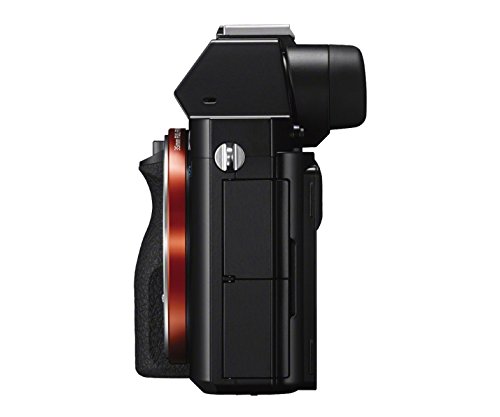
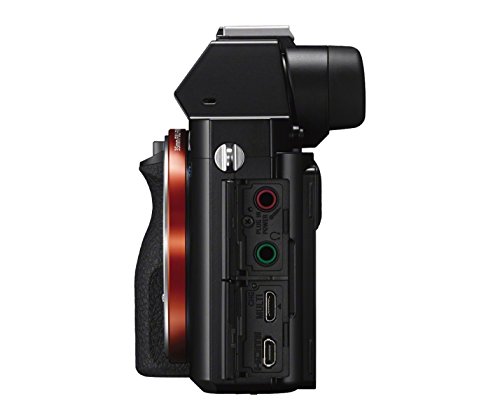
🚀 Elevate your vision with Sony α7S — where night turns into your brightest canvas.
The Sony ILCE7S/B Alpha a7S is a certified refurbished, ultra-compact full-frame mirrorless camera featuring a 12.2MP Exmor CMOS sensor optimized for exceptional low-light performance with ISO up to 409,600. It supports uncompressed 4K video output via HDMI, fast intelligent autofocus down to EV -4, and a tiltable 3.0-inch LCD for versatile framing. With Wi-Fi and NFC connectivity, it integrates effortlessly into your professional workflow, making it a top choice for videographers and photographers demanding high sensitivity and cinematic quality in a lightweight form.
| Metering Methods | Multi, Center-weighted, Spot |
| Exposure Control | Aperture priority, Automatic, Program, Shutter priority |
| White Balance Settings | Auto, Daylight |
| Self Timer | 10 Seconds |
| Screen Size | 3 Inches |
| Display Type | LCD |
| Display Fixture Type | Tilting |
| Display Resolution Maximum | 921000 |
| Has Color Screen | Yes |
| Flash Memory Type | SD/SDHC/SDXC, Memory Stick Duo/Pro Duo/Pro-HG Duo |
| Memory Slots Available | 1 |
| Write Speed | 5 fps |
| Flash Memory Speed Class | UHS Speed Class 3 (U3) |
| Flash Memory UHS Speed Class | U3 |
| Flash Memory Video Speed Class | 6 |
| Flash Memory Bus Interface Type | SD |
| Compatible Mountings | Sony E |
| Sensor Type | CMOS |
| Image stabilization | Digital |
| Maximum Aperture | 3.5 Millimeters |
| Expanded ISO Minimum | 50 |
| Photo Sensor Resolution | 12.2 MP |
| Photo Sensor Size | Full Frame (35mm) |
| Maximum Shutter Speed | 1/8000 Seconds |
| Minimum Shutter Speed | 30 seconds |
| Form Factor | SLR-style mirrorless |
| Special Feature | Travel |
| Color | Black |
| Item Weight | 1.08 Pounds |
| Video Resolution | FHD 1080p |
| Viewfinder | Electronic |
| Flash Modes | Auto, Fill Flash, Hi-Speed Sync, Off, Rear Sync, Red-Eye Reduction, Slow Sync, Wireless |
| Camera Flash | Built-In |
| Skill Level | Professional |
| Compatible Devices | Smartphones, Computers |
| Continuous Shooting | 1.2E+2 FPS |
| Aperture modes | F3.5+ |
| Viewfinder Magnification | 0.71x |
| Audio Input | Microphone |
| Flash Sync Speed | 1/250 sec |
| Video Capture Format | MP4 |
| Expanded ISO Maximum | 409600 |
| Battery Weight | 2 Grams |
| Battery Cell Type | Lithium Ion |
| Battery Average Life | 380 Photos |
| Battery Type | Lithium Ion |
| Aspect Ratio | 3:2, 4:3 |
| File Format | JPEG (DCF 2.0, EXIF 2.3), RAW (ARW 2.3) |
| Effective Still Resolution | 12.2 MP |
| JPEG Quality Level | Basic, Fine, Normal |
| Supported Image Format | AVCHD, JPEG, MPEG-4, RAW |
| Maximum Image Size | 10.02 Inches |
| Bit Depth | 14 Bit |
| Total Still Resolution | 12.2 MP |
| Maximum Focal Length | 70 Millimeters |
| Optical Zoom | 1 |
| Lens Type | 1/2-inch (1.3 cm) XGA OLED color electronic viewfinder (2,359,296 dots) |
| Zoom | Optical Zoom, Digital Zoom |
| Camera Lens | 35 Mm |
| Real Angle Of View | 54.12 Degrees |
| Digital Zoom | 2 |
| Connectivity Technology | NTSC |
| Wireless Technology | Yes |
| Video Output | HDMI |
| Total USB 2.0 Ports | 1 |
| Total USB 3.0 Ports | 1 |
| Total USB Ports | 1 |
| Total Video Out Ports | 1 |
| Shooting Modes | Aperture Priority, Auto, Manual, Program, Shutter Priority |
| Digital-Still | No |
| Movie Mode | Yes |
| Image Capture Type | Stills |
| Night vision | Yes |
| Auto Focus Technology | Hybrid |
| Focus Features | Contrast detect |
| Autofocus Points | 25 |
| Focus Type | Auto Focus |
| Focus Mode | Continuous-Servo AF (AF-C), Direct Manual Focus (DMF), Manual Focus (MF), Single-Servo AF (AF-S) |
| Autofocus | Yes |
Y**G
2019: A Good Specialty Camera for Photographers
I am a professional photographer and I have owned every other A7 camera including A7, A7S, A7R, all the gen 2 versions and now the gen 3. I currently shoot on the A7riii. If you'r reading this review then you likely already know enough about what this camera's amazing low light performance and want to know if this camera is still relevant in 2019.The short answer is really depending on what you plan to use it for. At the $2,000 the answer is no for all scenarios. For $400 more you can purchase the A7sii and that's a significant upgrade which I will go into further below. However if you can find this camera for around $1,500 or less, then the answer is YES!If you're an advanced amateur or getting into the photography or the video business, then this is a great camera. It is small, light, and powerful in low light situations without having to own flashes and other light modifiers. For video, most videographers will need a gimbal for smoothing out shake anyways so having IBIS (from the A7sii) may be redundant for your purposes and you can save some money with this camera. However if you are a working video professional, then most likely you should skip over this generation and go for the A7sii or the A7iii for 4k and 6k downsampling capabilities. However if you need a backup camera or a camera for personal projects, it still holds its value well.I used this camera mostly for photography stills as a backup for my A7rii. While this camera is primarily geared towards video, in my experience shooting stills with this camera is great despite what others may tell you about autofocus and video. It's definitely not a main camera for photo stills (12MP is too low to deliver to a client) but works well as a secondary or backup camera for low light situations. Even today the A7s holds up well as being a legendary low light king that's unmatched by few others. Possibly the reason why the price is still around $2000 is because there's no other camera out on the market besides the mark 2 that can match the same type of low light performance. The A7Sii is essentially the same camera with 1 stop better low light ISO performance in a better body with IBIS. The IBIS may not directly affect image quality but it allows for far longer hand held stills and smoother video so that it essentially boosts the low light image quality by leaps.Low light - This is this camera's strongest selling point. Low light beast. This camera will shoot in situation that no other camera can shoot in, and shoot it cleanly. People who don't know about this camera are constantly asking me to "turn on the flash" or "you'll never get that photo" and then are amazed when I show them the results. Simply put this camera is superb in producing "natural light" photos in low light without the distracting flash or harsh flash lighting. It's a unique look that few other cameras can really replicate.Dynamic Range - This camera has amazing dynamic range. It's like having layers and layers of color and data hidden under each fold. You can literally shoot once and bring out colors and details you never thought were there. The files are extremely malleable for editing. This is especially true for shooting in low light. Low light shadows anddark areas can almost ALWAYS be brought up for additional details hidden in the shadow.AF - this is the main concern most people have with using this camera for stills. True, this camera has no phase detection AF and it's all contrast detection. However it's AMAZING contrast detection. I've honestly never had issues with it as it is fast, accurate, and works in the dark. The camera was made for low light use so consequentially the sensor's ability to see in the dark and focus in the dark is excellent. I've had cameras like the A7rii and A7ii which have hundreds of "advanced hybrid PDAF/CD" sensors utterly fail in low light. The A7s is always dependable in seeing where sometimes your eyes can't.Battery - The gen 1 and gen 2 A7 cameras all have issues with battery life. It's a consequence of the small W batteries and it wasn't addressed until the gen 3 Z type batteries were introduced. But for stills photography where you don't need the camera to be on for 30 min at a time, it was sufficient with a second backup battery. When shooting video you have the camera on for hours at a time filming and will need to attach a second screen, mic, and extra batteries. For photos, get into the habit of turning the camera off when not shooting and turn it back on when you're ready to shoot.Megapixels and Image quality. This is my primary issue with the camera. 12 megapixels. Even though it's 12 beautiful megapixels, it is unfortunately not enough. 12MP is the size iphone cameras shoot these days. I am constantly wishing there was JUST BIT MORE megapixels squeezed in there to play around with. Often it comes when I need to crop photos down for better composition. I shot this in tandem with a A7rii and I could crop the hell out of the A7rii's 42MP files to get to my liking. The A7s's 12mp files are almost at the limit of what's deliverable to the client. Cropping even 20% gives you 9MP which is understandably tiny. The standard in the industry is 24 megapixels and 12 is too little to deliver to a client. Furthermore, used with beautiful Sony G Master lenses you really can't make proper use of the lens's resolving ability. Small tiny details and textures are lost because the 12MP sensor can't record all the details. However with 12MP you have nearly unlimited image storage with a 64gb card size. The file sizes are tiny, under 16mb per file as RAWs. For things like Instagram where you're limited to a 1080x1080 size, then it's good enough, but for anything serious, it won't be.At the end of the day you want to know if you should buy this camera. At $2000, the answer is no. For $400 more you can get the A7sii which with IBIS makes a lot more sense to a photographer or videographer. However around $1500 it's definitely worth it as a backup camera or a main camera for an aspiring photographer or videographer. I would say get one just to experience how good a true low light camera can be!***If this review was helpful, please give me a helpful vote! Thanks!
M**R
Great camera, works perfect in low light, takes time to master all of the functions.
The sony A7S camera is absolutely amazing. It shoots wonderfully in low light. I bought this product used and it came with everything you would have expected. It was even wrapped up nicely in a foam sleeve. The sensor was spotless and no signs of wear and tear. The strap was never opened.As soon as I started working with the camera I fell in love with it. It practically sees in the dark.Buyer beware tho, the camera does everything and packing everything into a small interface means there are allot of settings that do not seem apparent out of the box. Sony has an app store that allows developers the ability to build in extra functions, but it ships missing a few key features.You must download an app to perform time lapse photography. Once in this app you have to exit the app to return to normal shooting. Not a deal breaker, but kind of annoying especially since I'm an amateur photographer and when I'm shooting, I want to be taking shots not setting up the camera.As far as customization, the A7S does allow you to set up 3 buttons to match your shooting style, putting features you use most at your fingertips.All in all, grab a few lenses and this camera will take care of the rest.All photos below shot on a ZYKKOR WIDE ANGLE 28MM F2.8 with a MD>E-Mount adapter.http://www.amazon.com/gp/product/B00E5T5BJW?psc=1&redirect=true&ref_=oh_aui_detailpage_o01_s00
T**A
Nice light cam
I bought the Sony A7S because I wanted a lighter rig for event photography. I was getting tired of lifting a 4.5 lb pro DSLR rig (including flash) to events where I'd be standing, holding the camera for 3+ hours.The A7S (with Godox flash and 24-70 F/4 lens) is half the weight of my previous DSLR rig. So mission accomplished there.In terms of usability, it took me an hour or so to get used to the menus and set the camera up the way I like it. People complain about the menus but I really didn't find it any better or worse than any other professional DSLR. If I couldn't find something I googled it and quickly got an answer to direct me to the right menu option.In terms of build quality, both the A7S and the 24-70 f/4 lens are a class act. It's very apparent this camera is a step above other semi pro cameras. The finish is almost museum quality.In term of usage, the A7S is a mixed bag. The photo quality is excellent, but it strains to compete with a pro 20 megapixel plus full frame DSLR. The lower megapixel count leaves the image quality in average light about half way between a great aps-c camera and a full frame.The low light capabilities of the A7S are really quite good. I usually shoot events in dark settings using 1/60th of a second, ISO 1000 at f/4. Most of my shots are at around 24mm. I noticed less noise in the dark areas than a comparable DSLR. My first impression is that the A7S has about a 2 stop noise advantage over the typical DSLR. My old rig, I would comfortably shoot up to ISO 1600 and feel okay handing clients photos. With the A7S I could go as high as ISO 6400 no problem (and perhaps even higher).I was hesitant to give the D7S five stars because the autofocus is not comparable to a semi pro DSLR. It seems that the autofocus takes a little bit of time to confirm focus. Perhaps this is the lens I'm using. By no means is the autofocus slow, but my previous semi pro DSLR rig, I could mash on the shutter button and be pretty sure to get focus no matter what. I was still able to work okay with it, but there might be a few cases where I might not get the shot because I'm taking that shot in a real hurry.What really amazed me is that I don't have to touch the photos in post. With my old DSLR, I was always adjusting exposure, adjusting light room sliders, white balance, etc. With this cam, no post adjustment is needed at all. Very, very occassionally I might adjust the exposure, but this is primarily due to the decisions of the flash unit. From that perspective, this cam really speeds up my work, specially when I'm trying to get a lot of photos processed for a client in a very short period of time.Video from this camera is awesome, especially in low light. I've shot this cam in low light that I would not even attempt with any other camera/video camera and the result is little noise (when there is practically no light to work with) and no noise with a slight amount of light to work with (we're talking candle light). The resulting video in low light looks exactly as I remember seeing the scene with my own eyes, and that was using auto setting!.Some people complain about battery life but I was able to get about 200 shots before the battery showed 1/4 full. I swapped out the battery and 2 rechargeables in my godox flash and carried on for a while. I could see some gigs where I might go 4 batteries. I have a battery grip that holds two batteries (cheap after-market $35 unit) so I can always go to that if I want to do an 800+ shot day.The main objectives for me have been met. The rig is small and less than half the weight of my previous DSLR. I gave up on some resolution compared to my 20+ megapixel rig. I gained two stops of low light. The images are rock solid so I don't even have to adjust them in post, that saves me time (and the smaller image size is faster for downloading, etc.). Autofocus isn't such that I could get shots mashing on the shutter in all situations, but workable for event photography. All in all, if you are willing to accept the trade offs between this cam and a large pro DSLR rig, it's a great choice. The cam is really the "king" of low light, for both stills and video, which is quite commendable and in a small package to boot.
Trustpilot
3 weeks ago
5 days ago