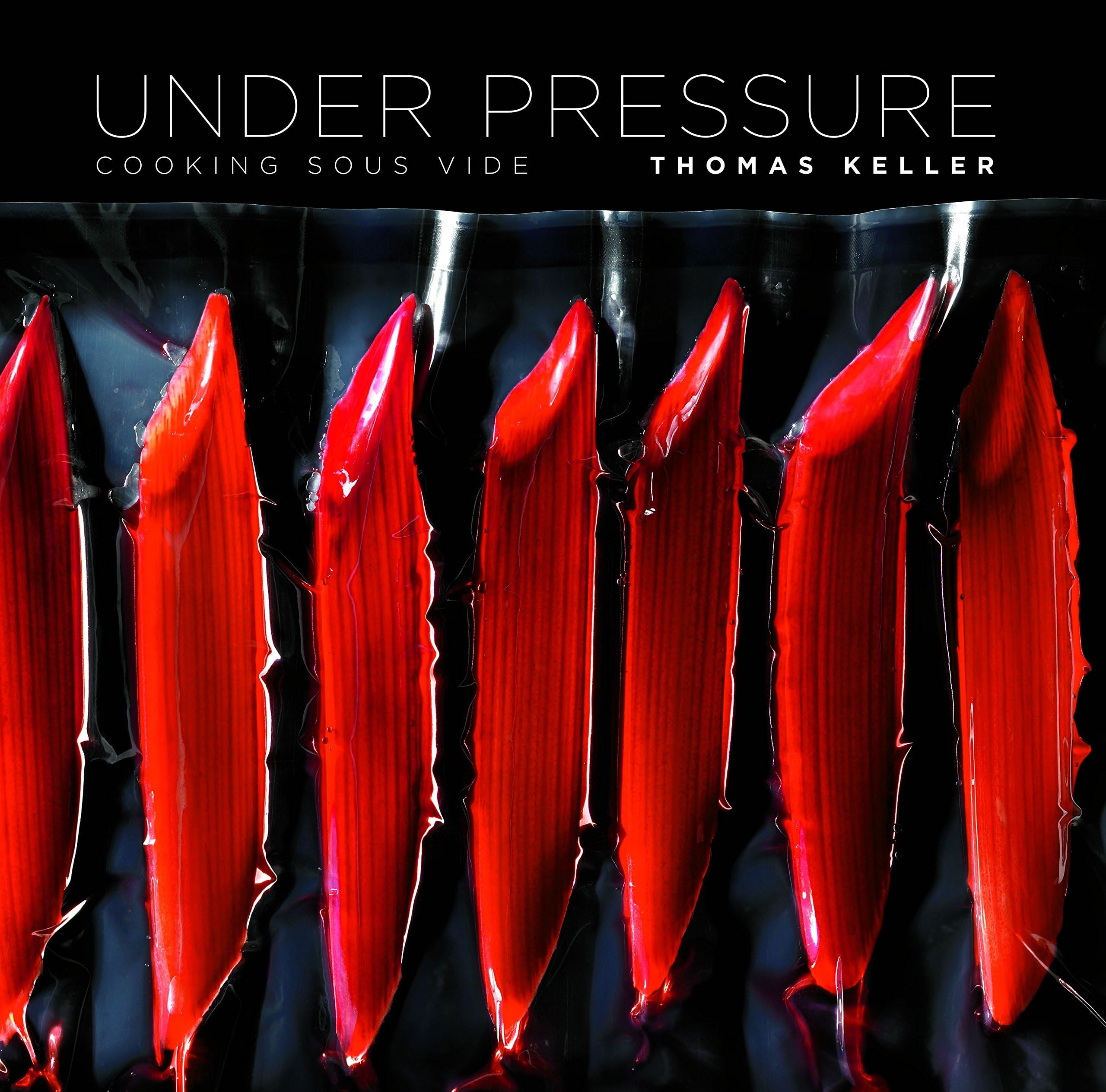
Under Pressure: Cooking Sous Vide
Product ID: 1274426
📚Expert chef-authored recipes
📸Stunning culinary photography
⏲️Precision temp control
Desertcart purchases this item on your behalf and handles shipping, customs, and support to Malaysia.
🔥 Sous Vide Secrets from a Culinary Legend – Cook Like a Pro, Impress Like a Boss!
Under Pressure: Cooking Sous Vide by Thomas Keller is a definitive guide to mastering sous vide cooking, featuring precise temperature techniques, exclusive recipes from world-renowned restaurants, and expert insights. This cookbook transforms challenging proteins and produce into restaurant-quality dishes, supported by stunning photography and comprehensive safety advice, making it an essential resource for serious home cooks and culinary professionals alike.


| Best Sellers Rank | #94,267 in Books ( See Top 100 in Books ) #45 in Professional Cooking (Books) #55 in Gourmet Cooking (Books) #72 in Pressure Cooker Recipes |
| Customer Reviews | 4.5 out of 5 stars 926 Reviews |
R**S
Obviously not for the "average" home cook. Rachael Ray fans need not apply
After reading many of the reviews of this book, I must get one thing off my chest: Thomas Kelller's cooking isn't meant to be accessible. If you know anything about the man, his food and his restaurants, then this won't be a surprise. Also, sous-vide as a technique was never developed to be utilized in an average home kitchen. The recipes in this book are clear, concise and don't leave anything out. It assumes you are using extremely high quality ingredients and have the means to maintain a water bath at a precise temperature. Sous vide can be done at home with fantastic results if you put enough care into preparation, timing and temperature maintenance. A foodsaver can be used. However professional vacuum machines are able to extract much more air from the bags (and are able to "compress" food which a foodsaver cannot) and obviously a lab quality roner would give the most exacting results in terms of cooking times and temps. The photography in this book is stellar, as is all of Keller's book and to me the Bras-like plate presentations are much more creative and visually interesting than his previous books, French Laundry included. This would be more of a resource for professional chefs with the skill and equipment to able to replicate the doness of proteins and vegetables. The personal insights of the various sous-chefs of the Keller empire and Sabastien Rouxel, the executive pastry chef are also worth noting as they aren't long and derivative, yet give the reader a broad understanding of what it takes to work at such a high level as well as obvious insights into sous-vide techniques and their utilization in the kitchen for things other than low-temp cooking. To me this is the most approachable book on the subject of sous vide. Other books like Joan Roca's "Sous Vide" is not only very expensive, but is long on scientific explanation and very short on content (relative to the high price) and isn't very practical. Jordi Cruz's "Logical Cuisine" also delves into low temperature cooking using sous vide to infuse stocks with other flavors, but the book as a whole only partly covers the full possibilities of sous vide cooking and the section on the subject is quite short. This book does a terrific job of distilling the essence of sous-vide cooking to the basics and organizes it in a clear and easily read source, in my opinion it is the best book to read up on the subject of sous-vide cooking
R**N
Morons
First, this is a rant. Second, this book is amazing and beautiful; a first of its kind and should be revered as such. Thomas Keller has been my go-to authority on cuisine for as long as I've know of him. I just received my copy of this book and I am absolutely thrilled. I will make this review very short, but I must respond to a few of the negative comments. Someone complained that this book was part of a trendy fad and that they were disappointed that Keller would endorse said fad. Well, moron, sous vide is not a fad as it has been popular in Europe for over thirty years. Also, someone complained that this book includes ingredients not easily obtained. You too are a moron and don't deserve to own this book. If you are serious about cooking and exploring the your personal unknowns then you can easily find these products on sites such as willpowder or simply google which ever hydrocolloid you need, you will surely find it. Also, some have raised the safety implications of cooking sous vide. If you have actually looked into the book and READ a little you may see the 3-4 pages of sous vide safety with each type of bacteria handled separately. I cannot wait to cook from this book. If you are a home cook and you don't have a vacuum sealer or an immersion circulator (I have neither) then you could simply buy the siploc vacuum bags and use a calibrated thermometer to achieve great results. There is a great description of a "ghetto sous vide" technique in the book Momofuku. Check it out.
W**N
An outstanding resource
If you are new to Sous vide, this book will provide a great historical context. The author provides recipes, photographs, and serving suggestions. If you are concerned with how to plate a particular dish, the authors photos will make the job much easier. One very important aspect of this book (which other Sous vide guides ignore) are the safety cautions. This technique is great but there are still safety precautions that you need to take. The only “negatives” that I could find are: (1) the type is small (I am 78 and ‘my eyes are great) and the book is heavy. High quality throughout. Amazon’s price for the book is well below the publisher’s list price ($75). I highly recommend this book.
C**E
An instant classic, but not for everyone
This cookbook is a mirror into the reader's own attitude toward cooking. If you are a professional with all the expensive equipment, a demanding clientele and a pioneering spirit, this book will quickly become an essential reference. If you are a casual home cook curious about sous vide wizardry and perhaps interested in toying with the techniques, you will find this book intimidating and useless. For foodies who have been intrigued by "molecular gastronomy" restaurant offerings, this book may answer a few "How did they do that?" questions. Given the level of creative energy between this book's covers, it is an outstanding value for the listed Amazon price. Understand, however, that as Keller states on p. 38, this book is "written for the professional kitchen, from one chef to another. No modifications have been made to accommodate cooks preparing [these recipes] at home, even though some of them certainly can be done at home with the right equipment" Recipe mise-en-place is organized by component in a division-of-labor professional kitchen style (not chronologically). All recipes use metric weights, so a digital scale is essential. These stylistic choices are sensible for Keller's audience, but may be offputting to a home cook more familiar with traditional American home cookbook presentations. Sous vide is, in important ways, both easier and safer than other cooking methods. Some of the advantages include ultra-precise control (and corresponding prevention of cooking errors and waste), extended hold times, intensified flavor, more efficient usage of labor, space and ingredients, and the ability to accomplish certain end results that are impossible with any other approach. Romantics who complain that sous vide reduces the artistry of cooking are ignoring the subjective, analog, soulful decisions that the chef must make concerning ingredients and method before and after bag cooking. In an introductory essay, Keller considers the sense of loss at the diminution of artisanal craft as technology supplants it. This was great writing, truly an artist at his best. One minor complaint I have with the book is its layout. Too many pictures of serious chefs at work are uncaptioned. Who am I looking at? What am I supposed to learn from this picture? Photos of finished recipes are often a page or two away from the recipe or even from their own caption. There are also artsy "backstage" pictures mixed in, producing a momentary confusion as to what one is contemplating. This is perhaps illustrative of the tone of the book. It's assumed that the reader is going to have the culinary chops to recognize these people (or ones like them) and fit right in next to them cooking obscure ingredients comfortably in a professional setting. Perhaps the effect sought is a coffee table book for professional chefs. I was also a bit disappointed with the layout's trendy approach of having more empty space (big white margins) bordering smaller, lighter type. Bring your reading glasses and good light when you sit down with this text. Following introductions on philosophy, science and history by Bruno Goussault, Harold McGee, Keller, Jonathan Benno, Corey Lee and Sebastien Rouxel, there in an extended section on Fundamentals, including what sous vide can achieve, basic principles and techniques, safety, use in the professional kitchen, and use in the home kitchen. I found the section on food safety to be particularly valuable and accessible to the home cook. Over sixty recipes are roughly equally divided into five major categories: Vegetables and Fruits, Fish and Shellfish, Poultry and Meat, Variety Meats, and Cheese and Desserts. Perplexingly, the table of contents lists only these categories and does not itemize the individual recipes. Each recipe generally takes two to three pages, plus a full-page photograph, and involves two or three dozen ingredients, divided into dish components (remember these are complex, composed dishes offered in Keller's restaurants, The French Laundry and per se). An example? "Grilled Octopus Tentacles, Chorizo, Fingerling Potatoes, Green Almonds and Salsa Verde," has 30 ingredients, two pages of instructions including a procedure for peeling green almonds, recipe p. 78-79, photo p. 76, two citations for sources, and one procedural reference to the Basics section. Similarly, "Dégustation de Porcelet, Rutabage Mostarda, Wilted Mustard Greens, and Potato 'Mille-Feuille'" is a tasting of five cuts from a baby pig; this recipe stretches four pages and lists 45 ingredients. The "Basics" section follows the recipes and includes everything from how to make clarified butter to recipes for eight different kinds of stock. Few home cooks are likely to make the composed dishes in their entirety, but experienced or adventuresome readers will certainly come away with ideas for home entertaining or approaches that might prepare only one simplified element from a Keller composed plate. Perhaps you would offer home guests five cuts from a baby pig; weeknight visitors to my home would more likely get pork chops sous-vided à la Keller, with one sauce. Other than the chapter on safety, perhaps the most useful parts for home sous vide users will be the two closing reference sections. First, there is a marvelous table that lists ingredients alphabetically, specifies how to sous vide the ingredient, and cites a recipe within the text that features the ingredient. Next comes an extended list of sources for equipment and ingredients. This is followed by a more traditional index, then acknowledgements and restaurant staff group photos, for a text of almost 300 pages. The only comparable text to address the topic of sous vide is Joan Roca's "Sous Vide Cuisine." Roca's text is stylistically quite different and more than a third shorter than Keller's book. The English translation of Roca's book also runs about two hundred dollars, which is quadruple the price of Keller's book. If you can choose only one, Keller's is stronger and a better value. It's not all things to all people, but "Under Pressure: Cooking Sous Vide" is invaluable in what it offers and an instant classic in its field.
M**E
Under Pressure
Love this cookbook. Fancy, beautiful pages. Not a book for the novice, other than learning how to and why the methods are used. I really enjoyed reading the articles and looking through the recipes to find ones I could actually make.
S**R
There needs to be a six star category for this book!
I wish I could give it six stars! Beautifully illustrated, wonderfully complete and written by the master of sous vide.
M**.
Beautiful Photos, But No Practical Use
When I was reading the reviews, I found many referring to hard-to-find ingredients, and (being a dedicated foodie) wondered just what that meant. I wished someone would provide some examples. So after purchasing the book, here is my best attempt to describe just how sophisticated the recipes in this book are. In terms of meat, don't think beef, pork, or chicken. There is one chicken recipe and one for prime beef sirloin. The others call for squab, pigeon, rabbit, quail, etc. There are also a couple recipes for pork belly and lamb, which are widely available, but not sold at your local Ralph's. Don't get me wrong. The pictures of the food look amazing. But these are not recipes that you would cook when your friends come over for dinner - unless you and your friends are all New York City restaurant critics. Think tiny portions of elegant food presented beautifully. I gave the book three stars only because of its limited practical usefulness.
N**K
You'll never settle for ordinary cooking ever again-professional tasters, you've found your ultimate euphoria in this chefs book
A smorgasbord of recipes ranging from the exotic to the ordinary, the decadently overwhelming to the commonly healthy, all cooked without anything other than an everyday sealable food bag. You will have to print up a metric to English standard weight table in some instances though, but it's very well worth it. The science behind it is all there, as well as an excellent compendium of culinary experts to guide you through the steps to a better way to prepare your meals. Prepare your palate for a paradigm shift for the better!!!! My only complaint-why did it take so long to make its way here to the US!!?!??
C**S
Excellence Under Pressure
Stunning cover, beautiful photography and excellent instructions and guidance throughout.
P**R
Editorisch ein sehr schönes Buch
Es ist wirklich ein sehr schönes Buch. Viele wunderschöne (nicht banale) Bilder. Interessante Texte. Allerdings handlet es sich hier um kein Kochbuch für Hobbyköcher. Thomas Keller beton das auch auf einer der ersten Seiten. Es ist ein "Kochbuch" von einem Michelin-Koch für Michelin-Köche. Die Rezepte sind nicht an das Normalniveau angepasst. Dementsprechend sind sehr anspruchsvoll und bestehen aus vielen Ingredienzen höchster Qualität. Lohnt es sich also ein solches Buch zu kaufen, wenn man als Hobbykoch mit sous vide eher experimentiert als richtig kocht (sous vide ersetzt alelrdings die anderen konventionellen Techniken nicht)? Meine Antwort lautet: Ja. Das Gute an diesem Buch ist, dass Thomas Keller verschiedene Techniken und Eigenschaften der verwendeten Produkte beschreibt. Darüber hinaus sind die Rezepte eine Quelle der Inspiration und laden zum Experimentieren ein. Allein schon die "ungewöhnlichen" Zusammensetzungen der Gerichte (Michelin-Niveau!) erweitern kulinarische Horizonte eines "Durchschnittskochs". Summa summarum ein sehr empfehlenswertes Buch für nicht einen alltäglichen Gebrauch.
S**O
wonderful book
No for beginners, excellent content.
R**S
Wonderful but mostly useless
I am a huge fan and very respectful of Thomas Keller. I am also new to sous vide cooking. I enjoyed the information and advice at the top of the book. However, the recipes for me were a total wipeout. I live in a small town in a very rural area. So consequently and obviously the majority of ingredients are totally unavailable. This made the large part of the book completely useless to me. I can recommend this book to anyone who wants to further their knowledge on sous vide technique but I don’t think it’s a volume I will be coming back to frequently when cooking.
E**N
Muy bueno
Explica muy bien los fundamentos del sois vide. Buenas recetas, y buenas fotos. Muy buen contenido, muy recomendable
Trustpilot
1 week ago
2 weeks ago