
Desertcart purchases this item on your behalf and handles shipping, customs, and support to Malaysia.
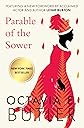
From a celebrated, award-winning author, a modern classic about a young girl fighting for survival in a post-apocalyptic world, perfect for fans of N.K. Jemisin and Margaret Atwood. Fifteen-year-old Lauren Olamina lives inside a gated community with her preacher father, family, and neighbors, sheltered from the surrounding social chaos and anarchy caused by climate change and economic crisis. In a society where any vulnerability is a risk, she suffers from hyperempathy—a debilitating sensitivity to others' emotions. Precocious and clear-eyed, Lauren must make her voice heard in order to protect her loved ones from the imminent disasters her small community stubbornly ignores. But what begins as a fight for survival soon leads to something much more: the birth of a new faith . . . and a startling vision of human destiny. Includes a foreword by LeVar Burton and an afterword by N. K. Jemisin Lauren's story continues in The Parable of the Talents. "In the ongoing contest over which dystopian classic is most applicable to our time, Octavia Butler's 'Parable' books may be unmatched."— The New Yorker Review: The Parable of the Sower is a wonderfully constructed vision of the world following a climate related ... - The Parable of the Sower is a wonderfully constructed vision of the world following a climate related collapse of western society. I mean wonderful in the sense that this world that Octavia Butler has brought to life inspired in me a genuine sense of wonder. Sci-fi books are supposed to create in the reader a sense of disbelief, a longing for the future and what could come with it, and this book did exactly that, while at the same time attacking and conquering huge themes like religion and racism. Racism in particular is a theme that I would like to spend quite a bit of time addressing, but religion is also something that I will touch on in some detail. There are a variety of other details and issues that could be addressed, but these are the two that stuck out to me like a sore thumb, and also the two that I was most interested in writing about. This book was excellent, compelling, and definitely worth more than one read. The story that Octavia Butler tells is a compelling story of survival and community. The opening of the book starts en medias res, exactly as a good futuristic novel can. I personally feel that telling too much of a back-story can destroy the reader’s ability to concoct one itself, it also takes away from the author’s ability to create suspense and mystery in the novel itself. Butler does a very good job of giving us a gripping story without boring us with the details of the failing of the society that once existed. It is very easy to take on the mindset of a young girl while reading, and that makes digesting all of the new and sometimes confusing information much more easily. The novel then goes on to talk about the sense of community that is felt in the walled “neighborhood” that Lauren, the main character and narrator, lives in. This neighborhood seems to be a well-oiled machine, despite the immediately apparent racial tensions to be found inside of the community. There is a division among the white members of the community and the other racial groups. This makes a lot of sense considering the racial tensions that exist even in the world today, but it was interesting to see that Butler does not envision a post-racial world for our future. One of the bigger themes of this book is “new slavery”; I put this in quotes only because I believe it to be a coined term and not merely an expression that I have made up. “New slavery” was introduced around the same time, as prisons became an industry rather than a place of reform. Butler speaks of this issue in a speech she gave which is the secondary reading for this week, “Every now and then you hear– and I’m not talking about ante-bellum slavery but modern-day slavery–every now and then you hear about some group of homeless people or illegal aliens or other people who have been held in slavery and I sort of combined slavery and throw-away workers and prison problems because in Parable of the Sower there is slavery and it is entirely legal because it isn’t called “slavery.” This quote speaks to her inclusion of the “new slavery” in her novel. This kind of slavery is found encapsulated in the city of Olivar, the fictional city being built where “skilled” workers are needed. The characters in the novel fear that this city is merely an excuse to capture people and indenture them to the larger corporate structure. This is a frightening reality because it is not unrealistic. There are certainly places in this dystopian America where slaves are found. They are people who do not have money and then work for company credit, but they never make quite enough money to afford their living expenses, so they become indebted to the company they work for, and end up owing the company massive amounts of money, and passing that on to their children when they die, creating a system of debt slavery that persists indefinitely. Butler definitely set out to make this a main feature in her book, but what is interesting is that the people of color in the novel feel that the city of Olivar would only want white workers. This is interesting because for as taught as the racial tensions are in the future, there does not seem to be hope for anyone who did not already have money when the country collapsed. Some people are simply “slightly better off”. The effects of this “new slavery” can be found in the people that the characters meet later on in the story; some of the people who they run into like Emery and Tori. They are both escaped slaves who are now dealing with the consequences of living a slave’s existence. They are also both hyper-empathetic, just like our narrator. This means that not only can they see someone in pain and relate, but also they actually feel it, and it is considered to be debilitating. Our narrator does not like to share with people that she has this condition, but she notices that the newer members of the group share her condition and immediately bonds with them over it. This hyper-empathy is a big reason why Lauren makes such an interesting character, because it shows how painful killing is for her, and how everything she does has a reason, and also is in part why she founds her religion, Earthseed. Religion is an interesting topic in any book, especially so in this one, as our character has spread the seeds for her own religion to take root, Earthseed. Earthseed is a new religion that has some elements of a bunch of already existing belief systems worked into it. The basic idea of Earthseed is that “the destiny of mankind is to take root amongst the stars,” this is interesting because it is both a spiritual philosophy, and a very real belief of the narrator. Lauren believes that the discontinuation of the space program is foolish, and that they should abandon the Earth and that they should try again somewhere else. Earthseed fascinates me, and I think I know where it stems from. Lauren lives in a firmly Baptist community, but does not have the faith of her father. Earthseed is a comfort to Lauren, and it is that simple. It is a basic philosophy that has sprung out of her discomfort with the world around her. She is living in a virtual hell, and has had to come up with some way to make her own truth. The truth she chooses to believe rather than a truth that is told to her. This is exactly where all religion stems from. People as a whole would not believe in something and it was not comforting to them. This is why I think the theme of religion is so interesting a Cli-fi book. With or without realizing it, Octavia Butler has created a wonderful comparison between a religion founded by an 18 year old, and hundreds of thousands of scientists’ conclusive evidence that climate change is very, very real. In the secondary reading Butler quotes a cartoon, the interesting part was this, “Make up your own truth and stick to it, no matter how little sense it makes. And sooner or later, you’ll have converts. Trust me.” This rings the truth to me about the world in general. People are so much more likely to believe in and idealize something that comforts them, rather than something that tells them they need to change. This is the whole fundamental issue we have had with the class. Our big question, “what can we do?” is answered by this simple quote. We need to make up a truth that people want to believe in, we cannot keep throwing the discomforting truth in their faces or they will continue to believe their own truths, namely “there is nothing that I can do.” Octavia Butler draws a comparison between a people who are still in disbelief about how broken their world is, and their deep belief that things will return to what they once were. This is a constant theme throughout the beginning of the book. Instead, a new religion is formed, which has the potential to have hundreds of followers, all because it is comforting and simple. This struck me as genius, and I may be reading a little too deeply, but I gleamed from Butler’s speech that this may have been on purpose. I liked that in particular about this book. The Parable of the Sower has struck me in a way that a lot of books have not. I do not however think that this book will make waves in the ocean of denial surrounding climate change. I don’t think that the book deals closely enough with what we, as a species, have done to destroy the planet, and therefore keeps us from feeling particularly guilty. This book is rather a story about survival, friendship, and faith. I liked it immensely and would even consider adding it to my course syllabus when I am finally a teacher rather than a student. Review: Interesting book - This is a must-read book. The book revolves around global change, inflation, and economic crises, and how the world was driven into chaos. It efficiently uses these problems to construct a magical story. Every page was thrilling and contained immense information. Lauren's story with hyper empathy gives perfect contrast as she lives in a world full of pain and destruction. When reading the book’s synopsis, this is exactly what caught my attention. How would she survive in the outside this condition? The book completely expanded my view on religion, countless questions made me stop reading, and ponder the questions. Octavia E. Butler asked great questions to the readers, the perspective of religion she gave Lauren (the main character) is one I’ve never seen before. The book has a great emphasis on race and prestige. The best chance of surviving is if you are white and rich enough to have a stable home in a walled community. The book did a great job keeping the reader interested in what’s happening, ranging from Lauren’s passionate ideologies about religion to the twists and turning points of the story. The book changes the reader's perspectives on religious and political ideas. Most importantly, the imagery the author provided was mystical. I could picture what I was reading in great detail on every page. Pain, blood, and rape were the biggest components of this story besides religion. And any reader could picture the bodies Butler was describing. As I said, the book was exciting, but the climax was rather disappointing. The peak of the book was in the center of the story, and it eventually took a dip down. I also disliked how many characters were involved in the story. Some of them don’t add much to the book either, it was a pain trying to remember who was who and trying to keep up with the constant introductions. I found myself turning back and trying to figure out who was who. Apart from this, this is a perfect novel. If you have the chance, please buy it, I guarantee you have never read such an intriguing book.


| Best Sellers Rank | #956 in Books ( See Top 100 in Books ) #1 in Black & African American Science Fiction (Books) #10 in Post-Apocalyptic Science Fiction (Books) #20 in Dystopian Fiction (Books) |
| Customer Reviews | 4.5 out of 5 stars 23,795 Reviews |
B**N
The Parable of the Sower is a wonderfully constructed vision of the world following a climate related ...
The Parable of the Sower is a wonderfully constructed vision of the world following a climate related collapse of western society. I mean wonderful in the sense that this world that Octavia Butler has brought to life inspired in me a genuine sense of wonder. Sci-fi books are supposed to create in the reader a sense of disbelief, a longing for the future and what could come with it, and this book did exactly that, while at the same time attacking and conquering huge themes like religion and racism. Racism in particular is a theme that I would like to spend quite a bit of time addressing, but religion is also something that I will touch on in some detail. There are a variety of other details and issues that could be addressed, but these are the two that stuck out to me like a sore thumb, and also the two that I was most interested in writing about. This book was excellent, compelling, and definitely worth more than one read. The story that Octavia Butler tells is a compelling story of survival and community. The opening of the book starts en medias res, exactly as a good futuristic novel can. I personally feel that telling too much of a back-story can destroy the reader’s ability to concoct one itself, it also takes away from the author’s ability to create suspense and mystery in the novel itself. Butler does a very good job of giving us a gripping story without boring us with the details of the failing of the society that once existed. It is very easy to take on the mindset of a young girl while reading, and that makes digesting all of the new and sometimes confusing information much more easily. The novel then goes on to talk about the sense of community that is felt in the walled “neighborhood” that Lauren, the main character and narrator, lives in. This neighborhood seems to be a well-oiled machine, despite the immediately apparent racial tensions to be found inside of the community. There is a division among the white members of the community and the other racial groups. This makes a lot of sense considering the racial tensions that exist even in the world today, but it was interesting to see that Butler does not envision a post-racial world for our future. One of the bigger themes of this book is “new slavery”; I put this in quotes only because I believe it to be a coined term and not merely an expression that I have made up. “New slavery” was introduced around the same time, as prisons became an industry rather than a place of reform. Butler speaks of this issue in a speech she gave which is the secondary reading for this week, “Every now and then you hear– and I’m not talking about ante-bellum slavery but modern-day slavery–every now and then you hear about some group of homeless people or illegal aliens or other people who have been held in slavery and I sort of combined slavery and throw-away workers and prison problems because in Parable of the Sower there is slavery and it is entirely legal because it isn’t called “slavery.” This quote speaks to her inclusion of the “new slavery” in her novel. This kind of slavery is found encapsulated in the city of Olivar, the fictional city being built where “skilled” workers are needed. The characters in the novel fear that this city is merely an excuse to capture people and indenture them to the larger corporate structure. This is a frightening reality because it is not unrealistic. There are certainly places in this dystopian America where slaves are found. They are people who do not have money and then work for company credit, but they never make quite enough money to afford their living expenses, so they become indebted to the company they work for, and end up owing the company massive amounts of money, and passing that on to their children when they die, creating a system of debt slavery that persists indefinitely. Butler definitely set out to make this a main feature in her book, but what is interesting is that the people of color in the novel feel that the city of Olivar would only want white workers. This is interesting because for as taught as the racial tensions are in the future, there does not seem to be hope for anyone who did not already have money when the country collapsed. Some people are simply “slightly better off”. The effects of this “new slavery” can be found in the people that the characters meet later on in the story; some of the people who they run into like Emery and Tori. They are both escaped slaves who are now dealing with the consequences of living a slave’s existence. They are also both hyper-empathetic, just like our narrator. This means that not only can they see someone in pain and relate, but also they actually feel it, and it is considered to be debilitating. Our narrator does not like to share with people that she has this condition, but she notices that the newer members of the group share her condition and immediately bonds with them over it. This hyper-empathy is a big reason why Lauren makes such an interesting character, because it shows how painful killing is for her, and how everything she does has a reason, and also is in part why she founds her religion, Earthseed. Religion is an interesting topic in any book, especially so in this one, as our character has spread the seeds for her own religion to take root, Earthseed. Earthseed is a new religion that has some elements of a bunch of already existing belief systems worked into it. The basic idea of Earthseed is that “the destiny of mankind is to take root amongst the stars,” this is interesting because it is both a spiritual philosophy, and a very real belief of the narrator. Lauren believes that the discontinuation of the space program is foolish, and that they should abandon the Earth and that they should try again somewhere else. Earthseed fascinates me, and I think I know where it stems from. Lauren lives in a firmly Baptist community, but does not have the faith of her father. Earthseed is a comfort to Lauren, and it is that simple. It is a basic philosophy that has sprung out of her discomfort with the world around her. She is living in a virtual hell, and has had to come up with some way to make her own truth. The truth she chooses to believe rather than a truth that is told to her. This is exactly where all religion stems from. People as a whole would not believe in something and it was not comforting to them. This is why I think the theme of religion is so interesting a Cli-fi book. With or without realizing it, Octavia Butler has created a wonderful comparison between a religion founded by an 18 year old, and hundreds of thousands of scientists’ conclusive evidence that climate change is very, very real. In the secondary reading Butler quotes a cartoon, the interesting part was this, “Make up your own truth and stick to it, no matter how little sense it makes. And sooner or later, you’ll have converts. Trust me.” This rings the truth to me about the world in general. People are so much more likely to believe in and idealize something that comforts them, rather than something that tells them they need to change. This is the whole fundamental issue we have had with the class. Our big question, “what can we do?” is answered by this simple quote. We need to make up a truth that people want to believe in, we cannot keep throwing the discomforting truth in their faces or they will continue to believe their own truths, namely “there is nothing that I can do.” Octavia Butler draws a comparison between a people who are still in disbelief about how broken their world is, and their deep belief that things will return to what they once were. This is a constant theme throughout the beginning of the book. Instead, a new religion is formed, which has the potential to have hundreds of followers, all because it is comforting and simple. This struck me as genius, and I may be reading a little too deeply, but I gleamed from Butler’s speech that this may have been on purpose. I liked that in particular about this book. The Parable of the Sower has struck me in a way that a lot of books have not. I do not however think that this book will make waves in the ocean of denial surrounding climate change. I don’t think that the book deals closely enough with what we, as a species, have done to destroy the planet, and therefore keeps us from feeling particularly guilty. This book is rather a story about survival, friendship, and faith. I liked it immensely and would even consider adding it to my course syllabus when I am finally a teacher rather than a student.
S**A
Interesting book
This is a must-read book. The book revolves around global change, inflation, and economic crises, and how the world was driven into chaos. It efficiently uses these problems to construct a magical story. Every page was thrilling and contained immense information. Lauren's story with hyper empathy gives perfect contrast as she lives in a world full of pain and destruction. When reading the book’s synopsis, this is exactly what caught my attention. How would she survive in the outside this condition? The book completely expanded my view on religion, countless questions made me stop reading, and ponder the questions. Octavia E. Butler asked great questions to the readers, the perspective of religion she gave Lauren (the main character) is one I’ve never seen before. The book has a great emphasis on race and prestige. The best chance of surviving is if you are white and rich enough to have a stable home in a walled community. The book did a great job keeping the reader interested in what’s happening, ranging from Lauren’s passionate ideologies about religion to the twists and turning points of the story. The book changes the reader's perspectives on religious and political ideas. Most importantly, the imagery the author provided was mystical. I could picture what I was reading in great detail on every page. Pain, blood, and rape were the biggest components of this story besides religion. And any reader could picture the bodies Butler was describing. As I said, the book was exciting, but the climax was rather disappointing. The peak of the book was in the center of the story, and it eventually took a dip down. I also disliked how many characters were involved in the story. Some of them don’t add much to the book either, it was a pain trying to remember who was who and trying to keep up with the constant introductions. I found myself turning back and trying to figure out who was who. Apart from this, this is a perfect novel. If you have the chance, please buy it, I guarantee you have never read such an intriguing book.
T**T
Great Climate Fiction Novel
Growing up I had never been exposed to much about religion. To this day my thoughts on religion are never substantial; sometimes I’ll have an occasional deep thought, but a fleeting one at that until I turn back to the life in front of me. Lauren Olamina, the protagonist in Parable of the Sower by Octavia E. Butler, on the other hand was brought up into an intensely religious household that she learned to resent. Lauren’s father was a Baptist minister, raising her and her brothers in an intensely religious fashion in a post-apocalyptic time outside of Los Angeles. The post-apocalyptic America is not one ravaged by supernatural creatures or extreme weather conditions, but an extremely plausible world set into motion by drought and racial tensions. America is at the bottom of a downward spiral with Lauren’s gated California neighborhood being the only thing keeping the drug addled maniacs and thieves from raiding her community on a daily basis. Disaster is constantly right outside of Lauren’s gate causing the extremely bright but mentally damaged young woman to attempt to find her place in collapsing America. Refusing to believe in the religion her father preaches to her daily, Lauren begins establishing her own beliefs in God that translate into what she calls Earthseed. To Lauren, God is change. Earthseed presented through Lauren is Butler’s way of examining our own society. By predicting what will become of our society if it does not overcome individualism, racism, and tendencies towards violence, Butler presents her solution through Earthseed. When society crumbles, so does 99% of the population. Anyone not protected in a gated or guarded society immediately turns towards looting, pillaging, rape, and especially arson. A new drug has been introduced on the streets dubbed “pyro” that makes watching a fire more exhilarating and enjoyable than having sex. Lauren being born in 2009 (the novel was written in 1993) has known only this nightmarish America her entire life. Racial tensions are at an all-time high, water is more expensive than food, and the government has basically collapsed. While the adults are fine with attempting to live life the way it used to be, preaching the same bible verses over again, and still believing things may eventually return to “normal”; Lauren is the next generation learning to live in this new society. Living in this new society and not understanding the old, Lauren rejects her father’s God. Lauren believes in a new religion she has discovered entitled Earthseed. Lauren claim’s she has not invented or made it up, but discovered it. There is no all mighty being or supernatural element to the God in Earthseed, God is only change. The book presents little Earthseed scripture and its beliefs throughout, which later make more sense towards the end of the novel. Earthseed believes that praying does nothing but assist the prayer, and that effort should be put into action to make change. The more the proverbs are read in the book the more the reader is able to comprehend Lauren’s beliefs. Lauren literally believes that God is change. Some of Earthseed’s texts give more insight into her complex thinking “We do not worship God. We perceive and attend God. With forethought and work, we shape God.” And “God is Power- infinite, irresistible, inexorable, indifferent. And yet, God is Pliable- trickster, teacher, chaos, clay. God exists to be shaped. God is Change”. I really loved the thought put into Lauren’s complex world view and it makes complete sense considering the dangerous world she learned to grow up in. Lauren is forced to leave the only home she has ever known when crazy drug addled arsonists come to pillage and destroy her neighborhood. If I grew up in that type of world I am not sure what I would believe in, but Lauren’s views are all justified and change is the belief and system that keeps her alive in post-apocalyptic California. Butler, through Lauren, is expressing that she believes that to get through the hard times any nation is facing, they need to be adaptable, diverse, and learn to embrace change. Another quote from Earthseed demonstrates Butler’s thoughts on diversity, “Embrace diversity. Unite—or be divided, robbed, ruled, killed by those who see you as prey. Embrace diversity, or be destroyed”. My main issue with Butler’s Earthseed is the way that she presents it. At first Earthseed is not exactly referred to as a religion by Lauren until other people she meets on her journey refer to it as such. My problem with Butler deciding to refer to Earthseed as a religion is that it is too distinctly different from any other religion to be classified as such. A religion is classified by most sources as a set of beliefs concerning the cause, purpose, and nature of the universe; and the Gods that preside over it. Earthseed perfectly fits the set of beliefs and practices used and agreed on by a group of people, but when addressing its God of Change, it is not actually referring to a deity as is every other religion. Also converting the people Lauren traveled with to even accept the idea of something they were referring to as a religion would not go as quickly as it did in the book. It is hard enough reaching out to someone without a religion to think about one, but trying to convince a devout religious individual about a new way of thinking seems like it would not be possible. Reading Butler’s essay “Devil Girl From Mars”: Why I Write Science Fiction, made it clear where Lauren’s attitude and beliefs came from. Butler believes in a well-educated, literate, news observing, and accepting society. Butler seems to view society on a macro level more so than a micro one, focusing on big picture issues and the state of the human race as a whole. Butler understands that global warming issue an issue in our society which is why she chose to have that be the cause of the draughts and erratic weather in her novel. From focusing on global warming in many of the novels we have read so far I believe Butler paints the most realistic picture of the consequences of ignoring global warming. I agree with Butler’s focus on the continuing productive existence of the human race. I often also have thoughts about human society as a whole and believe Butler made well educated and productive points, the things that she exaggerated for the sake of her novels are actual issues we need to be focusing on today. Overall Parable of the Sower was one of the more realistic and enjoyable post-apocalyptic books I’ve read. The religious undertone was present but not abrasive, and focused more on religion as a general concept. Instead of focusing on one religion, Butler commented on religion as it fits into society as a whole.
V**R
A brilliant, but depressing, read
I wish I had read this book sooner, but I'm still glad I read it when I did. I think it affected me so deeply because the book is set in our time period now and if I had read it 10 years ago, maybe it wouldn't have resonated so deeply. I read lots of horror and other dark fiction but this book disturbed me more than anything I have read recently. Maybe because so many of the horrors described seem plausible and possible in the near future. When I read Stephen King, I know it's fiction and don't expect any of it to happen. I hope I never experience Butler's vision of the future in my lifetime, but I also know that our societal contract is so fragile and could easily collapse with just a few external shocks. But I also take some hope away from this book, hope that no matter what happens to us, humanity can still find some community amid chaos and hopefully construct something out of the ruins. I wish I had bought the sequel at the same time I bought this, so that I could read it right away. I think Parable of the Sower is now my favorite piece of dystopian fiction. I plan to read it again and again in the years to come, the way I have 1984 and Animal Farm.
F**G
One of the best Dystopian Future novels.
Octavia Butler wrote a slam dunk dystopian science "fiction" novel in the mid-1990's. It is a tough read because 2026 mirrors the novel's rugged society, climate and politics. I pray someone will by the rights and make this a movie. This is where we are headed and this book messed with my sleep because it was like reading prophecy. The lovely descriptive language puts the reader into the gritty world created by the author. I do not want to give away the plot or the terrifying parallels between now and the novel but it is weird and genius. I just wish Octavia lived longer to see how so many people appreciate her excellent art. Every person who cares about our future needs to read this book.
M**S
Unsettling and Unforgettable
This is a must-read for those who truly enjoy dystopian narratives. The Parable of the Sower explores societal collapse, religion, race, and survival. Lauren’s journey, shaped by her hyper-empathy and her creation of Earthseed (A new way about thinking about God), is thought-provoking. The story is gripping, especially during the early chapters and the pivotal moment when Lauren is forced to leave her home after a devastating attack. The story is intriguing and keeps readers on edge, especially in the first half. The pivotal moment when Lauren is forced to leave her walled community after a devastating attack is gripping and emotionally charged. However, the pacing slows down after this turning point, with less intensity as Lauren journeys through the outside world. I’ll also say the relationship with Laren and the 57 yrl old was a bit unsettling, even if it’s consensual (but that might be a personal view). Overall, I think Octavia Butler delivers a unsettling and unforgettable story that keeps readers engaged and challenges their perspectives. Highly recommended!
B**Y
Timely Dystopian Novel
This was a choice for my book club. The book club randomly selected dystopia as its theme. I tend to shy away from dystopian novels, and although I know that her novel Kindred was very popular at a school where I taught, I never read any of her books. Interestingly, just as I started reading this book, there was a story on NPR about Butler mostly focusing on Parable of the Sower. It ended up being an excerpt from a show called Throughline that had a longer story on Butler’s life and influence on the new wave of Afro Futurist writers. After listening to the story and learning more about Octavia Butler’s life, I ended up enjoying this book much more than I thought I would. This was not a typical dystopian novel, although there are some brutal parts. In our book club, we talked about how in the beginning of the novel, within the first 100 pages or so, it starts to get rather bleak. One of the things, though, that balances this despair is Lauren’s Earth Seed philosophy. There’s also some kind of connection with space exploration that isn’t completely covered in this first book, but overall, I really enjoyed how she outlines and charts the evolution of the Earth Seed movement. It seems to be one of the main things that keeps her going and gradually attracts others along the way. Although some of the secondary characters are not well developed, this was an interesting quest/journey novel. I also appreciated the social commentary that Butler provides with painting such a dire portrait of what would happen if economic, job, race, and environmental concerns are not addressed. As I was reading the book, I couldn’t help but think about the influence of the LA Riots and the craziness of the early 90s. I actually thought the book was written much earlier, but it makes sense that it was published a year or so after the riots. Her description of the Freeway and Los Angeles in general sounded like what happened after the earthquake in the late 80s and the riots. It was also interesting to see some possible connections between Pyro, a synthetic and destructive drug that compels users to set fires, and the crack epidemic that plagued the US in the late 80s and early 90s. Although I was apprehensive to read a dystopian book like this, I really enjoyed it and felt that there were some amazing messages in the events in the novel.
K**G
Used books are better!
Pretty good. Enjoyed the book a lot.
P**I
Condition of book
The book was in great condition Storyline had exceeded my greatest expectations, the book arrived within 24 hours of the order placed. I'm extremely happy with the service! Happy reading, fellow readers!
C**N
Amazon: péssimo serviço
A Amazon me entregou o livro em péssima condição, com as páginas completamente deterioradas nos lados. Pedi substituição e me entregaram a mesma coisa! O defeito já é bastante evidente, me entregarem assim uma vez já achei bem ruim, duas vezes achei clara má-fé.
W**I
The book is like a prophecy of what we are experiencing now.
A tale about dystopian future very riveting and gripping tale by Octavia E butler.
C**N
Of public interest
This is a tough SciFi - the events describe are not so far-stretched, and it definitely hits home. I loved the jornal narrative and Lauren's reflections on religion & community. Highly recommend, but be mindful that we are in a apocalyptic scenario.
T**A
Thought provoking
For a good society and better world, the entire community (ies) must prosper, and we must take one another along. This is so relevant today and will always be...
Trustpilot
3 weeks ago
2 months ago