We remain fully operational. Our teams are working around the clock to ensure your deliveries continue safely.

下载应用程序


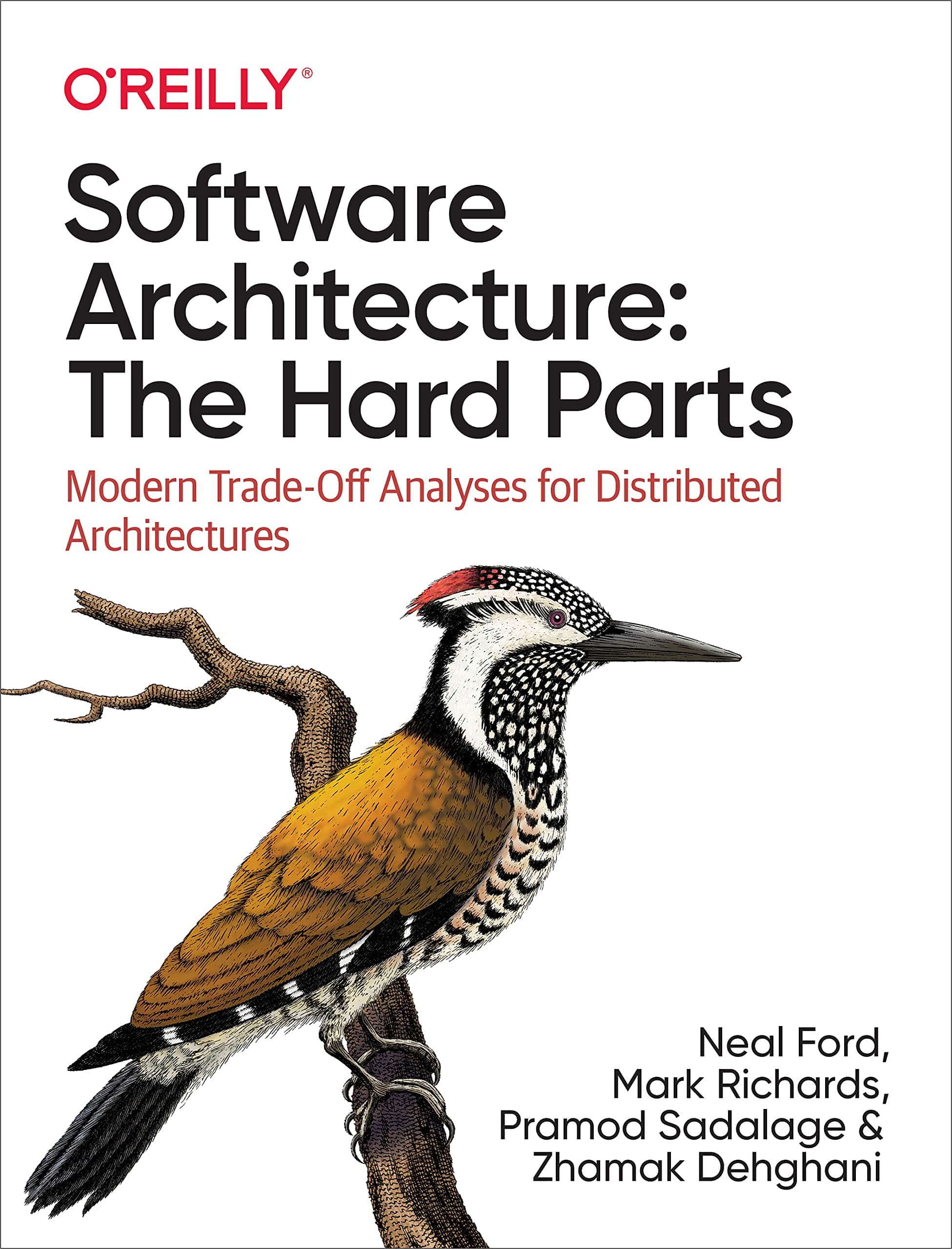
desertcart.co.jp: Software Architecture: The Hard Parts: Modern Trade-Off Analyses for Distributed Architectures : Ford, Neal, Richards, Mark, Sadalage, Pramod, Dehghani, Zhamak: Foreign Language Books Review: えーっと、 少なくとも 自分という人間は、 『日本語』 も、 『英語』 も、 はっきりいって 『中途半端』 なんで(;'∀`)💧 本書と訳本片手に 悪戦苦闘しながら 精読いたしました (;'∀`)💧 はい、 それでも どうして なかなか『深い理解』には いまだ至ってはおらず(;'∀`)💧 ために イマ読んだ内容を えっちらおっちら 書きまとめている最中であります。 ときに随想、 ときに物語な 文章なので、 書き起こしてみると これがなかなかどうして、 けっこう 理解した『つもり』だった、 という箇所が多い。。。 なんか、 内容まとめた『付録』 みたいなのが欲しかったっすね。。。 いや、それあると さすがに ヤヴァイか。。。 いやいやけど『難民』が。。。。 。。。 。。。 まる。 Review: Awesome book. Great overview and some deep dives into the many trade off dimensions architects are challenged with every day








| Amazon Bestseller | #29,040 in Foreign Language Books ( See Top 100 in Foreign Language Books ) #11 in Parallel Processing Computers #29 in Software Design Tools & Techniques #29 in Computer Systems Analysis & Design |
| Customer Reviews | 4.6 4.6 out of 5 stars (635) |
| Dimensions | 7 x 0.75 x 9.25 inches |
| ISBN-10 | 1492086894 |
| ISBN-13 | 978-1492086895 |
| Item Weight | 210 g |
| Language | English |
| Print length | 459 pages |
| Publication date | November 30, 2021 |
| Publisher | O'Reilly Media |
_**L
えーっと、 少なくとも 自分という人間は、 『日本語』 も、 『英語』 も、 はっきりいって 『中途半端』 なんで(;'∀`)💧 本書と訳本片手に 悪戦苦闘しながら 精読いたしました (;'∀`)💧 はい、 それでも どうして なかなか『深い理解』には いまだ至ってはおらず(;'∀`)💧 ために イマ読んだ内容を えっちらおっちら 書きまとめている最中であります。 ときに随想、 ときに物語な 文章なので、 書き起こしてみると これがなかなかどうして、 けっこう 理解した『つもり』だった、 という箇所が多い。。。 なんか、 内容まとめた『付録』 みたいなのが欲しかったっすね。。。 いや、それあると さすがに ヤヴァイか。。。 いやいやけど『難民』が。。。。 。。。 。。。 まる。
T**E
Awesome book. Great overview and some deep dives into the many trade off dimensions architects are challenged with every day
M**A
o'reilly publishing sucks. I wish authors self-published. I would buy that instead.
A**X
This is one of the best books I've ever read. I recommend it for every software architect
J**Y
This is a great book! It is a sequel to the authors' prior book, "Fundamentals of Software Architecture" (which isn't a prerequisite to this book, but is helpful). I liked that book. This one is way better. Where the first book stayed fairly high level and abstract, and focused on working as an architect in a company, this book is all about actual tough architecture decisions in practice. It applies some of the the first book's approaches and patterns (and a whole bunch of new ones) towards a fictional example application which a dev team is tasked to completely refactor. Basically, the book is structured as a narrative about a team breaking down a faulty outdated monolithic application into a modern microservices-based architecture. Each chapter essentially compares different aspects of how a monolithic architecture might have been written to do something in the past, then how a modern microservice architecture could do the same thing today. Along the way the authors offer terrific advice and approaches for effective tradeoff analysis (and countless suggestions and tips) that you can use when refactoring a large monolith app (or when building microservices from scratch), detailing at every level how you might sort out a tangled mess of dependencies into a clean microservices stack - from shared code libs/components/modules, to shared database tables and schemas, to various network concerns, etc. There is nearly no code (it's not an implementation book), but the descriptions of each example scenario, pattern, diagram, and everything around it are extensive and detailed. The authors don't actually offer any definitive "best practice" in any of the scenarios they consider, but rather present all the pros and cons of each approach you might consider - which all together support their overall thesis that there are no right or wrong answers in architecture, only tradeoffs to weigh and consider for any given design challenge and possible architectural solution. I give this book my highest recommendation - it's a winner.
F**R
This book teaches you how to think with real criteria, it’s a true gem in the world of systems. Even today, when I reread it, I see how many of the challenges it presents are now solved by modern technologies. That gives me the ability to understand why certain decisions were made back then, and also why, with today’s tools, I would approach them differently. Without a doubt, it has become a classic in the field, and I now fully understand why.