We remain fully operational. Our teams are working around the clock to ensure your deliveries continue safely.

下载应用程序


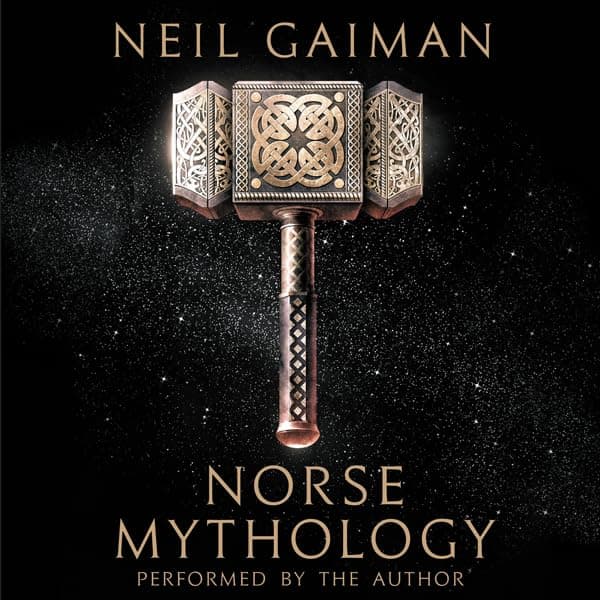
desertcart.com: Norse Mythology (Audible Audio Edition): Neil Gaiman, Neil Gaiman, William Morrow: Books Review: A wonderful retelling of tales that many of us never knew, all done with Gaiman's wonderful style and sensibility - It’s been kind of wonderful to see Neil Gaiman’s stunned reaction to the runaway success of Norse Mythology, a book that, to be fair, really shouldn’t be as popular as it is. Let’s be clear – Norse Mythology isn’t a new novel from Gaiman, isn’t a new collection of stories. Rather, it’s exactly what the title suggests: a retelling of Norse myths by Gaiman himself, infusing the rich, vibrant Norse myths with his own dry humor and rich storytelling voice. And while the book is undeniably wonderful, you can’t help but understand where Gaiman is coming from. Books of mythology aren’t exactly your typical bestsellers, give or take a Rick Riordan novel, and Norse myths even less so – they’ve never had the cultural cachet of the Greek and Roman gods. And yet, in many ways, that’s what makes Norse Mythology such a rewarding read. Oh, yes, there’s Gaiman’s inimitable voice, which brings these tales to life as they’ve rarely been done before; with his direct, demanding Thor, his sneaky Loki, and the menagerie of creatures and tales at his disposal, Norse Mythology feels undeniably like the work of the same man who wrote American Gods and Sandman. (Indeed, any fan of American Gods will be thrilled to see the origins of some of that book’s odder scenes here.) Gaiman’s love of myth and archetype is long since established, but his joy in exploring this vein of stories really comes through in every page. But more than that, Norse Mythology works partially because of its novelty. Most of us don’t know much about the Norse myths beyond what we’ve gained from Marvel’s version of Thor and Loki (a starting point Gaiman himself shares, as he discusses in his introduction), which means that these aren’t stories we know that well. That allows the book to feel fresh and new in a way that Greek myths might not, telling stories we don’t already know – everything from the origins of poetry in the world to the creation of the wall around the world, from the beginning of it all to the final battle, Ragnarok. And in Gaiman’s hands, it’s all exciting, funny, charming, and utterly magical. More than that, though, the Norse myths don’t feel like the myths we know – and while some of that is no doubt to Gaiman’s style, much of that comes from the characters themselves, who cheat, sneak, steal, battle, and betray every bit as much as humans, maybe even more so. These are universal tales, ones that play off of classical archetypes, but plunge us into a world most of us have no knowledge of. And if Gaiman takes a little too long to set it up (the first couple of chapters, which familiarize us with the world and the cast of characters, are undeniably a bit dry, but worth powering through to the first real tales), that’s okay; we need our chance to get our bearings. So, yes, Norse Mythology is a hit, and while it may be an unlikely one, it’s not an undeserving one. It’s pure Gaiman, in terms of theme and feel; while he may not have written the plots here, they reflect his love of myth and legend, his unique sensibility, and his ability to combine the archetypal and the personal into something rich. And more than that, it’s a window into history, belief, and religion of a sort that many of us never know. It’s a wonderful read, and deserves all of its success and then some. Review: I find it unnecessary to remind many of you of the standards to ... - The title alone is self-explanatory. This is a collection of Norse Mythology that is presented to us by Neil Gaiman. I find it unnecessary to remind many of you of the standards to which I happen to hold this particular author to. He is an auto-buy. He has proven his worth and earned that respect. He tirelessly prevails and exceeds. So I had no doubts that this beautifully and so aptly covered book would meet these high expectations. What is presented to us is a masterfully crafted interpretation of myths that are easily engaging equally for readers with a solid background in Norse mythology to those with little to no previously working knowledge. I admit that I fall into this latter category. In fact, I believe most of my learned mythology was derived from comics and video games. My high school and college studies tend to have leaned more heavily towards Greek mythology. So I can claim not true intellectual comprehension, I speak only of what I took away from this reading. This was an experience that read more of a worthy and fascinating history than simply fiction. We are given a clear concept of the events that unfolded during the lives of Odin, Thor and Loki. The stories are delivered in an almost simplistic yet impactful and memorable manner that has made the entire event flawlessly engrossing and informative. Gaiman has taken something older and complex at times and made it approachable for every individual. After a welcoming introduction, we are immediately introduced to the key players and some familiar Gods for many of you: Odin – He is oldest of all gods and the all-father, he is known by many names. Thor – He is known for his strength and his legendary hammer Mjollnir, he is a son of Odin. Loki – He is known for his wit and looks. He is a constant thorn in the sides of the other gods and Odin’s blood brother. Don’t fret, Gaiman has left no stone unturned including many other gods and characters that are familiar to Norse mythology, including dear Freya. I attribute part of the successful execution of Norse Mythology to just how well Gaiman has managed to divide each story and narration appropriately. He has even so kindly inserted a thorough glossary for those who find themselves in need. The reading process is fluid and effortless. This is a title that could easily be consumed within a few hours. We are graciously gifted 15 stories within this beautiful title. My favorites would include: Mimir’s Head and Odin’s Eye Freya’s Unusual Wedding Hymir and Thor’s Fishing Expedition The Last Days of Loki If I had to choose an absolute favorite god, it would be Loki. For all of his mischief and arrogance, there was a great amount of entertainment to be found within his exploits and adventures. He truly is cunning. “Because,” said Thor, “when something goes wrong, the first thing I always think is, it is Loki’s fault. It saves a lot of time.” “He is tolerated by the gods, perhaps because his stratagems and plans save them as often as they get them into trouble. Loki makes the world more interesting but less safe. He is the father of monsters, the author of woes, the sly god.” Gaiman has vividly painted the worlds of Asgard and beyond with great clarity. This fascinating history of mythology unfolds in a way that only he could make happen. His ability to weave endlessly enchanting stories full of magic and promise carry you effortlessly on a journey from the very birth of Odin to Ragnarök. Even those with zero comprehension of Norse mythology will walk away feeling knowledgeable and satisfied. ⭐ ⭐ ⭐ ⭐
J**E
A wonderful retelling of tales that many of us never knew, all done with Gaiman's wonderful style and sensibility
It’s been kind of wonderful to see Neil Gaiman’s stunned reaction to the runaway success of Norse Mythology, a book that, to be fair, really shouldn’t be as popular as it is. Let’s be clear – Norse Mythology isn’t a new novel from Gaiman, isn’t a new collection of stories. Rather, it’s exactly what the title suggests: a retelling of Norse myths by Gaiman himself, infusing the rich, vibrant Norse myths with his own dry humor and rich storytelling voice. And while the book is undeniably wonderful, you can’t help but understand where Gaiman is coming from. Books of mythology aren’t exactly your typical bestsellers, give or take a Rick Riordan novel, and Norse myths even less so – they’ve never had the cultural cachet of the Greek and Roman gods. And yet, in many ways, that’s what makes Norse Mythology such a rewarding read. Oh, yes, there’s Gaiman’s inimitable voice, which brings these tales to life as they’ve rarely been done before; with his direct, demanding Thor, his sneaky Loki, and the menagerie of creatures and tales at his disposal, Norse Mythology feels undeniably like the work of the same man who wrote American Gods and Sandman. (Indeed, any fan of American Gods will be thrilled to see the origins of some of that book’s odder scenes here.) Gaiman’s love of myth and archetype is long since established, but his joy in exploring this vein of stories really comes through in every page. But more than that, Norse Mythology works partially because of its novelty. Most of us don’t know much about the Norse myths beyond what we’ve gained from Marvel’s version of Thor and Loki (a starting point Gaiman himself shares, as he discusses in his introduction), which means that these aren’t stories we know that well. That allows the book to feel fresh and new in a way that Greek myths might not, telling stories we don’t already know – everything from the origins of poetry in the world to the creation of the wall around the world, from the beginning of it all to the final battle, Ragnarok. And in Gaiman’s hands, it’s all exciting, funny, charming, and utterly magical. More than that, though, the Norse myths don’t feel like the myths we know – and while some of that is no doubt to Gaiman’s style, much of that comes from the characters themselves, who cheat, sneak, steal, battle, and betray every bit as much as humans, maybe even more so. These are universal tales, ones that play off of classical archetypes, but plunge us into a world most of us have no knowledge of. And if Gaiman takes a little too long to set it up (the first couple of chapters, which familiarize us with the world and the cast of characters, are undeniably a bit dry, but worth powering through to the first real tales), that’s okay; we need our chance to get our bearings. So, yes, Norse Mythology is a hit, and while it may be an unlikely one, it’s not an undeserving one. It’s pure Gaiman, in terms of theme and feel; while he may not have written the plots here, they reflect his love of myth and legend, his unique sensibility, and his ability to combine the archetypal and the personal into something rich. And more than that, it’s a window into history, belief, and religion of a sort that many of us never know. It’s a wonderful read, and deserves all of its success and then some.
T**D
I find it unnecessary to remind many of you of the standards to ...
The title alone is self-explanatory. This is a collection of Norse Mythology that is presented to us by Neil Gaiman. I find it unnecessary to remind many of you of the standards to which I happen to hold this particular author to. He is an auto-buy. He has proven his worth and earned that respect. He tirelessly prevails and exceeds. So I had no doubts that this beautifully and so aptly covered book would meet these high expectations. What is presented to us is a masterfully crafted interpretation of myths that are easily engaging equally for readers with a solid background in Norse mythology to those with little to no previously working knowledge. I admit that I fall into this latter category. In fact, I believe most of my learned mythology was derived from comics and video games. My high school and college studies tend to have leaned more heavily towards Greek mythology. So I can claim not true intellectual comprehension, I speak only of what I took away from this reading. This was an experience that read more of a worthy and fascinating history than simply fiction. We are given a clear concept of the events that unfolded during the lives of Odin, Thor and Loki. The stories are delivered in an almost simplistic yet impactful and memorable manner that has made the entire event flawlessly engrossing and informative. Gaiman has taken something older and complex at times and made it approachable for every individual. After a welcoming introduction, we are immediately introduced to the key players and some familiar Gods for many of you: Odin – He is oldest of all gods and the all-father, he is known by many names. Thor – He is known for his strength and his legendary hammer Mjollnir, he is a son of Odin. Loki – He is known for his wit and looks. He is a constant thorn in the sides of the other gods and Odin’s blood brother. Don’t fret, Gaiman has left no stone unturned including many other gods and characters that are familiar to Norse mythology, including dear Freya. I attribute part of the successful execution of Norse Mythology to just how well Gaiman has managed to divide each story and narration appropriately. He has even so kindly inserted a thorough glossary for those who find themselves in need. The reading process is fluid and effortless. This is a title that could easily be consumed within a few hours. We are graciously gifted 15 stories within this beautiful title. My favorites would include: Mimir’s Head and Odin’s Eye Freya’s Unusual Wedding Hymir and Thor’s Fishing Expedition The Last Days of Loki If I had to choose an absolute favorite god, it would be Loki. For all of his mischief and arrogance, there was a great amount of entertainment to be found within his exploits and adventures. He truly is cunning. “Because,” said Thor, “when something goes wrong, the first thing I always think is, it is Loki’s fault. It saves a lot of time.” “He is tolerated by the gods, perhaps because his stratagems and plans save them as often as they get them into trouble. Loki makes the world more interesting but less safe. He is the father of monsters, the author of woes, the sly god.” Gaiman has vividly painted the worlds of Asgard and beyond with great clarity. This fascinating history of mythology unfolds in a way that only he could make happen. His ability to weave endlessly enchanting stories full of magic and promise carry you effortlessly on a journey from the very birth of Odin to Ragnarök. Even those with zero comprehension of Norse mythology will walk away feeling knowledgeable and satisfied. ⭐ ⭐ ⭐ ⭐
S**A
I bought this book last year when it was still hot off the press simply because it contained the words Norse and Mythology in one title. I’m a huge, HUGE mythology fan and Norse Mythology is on of those lesser known gems that have not yet been completely discovered and talked about as much as Greek or Egyptian Myths. To me, the fact that this was one concise guide to another beautiful, obscure culture and it’s roots was more than enough an incentive to buy it. Norse Mythology is a collection of stories that explain in detail important concepts and foundations of the North Germanic people. Although with the uprising of Christianity, most of the literature and scriptures have been lost but a few passed on works have still survived through the concealment of the Gods as kings and princes so as to appease the Christian rule. Neil Gaiman has taken the stories from the poem called Edda and put through the situations through a little fictional magic of his own. He goes on to explain the conception of the world according to Norsemen and how the use of pagan symbols and worship slowly formed a full fledged religion. The importance of the world tree Yggdrasil is understood as it marks the centre of the Norse Universe, stemming 9 realms from it. The Gods are born of a giant called Ymir and it’s his sons, Odin, Vili and Vè who later on slay him to create the remainder of all in existence, including Asgard and Midgard. The beginning also marks the existence of the end, Ragnarok. The Norse Universe exist on this very phenomenon that one day, the fire demon Surtr will bring the Norse Universe to an end with his flaming sword as it will slash through gods and mortals alike to lay it all to ruin. The myths of Thor, Loki, Balder, Heimdall and other gods are presented through stories and narratives also highlighting all the important incidents such as Odin becoming an All-Father, how Mjollnir became Thor’s weapon, the creation of beasts and Hell and Valhalla, etc. My main fascination was with the differences between the actual myths and the ones portrayed by pop culture. The following are the major points of differences: In the Marvel universe, Loki is referred to as the adopted brother of Thor but in reality, he is the blood brother of Odin instead. Hela is shown as a beautiful creature that rules the darkness and is the firstborn of Odin but infact, Hel is one of the offspings of Loki with the giantess Angrboda and is half corpse and half alive. It is Odin who sends her to rule the land of the underworld where she takes care of all the souls who didn’t die in battle and greatness and go on to Valhalla, the Norse Heaven. Thor is handsome and built and strong, is good at heart even if impulsive. However, unlike the suave Chris Hemsworth, he is also, to put it politely, dimwitted. Fenris the wolf is not a pet adopted by Hela/Hel but is one of the 3 monster children of Loki and Angrboda. The fact that you get to meet another set of Gods according to a culture that basically thrived and flourished on battles and plundering, it is not astonishing to see that they are not perfect. The stories often drip of betrayal, jealousy, hatred and cunning which were obviously very essential qualities for a culture such as that. The Gods aren’t picture perfect and show through their own human traits which is what makes it as engaging and realistic as it is. This was my first ever Neil Gaiman book and Needless to say, I am spellbound. The manner in which the stories are narrated actually feels like an age old storyteller, sitting in the woods in front of a bonfire to speak of the Gods and their long forgotten tales of valour, humour and cunning. Often when a culture and it’s myths are retold, there remains the risk of either overdoing the creativity or understating the actual facts. This book was the perfect example of what literary and creative restraint look like. Gaiman made sure you got all the facts, a laugh and then some but without disturbing the credibility of the actual mythology. He has tried every possible way to maintain the sanctity of the culture without making it too factual and boring. If you aren’t a non fiction lover and would not want all the extra information but would like to skip over to the stories, you can simply skip over the first 20 or so pages but don’t. YOU NEED ALL THE INFORMATION FOR IT ALL TO MAKE SENSE!!! A 5 star read that actually made me smile and laugh after so long. Definitely a read worthy of all the hype.
S**I
Gros coup de coeur pour "Norse Mythology" de Neil Gaiman ! Il se place assez facilement parmi les livres les plus drôles que j'ai lu cette année ! Dans ce livre, Neil Gaiman re-raconte la mythologie nordique dans un langage contemporain très accessible, sans changer les histoires originelles. Et quelles histoires ! Dans l'une, Thor part en quête d'un chaudron suffisamment grand pour brasser la bière des dieux, et se retrouve dans un concours de pêche qui va se terminer dans un combat contre le grand Serpent des mers... On apprend aussi l'origine de Mjolnir, le fameux marteau de Thor. Ca commence par un Loki bourré qui décide de raser les cheveux de la femme de Thor pour s'amuser... La naissance du cheval d'Odin (un cheval à huit pattes), est assez loufoque elle aussi... :) Autant dire qu'avec des dieux sans cesse en train de boire, une fin du monde où tout le monde meurt (zéro rédemption), un monde où on célèbre les prouesses de combat plutôt que les vertus... Ces histoires de vikings sont complétement décalées, bien loin des religions habituelles ! D'ailleurs, si vous aimez le personnage de Loki dans les films Marvel, vous trouverez un personnage encore plus traitre et malicieux dans le livre (un vrai plaisir) ! C'est une lecture qui peut faire un peu peur sur les deux trois premiers chapitres (qui introduisent beaucoup de vocabulaire et d'événements), mais ça se lit comme un livre pour enfant après (l'hydromel et la fin du monde en plus)
S**T
Very bad quality and I don’t even know what happen to the pages. But I love the story. Very interesting!
A**O
Neil Gaiman is an amazing storyteller!
A**R
içerik az ama başlangıç için yeterli
TrustPilot
3 周前
1天前