Some deliveries may take a little longer than usual due to regional shipping conditions.

下载应用程序


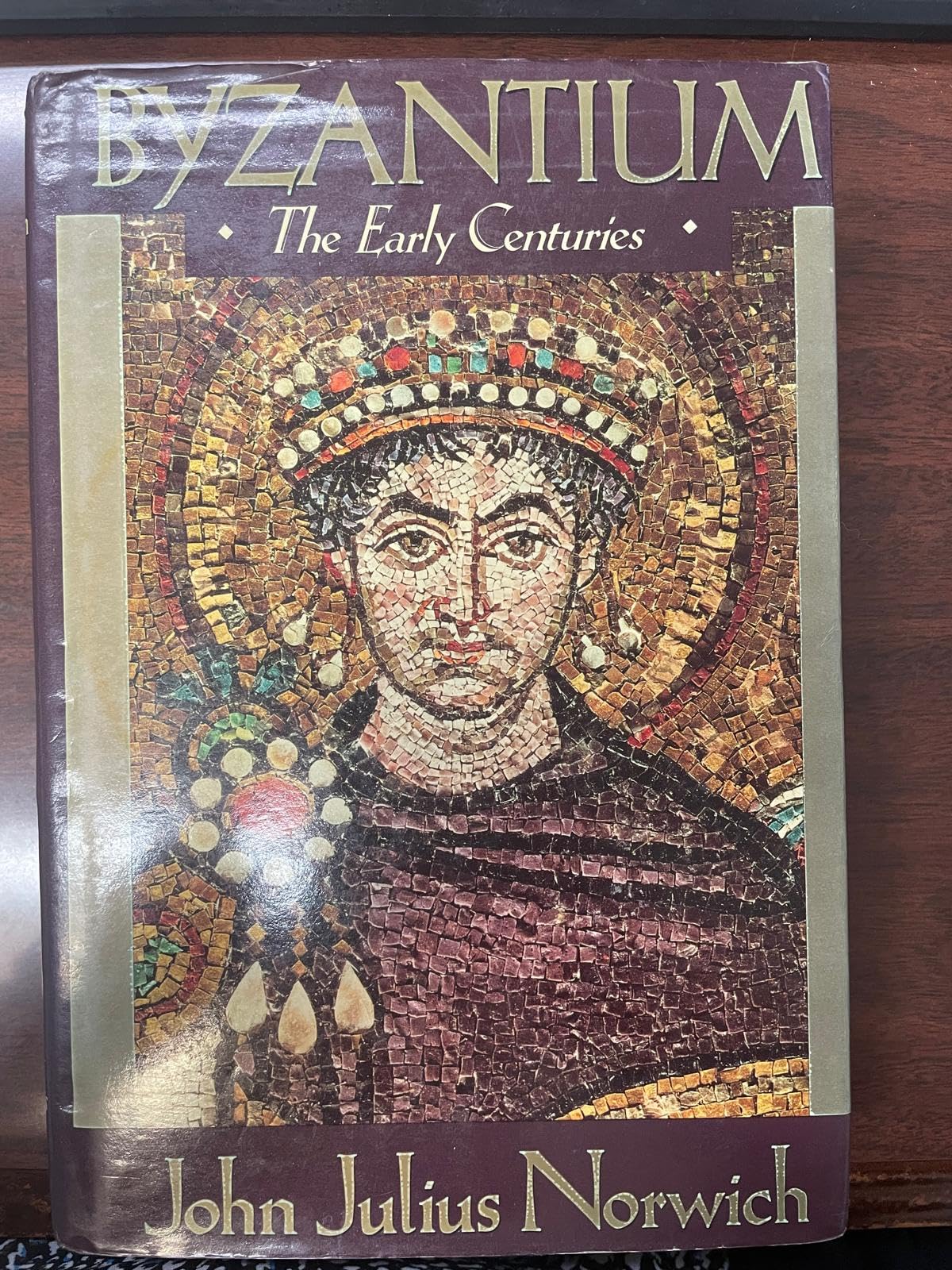
Byzantium (I): The Early Centuries [Norwich, John Julius] on desertcart.com. *FREE* shipping on qualifying offers. Byzantium (I): The Early Centuries Review: Outstanding Epic on one of the World's most intriguing civilizations - I want to say that I have already read the short version, "A Short History of Byzantium" which is the author's condensation of this three-volume epic into one single paperback volume. It follows the same general pattern but doesn't go near as in depth and does not contain as many fascinating anecdotes as the long version. I gave the short version four stars, and thought it was awesome, but now that I have finished the first volume (The Early Centuries) of Norwich's long version in three volumes, I can see how superior it is to the condensed book. All I can say is "awesome!!!" Lord Norwich begins the epic in the year 286 when Diocletian divides the Roman Empire, setting the stage for the rise of Constantine the Great. He then details Constantine's rise to power, the defeat of his co-augustus, Licinius, his "adoption" of the Christian faith (and eventual conversion to Christianity), and the construction of his new capital at Byzantium (from which the empire gets its name, but was never called that by contemporaries). The volume covers the other remaining Roman emperors, up to the fall of the west and the deposition of Romulus Augustulus by barbarian invaders in 476, then continues with the part of imperial history which can truly be called Byzantine and not Roman (beginning with the eastern augusuts, Zeno). There is a quite helpful list of emperors in the back of the book to help you keep track of the narrative. The narrative is principally concerned with the lives of the emperors, and the political and historical aspect of the Byzantine Empire--rather than the lives of the base subjects of the empire or social and economic trends--which would be more of interest to archaeologists and professional historians. This is because the book is intended for *us*, the average reader who enjoys a good epic tale, rather than for professionals. It is for this reason that it is quite readable and even entertaining, rather than being much like a textbook on Byzantine civilization. Lord Norwich has a decent sense of humor, too which makes the book an absolute pleasure to read. The only sociopolitical trend covered in the book is early Christianity, because it was such an integral part of the lives of the emperors as well as their subjects, and he details it quite well and in an understandable--rather than theological or dogmatic--manner. Complex ideas like the Arian and Monophysite controversies are well explained and easy to understand in Norwich's writing. As he relies heavily on primary sources and contemporary historians (as he well should), there are parts of the history of Byzantium better and more extensively covered than others. Justinian's reign takes several whole chapters, whereas others are covered in less detail. This is not a flaw, only a reality reflecting the availability of information of a certain period. Lord Norwich is not Gibbon. He does not look down on the Empire with typical Enlightenment-era contempt of the Byzantines and their religious and political issues, as does Gibbon. He actually greatly admires the Byzantines, a fact reflected greatly in the narrative. He paints a picture of the Empire as one worth discussing and reading about. Who wants to sit through hundreds of pages of Gibbon's scorn for the Empire, when you can read Norwich's more positive and readable assessment of it? The volume ends with the coronation of Charlemagne by the Pope as western emperor in 800, which dealt a serious and contemptuous blow to Byzantine authority and its emperors' monopoly over the title "Emperor of the Romans", and the deposition shortly after of the Empress Irene. While the first volume seems to end seriously, it actually ends on a note of hope. The best is yet to come for Byzantium, however much territory they might have lost over the years or however serious their military or financial situation might be. Whether your interest in the Byzantine Empire is professional, amateur or even purely casual, you'll enjoy this wonderful narrative by a very talented author and storyteller. It'll keep you wide awake at night, wanting to read just one more deposed emperor or one more nose-slitting or castration! Not to miss! Review: Too entertaining to be history? - John Julius Norwich creates a landscape of blood-soaked battlefields dominated by glorious conquering armies, and glittering marble cities filled with golden churches and restless plebeians who are as passionate about theology as they are about Chariot races. His book is filled with interesting characters: mighty emperors and generals, scheming wives and lovers, and devilishly shrewd nobles and bishops, to name a few. Norwich's story is hard to put down, and he is one of the few writers talented enough to make his historical figures leap into life and remind us that they were real people. Is this an epic movie? A blockbuster novel? No, its history, Byzantine history, to be precise. It's not like any history you have read before. Don't look for endless lists of footnotes, dry re-hashing and reinterpretation of primary source evidence, or some Earth-shattering revelation of the latest archaeological findings. This is not a "scholar's" history, so lower that nose about 45 degrees! And yet, Norwich gives us absolutely no reason to doubt him. His conclusions are reasonable and sound, and he makes occasional references to respected scholars such as Ostrogorsky or Bury to support his work. Norwich's history is the kind of history that inspired Machiavelli to produce a great work of political philosophy: reasonable, yet passionate and human, and above all: READABLE! So turn off the TV, prepare your favorite hot or cold beverage, and ensconce yourself in the comfortable chair by the fire -- while Viscount Norwich enthralls you into the wee hours of the morning with his masterpiece which is too good to be history!
| Best Sellers Rank | #189,678 in Books ( See Top 100 in Books ) #1,874 in European History (Books) |
| Customer Reviews | 4.6 4.6 out of 5 stars (169) |
| Dimensions | 6.61 x 1.5 x 9.5 inches |
| ISBN-10 | 0394537785 |
| ISBN-13 | 978-0394537788 |
| Item Weight | 1.9 pounds |
| Language | English |
| Print length | 416 pages |
| Publication date | March 18, 1989 |
| Publisher | Knopf |
S**W
Outstanding Epic on one of the World's most intriguing civilizations
I want to say that I have already read the short version, "A Short History of Byzantium" which is the author's condensation of this three-volume epic into one single paperback volume. It follows the same general pattern but doesn't go near as in depth and does not contain as many fascinating anecdotes as the long version. I gave the short version four stars, and thought it was awesome, but now that I have finished the first volume (The Early Centuries) of Norwich's long version in three volumes, I can see how superior it is to the condensed book. All I can say is "awesome!!!" Lord Norwich begins the epic in the year 286 when Diocletian divides the Roman Empire, setting the stage for the rise of Constantine the Great. He then details Constantine's rise to power, the defeat of his co-augustus, Licinius, his "adoption" of the Christian faith (and eventual conversion to Christianity), and the construction of his new capital at Byzantium (from which the empire gets its name, but was never called that by contemporaries). The volume covers the other remaining Roman emperors, up to the fall of the west and the deposition of Romulus Augustulus by barbarian invaders in 476, then continues with the part of imperial history which can truly be called Byzantine and not Roman (beginning with the eastern augusuts, Zeno). There is a quite helpful list of emperors in the back of the book to help you keep track of the narrative. The narrative is principally concerned with the lives of the emperors, and the political and historical aspect of the Byzantine Empire--rather than the lives of the base subjects of the empire or social and economic trends--which would be more of interest to archaeologists and professional historians. This is because the book is intended for *us*, the average reader who enjoys a good epic tale, rather than for professionals. It is for this reason that it is quite readable and even entertaining, rather than being much like a textbook on Byzantine civilization. Lord Norwich has a decent sense of humor, too which makes the book an absolute pleasure to read. The only sociopolitical trend covered in the book is early Christianity, because it was such an integral part of the lives of the emperors as well as their subjects, and he details it quite well and in an understandable--rather than theological or dogmatic--manner. Complex ideas like the Arian and Monophysite controversies are well explained and easy to understand in Norwich's writing. As he relies heavily on primary sources and contemporary historians (as he well should), there are parts of the history of Byzantium better and more extensively covered than others. Justinian's reign takes several whole chapters, whereas others are covered in less detail. This is not a flaw, only a reality reflecting the availability of information of a certain period. Lord Norwich is not Gibbon. He does not look down on the Empire with typical Enlightenment-era contempt of the Byzantines and their religious and political issues, as does Gibbon. He actually greatly admires the Byzantines, a fact reflected greatly in the narrative. He paints a picture of the Empire as one worth discussing and reading about. Who wants to sit through hundreds of pages of Gibbon's scorn for the Empire, when you can read Norwich's more positive and readable assessment of it? The volume ends with the coronation of Charlemagne by the Pope as western emperor in 800, which dealt a serious and contemptuous blow to Byzantine authority and its emperors' monopoly over the title "Emperor of the Romans", and the deposition shortly after of the Empress Irene. While the first volume seems to end seriously, it actually ends on a note of hope. The best is yet to come for Byzantium, however much territory they might have lost over the years or however serious their military or financial situation might be. Whether your interest in the Byzantine Empire is professional, amateur or even purely casual, you'll enjoy this wonderful narrative by a very talented author and storyteller. It'll keep you wide awake at night, wanting to read just one more deposed emperor or one more nose-slitting or castration! Not to miss!
A**L
Too entertaining to be history?
John Julius Norwich creates a landscape of blood-soaked battlefields dominated by glorious conquering armies, and glittering marble cities filled with golden churches and restless plebeians who are as passionate about theology as they are about Chariot races. His book is filled with interesting characters: mighty emperors and generals, scheming wives and lovers, and devilishly shrewd nobles and bishops, to name a few. Norwich's story is hard to put down, and he is one of the few writers talented enough to make his historical figures leap into life and remind us that they were real people. Is this an epic movie? A blockbuster novel? No, its history, Byzantine history, to be precise. It's not like any history you have read before. Don't look for endless lists of footnotes, dry re-hashing and reinterpretation of primary source evidence, or some Earth-shattering revelation of the latest archaeological findings. This is not a "scholar's" history, so lower that nose about 45 degrees! And yet, Norwich gives us absolutely no reason to doubt him. His conclusions are reasonable and sound, and he makes occasional references to respected scholars such as Ostrogorsky or Bury to support his work. Norwich's history is the kind of history that inspired Machiavelli to produce a great work of political philosophy: reasonable, yet passionate and human, and above all: READABLE! So turn off the TV, prepare your favorite hot or cold beverage, and ensconce yourself in the comfortable chair by the fire -- while Viscount Norwich enthralls you into the wee hours of the morning with his masterpiece which is too good to be history!
D**N
A thorough study of Byzantium from 323 to 802
As the title implies, this is not a complete history of the Byzantine Empire, but rather an examination of the Eastern Roman empire through the reign of Empress Irene. For those unfamiliar with the wealth, power and influence, of Byzantium, this is an excellent place to begin, as Norwich is considered by many THE authority on this subject. As good as this history is, I can only give it four stars. My biggest complaint with this otherwise excellent book is its focus exclusively on the political history of the early Byzantine Empire. Norwich does a solid job of narrating the governance of various Byzantine emperors, and discusses the policies, palace intrigue and political climate at great length. However there is virtually no mention of the cosmopolitan nature of the Empire, its thriving economy, and the vast commercial networks established by the Romans and expanded by the Byzantines. This does the serious historian a disservice, and I wish greater attention had been given these topics. With that said, I enthusiastically recommend this to the serious historian or those seeking a detailed political history of an often neglected but critical era in world civilization.
L**A
Un ottimo libro per gli appassionati di storia. Peccato che non esista una traduzione in italiano, ma l'Inglese è molto comprensibile. Purtroppo le pagine sono un po' ingiallite, altrimenti avrebbe meritato 5 stelle
G**R
The only book that fully covers the early Byzantine period in detail, and in a great informal style. It's already not an easy book to get hold of so I'm glad and relieved to do so. It's scandalous there currently isn't a digital version.
G**S
super good book, good condition, reliable mailings
D**E
Covering the first 500 years of Byzantine history, this book takes the reader from the founding of Constantinople in 330 CE to the crowning of Charlemagne in 800 CE. However, this is not dry history by any means; John Julius Norwich not only knows his subject, he knows how to write! Norwich is one of those rare authors who can present history in a manner both lively and authoritative; he does not bore the reader, nor does he trivialize the material. He has written a history book which manages to be informative, readable and even humourous. This is the first volume in his trilogy on the Byzantine Empire or the Eastern Roman Empire. To the people who lived during this period of history it was simply known as the Roman Empire. This is not an era of European history that I am familiar with and this book has left me far more knowledgeable about Roman history, the history of the Mediterranean, the divide between the Roman Catholic Church and the Eastern Orthodox Church - it touches on so many aspects of European history, religion, architecture and society. The 1,100 years of Byzantine history was a black hole to me. After reading "Byzantium: The Early Centuries", it no longer is, at least not the first 500 years. This volume contains maps, family trees for the emperors, a list of emperors giving the dates during which they reigned, a list of Byzantine monuments still existing, an extensive bibliography and a detailed index. I have ordered the two companion volumes ( Byzantium: The Apogee and Byzantium: The Decline and Fall ), a single volume abridged version is also available.
J**Z
Hay muchas historias de Bizancio, pero nadie como John Julius Norwich escribe de ese tema de una forma tan amena como bien documentada.