
下载应用程序


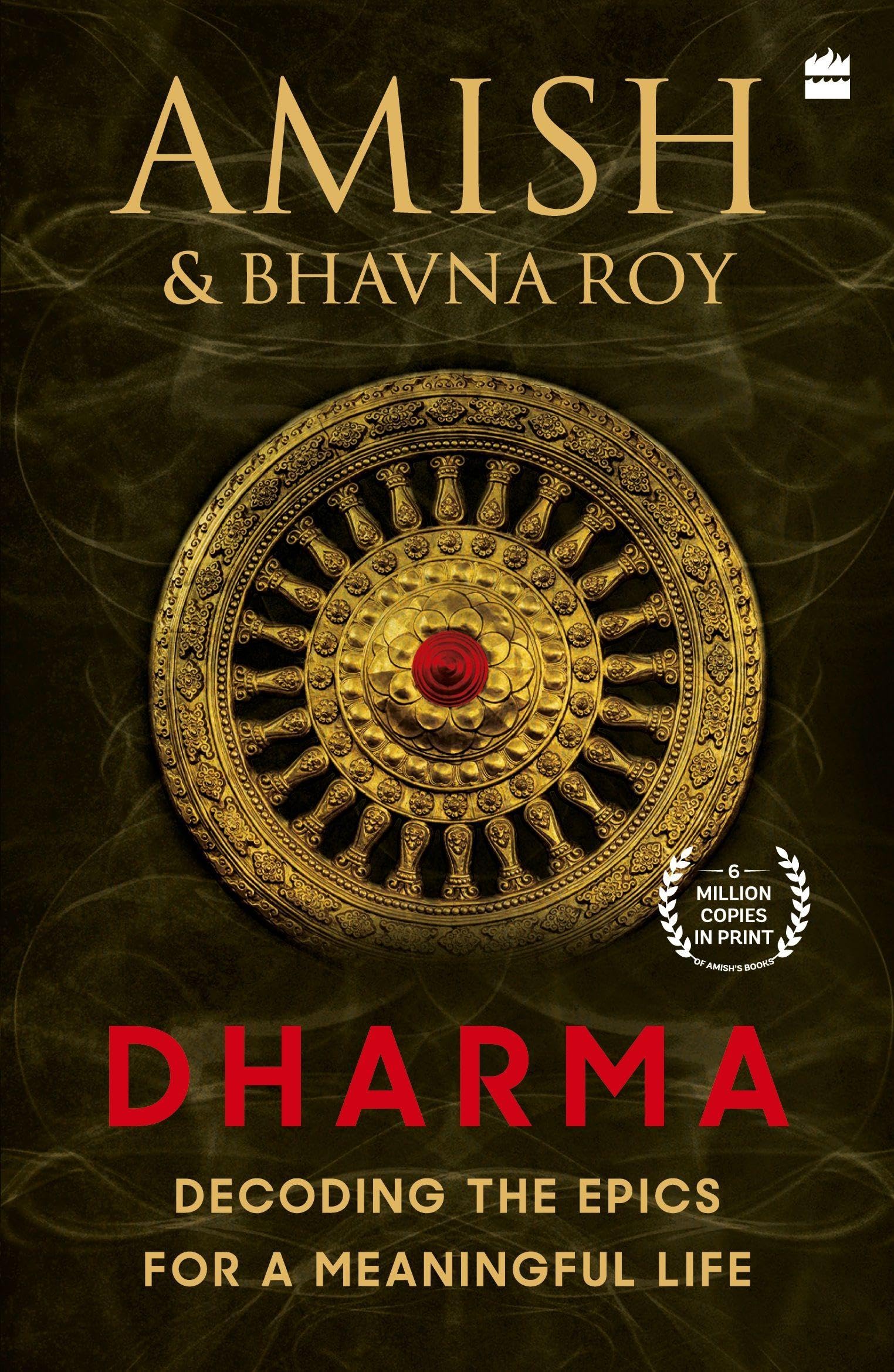
desertcart.in - Buy Dharma book online at best prices in India on desertcart.in. Read Dharma book reviews & author details and more at desertcart.in. Free delivery on qualified orders. Review: Good book - Nicely written with lots of examples about the path of Dharma Review: An Insightful read on our ancient history and philosophy! - “If our actions are motivated by fear, passion, anxiety, desire- if they are driven by the ego – then even hard work can take us away from Dharma” Dharma, which is a term of fundamental significance to Indian philosophy and faith, has many definitions. It has been quite impossible to offer a single coherent description of dharma, since the term has a long and varied history and a diverse collection of definitions and interpretations. The meaning of the term dharma depends on the context, and its meaning has changed for a long time as the doctrines of Hinduism have progressed throughout history. We all have different meaning and understanding of Dharma. As the authors narrate in the Introduction, “why Dharma? Don’t we understand the concept by now? But Dharma is quite the Scarlet Pimpernel among words. Difficult to pin down, it is invisible to the eye and confounding in the extreme. Shift the definition just a little, and it slides into another meaning. Yet, it is the universe within which Indian philosophy nestles.” I was completely spell-bound and impressed. Amish definitely has a way with the words, they stir you internally, challenge your thoughts (in a good way, of course). I have always loved reading his works. His work has always been supported by his extensive research and deep analysis. They offer a fresh and fascinating view to our vast culture and ancient history. In the book, the writers have adroitly narrated the philosophy of Dharma. Discussing multiple dimensions and decoding the meaning of several principles of Indian history, deducing myths and mythological characters, the ideas; their vices and virtues. They delve into the precious jewels of ancient Indian epics, as well as through the complex world of Amish's Shiva Trilogy and Ram Chandra Series, to traverse some of the core principals, concepts and foundations of Indian philosophy. They have not adopted the typical non-fiction method of writing and describing the Dharma, expanding on the hypothesis and then backing up the sources. Instead, they adopted the classical form of discussions that present multiple viewpoints, sometimes opposing views. They have strived to achieve an understanding of ethics, morals, humanity, sacrifice, loyalty, rigour, restraint, aspiration, wisdom, and many other imponderables. However, they have not written, in any way, in the form of lessons that they derive from these viewpoints, only ideas and suggestions. For it is we, who will have to make up our own mind and how we have a take on things as such. “Karma, like I said, is activity; to do. And activity should be a tool for self-discovery. You have to walk that path alone, though. Understand your own inner drama. Confront it. Then master it. That will bring you closer to dharma.” I have been able to relate to all these discussions since I come from a common context, straddled between worlds, with contemporary life at school, and the traditions and rich heritage from the family. Few instances and some points of view were eye-openers, having never thought so intensely on some of these concepts. It was pretty impressive. At times, we must all pause to acknowledge our uncertainty and to discover answers to our questions, to our inner wars. Confusion is going to act as a step stone. It will inspire us to seek and appreciate. We need to ask the right questions; we need to inquire intelligently. We need to ask about the answer, to quench our thirst for knowledge, and not just because we want to sound clever, or smart. If there are so many certitudes about life and ourselves, it could lead to an untested life that does not grow to its fullest. “Anything that is not constantly examined by our higher intelligence cannot be wholly positive” It has been fittingly said that Mother India is unique and special. The only one with an unbroken chain, with its roots extending back to the dawn of the human civilization. We must keep the flame alive. Pass on the torch. The more we share it, the more it expands. And all of us will benefit from the light of ancient India. “Traditions are not the worship of ashes, but the preservation of fire” In several ways, the book Dharma was really an eye-opener and was a stimulating and insightful read on our ancient history and philosophy, giving us a new outlook on some ideas and concepts. I would recommend the book to anyone interested in Indian mythology and philosophy, who is open to a healthy discussion of our pre-conceived conceptions.
| Best Sellers Rank | #7,766 in Books ( See Top 100 in Books ) #1,198 in Hinduism (Books) #13,574 in Literature & Fiction (Books) |
| Country of Origin | India |
| Customer Reviews | 4.2 4.2 out of 5 stars (1,612) |
| Dimensions | 12.85 x 1.32 x 19.84 cm |
| ISBN-10 | 9356293090 |
| ISBN-13 | 978-9356293090 |
| Item Weight | 294 g |
| Language | English |
| Net Quantity | 500.00 Grams |
| Paperback | 224 pages |
| Publisher | HarperCollins India (5 January 2023); HarperCollins Publishers; Product Safety Manager; [email protected] |
S**H
Good book
Nicely written with lots of examples about the path of Dharma
A**N
An Insightful read on our ancient history and philosophy!
“If our actions are motivated by fear, passion, anxiety, desire- if they are driven by the ego – then even hard work can take us away from Dharma” Dharma, which is a term of fundamental significance to Indian philosophy and faith, has many definitions. It has been quite impossible to offer a single coherent description of dharma, since the term has a long and varied history and a diverse collection of definitions and interpretations. The meaning of the term dharma depends on the context, and its meaning has changed for a long time as the doctrines of Hinduism have progressed throughout history. We all have different meaning and understanding of Dharma. As the authors narrate in the Introduction, “why Dharma? Don’t we understand the concept by now? But Dharma is quite the Scarlet Pimpernel among words. Difficult to pin down, it is invisible to the eye and confounding in the extreme. Shift the definition just a little, and it slides into another meaning. Yet, it is the universe within which Indian philosophy nestles.” I was completely spell-bound and impressed. Amish definitely has a way with the words, they stir you internally, challenge your thoughts (in a good way, of course). I have always loved reading his works. His work has always been supported by his extensive research and deep analysis. They offer a fresh and fascinating view to our vast culture and ancient history. In the book, the writers have adroitly narrated the philosophy of Dharma. Discussing multiple dimensions and decoding the meaning of several principles of Indian history, deducing myths and mythological characters, the ideas; their vices and virtues. They delve into the precious jewels of ancient Indian epics, as well as through the complex world of Amish's Shiva Trilogy and Ram Chandra Series, to traverse some of the core principals, concepts and foundations of Indian philosophy. They have not adopted the typical non-fiction method of writing and describing the Dharma, expanding on the hypothesis and then backing up the sources. Instead, they adopted the classical form of discussions that present multiple viewpoints, sometimes opposing views. They have strived to achieve an understanding of ethics, morals, humanity, sacrifice, loyalty, rigour, restraint, aspiration, wisdom, and many other imponderables. However, they have not written, in any way, in the form of lessons that they derive from these viewpoints, only ideas and suggestions. For it is we, who will have to make up our own mind and how we have a take on things as such. “Karma, like I said, is activity; to do. And activity should be a tool for self-discovery. You have to walk that path alone, though. Understand your own inner drama. Confront it. Then master it. That will bring you closer to dharma.” I have been able to relate to all these discussions since I come from a common context, straddled between worlds, with contemporary life at school, and the traditions and rich heritage from the family. Few instances and some points of view were eye-openers, having never thought so intensely on some of these concepts. It was pretty impressive. At times, we must all pause to acknowledge our uncertainty and to discover answers to our questions, to our inner wars. Confusion is going to act as a step stone. It will inspire us to seek and appreciate. We need to ask the right questions; we need to inquire intelligently. We need to ask about the answer, to quench our thirst for knowledge, and not just because we want to sound clever, or smart. If there are so many certitudes about life and ourselves, it could lead to an untested life that does not grow to its fullest. “Anything that is not constantly examined by our higher intelligence cannot be wholly positive” It has been fittingly said that Mother India is unique and special. The only one with an unbroken chain, with its roots extending back to the dawn of the human civilization. We must keep the flame alive. Pass on the torch. The more we share it, the more it expands. And all of us will benefit from the light of ancient India. “Traditions are not the worship of ashes, but the preservation of fire” In several ways, the book Dharma was really an eye-opener and was a stimulating and insightful read on our ancient history and philosophy, giving us a new outlook on some ideas and concepts. I would recommend the book to anyone interested in Indian mythology and philosophy, who is open to a healthy discussion of our pre-conceived conceptions.
V**R
Must read.
Great insights.
N**R
When you find your purpose and rhythm in the universe, you are in a state of dharma!!
I would like to thanks Amazon for delivering the book in the nicest condition. I had read Amish’s earlier literary works in my school days probably when I was in class 9 or 10. So I was excited to try his new book( when I finished my college hence a long time overdue). This book consist of 196 pages of a conversation of in-laws on spirituality, religion, and on life. Amish had tried to explain them with the reference of certain paras from “Ramayana”, “Meluan Trilogy”, “Shree Ram Chandra Series” and our mythology stories on gods. This can also be considered as a good market strategy to attract buyers to read his other fictions. The book generally done an analysis and criticism on the actions of the gods in the mythology and compared with other individuals as qualities. It was a new concept for me to read but I have saw the same concept on “Epic Channel” where great individuals were summoned by chitragupt for their actions to render judgements. It was a short read and can be completed in hours but as a slow reader, I completed it in 1-2 weeks. Thing I don’t like about this book is that the author has criticised the socialist policies in the old era, terms like human brain is reptilian(conspiracy theory?) use of pseudoscience and last chapter is just a yoga manual, is he trying to promote yoga? Well and good but this was weird to include in a fictional book. It was a weak book by Amish and hence I will rate 3/5 🌟🌟.
A**R
One of a Kind Book
One of the best book that you can read. Read it if you want a different perspective of the things that is going on in your life. The way it rates events of our life with the events of Mahabharat and Ramayan. The story of Karn and Arjun... It just wow
A**J
No INSPIRATION but TRANSFORMATION and it's ME who change myself
Amish's books can be read 100 times and each time u will find a different and new facet of looking at life. As Mahatma Gandhi says , "It's better to read 1 book 10 times than reading 10 books at once", and his book totally applies to the quote above. Thoughtful, inspiring and deeply moved, rather i would say transformed myself from being an ignorant and lazy to a more calm, proficient and cheering person. Love you Amish Sir. I started with Suheldev and now i have completed The Shiva Trilogy, Immortal India and Dharma. Soon moving on my next to the Ram Chandra Series. I'm a bit upset about the book not having your signature on it, even i preordered it albeit i can feel you in your books. You truly blessed by Lord Shiva. Om Namah Shivay 🙏
P**A
Very Nice
True to its title, "Dharma" is both enlightening and illuminating. It sparks thoughts, questions, and ideas that can significantly enhance the meaning of life. As a dedicated fan of Amish, having thoroughly enjoyed his Shiva Trilogy, I found it effortless to connect with the stories and characters brought over from there. However, the inclusion of small anecdotes ensures accessibility for readers unfamiliar with the trilogy, though I refrain from judging its effectiveness. Book highlights the importance of dialogue, discussion with like minded people. The book delves deeply into the interplay of physiological grooming, mindset, circumstances, ego, society, and peer pressure in our everyday actions. Through its pages, one can perceive familiar terms such as swadharma, dharma, loyalty, humility, silence, envy, ego, anger, and my personal favorite, karma, in a new and wisdom-filled light. It serves as a poignant reminder that we perceive the world solely through our own lens. In every situation, there exist three perspectives: mine, yours, and the elusive "reality."
A**R
Nice explanation on dharma and karma. Significance of managing emotions like Anger, loyalty vs love. The last chapter is an interesting read
N**J
The conversation style was great to generate thoughts to ponder on. It almost made me want to be there to be part of the conversations. Some of the conversations were very much structured and felt like flowing from the elder parents to the younger couple. While I do subscribe to that mindset that we can learn a lot from our elders, don’t they learn from us also?
N**I
Very interesting way to discussing Dharma, but sometimes I missed context. I need to read again and again for better grasping of Dharma.
A**R
Very well presented with total simplicity. Nothing not to like. I am using it to learn in-depth about the topic of yoga.
M**I
I have read all of the books on Shiva and loved, loved, loved them. So I bought this one thinking I might learn something new. This book would be great for someone who didn't have any prior understanding. Well written, easy read for a beginner.
TrustPilot
1天前
1 个月前