We remain fully operational. Our teams are working around the clock to ensure your deliveries continue safely.

下载应用程序


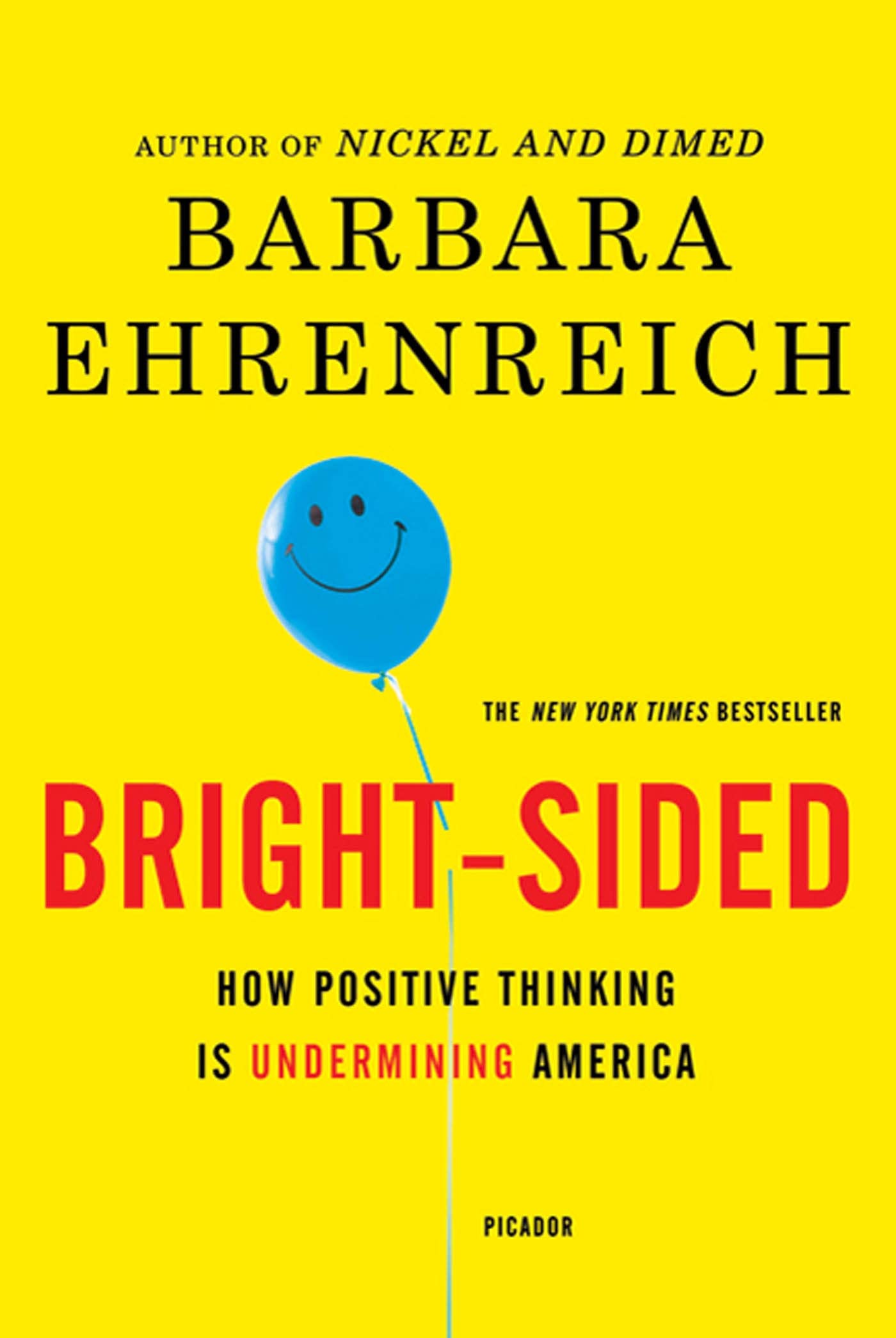
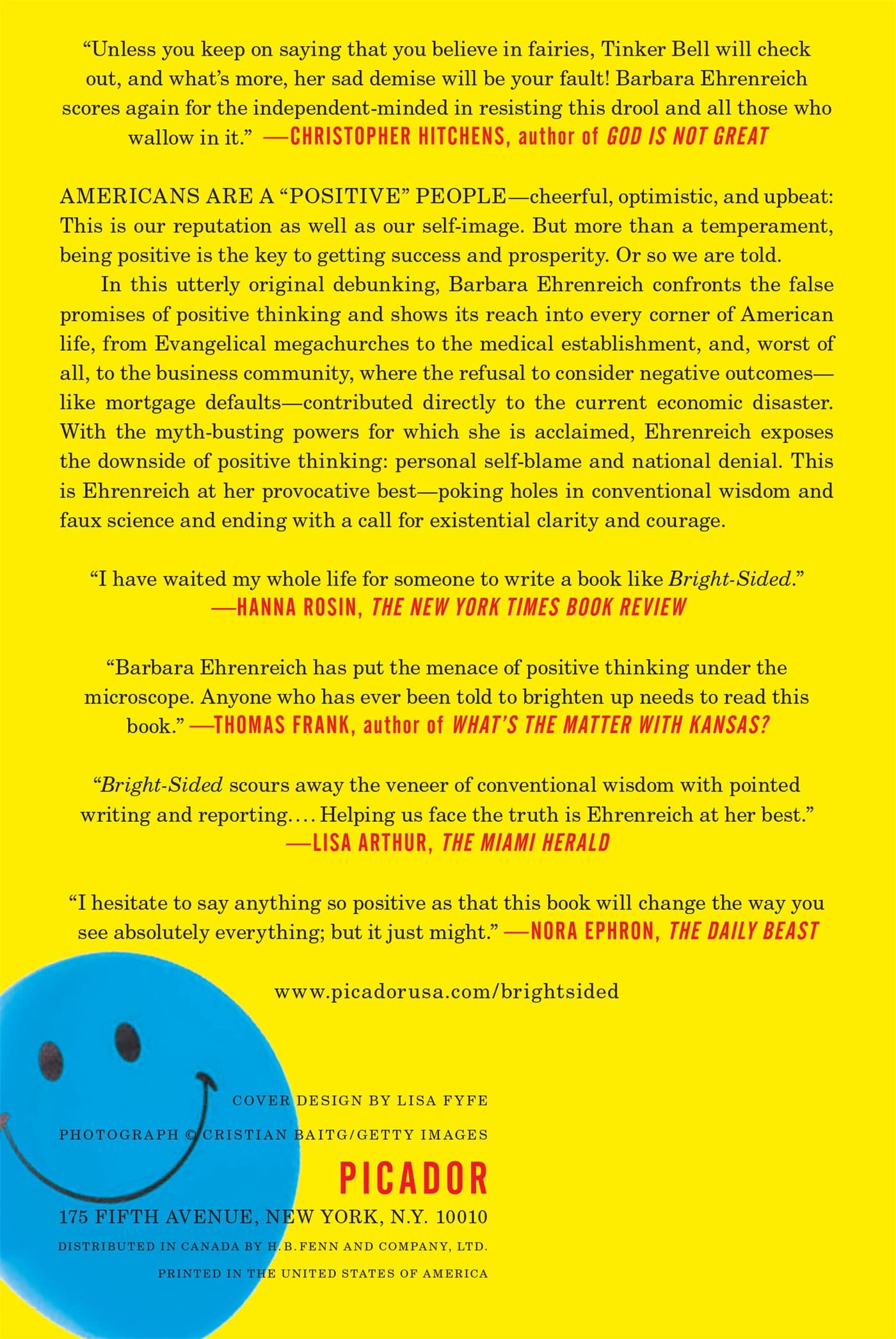
Bright-sided: How Positive Thinking Is Undermining America [Ehrenreich, Barbara] on desertcart.com. *FREE* shipping on qualifying offers. Bright-sided: How Positive Thinking Is Undermining America Review: A member of my tribe! - Ah.. at last... a member of my tribe! What's wrong with being sad and depressed when sick and suffering; horrified by the bombing of innocents; furious with inequality, racism, misogyny, ageism; outraged by corporate malfeasance and immunity? A little pessimism and skepticism is damn useful. I suspect I'm in the minority when I say I don't believe having a positive, cheerful outlook will cure cancer. In fact, I don't think cancer, or any other illness, gives a fart if I'm chipper, whereas if I take it seriously and realistically, rather than being determinedly, insistently, optimistic as to the outcome, then although I may be bloody miserable, at least I'll be doing whatever it takes to improve my health. Oprah would probably disagree. She, and so many others in the Positive Thinking camp, would probably tell me I had brought the damn disease on myself due to negative thinking and that my negative thinking would be the death of me, literally. Similarly, I believe no amount of 'visualizing' will 'manifest' my material desires. In other words, I won't get a Pulitzer by visualizing myself accepting it. I think the book THE SECRET is a dangerous fraud, although not a new one. Its bulls*** has been around since before Norman Vincent Peale. And so on. So, imagine my joy in reading a book, a well-researched, thoughtful one at that, which not only agrees with me (don't we all love being agreed with!), but one that also provides a history of where this idiotic belief system came from in the first place. And where did it come from? Ehrenreich tells us it comes from "New Thought" the 19th c. reaction to the more dour and punitive practices of Calvinism, which over time mutated into something just as useless and damaging. I didn't know that, but it makes perfect sense. These things are never new, they just slink around for years, shapeshifting as they go. When she turns her gaze to the medical community, Ehrenreich knows what's she's talking about, having experienced cancer herself, and damn near choked to death on all the pink ribboned positivity everyone insisted she have, and the marketing of products like pink teddy bears and pink lipstick and pink everything that, she believes, serve more to infantilize women than empower them. Wouldn't you, she asks, rather have a skeptical, even pessimistic doctor who was going to explore ever treatment possible, do every test possible, rather than the positive-thinker who says, "oh, it's probably just a shadow on the x-ray. Meditate a bit. That'll do the trick." She looks at the motivational gurus hawking their dubious wares; the corporations bullying their employees into faux positivity, to the detriment of both the employees and the bottom line; and the quacks claiming cheerfulness can improve the immune system and, as I said above, cure disease (research on the subject is laughably feeble and discounted). She takes us inside the mega-churches of abundance -- Joel Ornsteen and the ilk -- and doesn't hesitate to show us the little man behind the bedazzled curtain. She points a damning finger at how such 'Christian' churches are entirely concerned with materialism, in utter contradiction to the teachings of Christ. It reads like some bizarre heretical cult. One of the most important sections for me had to do with the economic consequences of positive thinking, and how it contributed to the collapse of the Ponzi scheme the mortgage industry had become and the resultant economic meltdown. An eye-opener and must read. Reading this wonderful book reminded me -- I met a man some years ago, a plumber and victim of the economic catastrophe, whose house was in foreclosure. He told me he wasn't worried because he was putting out great energy into the world and would soon -- he had no doubt -- be raking in cash as a motivational speaker to corporate executives. I suggested no amount of positive thinking would pay his back mortgage, and shouldn't he start working as a plumber again, a field in which he could make pretty good money, and renegotiate with his bank? He wouldn't be dissuaded and insisted he was plugged into the abundance of the universe. Well, okay, then. Of course he lost his house and, I'm sad to say, disappeared on down the road where he was sure he would find his pot of gold waiting. The positive thinking camp would say he simply wasn't visualizing properly, that some wee dark pocket of negativity was holding him back from his best life. Ehrenreich would suggest his problem was the unreality inherent in ruthless optimism, because it kept his delusions intact and chasing after a sparkly carrot that not only would he never catch, but doesn't exist. To be clear, Ehrenreich isn't extolling depressive, morbid crankiness and pessimism, just a dose of reality. Such reality might just help you get out of town before the pitchfork-waving mob arrives and get into the cellar before the tornado blows your roof off. Review: “Optimism is the opium for the people” - I recommend this book with some reservations. I am currently undergoing (5) rounds of chemo for Testicular Cancer, am a huge fan for Dale Carnegie/Steven Covey/Napoleon Hill/etc, and I am a Vipassana meditation practitioner. The last bit may seem esoteric, but it’s simply a meditation technique taught for free with as little dogma as possible in free 10-day meditation retreats around the world. Vipassana is a Pali word (ancient Northern Indian language that Gotama the Buddha used 25 centuries ago) meaning “seeing reality as it is from moment-to-moment.” That is essentially the response to positive thinking/positive psychology that the author wants to promote. Realism. Her academic rigor in researching this book is impressive. However, it is biased and sometimes unfairly bashes life coaches or any value these “positive thinking gurus” provide. One huge error she made is on page 94 where she writes, “If you are satisfied with what you have you need to ‘sharpen the saw’ in self-help writer Steven Covey’s words, and admit what you have isn’t enough.” She is referencing his hit business book The Seven Habits of Highly Effective People. Sharpening the saw is the 7th habit. It starts off with an anecdote of two men challenging each other to cut down trees. One does not rest and the other takes a break to sharpen his saw. He ends up being more productive. Sounds more like wise advice then irresponsible positive thinking delusions. It has nothing to do with admitting you don’t have enough. It has everything to do with self-care and taking a break every once and a while. Wrong guy to pick on there. I’d find more errors if I was intimately familiar with more works she criticizes. But to say they are without criticism is foolish of me. Throughout the book you’ll see her pick up the most extreme cases of the follies of the positive thinking movement: mega churches, corporations, unethical gurus, and Wall Street analysts/billionaires. It’s unfair, but I see she just didn’t have time to write the book with examples of how the positive thinking movement has helped others (except that one real estate agent with motivational CDs in her trunk that was never encouraged to aim high by her poor family). She also completely trashes the entire life coach industry. I’m reading the book Becoming a Professional Life Coach by Patrick Williams. It has mature and balanced content. Writing off an entire profession due to many bad apples is not a balance approach. The book wouldn’t be as interesting if it was more balanced in its analysis. Chapter 1 was good to read for my situation. However, I feel like what she got out of cancer was two books. Point well taken, but for me I found none of the hospital professionals forcing me to be cheery. Some family meme bees, yeah. The rhetoric of “you can beat this” and “you’re a warrior” is annoying. But at the end of the day if you tell someone you are in a lot of pain they back off. Same with my aunt who had breast cancer. She had support groups she enjoyed. She is cancer free. She does not look back at it like the best thing to happen to her. Sometimes I think the author just had bad luck with some medical professionals she encountered. Doesn’t lessen her point that the positivity in the breast cancer culture is overwhelming. The history of Calvinism to New Thought to Positive Psychology was fascinating. Connecting positive thinking to toxic elements of Calvinism and how it can be used for control over the individual blew me away. I definitely can see it as a tool for political oppression worldwide. But like a knife can kill so can it cut steak. It’s a tool and it’s usefulness depends on how effectively you use it. I think trying to pin 2008 on positive thinking in only one chapter was overly ambitious. Interesting to read due to her research. Never made the connection with Republicanism and the positive thinking movement. Makes sense. The whole pull yourself up by your bootstraps individualism. I believe an enormous rebalancing needs to happen with positive thinking in the USA. I also believe it can be useful too. Wish I had this book when I started my whole motivational journey. There really are many pitfalls to positive thinking...
| Best Sellers Rank | #433,570 in Books ( See Top 100 in Books ) #213 in Cultural Anthropology (Books) #304 in Customs & Traditions Social Sciences #9,206 in Psychology & Counseling |
| Customer Reviews | 4.4 4.4 out of 5 stars (579) |
| Dimensions | 5.5 x 0.65 x 8.2 inches |
| Edition | First Edition |
| ISBN-10 | 0312658850 |
| ISBN-13 | 978-0312658854 |
| Item Weight | 2.31 pounds |
| Language | English |
| Print length | 256 pages |
| Publication date | August 3, 2010 |
| Publisher | Picador |
L**S
A member of my tribe!
Ah.. at last... a member of my tribe! What's wrong with being sad and depressed when sick and suffering; horrified by the bombing of innocents; furious with inequality, racism, misogyny, ageism; outraged by corporate malfeasance and immunity? A little pessimism and skepticism is damn useful. I suspect I'm in the minority when I say I don't believe having a positive, cheerful outlook will cure cancer. In fact, I don't think cancer, or any other illness, gives a fart if I'm chipper, whereas if I take it seriously and realistically, rather than being determinedly, insistently, optimistic as to the outcome, then although I may be bloody miserable, at least I'll be doing whatever it takes to improve my health. Oprah would probably disagree. She, and so many others in the Positive Thinking camp, would probably tell me I had brought the damn disease on myself due to negative thinking and that my negative thinking would be the death of me, literally. Similarly, I believe no amount of 'visualizing' will 'manifest' my material desires. In other words, I won't get a Pulitzer by visualizing myself accepting it. I think the book THE SECRET is a dangerous fraud, although not a new one. Its bulls*** has been around since before Norman Vincent Peale. And so on. So, imagine my joy in reading a book, a well-researched, thoughtful one at that, which not only agrees with me (don't we all love being agreed with!), but one that also provides a history of where this idiotic belief system came from in the first place. And where did it come from? Ehrenreich tells us it comes from "New Thought" the 19th c. reaction to the more dour and punitive practices of Calvinism, which over time mutated into something just as useless and damaging. I didn't know that, but it makes perfect sense. These things are never new, they just slink around for years, shapeshifting as they go. When she turns her gaze to the medical community, Ehrenreich knows what's she's talking about, having experienced cancer herself, and damn near choked to death on all the pink ribboned positivity everyone insisted she have, and the marketing of products like pink teddy bears and pink lipstick and pink everything that, she believes, serve more to infantilize women than empower them. Wouldn't you, she asks, rather have a skeptical, even pessimistic doctor who was going to explore ever treatment possible, do every test possible, rather than the positive-thinker who says, "oh, it's probably just a shadow on the x-ray. Meditate a bit. That'll do the trick." She looks at the motivational gurus hawking their dubious wares; the corporations bullying their employees into faux positivity, to the detriment of both the employees and the bottom line; and the quacks claiming cheerfulness can improve the immune system and, as I said above, cure disease (research on the subject is laughably feeble and discounted). She takes us inside the mega-churches of abundance -- Joel Ornsteen and the ilk -- and doesn't hesitate to show us the little man behind the bedazzled curtain. She points a damning finger at how such 'Christian' churches are entirely concerned with materialism, in utter contradiction to the teachings of Christ. It reads like some bizarre heretical cult. One of the most important sections for me had to do with the economic consequences of positive thinking, and how it contributed to the collapse of the Ponzi scheme the mortgage industry had become and the resultant economic meltdown. An eye-opener and must read. Reading this wonderful book reminded me -- I met a man some years ago, a plumber and victim of the economic catastrophe, whose house was in foreclosure. He told me he wasn't worried because he was putting out great energy into the world and would soon -- he had no doubt -- be raking in cash as a motivational speaker to corporate executives. I suggested no amount of positive thinking would pay his back mortgage, and shouldn't he start working as a plumber again, a field in which he could make pretty good money, and renegotiate with his bank? He wouldn't be dissuaded and insisted he was plugged into the abundance of the universe. Well, okay, then. Of course he lost his house and, I'm sad to say, disappeared on down the road where he was sure he would find his pot of gold waiting. The positive thinking camp would say he simply wasn't visualizing properly, that some wee dark pocket of negativity was holding him back from his best life. Ehrenreich would suggest his problem was the unreality inherent in ruthless optimism, because it kept his delusions intact and chasing after a sparkly carrot that not only would he never catch, but doesn't exist. To be clear, Ehrenreich isn't extolling depressive, morbid crankiness and pessimism, just a dose of reality. Such reality might just help you get out of town before the pitchfork-waving mob arrives and get into the cellar before the tornado blows your roof off.
L**N
“Optimism is the opium for the people”
I recommend this book with some reservations. I am currently undergoing (5) rounds of chemo for Testicular Cancer, am a huge fan for Dale Carnegie/Steven Covey/Napoleon Hill/etc, and I am a Vipassana meditation practitioner. The last bit may seem esoteric, but it’s simply a meditation technique taught for free with as little dogma as possible in free 10-day meditation retreats around the world. Vipassana is a Pali word (ancient Northern Indian language that Gotama the Buddha used 25 centuries ago) meaning “seeing reality as it is from moment-to-moment.” That is essentially the response to positive thinking/positive psychology that the author wants to promote. Realism. Her academic rigor in researching this book is impressive. However, it is biased and sometimes unfairly bashes life coaches or any value these “positive thinking gurus” provide. One huge error she made is on page 94 where she writes, “If you are satisfied with what you have you need to ‘sharpen the saw’ in self-help writer Steven Covey’s words, and admit what you have isn’t enough.” She is referencing his hit business book The Seven Habits of Highly Effective People. Sharpening the saw is the 7th habit. It starts off with an anecdote of two men challenging each other to cut down trees. One does not rest and the other takes a break to sharpen his saw. He ends up being more productive. Sounds more like wise advice then irresponsible positive thinking delusions. It has nothing to do with admitting you don’t have enough. It has everything to do with self-care and taking a break every once and a while. Wrong guy to pick on there. I’d find more errors if I was intimately familiar with more works she criticizes. But to say they are without criticism is foolish of me. Throughout the book you’ll see her pick up the most extreme cases of the follies of the positive thinking movement: mega churches, corporations, unethical gurus, and Wall Street analysts/billionaires. It’s unfair, but I see she just didn’t have time to write the book with examples of how the positive thinking movement has helped others (except that one real estate agent with motivational CDs in her trunk that was never encouraged to aim high by her poor family). She also completely trashes the entire life coach industry. I’m reading the book Becoming a Professional Life Coach by Patrick Williams. It has mature and balanced content. Writing off an entire profession due to many bad apples is not a balance approach. The book wouldn’t be as interesting if it was more balanced in its analysis. Chapter 1 was good to read for my situation. However, I feel like what she got out of cancer was two books. Point well taken, but for me I found none of the hospital professionals forcing me to be cheery. Some family meme bees, yeah. The rhetoric of “you can beat this” and “you’re a warrior” is annoying. But at the end of the day if you tell someone you are in a lot of pain they back off. Same with my aunt who had breast cancer. She had support groups she enjoyed. She is cancer free. She does not look back at it like the best thing to happen to her. Sometimes I think the author just had bad luck with some medical professionals she encountered. Doesn’t lessen her point that the positivity in the breast cancer culture is overwhelming. The history of Calvinism to New Thought to Positive Psychology was fascinating. Connecting positive thinking to toxic elements of Calvinism and how it can be used for control over the individual blew me away. I definitely can see it as a tool for political oppression worldwide. But like a knife can kill so can it cut steak. It’s a tool and it’s usefulness depends on how effectively you use it. I think trying to pin 2008 on positive thinking in only one chapter was overly ambitious. Interesting to read due to her research. Never made the connection with Republicanism and the positive thinking movement. Makes sense. The whole pull yourself up by your bootstraps individualism. I believe an enormous rebalancing needs to happen with positive thinking in the USA. I also believe it can be useful too. Wish I had this book when I started my whole motivational journey. There really are many pitfalls to positive thinking...
W**E
In this brilliant book, Barbara Ehrenreich shows how harmful the `positive thinking' movement is, how it means self-blame, victim-blaming and national denial, inviting disaster. She shows that it wrecks efforts for education, skills and reforms. She cites a guru who said, "the mind is actually shaping the very thing that is being perceived." There is a long tradition in the USA of this kind of mind-over-matter idealism: it includes William James, Ralph Waldo Emerson, Mary Baker Eddy (the founder of Christian Science), Norman Vincent Peale (The power of positive thinking), Dale Carnegie (How to make friends and influence people), Scott Peck (The road less travelled), Tom Peters (The pursuit of wow), Deepak Chopra (Quantum healing), Oprah Winfrey, and Rhonda Byrne (The Secret). Byrne evilly said that tsunamis only happen to people who are `on the same frequency as the event' - blaming people's personalities for their deaths. In the field of health, `positive thinkers' tell us that being positive will help to cure cancer. But research has found no such link: see for example James Coyne et al, `Psychotherapy and survival in cancer: the conflict between hope and evidence', Psychological Bulletin, 2007, 133, 3, 367-94, and `Emotional well-being does not predict survival in head and neck cancer patients', Cancer, 2007, 110, 11, 2568-75. So, even if you believe, with Ann McNerney, that, "Cancer will lead you to God" (The gift of cancer: a call to awakening), `positive thinking' won't make you better. The business world loves positive thinking. The US market for motivational products is worth $21 billion a year and companies use them against their workers. For instance, AT&T sent staff to a motivational event on the same day it announced 15,000 redundancies. The motivator's message? "It's your own fault; don't blame the system; don't blame the boss - work harder and pray more." Ehrenreich presents us with this striking image: "a candlelit room thick with a haze of incense, 17 blindfolded captains of industry lay on towels, breathed deeply, and delved into the `lower world' to the sound of a lone tribal drum. Leading the group was Richard Whiteley, a Harvard business school-educated best-selling author and management consultant who moonlights as an urban shaman. `Envision an entrance into the earth, a well, or a swimming hole', Whiteley half-whispered above the sea of heaving chests. He then instructed the executives how to retrieve from their inner depths their `power animals, who would guide their companies to 21st century success'." A third of British CEOs of FTSE 100 companies used such personal coaches in 2007. The debt crisis was built on runaway positive thinking. As Ehrenreich notes, "the recklessness of the borrowers was far exceeded by that of the lenders, with some finance companies involved in subprimes undertaking debt-to-asset ratios of 30 to 1." The promoter of a master's programme in `positive psychology' at the University of East London saw `healthy British scepticism' as one of the `challenges' facing her. But we need to be sceptical, to see things as they are, not as we wish them to be. We need not `positive thinking' but real thinking.
L**E
Barbara Ehrenreich never disappoints. Intelligently written, relevant information. Always enjoyable reading her work.
A**N
I am so sick and tired of positive thinking. It's ridiculous. i was hoping this book would give me a bunch of valid arguments against this scourge. This book provided a different perspective. It demonstrates how positive thinking can actually hurt other people or at the very least prevent you from truly empathizing with people having a tough time. When your friend has cancer and you say things like "my thoughts and prayers are with you" instead of "Hey, how are you? Tell me about how you're feeling? What are you thinking?" you're kinda just telling them you don't want to hear it and that they should just shut up and be positive. Such a shame.
V**T
Ever bought a self-help book that didn't deliver what it promised? Then Bright-sided is for you. This is a forensic diagnosis of why boundless positive thinking turns our minds to mush, deracinates managers, and helps make us willing believers in economic bubbles. Ehrenreich has several distinct strands to her book. She kicks off with her experience at the age of about sixty when diagnosed with breast cancer. To her amazement she stumbled across on an entire industry in the US devoted to presenting the disease as little short of the best thing that could ever happen to a woman. Other chapters analyse how the school of mindless optimism was born with Mary Baker Eddy, fed the subprime scandal and has come to infect mainstream corporate management thinking. Anyone who has sat through a toe-curling session by a motivational speaker at a company off-site will chuckle in recognition. Ehrenreich has evidently survived her brush with cancer without resorting to a whacky, manic outlook. And her book is far from down at the mouth. It is a good read, sceptical but sane, probing yet witty. There are especially amusing interviews with "positive thinking" gurus at various stages of derangement. One gap is that she does not discuss cognitive behaviour therapy. This is successful in treating depression by eliminating negative thoughts that tend to reinforce themselves - at least the National Health Service, which now stumps up for the treatment, believes so. In short, this is a book for grown-ups baffled by the credulity of others, and perhaps their own. A life-changing book? No, but its explanation of how fads have entered the mainstream will certainly generate a wry smile.
D**R
Praise!