We remain fully operational. Our teams are working around the clock to ensure your deliveries continue safely.

下载应用程序


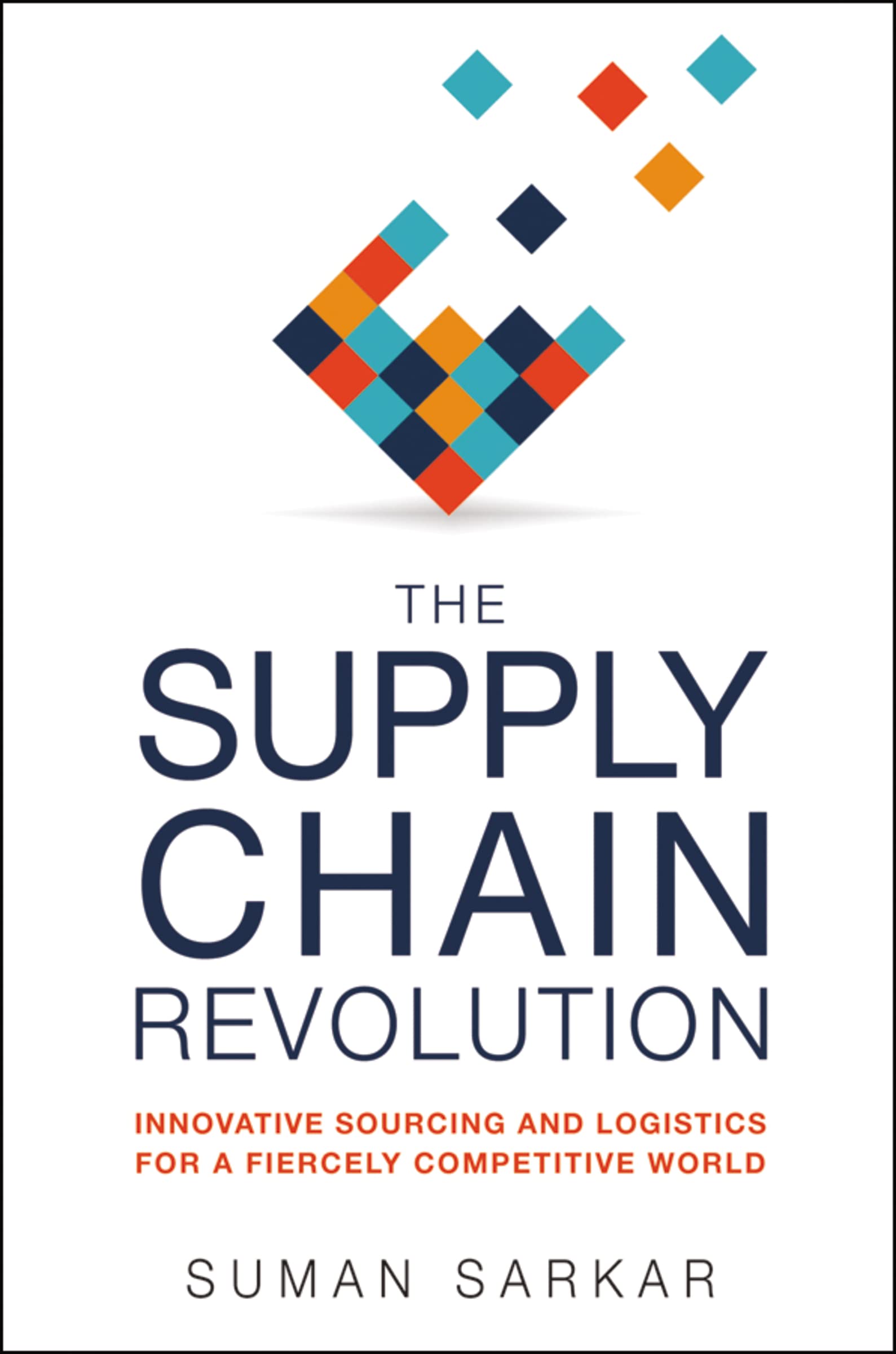
Supply Chain Revolution [Sarkar, Suman] on desertcart.com. *FREE* shipping on qualifying offers. Supply Chain Revolution Review: Suman Sarkar is the Real Deal... - I picked up The Supply Chain Revolution in an effort to fast track my understanding of the challenges, risks and opportunities within the world of supply chain. I had been tapped to lead global sales for a new AI Supply Chain Risk Management software startup here in San Francisco that was in the process of raising a 10MM seed round, and I had to go from knowing very little to being an expert on the topic as quickly as possible. Not only did Suman and his book deliver the exact info I needed to speak confidently to the executive team and the board about Supply Chain, but this book actually played a direct and immediate role in shaping my entire career trajectory. In The Supply Chain Revolution, Suman breaks the complex and rather band topic down into simple, exciting and actionable insights with clear real-world examples throughout the book. He pulls from his direct experience having spent decades working with and for some of the largest enterprises in the world to optimize their supply chain. As a result of reading this book, and subsequent discussions that occurred with our executive team as a result, I was actually able to forge a personal bond and consulting relationship with Suman. The work we've done together has been nothing short of transformational. He asks the tough questions that many others are afraid to address for fear they'll ruffle feathers. I can honestly say that he's helped me personally shave years off my learning curve and helped shape my career thanks to the advice contained within this book and the consulting he's done with me and my team. I hear there's a second book on the horizon which I can't wait to read as well. Keep up the great work Suman! Review: have reaped great benefit. Retailers everywhere are under constant pressure - In the constant and often obsessive search for profit and growth, I think it would be fair to say that few CEO’s think of their supply chain and sourcing as an obvious area for their attention. They are far more inclined to look to a change in business model, strategy or geographic reach to meet their objectives. The value of this book lies in Sarkar’s cogent argument that will turn your understanding of supply chain from something “having about the same sex appeal as broccoli” into an area of immediate concern. The ‘Supply Chain Revolution’ covers both the opportunities in supply chain and sourcing in some depth, but I will focus only on a few aspects from each. When the late Steve Jobs returned to a failing version of the company he founded, he set himself three goals. The first was, as to be expected, to improve Apple’s product line. The second was to improve its marketing - also to be expected. But the third, was to transform Apple’s supply chain, not as an after-thought, but to save the company from going to the wall. As the author, Sarkar, explains, Jobs cared about supply chains because he knew the price Apple was paying for having one “so shoddy and slipshod.” To address this critical area, he assigned Tim Cook to the task, the man who has succeeded Jobs as the CEO. Cook reduced inventory from months to days, and forged long term deals with Apple suppliers for key components. This enabled Apple to become exceptionally fast at getting new products to consumers, causing sales to spiral upward. Much of what we commonly understand by supply chain is based on Second World War methods, designed to get supplies to the end-users as fast as possible. Hitler’s failures in North Africa and Stalingrad were partly caused by supply breakdowns. Given the successes of the Allies’ supply chain management and sourcing techniques, they have been adopted by organizations of all types. However, in most organizations they have not changed fundamentally since World War 2, even in huge companies. Those who have recognised the value of constantly examining and upgrading their systems, have reaped great benefit. Retailers everywhere are under constant pressure, and many great brands have folded. In contrast, Zara, the Spanish clothing retailer with almost 7,000 stores in 88 countries, is thriving. This remarkable achievement is not based on the fashion flair of its founder, Amancio Ortega, the richest man in Europe, but on his attention to Zara’s supply chain. The retail clothing store, Gap for example, takes between 9 and 12 months to get is new designs into its 4,000 stores in 52 countries. Zara needs only 10 -15 days! Zara is a perfect illustration of the connection between a company’s Functional Strategy, (the way of functioning that causes its strategy to be successful,) and its supply chain. Ortega’s view of clothing is that they are “perishable commodities like fruit: people change their styles frequently, depending on their whim or some fashion trend.” Ortega’s strategy is to feed that whim through Zara’s ability to get new designs to customers in a week or two. In neither the case of Apple nor Zara is their supply chain thought of as backroom grunt-work, but a strategic imperative that requires attention and respect. Author Sarkar’s obvious depth of knowledge and experience shines through the book. It provides a host of insights into where attention needs to be focused, to derive profit and growth benefits from one’s supply chain. Understanding supply chain as the process by which materials are received and goods delivered, is a very narrow view. Coupled to one’s supply chain thinking must be the company’s procurement approach, and more specifically, sourcing: the supplier selection and management. There are two broad approaches to dealing with suppliers. One is to bring the function inhouse either through developing the needed capacity, or by buying the supplying company. Google, Tesla, Microsoft and Pfizer are cited by Sarkar as companies using this approach - which has not proven to be a great success. The losses they have incurred make this point. The other approach is the through the formation of alliances with suppliers. An alliance differs in material ways from simply choosing a supplier, based on its ability to deliver on a company’s current needs. Rather, it involves a long-view commitment to making the alliance successful, which only begins, not ends, with the signing of the agreement. The is an art of forging and maintaining an alliance. It involves seeing the supplier as an ally, and working with the supplier company to achieve your goals, and theirs. Suppliers come and go, allies are expected to stay and work together. Starbucks, the giant chain of 20,000 international coffee shops, owes their success in large part to the alliances forged by its founder Howard Schultz. Starbucks has used these alliance in key areas of business. The first is discovering, sourcing and then marketing speciality coffees. By treating its alliance partners fairly, it ensures a sustainable supply of coffee to support a growing business. This includes developing alliances with booksellers to open outlets in their stores, and with Apple to play music in Starbucks coffeeshops. Many have alliances with their suppliers and intermediaries, but they fail. Making your supply chain effective across the many allies in the supply chain, requires work: commitment and ongoing attention. This attention is as much to the relationship with the ally, as to the process you require and jointly craft. Thinking you don’t need allies has proven a mistake many make, of which Nokia is an example. It refused to partner with wireless operators and enter exclusive arrangements with them. Samsung, by contrast allied with Verizon, LG with AT&T, as did Apple. But as Sarkar makes clear, whether the resources you require are inside or outside your company, the sophistication and ongoing development of the supply chain, will determine profitability and market share in very significant ways. This is not a book directed at the operations executive alone, but at the whole of the executive team, and the CEO in particular. Readability Light ----+ Serious Insights High -+--- Low Practical High -+--- Low *Ian Mann of Gateways consults internationally on leadership and strategy, and is the author of the recently released Executive Update.
| Best Sellers Rank | #943,825 in Books ( See Top 100 in Books ) #76 in Distribution & Warehouse Management (Books) #98 in Production & Operations #5,140 in Business Management (Books) |
| Customer Reviews | 4.3 4.3 out of 5 stars (167) |
| Dimensions | 6 x 0.75 x 8.95 inches |
| ISBN-10 | 1400242665 |
| ISBN-13 | 978-1400242665 |
| Item Weight | 2.31 pounds |
| Language | English |
| Print length | 256 pages |
| Publication date | January 11, 2023 |
| Publisher | AMACOM |
K**D
Suman Sarkar is the Real Deal...
I picked up The Supply Chain Revolution in an effort to fast track my understanding of the challenges, risks and opportunities within the world of supply chain. I had been tapped to lead global sales for a new AI Supply Chain Risk Management software startup here in San Francisco that was in the process of raising a 10MM seed round, and I had to go from knowing very little to being an expert on the topic as quickly as possible. Not only did Suman and his book deliver the exact info I needed to speak confidently to the executive team and the board about Supply Chain, but this book actually played a direct and immediate role in shaping my entire career trajectory. In The Supply Chain Revolution, Suman breaks the complex and rather band topic down into simple, exciting and actionable insights with clear real-world examples throughout the book. He pulls from his direct experience having spent decades working with and for some of the largest enterprises in the world to optimize their supply chain. As a result of reading this book, and subsequent discussions that occurred with our executive team as a result, I was actually able to forge a personal bond and consulting relationship with Suman. The work we've done together has been nothing short of transformational. He asks the tough questions that many others are afraid to address for fear they'll ruffle feathers. I can honestly say that he's helped me personally shave years off my learning curve and helped shape my career thanks to the advice contained within this book and the consulting he's done with me and my team. I hear there's a second book on the horizon which I can't wait to read as well. Keep up the great work Suman!
I**N
have reaped great benefit. Retailers everywhere are under constant pressure
In the constant and often obsessive search for profit and growth, I think it would be fair to say that few CEO’s think of their supply chain and sourcing as an obvious area for their attention. They are far more inclined to look to a change in business model, strategy or geographic reach to meet their objectives. The value of this book lies in Sarkar’s cogent argument that will turn your understanding of supply chain from something “having about the same sex appeal as broccoli” into an area of immediate concern. The ‘Supply Chain Revolution’ covers both the opportunities in supply chain and sourcing in some depth, but I will focus only on a few aspects from each. When the late Steve Jobs returned to a failing version of the company he founded, he set himself three goals. The first was, as to be expected, to improve Apple’s product line. The second was to improve its marketing - also to be expected. But the third, was to transform Apple’s supply chain, not as an after-thought, but to save the company from going to the wall. As the author, Sarkar, explains, Jobs cared about supply chains because he knew the price Apple was paying for having one “so shoddy and slipshod.” To address this critical area, he assigned Tim Cook to the task, the man who has succeeded Jobs as the CEO. Cook reduced inventory from months to days, and forged long term deals with Apple suppliers for key components. This enabled Apple to become exceptionally fast at getting new products to consumers, causing sales to spiral upward. Much of what we commonly understand by supply chain is based on Second World War methods, designed to get supplies to the end-users as fast as possible. Hitler’s failures in North Africa and Stalingrad were partly caused by supply breakdowns. Given the successes of the Allies’ supply chain management and sourcing techniques, they have been adopted by organizations of all types. However, in most organizations they have not changed fundamentally since World War 2, even in huge companies. Those who have recognised the value of constantly examining and upgrading their systems, have reaped great benefit. Retailers everywhere are under constant pressure, and many great brands have folded. In contrast, Zara, the Spanish clothing retailer with almost 7,000 stores in 88 countries, is thriving. This remarkable achievement is not based on the fashion flair of its founder, Amancio Ortega, the richest man in Europe, but on his attention to Zara’s supply chain. The retail clothing store, Gap for example, takes between 9 and 12 months to get is new designs into its 4,000 stores in 52 countries. Zara needs only 10 -15 days! Zara is a perfect illustration of the connection between a company’s Functional Strategy, (the way of functioning that causes its strategy to be successful,) and its supply chain. Ortega’s view of clothing is that they are “perishable commodities like fruit: people change their styles frequently, depending on their whim or some fashion trend.” Ortega’s strategy is to feed that whim through Zara’s ability to get new designs to customers in a week or two. In neither the case of Apple nor Zara is their supply chain thought of as backroom grunt-work, but a strategic imperative that requires attention and respect. Author Sarkar’s obvious depth of knowledge and experience shines through the book. It provides a host of insights into where attention needs to be focused, to derive profit and growth benefits from one’s supply chain. Understanding supply chain as the process by which materials are received and goods delivered, is a very narrow view. Coupled to one’s supply chain thinking must be the company’s procurement approach, and more specifically, sourcing: the supplier selection and management. There are two broad approaches to dealing with suppliers. One is to bring the function inhouse either through developing the needed capacity, or by buying the supplying company. Google, Tesla, Microsoft and Pfizer are cited by Sarkar as companies using this approach - which has not proven to be a great success. The losses they have incurred make this point. The other approach is the through the formation of alliances with suppliers. An alliance differs in material ways from simply choosing a supplier, based on its ability to deliver on a company’s current needs. Rather, it involves a long-view commitment to making the alliance successful, which only begins, not ends, with the signing of the agreement. The is an art of forging and maintaining an alliance. It involves seeing the supplier as an ally, and working with the supplier company to achieve your goals, and theirs. Suppliers come and go, allies are expected to stay and work together. Starbucks, the giant chain of 20,000 international coffee shops, owes their success in large part to the alliances forged by its founder Howard Schultz. Starbucks has used these alliance in key areas of business. The first is discovering, sourcing and then marketing speciality coffees. By treating its alliance partners fairly, it ensures a sustainable supply of coffee to support a growing business. This includes developing alliances with booksellers to open outlets in their stores, and with Apple to play music in Starbucks coffeeshops. Many have alliances with their suppliers and intermediaries, but they fail. Making your supply chain effective across the many allies in the supply chain, requires work: commitment and ongoing attention. This attention is as much to the relationship with the ally, as to the process you require and jointly craft. Thinking you don’t need allies has proven a mistake many make, of which Nokia is an example. It refused to partner with wireless operators and enter exclusive arrangements with them. Samsung, by contrast allied with Verizon, LG with AT&T, as did Apple. But as Sarkar makes clear, whether the resources you require are inside or outside your company, the sophistication and ongoing development of the supply chain, will determine profitability and market share in very significant ways. This is not a book directed at the operations executive alone, but at the whole of the executive team, and the CEO in particular. Readability Light ----+ Serious Insights High -+--- Low Practical High -+--- Low *Ian Mann of Gateways consults internationally on leadership and strategy, and is the author of the recently released Executive Update.
A**S
Highly recommended for business executives and students.
A different perspective on how to compete than what we normally hear. Traditionally, sourcing and supply chain are not considered frontline functions. The book brings out the point how they can help companies win in today’s world. Easy to read and full of examples. As a business executive I would highly recommend the book for business leaders and students.
K**O
Good for the less experienced
This is an interesting book with tips and brief case studies in recent industry trends. However, as a supply chain professional, I didn't learn enlightening info from it.
K**K
Very innovative and novel view of Supply Chain
This book provided a very interesting perspective on the role of Supply Chain and Sourcing organizations beyond their traditional functional silos. I think this should be a required reading as part of MBA programs across the country.
M**T
FANTASTIC BOOK
Fantastic book. It is easy to read, straight to the point, tons of case studies, it's great. I would really recommend it to any supply chain professional or simply anyone interested in the matter. This book will not disappoint you!
R**H
This book focuses mainly on strategic sourcing and does not cover the entire gamut of Supplychain. It does not cover other ascents of supply chain
A**R
Well structured. Short and precise chapters. Great examples. Sufficient graphics. Inexpensive. Ebook availability. Didn't like abbreviations. Overall: I can recommend this book. Very comfortable and smooth to read / understand.
K**O
Being in technologies for years, and a decision leader, I imagine this book could help me get the best trend in Digitalization of supply chain. At the end, just few exemple, no framework, and, the worst, is that more than half of the. book is about sourcing, and not supply chain ( in a logistics, delivery, warehousing, etc...).. A big disappointment
E**S
A very good book
O**N
Great book to read about supply chain