We remain fully operational. Our teams are working around the clock to ensure your deliveries continue safely.

下载应用程序


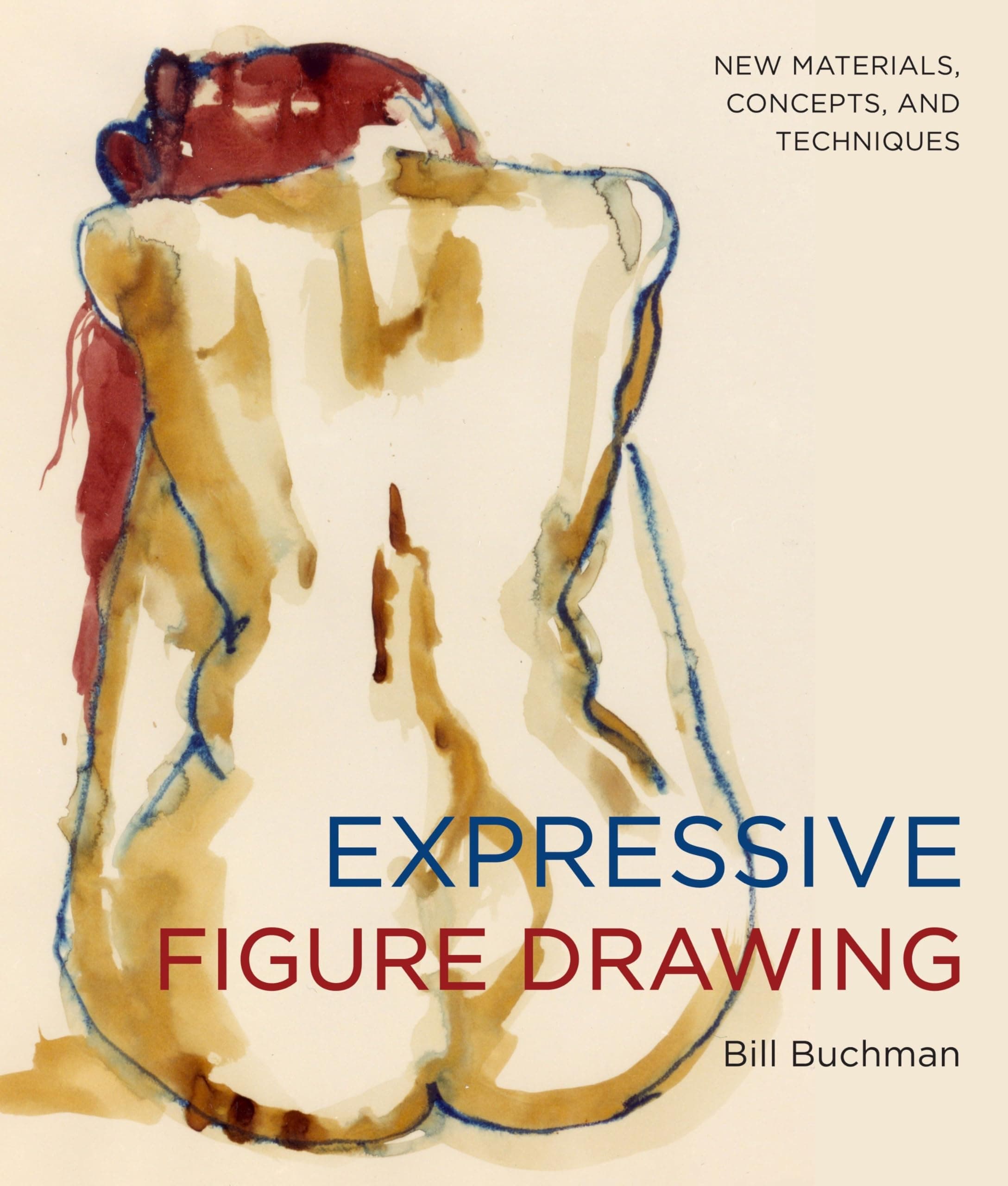
Expressive Figure Drawing: New Materials, Concepts, and Techniques [Buchman, Bill] on desertcart.com. *FREE* shipping on qualifying offers. Expressive Figure Drawing: New Materials, Concepts, and Techniques Review: If you want to draw beautifully, Get this!!! - I bought this book and it's companion DVD The Art of Drawing The Figure: Essential Exercises [Interactive DVD ]and out of all the art books I bought this one has made the most profound difference to my work. I'm no newbie to drawing, but this pushed me in new directions in terms of technique and materials. Bill makes what I thought were challenging skills to aquire into very simple and inspiring steps. Figure drawing has taken on a magnificent new appeal for me. This was a very worthwhile investment and I highly recommend getting these. The book is deceptively simple looking and yet is absolutely jam packed with new ideas and techniques to try. It's well organised, has a beautiful writing style without being wordy or condescending, and the art work is inspiring and clearly demonstrates Bill's lessons. Each technique builds on previously acquired drawing skills and does so in a gentle way. This is geared towards figure drawing, but I'll use these skills in so many other types of art work. You can get this book on its own and learn an absolutely staggering amount from it but, if you are able to, do yourself a favour and get the DVD too... if you want to make quantum leaps in progress! I'm buying more of Bill's DVDs and will get any others he releases in the future. Oh, I also bought the dvd "Art Models 6" to use for drawing models for the exercises... perfect! Review: An exciting, innovative book on figure drawing - I've taken classes in figure drawing, studied books on anatomy for artists, and practiced on my own in figure drawing open studio sessions, but nothing has excited me as much about drawing the human figure as this book: Expressive Figure Drawing by Bill Buchman. This quotation towards the end of the book sums up the author's dynamic teaching philosophy: "The process of learning to draw the figure and the process of releasing your creativity and expressivity are one." He begins with the drawing process, seemingly paradoxical guiding principles ("you have to give up control to get control") and practical strategies for gauging accurate proportions. Using a variety of media (including some unconventional combinations such as water-soluble wax crayons with diluted acrylic ink) and tools like sumi brushes and reed pens, the author gives an example on every page of the concepts and techniques practiced in the exercises. (These examples are some of the most beautiful figure drawings I've seen and are alone worth the price of the book.) These concepts and techniques include gesture, mass, line, structure, shape, volume and color. Several step-by-step process examples are also given, which made me feel like I was looking over his shoulder in the studio. The book closes with ideas on developing what the author calls the "expressive mindset": learning how to capture the spirit or life of the subject, or the Chi. Ultimately and ideally, by following the book's exercises and practicing diligently, the expression conveyed by the human body and the expression conveyed by the artist will come together in a dynamic life drawing that does, indeed, have life.
| Best Sellers Rank | #303,081 in Books ( See Top 100 in Books ) #131 in Human Figure Art (Books) #197 in Drawing Specific Objects #307 in Figure Drawing Guides |
| Customer Reviews | 4.5 4.5 out of 5 stars (208) |
| Dimensions | 8.57 x 0.43 x 9.99 inches |
| Edition | 11/14/10 |
| ISBN-10 | 0823033147 |
| ISBN-13 | 978-0823033140 |
| Item Weight | 1.45 pounds |
| Language | English |
| Print length | 176 pages |
| Publication date | December 14, 2010 |
| Publisher | Watson-Guptill |
J**.
If you want to draw beautifully, Get this!!!
I bought this book and it's companion DVD The Art of Drawing The Figure: Essential Exercises [Interactive DVD ]and out of all the art books I bought this one has made the most profound difference to my work. I'm no newbie to drawing, but this pushed me in new directions in terms of technique and materials. Bill makes what I thought were challenging skills to aquire into very simple and inspiring steps. Figure drawing has taken on a magnificent new appeal for me. This was a very worthwhile investment and I highly recommend getting these. The book is deceptively simple looking and yet is absolutely jam packed with new ideas and techniques to try. It's well organised, has a beautiful writing style without being wordy or condescending, and the art work is inspiring and clearly demonstrates Bill's lessons. Each technique builds on previously acquired drawing skills and does so in a gentle way. This is geared towards figure drawing, but I'll use these skills in so many other types of art work. You can get this book on its own and learn an absolutely staggering amount from it but, if you are able to, do yourself a favour and get the DVD too... if you want to make quantum leaps in progress! I'm buying more of Bill's DVDs and will get any others he releases in the future. Oh, I also bought the dvd "Art Models 6" to use for drawing models for the exercises... perfect!
T**.
An exciting, innovative book on figure drawing
I've taken classes in figure drawing, studied books on anatomy for artists, and practiced on my own in figure drawing open studio sessions, but nothing has excited me as much about drawing the human figure as this book: Expressive Figure Drawing by Bill Buchman. This quotation towards the end of the book sums up the author's dynamic teaching philosophy: "The process of learning to draw the figure and the process of releasing your creativity and expressivity are one." He begins with the drawing process, seemingly paradoxical guiding principles ("you have to give up control to get control") and practical strategies for gauging accurate proportions. Using a variety of media (including some unconventional combinations such as water-soluble wax crayons with diluted acrylic ink) and tools like sumi brushes and reed pens, the author gives an example on every page of the concepts and techniques practiced in the exercises. (These examples are some of the most beautiful figure drawings I've seen and are alone worth the price of the book.) These concepts and techniques include gesture, mass, line, structure, shape, volume and color. Several step-by-step process examples are also given, which made me feel like I was looking over his shoulder in the studio. The book closes with ideas on developing what the author calls the "expressive mindset": learning how to capture the spirit or life of the subject, or the Chi. Ultimately and ideally, by following the book's exercises and practicing diligently, the expression conveyed by the human body and the expression conveyed by the artist will come together in a dynamic life drawing that does, indeed, have life.
C**E
Helpful information for portrait drawing
As a newby to the field of drawing, I found this book helpful with insightful tips and perspectives. It gave me an alternative perspective to drawing live models. It simplified the process and gave advise on multiple media. It showed that a simple drawing can be as effective and beautiful as a complicated drawing.
H**I
Gesture drawing or painting is the key to both Eastern and Western art
Bill Buchman first brought my attention when he bought a specialty brushes( made of rat whiskers) from our Amazon store. As a Chinese brush painting(also known as sumi-e) artist and teacher I found Bill's 2 DVDs very interesting so I bought them and loved watching them. As he and I became friends on Facebook I asked him about the concept of gesture drawing that he has mentioned in his DVDs. He told me that in this new book he has devoted a whole chapter to the gesture! So I bought it and just finished reading. What is gesture? It's not easy to put in words, according to Bill, it is capturing what the model is doing... it's the action of the pose..and it's also the action of the artist! In Eastern painting we also emphasize on the essence, the "spirit" of the subject matter, or the Tao...the "Life Movement"(qiyun shengdong) which is the very goal of painting. As Bill puts it "the sense of movement in an artwork is what makes it live." Gesture drawing is also about how you move your hand, and Bill has illustrated it well in the book with sumi brush strokes which records the subtle hand movement which express the movement of the pose. As bill points out, to draw the body our mind has to be in touch with our own body. As we do in Chinese painting, to draw orchid leaves with grace and draw bamboo with strength, gesture of pose will require not only what materials to use but also what type of hand and arm movement "to express an idea or meaning." What is why the ancient Chinese scholar-armature painters have used the word "writing" instead of "drawing" or "painting" to call this kind of action or attitude in art. In gesture drawing one must strives to capture the movement and flow of the forms in a sweeping manner, rather than just describe the edges etc.. By giving away control and fuzzy details, we gain freedom. And only after a short anxiety can we enjoy relaxation. Bill's book is a great supplement to his 2 DVDs. I am very happy to find an art teacher who has such a deep understanding of traditional and contemporary western art as well as a very open mind to materials, techniques and concepts from the East. I would highly recommend this book to all my follow sumi artists and students.
P**A
This paperback version of the book is 176 pages thick; and, contains example drawings(pen/pencil/charcoal)/watercolour paintings on each and every single page; too, there are detailed and clear step by step explanations being given explaining all of the many different techniques that were used to produce each example 'drawing/painting'. Frankly, I have only just received it in through the post; so, I haven't had time to read through it all, yet; but, immediately, I had to go take a look inside...and, so, I quickly glimpsed through going from cover to cover; then, I decided to try reading a few pages/passages; and, yes, I was very impressed by the quality of the writing/useful explanations/but, especially, by the fact that the examples given on each page do truly make me feel 'inspired' enough to wish to start drawing along... ;-) NOTE: This is not a book for those who are strongly into 'realism'...; instead, this book encourages you to 'experiment' with learning figure drawing; concerning, lines/blind contour drawing/outlines/mass/weight/direction/proportions/scribbles/design/concepts for form building/-etc. LATEST UPDATE After buying the book, and, looking through it. Next, I hopped over to YouTube to do a quick search to find: Bill Buchman...there I encountered seeing a few video clips of him teaching; I also discovered he has an online web site: [...], as well as, a number of teaching videos. One of these teaching videos is also related to this particular book, it's called: Art Is An Attitude/Essential Exercises by Bill Buchman...which I also went and brought. Right now, I'm watching both the video/and, reading the book. The two things seem to work together really well; the book explains everything in great detail...; while the video shows the drawing processes in actual action. My verdict is having both book/video together is very useful, as well as, being 'inspiring'. However, you could just chose to work with either one; but, my guess is, if you like either the book/video...then, you're also going to be sorely 'tempted' to buy both.
T**A
I don't review often, but this book warrants all the praise it can get. It's incredibly inspiring. Also, I think it's aimed at a specific mindset - tinkerers who don't want to colour within the lines. Artists into hyper-realism might not learn much from this book, but the experimenters will be thoroughly inspired. The exercises are fun without being prescriptive, and lead to a journey of discovery. I am about 25% into the book and can already see a difference in how I approach art - in that way, it's a pretty cerebral experience too. The book clearly showcases methods, tools, mind sets for getting really expressive. What's great is how it gets you there by also showing you how to be economical with details. I'd say this is a great resource for folks who already have some basic skills - it'll take you many levels up. Beginners will learn some good practices like the compass and clock method of setting line direction and the value of being minimal. Experts will learn a new thought process. This book coupled with Keys to Drawing with Imagination by Bert Dodson and Pen & Ink Drawing by Alphonso Dunn are invaluable for technical expertise, finding your own style and evolving into the artist you are meant to be.
B**E
ce livre donne des pistes pour traiter le nu et franchement je trouve tous les dessins supers. J'ai pris des cours de modèles vivants et ce livre donne envie d'aller encore plus loin dans les matériaux et dans le rendu. Je l'adore............
M**R
...war ich sofort beim Aufschlagen des Buches. Ich bin keine Anfängerin und habe es für mein Grafik-Design-Studium gekauft. Es sind so viele inspirierende Anregungen drin und das Buch nimmt einem die Angst mit freien, schwungvollen Linien zu arbeiten. Auch bekommt man so richtig Lust, verschiedene Medien und Techniken auszuprobieren und sich selber auszudrücken. Aber auch für Anfänger ist es sehr toll geeignet. Es sind locker- und warm-werd-Übungen dabei und ich finde, es ist nicht zu viel Text drin. Es enthält viele Bilder als Beispiele, bei denen man sofort zum eigenen Skizzenbuch greifen und loslegen will!
B**E
I'm taking my time with this book but so far I absolutely adore it!!!