We remain fully operational. Our teams are working around the clock to ensure your deliveries continue safely.

下载应用程序




Buy anything from 5,000+ international stores. One checkout price. No surprise fees. Join 2M+ shoppers on Desertcart.
Desertcart purchases this item on your behalf and handles shipping, customs, and support to Malaysia.
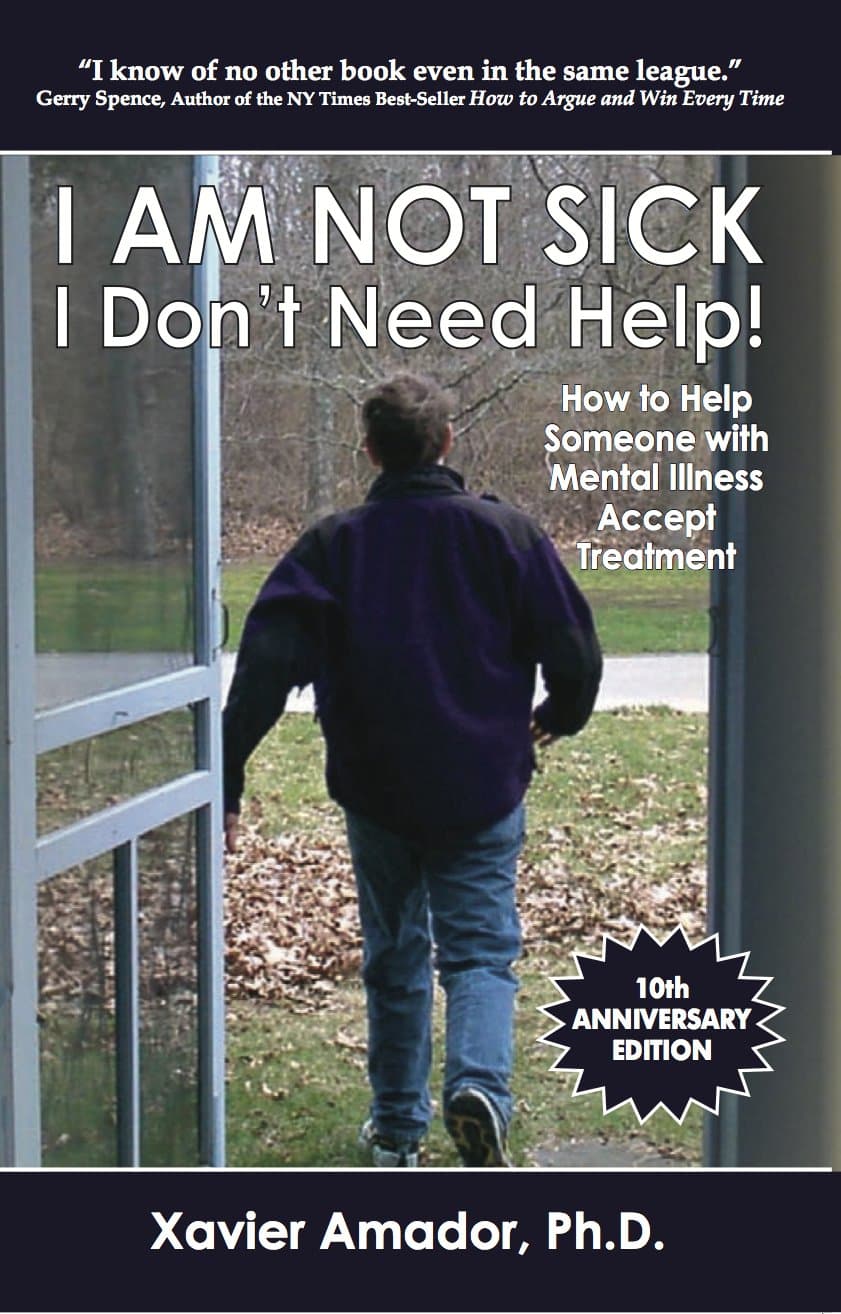
I Am Not Sick I Don't Need Help!: How to Help Someone with Mental Illness Accept Treatment [Amador Ph.D., Associate Professor of Psychology and Psychiatry Columbia University College of Physicians and Surgeons Director of Diagnosis and Evaluation Center for Psychotic Disorders Xavier F] on desertcart.com. *FREE* shipping on qualifying offers. I Am Not Sick I Don't Need Help!: How to Help Someone with Mental Illness Accept Treatment Review: Important Book Explains Why Some Mentally Ill People Can't See Their Dysfunction - Teaches a Communication Technique That Works - Amador has put a name to something I never understood: anosognosia, a real medical condition, brain-based frontal lobe problem in which certain people cannot truly perceive their actual condition accurately. Thus some mentally ill people think they are thriving and just fine when they are in actuality, barely functioning, acting oddly or violently, being inappropriate in some manner, or are physically dirty etc. This can also happen after a brain injury such as after stroke or after serious head injury. That is why they often go off their meds on their own, they honestly think nothing is wrong. This book teaches the reader what anosognosia is and how loved ones or health care professionals can communicate and encourage a mentally ill person to stay on a treatment plan of medication and appointment keeping even when they think they are not truly in need of help. It teaches a communication technique related to something I learned in my professional career in customer service called "active listening". This is a non-judging way of talking. Regarding delusions you are taught a way to discuss them without saying you believe they are real. It also uses a goal setting method of making plans that lets the patient be in control of their future and realizing that to get to that goal they have more success while being compliant on the treatment plan. The overall plan also suggests using some of the new forms of medication which are old medications in a long-term injectable delivery system thereby eliminating the daily pill taking which is easier to not comply with. Another component of care recommended is the forced outpatient (day program) treatment that is now legal in 47 states. Sadly this was defeated in the state where my relative resides but I was able to use this method with success. Another important thing is that the patient have a family member they are working with the health care professionals with. I am angered and frustrated that our psychiatrists do not insist that such plans as well as psychiatric advance directives be written and also living wills and durable power of attorney arrangements made while the patient is most well and able to deal with these matters. Sadly too many people are left to be their own advocate and the family of the adult patient is shut out of the process. The ailing patient then sometimes dupes the doctor into thinking all is fantastic when in reality they are suffering or living in a sub-standard and non-thriving manner and living with dysfunction and disability. Lastly the author gives suggestions for when the patient is feeling well, how to work out the negative emotions that may exist between the loving relative that helped them be committed against their will etc. even when the outcome was positive and when it saved their life. This is the only book I know of right now to address agosognosia for the layperson and to explain a communication plan in an easy to understand manner. I found it easy to read and approachable and read it cover to cover. I rate this 5 stars = I Love It Review: This book has changed our lives! - In a desperate search to find someone or some thing to help me deal with a loved one I bought Dr. Amador’s book “I AM NOT SICK”. Not knowing what this was about, except for the reviews, I scrambled for some type of hope I could grab onto to help “save” myself and my family from hopelessness. This book was so much more than how to “deal” with the issue of mental illness, it’s about understanding and learning to communicate in a way that produces not just results, but a deeper love and bond with some one who has a mental illness. After reading this book, and within one day of putting into practice “LEAP” tools, I found that IT WORKED! BUT - it just didn’t work in “dealing” with the “other person” it worked for my own self! I was, and still am, much more at peace, calmer, more understanding and have a true desire to empathize with my loved family member more than I have ever been before. I wish I would have read this book years ago and learned these four simple tools. I have lost so much by not knowing how to communicate and be there for my family member, but all that has changed now. There is basically no more fear, arguing, power struggles, or trying to trick or threaten in order to get her to “listen, understand and comply.” In fact it is the other way around...I am the one listening, trying to understand and complying (Agree) with her! What a turn around! But God is faithful and I believe He gave Dr. Amador a profound word to share for those who have mentally ill loved ones. This is a MUST READ!
| Best Sellers Rank | #171,656 in Books ( See Top 100 in Books ) #3,606 in Psychology & Counseling #5,631 in Parenting & Relationships (Books) #16,484 in Self-Help (Books) |
| Customer Reviews | 4.7 4.7 out of 5 stars (1,799) |
| Dimensions | 5.4 x 0.7 x 8.4 inches |
| Edition | 10th Anniversary ed. |
| ISBN-10 | 0967718937 |
| ISBN-13 | 978-0967718934 |
| Item Weight | 12 ounces |
| Language | English |
| Print length | 249 pages |
| Publication date | December 1, 2011 |
| Publisher | Vida Press |
C**M
Important Book Explains Why Some Mentally Ill People Can't See Their Dysfunction - Teaches a Communication Technique That Works
Amador has put a name to something I never understood: anosognosia, a real medical condition, brain-based frontal lobe problem in which certain people cannot truly perceive their actual condition accurately. Thus some mentally ill people think they are thriving and just fine when they are in actuality, barely functioning, acting oddly or violently, being inappropriate in some manner, or are physically dirty etc. This can also happen after a brain injury such as after stroke or after serious head injury. That is why they often go off their meds on their own, they honestly think nothing is wrong. This book teaches the reader what anosognosia is and how loved ones or health care professionals can communicate and encourage a mentally ill person to stay on a treatment plan of medication and appointment keeping even when they think they are not truly in need of help. It teaches a communication technique related to something I learned in my professional career in customer service called "active listening". This is a non-judging way of talking. Regarding delusions you are taught a way to discuss them without saying you believe they are real. It also uses a goal setting method of making plans that lets the patient be in control of their future and realizing that to get to that goal they have more success while being compliant on the treatment plan. The overall plan also suggests using some of the new forms of medication which are old medications in a long-term injectable delivery system thereby eliminating the daily pill taking which is easier to not comply with. Another component of care recommended is the forced outpatient (day program) treatment that is now legal in 47 states. Sadly this was defeated in the state where my relative resides but I was able to use this method with success. Another important thing is that the patient have a family member they are working with the health care professionals with. I am angered and frustrated that our psychiatrists do not insist that such plans as well as psychiatric advance directives be written and also living wills and durable power of attorney arrangements made while the patient is most well and able to deal with these matters. Sadly too many people are left to be their own advocate and the family of the adult patient is shut out of the process. The ailing patient then sometimes dupes the doctor into thinking all is fantastic when in reality they are suffering or living in a sub-standard and non-thriving manner and living with dysfunction and disability. Lastly the author gives suggestions for when the patient is feeling well, how to work out the negative emotions that may exist between the loving relative that helped them be committed against their will etc. even when the outcome was positive and when it saved their life. This is the only book I know of right now to address agosognosia for the layperson and to explain a communication plan in an easy to understand manner. I found it easy to read and approachable and read it cover to cover. I rate this 5 stars = I Love It
T**M
This book has changed our lives!
In a desperate search to find someone or some thing to help me deal with a loved one I bought Dr. Amador’s book “I AM NOT SICK”. Not knowing what this was about, except for the reviews, I scrambled for some type of hope I could grab onto to help “save” myself and my family from hopelessness. This book was so much more than how to “deal” with the issue of mental illness, it’s about understanding and learning to communicate in a way that produces not just results, but a deeper love and bond with some one who has a mental illness. After reading this book, and within one day of putting into practice “LEAP” tools, I found that IT WORKED! BUT - it just didn’t work in “dealing” with the “other person” it worked for my own self! I was, and still am, much more at peace, calmer, more understanding and have a true desire to empathize with my loved family member more than I have ever been before. I wish I would have read this book years ago and learned these four simple tools. I have lost so much by not knowing how to communicate and be there for my family member, but all that has changed now. There is basically no more fear, arguing, power struggles, or trying to trick or threaten in order to get her to “listen, understand and comply.” In fact it is the other way around...I am the one listening, trying to understand and complying (Agree) with her! What a turn around! But God is faithful and I believe He gave Dr. Amador a profound word to share for those who have mentally ill loved ones. This is a MUST READ!
H**E
Pass On to Others Sooner rather than Later
Having read many books on bipolar and schizophrenia as we have gone through 4 years of trying to figure out what is wrong with our son, I landed on this fine book, way too late. But, I am devouring every page now. The photo on the jacket of the book really hits' home. How many times my son has left home are more than I can count. I would watch him leave and walk away from home, backpack in hand. My son is diagnosed with bipolar disorder and has been in and out of treatment for 4 years. He is now in the hospital again, after having gone off of his medications, again, (and self medicating with marijuana and such) and close to having to do another stint at that state hospital. He is only 17, going on 18. I hope he reaches into adulthood. If he were to kill himself as he sometimes says he will do, having read this book and having tried everything within my power to help him, I will come out the other side with some solace for my heart. I know I am powerless to such a disease. Damn mental illness! It's as worse a curse as cancer. I would put down every book you might be reading right now, even from Fuller Torrey, and read this first. Underline and keep going back to the reasoning behind the authors suggestions. (Some of the ideas in the book are usable when dealing with troubled people and youth in general.) Best of luck. I have recommend this book to the therapist now working with my son. I will send one in the mail to his current psychiatrist who could use this for her practice. She is not connecting with my son and it's causing very slow movement in his progress. I so appreciate the author updating the book as time goes on! Hugs to you and all.
J**E
This is an important book for families of people with a mental illness. Especially useful is the research that one in every two people suffering schizophrenia does not fully understand that they have a mental illness. Even more significant is the finding that this symptom is caused by damage to the very part of the brain which is responsible for the illness itself. This is an astonishing fact that should concentrate our attitude to this terrible illness and the way we perceive those who suffer from it. People with schizophrenia may not be in ‘denial’ after all. An astute approach from psychologists et al could bring hope that people might be led gently towards medication and a lessening of their symptoms? Governments please take note!
D**M
Ce livre m'a beaucoup aidée , très interessant il a complètement modifié ma façon d'aborder les relations avec mon fils ..
A**R
A clear guide for friends, family and care givers in listening to, and establishing trust with mentally ill individuals. Also great for parents of teenagers and young adults. Helpful in decreasing anger and avoidance in difficult relationships.
T**D
This is possibly the most helpful book I've ever bought. Without going into too much personal detail, I will say that I was facing a situation very similar to the author's. Reading this book completely changed my view of the situation and really helped me and the family take a different approach. Very highly recommended and possibly the best money you could spend!
M**O
Leer este libro me ha ayudado enormemente a cambiar mi forma de comunicarme con la persona que amo, es una excelente herramienta para entender como se siente y cual es la mejor manera de acompañarla.