We remain fully operational. Our teams are working around the clock to ensure your deliveries continue safely.

下载应用程序


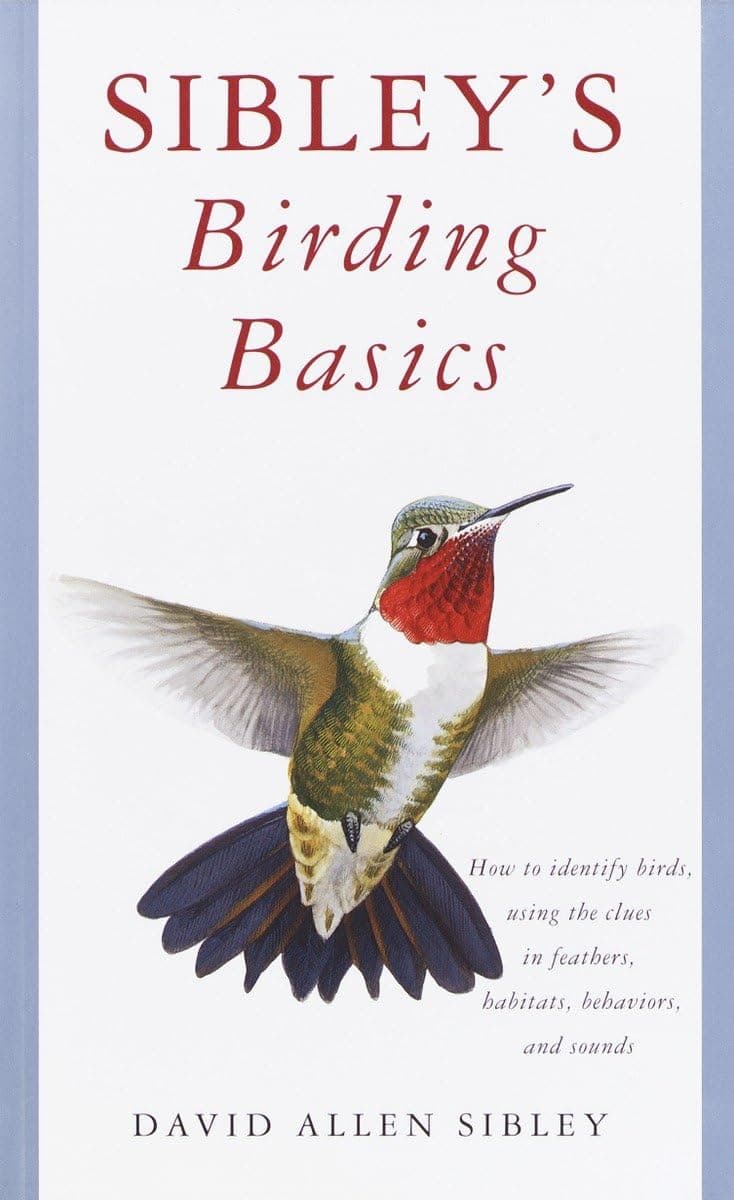
Buy Sibley's Birding Basics (Sibley Guides) on desertcart.com ✓ FREE SHIPPING on qualified orders Review: ONE OF THE MOST HELPFUL BIRDING BOOKS I HAVE EVER READ...and read and read and read. - At 154 pages I have always been fascinated that an author could pack so much information into so few pages. I have had a lifelong interest in birds - as a wee lad I was extremely aware of them and found each and everyone of them I spotted (I did not know the names of most) interesting and delightful. I began "serious" birding later in life than some in the late 1960s. Birding has become one of my life passions; but that being said, I must assure you that I am NOT an expert! No, no, no! Far from it as a matter of fact. Each passing year I learn more and more and discover that much I thought I knew I actually did not know...or at least did not know it well enough. Enter this book; "Sibley's Birding Basics." I purchased my first copy around 2005, a couple of years after it was first published. I read it and reread it and read it again...and on and on. Each time I went through the book I grumbled under my breath (I still do as a matter of fact), that I wished I had had this book and the information in it right from the beginning. My life would have been much richer had I had access to the information found in this thing. Now this brings us to the only quibble I have concerning what is probably the best of all the Sibley books (I have all of them) and that would be the title. By using in the title the word "Basics" it gives the potential reader that this is a book meant for the beginning birder and only the beginning birder. Nothing could be farther from the truth. Yes, it is a most wonderful book for the novice, not doubt about that, but it is also of extreme value to the most experienced of birders. The book is organized in chapters which include: Getting Started, Finding Birds, The Challenges of Bird Identification, Misidentification, Identifying Rare Birds, Taxonomy, Using Behavioral Clues, Voice, Understanding Feathers, Feather Arrangement and Color Patterns, Structure of Tail and Winds, Bare Parts, Molt, Feather Wear, Age Variation and Ethics and Conservation. The illustrations in this work are absolutely the best. The text is clear and concise and extremely readable in informative and the illustrations and text blend perfectly. As the author writes, he shows you what he is writing about. I dread the day (I say with tongue in cheek and somewhat sarcastically) when I become one of those folks I meet now and then that simply know everything about birds and bird identification there is to know and are quick to tell you about it. One of the nicest things about birding is that there is always something to learn and indeed, to relearn from time to time. I am rather convinced that this little book is of great value to both the rank beginner and to the birder who has been beating the bushes for decades. Due to being rather absent minded and quite disorganized (Long story which I will not bore you with), I recent "misplaced" my original copy of this book, ergo I was forced to buy this new one. Now, If I can just learn to distinguish and identify all the warbles and sparrows that flit though my life I will die a happy guy...sigh. Rotten little LBJs! Don Blankenship The Ozarks Review: Sibley's best work to date - best book for building ID skill - I just finished reading SIBLEY'S Birding Basics. I was impressed enough with it that I thought I would write a short review. In the past, when friends/acquaintances have asked what books I would recommend in order to improve their birding skills - not a field guide - I would recommend either Birding for Beginners; Sheila Buff or The Complete Birder; Jack Connor. In addition, I would always recommend getting The Basics of Bird Identification (Bird Topography) - A Birders Journal Publication. This is because neither of the two previous texts dedicated sufficient, if any, time on understanding bird topography. Reading the latter text was a big breakthrough for me in bird identification. I believe it is absolutely essential if you want to start nailing the tough field identifications. It gives you an understanding and takes you to another level of bird identification that you are just not going to get outside of bird-in-hand, detailed examination experience. I have both of Sibley's previously published texts - he has been quite voluminous lately - The SIBLEY GUIDE to Bird Life & Behavior and The SIBLEY Guide to Birds. While I have mixed emotions about the goals of each of these texts and Sibley's success in accomplishing them, I can argue that they are very worthwhile books and any avid birder should probably count them among their personal library. This brings us to Sibley's latest text, the topic of this CoBirds post. I have been birding all my life; more seriously for about the past 10 years or so - thanks to Walt and Alan V. So you might say, "why read a 'birding basics' book?" There are two answers: 1) I am an incurable book hound, and digest most all books I can get my hands on in my areas of interest, and 2) I believe there is always more to learn. Now some books fall short on the promise of #2. I will start reading it, then just skim it, and then finally just put it on my shelf after it has sat on my nightstand without being touched for the requisite amount of time. This latest book from Sibley was not one of those. I believe this is his best work yet. And compared to those large tomes of his two previous publications, it comes in a small paperback book only 155 pages long. I believe this book has something to offer for beginner to expert. I picked up at least one new piece of information in every section, and sometimes, many more. In addition, he devotes a great deal of time to bird topography. So this new book has everything that I used to recommend two books for, rolled into one. It is extremely readable; has a natural progression of topics; and many illustrations that help to drive home advanced topics. If you are considering a book to enhance your birding identification skills, all of the books that I mentioned in the second paragraph above are very worthwhile, but I believe that Sibley's new book has just taken first place in my recommendation list.
| Best Sellers Rank | #34,038 in Books ( See Top 100 in Books ) #42 in Outdoors & Nature Reference #64 in Bird Field Guides |
| Customer Reviews | 4.7 4.7 out of 5 stars (1,128) |
| Dimensions | 4.75 x 0.5 x 8.5 inches |
| Edition | First Edition |
| ISBN-10 | 0375709665 |
| ISBN-13 | 978-0375709661 |
| Item Weight | 12 ounces |
| Language | English |
| Part of series | Sibley Guides |
| Print length | 168 pages |
| Publication date | October 1, 2002 |
| Publisher | Alfred a Knopf Inc |
D**P
ONE OF THE MOST HELPFUL BIRDING BOOKS I HAVE EVER READ...and read and read and read.
At 154 pages I have always been fascinated that an author could pack so much information into so few pages. I have had a lifelong interest in birds - as a wee lad I was extremely aware of them and found each and everyone of them I spotted (I did not know the names of most) interesting and delightful. I began "serious" birding later in life than some in the late 1960s. Birding has become one of my life passions; but that being said, I must assure you that I am NOT an expert! No, no, no! Far from it as a matter of fact. Each passing year I learn more and more and discover that much I thought I knew I actually did not know...or at least did not know it well enough. Enter this book; "Sibley's Birding Basics." I purchased my first copy around 2005, a couple of years after it was first published. I read it and reread it and read it again...and on and on. Each time I went through the book I grumbled under my breath (I still do as a matter of fact), that I wished I had had this book and the information in it right from the beginning. My life would have been much richer had I had access to the information found in this thing. Now this brings us to the only quibble I have concerning what is probably the best of all the Sibley books (I have all of them) and that would be the title. By using in the title the word "Basics" it gives the potential reader that this is a book meant for the beginning birder and only the beginning birder. Nothing could be farther from the truth. Yes, it is a most wonderful book for the novice, not doubt about that, but it is also of extreme value to the most experienced of birders. The book is organized in chapters which include: Getting Started, Finding Birds, The Challenges of Bird Identification, Misidentification, Identifying Rare Birds, Taxonomy, Using Behavioral Clues, Voice, Understanding Feathers, Feather Arrangement and Color Patterns, Structure of Tail and Winds, Bare Parts, Molt, Feather Wear, Age Variation and Ethics and Conservation. The illustrations in this work are absolutely the best. The text is clear and concise and extremely readable in informative and the illustrations and text blend perfectly. As the author writes, he shows you what he is writing about. I dread the day (I say with tongue in cheek and somewhat sarcastically) when I become one of those folks I meet now and then that simply know everything about birds and bird identification there is to know and are quick to tell you about it. One of the nicest things about birding is that there is always something to learn and indeed, to relearn from time to time. I am rather convinced that this little book is of great value to both the rank beginner and to the birder who has been beating the bushes for decades. Due to being rather absent minded and quite disorganized (Long story which I will not bore you with), I recent "misplaced" my original copy of this book, ergo I was forced to buy this new one. Now, If I can just learn to distinguish and identify all the warbles and sparrows that flit though my life I will die a happy guy...sigh. Rotten little LBJs! Don Blankenship The Ozarks
J**S
Sibley's best work to date - best book for building ID skill
I just finished reading SIBLEY'S Birding Basics. I was impressed enough with it that I thought I would write a short review. In the past, when friends/acquaintances have asked what books I would recommend in order to improve their birding skills - not a field guide - I would recommend either Birding for Beginners; Sheila Buff or The Complete Birder; Jack Connor. In addition, I would always recommend getting The Basics of Bird Identification (Bird Topography) - A Birders Journal Publication. This is because neither of the two previous texts dedicated sufficient, if any, time on understanding bird topography. Reading the latter text was a big breakthrough for me in bird identification. I believe it is absolutely essential if you want to start nailing the tough field identifications. It gives you an understanding and takes you to another level of bird identification that you are just not going to get outside of bird-in-hand, detailed examination experience. I have both of Sibley's previously published texts - he has been quite voluminous lately - The SIBLEY GUIDE to Bird Life & Behavior and The SIBLEY Guide to Birds. While I have mixed emotions about the goals of each of these texts and Sibley's success in accomplishing them, I can argue that they are very worthwhile books and any avid birder should probably count them among their personal library. This brings us to Sibley's latest text, the topic of this CoBirds post. I have been birding all my life; more seriously for about the past 10 years or so - thanks to Walt and Alan V. So you might say, "why read a 'birding basics' book?" There are two answers: 1) I am an incurable book hound, and digest most all books I can get my hands on in my areas of interest, and 2) I believe there is always more to learn. Now some books fall short on the promise of #2. I will start reading it, then just skim it, and then finally just put it on my shelf after it has sat on my nightstand without being touched for the requisite amount of time. This latest book from Sibley was not one of those. I believe this is his best work yet. And compared to those large tomes of his two previous publications, it comes in a small paperback book only 155 pages long. I believe this book has something to offer for beginner to expert. I picked up at least one new piece of information in every section, and sometimes, many more. In addition, he devotes a great deal of time to bird topography. So this new book has everything that I used to recommend two books for, rolled into one. It is extremely readable; has a natural progression of topics; and many illustrations that help to drive home advanced topics. If you are considering a book to enhance your birding identification skills, all of the books that I mentioned in the second paragraph above are very worthwhile, but I believe that Sibley's new book has just taken first place in my recommendation list.
G**R
Excelldent structured analysis of what to look for in identifying birds
Review – Sibley's Birding Basics by David Allen Sibley “Sibley's Birding Basics” by David Allen Sibley (son of Fred Sibley and brother of Steven Sibley) is a fantastic book on the basics of what to look for in the identification of birds. This is not a specie by specie listing of the characteristics of the various birds, but a explanation of the what to look for in identifying birds, along with hundreds of examples well explained and illustrated. David carefully and in detail explains the things about birds that differentiate them one from another. These include geography, taxonomy, behavioral clues, voice, feathers in the arrangements, color patterns, and structure of tail and wings, bare parts, molt, age variation. David discusses the challenges of identifying birds and why so many times the word “probable” is included. This is a guide to what to look for and remember to tell one bird from another. Thus, for a serious wanna be birder, this is an excellent starting point. It is not for the amateur who wants to tell a red winged black bird from a blue jay, nor a hawk from a crow. By the time an individual is ready for this book, he/she can identify with confidence the common birds in their back yard. This is for the individual who whats to learn to differentiate the sparrows or the warblers or the gulls. Is this a necessary book? No, but it sure makes approach to the study of birds more scientific and practical. It will save hours of hard study to learn what differentiates the various birds.
S**H
The book is very simple and yet detailed and covers various aspects of birding. It give a deep insight about identification of birds, taxonomy, behavioural clues, voice calls, feather patterns and bill patterns. The language used is simple and the information can be grasped easily as it has relevant colourful pictures too. The book is simply marvellous and will definitely polish your birding techniques.
E**G
If you do bird watching, you should definitely have it.
H**S
A deep dive into the intricacies of birding - very valuable reading - also for the advanced birder and for different biogeographic realms!
2**M
livre anglophone broché souple moyen format récent (2002) consacré à l'initiation à l'ornithologie l'auteur traite son sujet en 16 chapitres abondamment illustrés de dessins en couleur ou n&b: 1 pour démarrer (7p) 2 trouver les oiseaux (9p) 3 le défi de l'identification (18p) 4 les erreurs d'identification (13p) 5 les oiseaux rares (2p) 6 taxonomie (6p) 7 indices comportementaux (6p) 8 identification à l'oreille (10p) 9 comprendre les plumes (23p) 10motifs colorés (7p) 11structure de la queue et des ailes (13p) 12parties nues (4p) 13mue (4p) 14usure du plumage (4p) 15variation avec l'âge (5p) 16conservation (2p) les exemples nombreux ne concernent pas nos espèces européennes courantes mais ces notions basiques sont universelles ce petit livre à l'iconographie parfaite, même s'il ne traite que d'espèces américaines, passionnera tous les ornithologues amateurs ou confirmés
C**N
Very logical methodology. It has helped a lot. I think of the things I read every time I go out. The chapter on voice is a gem.
TrustPilot
1天前
3天前