We remain fully operational. Our teams are working around the clock to ensure your deliveries continue safely.

下载应用程序


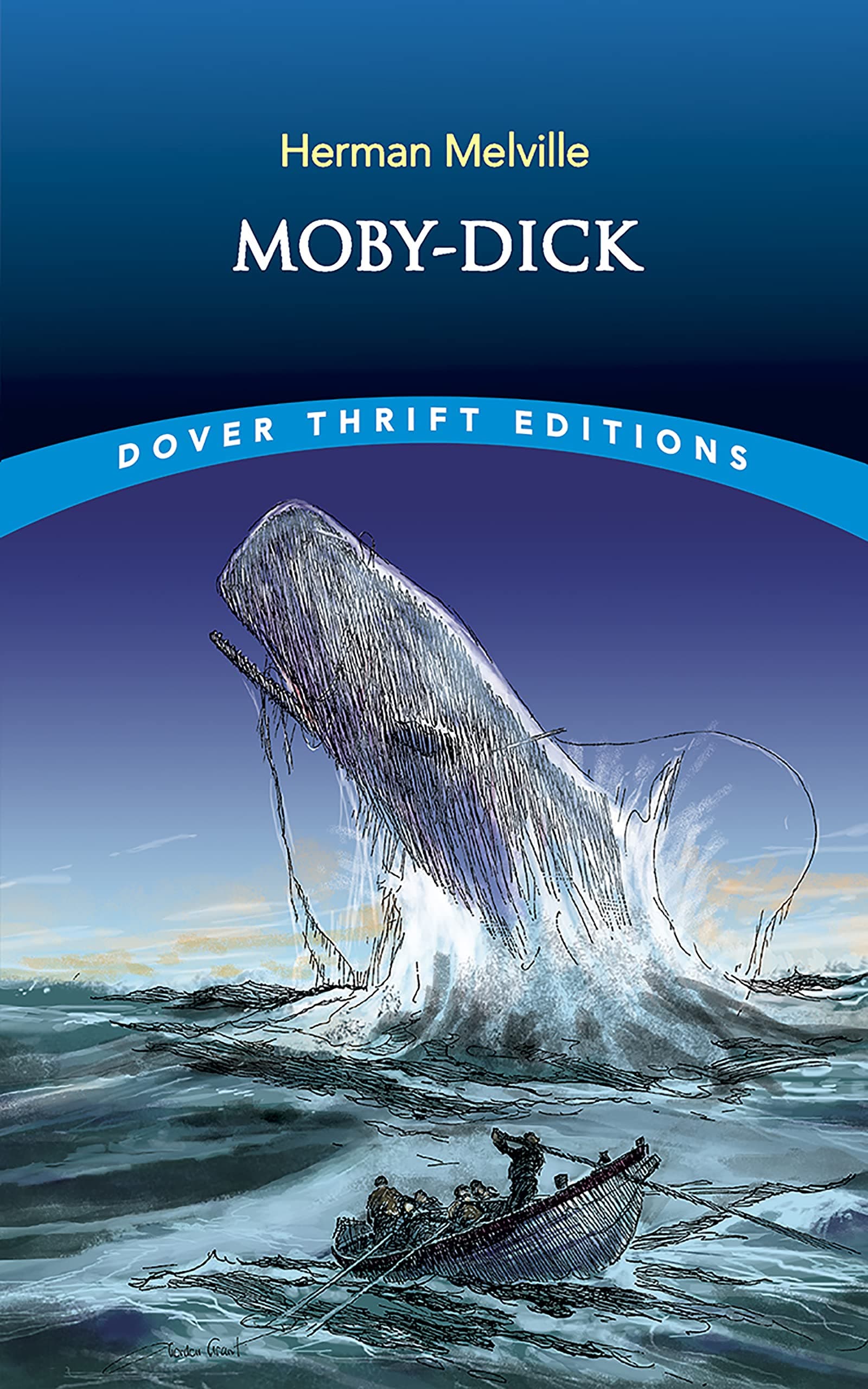
🚢 Set sail on the ultimate literary adventure—don’t miss the classic everyone’s talking about!
Moby-Dick by Herman Melville, published by Dover Publications, is a top-ranked classic sea story with a 4.6-star rating from over 3,400 readers. Available with fast, free shipping and flexible payment options, this edition is a must-have for any serious literature collection.






| ASIN | 0486432157 |
| Best Sellers Rank | #417,001 in Books ( See Top 100 in Books ) #9 in Sea Stories #456 in Classic Literature & Fiction #1,236 in Literary Fiction |
| Customer reviews | 4.6 4.6 out of 5 stars (3,453) |
| Dimensions | 13.34 x 3.18 x 20.96 cm |
| Edition | New |
| ISBN-10 | 9780486432151 |
| ISBN-13 | 978-0486432151 |
| Item weight | 363 g |
| Language | English |
| Print length | 464 pages |
| Publication date | 1 November 2003 |
| Publisher | Dover Publications Inc. |
| Reading age | 11 years and up |
J**N
El libro llegó un poquito después del día pactado, pero todo bien. El libro es una joya brutal de la literatura.
Ó**.
La edición es increíble, tapa dura con sobrecubierta, buena encuadernación. El precio es buenísimo sin estar de oferta. El libro en sí es increíble, pero la lectura de este clásico es exigente, pero vale la pena. He visto algún comentario que la sobrecubierta viene raspada, pero no es cierto, es el diseño original que simula el impacto de la ballena y al estar en blanco da otra impresión.
M**N
Having reached the mid-life point, I didn't "get around to" reading MOBY-DICK until just recently. I'm certainly glad that I finally stopped putting it off. Herman Melville's work is truly one of the most amazing books I have read. As others have pointed out here, it's not always an easy read, but it is well worth devoting time to. Indeed, I approached it as if it were an artisan cheese or a fine glass of wine; I ingested it slowly, savoring it over a period of months. MOBY-DICK is told (mostly) through the eyes of a seaman ("Call me Ishmael"), beginning with his journey to Nantucket to find a job on a whaler and then continuing with his voyage on the Pequod. The initial chapters (minus the introductory matter) are somewhat misleading in that they employ a traditional narrative structure--quite amusingly describing Ishmael's first encounter with the cannibal harpooner Queequeg--and the unaware reader who enjoys this initial rollicking ride may be disappointed with the "digressions" that follow. Once the Pequod sets sail, the narrative adopts the rhythm of a voyage, i.e., long days at sea, labor-intensive with respect to the upkeep of the vessel, but otherwise dull, interspersed with heart-stopping whaling and welcome encounters with other ships. This pattern of life at sea is reflected in the book's structure in this way: the long, uneventful days lend time to the narrator to present the history, science, and art of whales and whaling, while the whaling and ship encounters brings the narration back to a more-or-less (and often less) traditional narrative structure. The core story is well known, and would be familiar even to those who haven't much other knowledge of the work. (Anyone who's seen or read JAWS would recognize the story.) A psychologically scarred and physically mutilated man, Ahab, the captain of the Pequod, is obsessed with exacting retribution against the highly dangerous white whale that made him a cripple, not to mention killing many other men. His loyal first mate, Starbuck, tries to reason with him, but Ahab is unable to respond to reason; Ahab feels that he is acting out a preordained role. MOBY-DICK, which was first published in 1851, is a surprisingly modern work. Melville explores the story using multiple perspectives and various literary devices, most notably inserting chapters written as scenes in a play. An example of this can be observed beginning with Chapter 36, "The Quarter-Deck": This is a seminal chapter in that in it Captain Ahab explains the Pequod's true mission--to kill Moby-Dick--and his personal motivation for doing it: "Aye, Starbuck; aye, my hearties all round; it was Moby-Dick that dismasted me..." Chapters 37-40, which are given sequential temporal titles ("Sunset," "Dusk," "First Night Watch," "Midnight") provide reflections on Ahab's speech to the crew from the perspective of three of the main characters, Ahab, Starbuck and Stubb; these are followed by a chapter written like a script of a musical play and which involves a number of crewmen. There is, in short, considerable exploration of and experimentation in narrative forms. What I found particularly moving were the small, almost painterly touches in Melville's writing, such as the image of a hawk in the far distance dropping Ahab's hat into the sea (Chapter 130, "The Hat"). Also delighting the reader are the intensely cinematic moments, e.g., Starbuck, standing outside Ahab's door and full of angst, ponders murderous thoughts while handling a musket (Chapter 123 "The Musket"). MOBY-DICK is a fabulous piece of art and is veritable literature worthwhile reading.
N**F
The quality of the pages and the cover are not ideal.
R**C
It's a classic allegory, but Moby-Dick is an arduous experience. I once read a summary that this book is only truly capable of being judged when read all the way through to its climax. The fact is, this book holds true to it, and even if when reading it you feel yourself slipping: keep at it, there is some superb English and some superb thought hidden in this book. There are two faults with this book. First, and the biggest one, is the many many chapters on the technical aspects of Whaling and Cetology. Although interesting at first, they descend into Minutiae, and even I as a person who loved the book from cover to cover skipped a few chapters of this nature, scanning for any truly important passages. Secondly, in a few scenes the dialogue can get confusing, but these are generally not key scenes- so do not worry. Just remember that nearly everyone refers to themselves in the Third-Person, and Melville's lack of "said -" becomes less vexing and confusing. The book does, however, contain some of the best prose I have ever read- and I've read a lot of it. Poetic, almost Shakespearean, and above all soaked in atmosphere, there are times when this book just astounds you with the vividness and tenacity of its language. With phrases like "made appalling battle" it sweeps away the less complex and incredibly simple modern bestsellers like The Da Vinci Code. At the heart of the book is an intense symbolism that would sound ludicrous to those who have not read the book, the fact that one white whale could represent so plausibly so so many things does sound far fetched, but when you read it you find so many different answers. Fate, Providence, Nature, Madness, Death, Predestination- all these things run as Ahab and the Pequod's brave and diligent crew assail Moby-Dick. Sure to be remembered as one of the greatest books ever written even in the far far future, this novel is an experience like no other- and an incredibly individual and personally driven one too, perhaps why it is the source of so much praise and so much perplexity. This book teaches you the art of writing, and the art of allegory.
TrustPilot
1 个月前
1天前