
下载应用程序


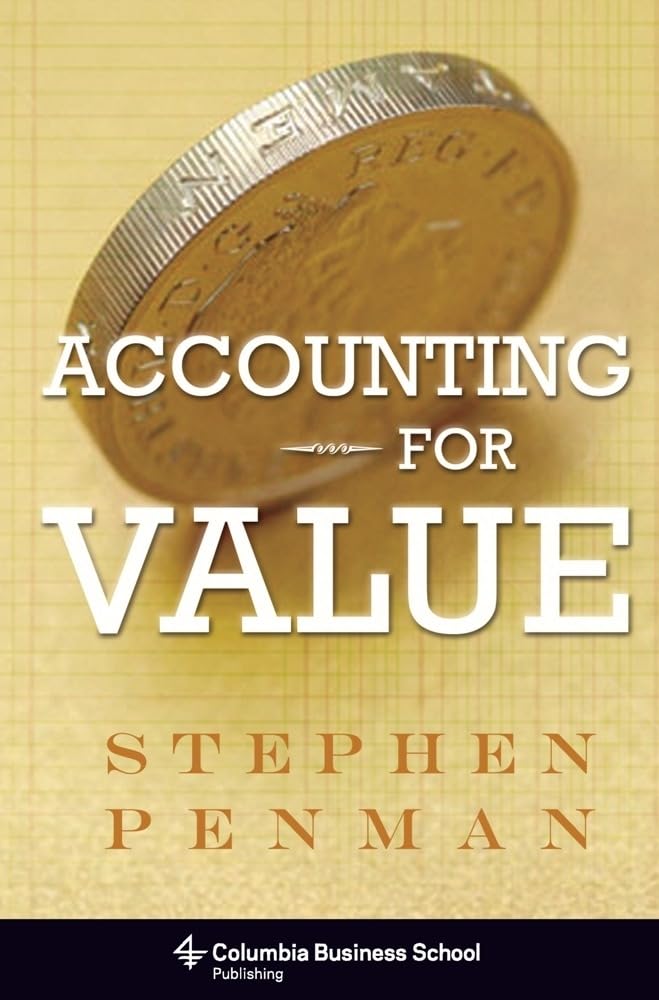
Columbia University Press Accounting for Value : Penman, Stephen: desertcart.ae: Books Review: It is a very good practical book. Far better than any valuation text book that teaches you theoretical models that yield extremely bad results in real life. The author does a great job at explaining why to do things. It also has thoughtful discussions around value investmenting versus other philosophies, truly getting to the heart of what this investment philosophy is about (much more than buying low price-to-book stocks). A very good read! Review: Bravo this is one of the best books I have read. In investing there is three things key. 1) accounting 2) business strategies, which I highly recommend Micheal porters book and his explanation of the 5 competitive forces to help find business with a durable competitive advantage. 3 ) valuation metrics. Most use growth in their intrinsic valuation formula. However, Stephen penman creates a formula without growth because growth is risky I think the approach is genius, because growth is too risky and to hard to predict so it shouldn’t be in the intrinsic value formula. He uses this year estimates next and book value to “ anchor “ a fair valuation. Which I think is way more accurate trying to determine the eps of a stock 10 years from now
A**Z
It is a very good practical book. Far better than any valuation text book that teaches you theoretical models that yield extremely bad results in real life. The author does a great job at explaining why to do things. It also has thoughtful discussions around value investmenting versus other philosophies, truly getting to the heart of what this investment philosophy is about (much more than buying low price-to-book stocks). A very good read!
A**E
Bravo this is one of the best books I have read. In investing there is three things key. 1) accounting 2) business strategies, which I highly recommend Micheal porters book and his explanation of the 5 competitive forces to help find business with a durable competitive advantage. 3 ) valuation metrics. Most use growth in their intrinsic valuation formula. However, Stephen penman creates a formula without growth because growth is risky I think the approach is genius, because growth is too risky and to hard to predict so it shouldn’t be in the intrinsic value formula. He uses this year estimates next and book value to “ anchor “ a fair valuation. Which I think is way more accurate trying to determine the eps of a stock 10 years from now
N**I
-
M**I
masterpiece
M**O
Without doubts not an easy read, although i think the author is a financial genius and i'd recommend this book for the serious investor keep in mind you're not going to Get it the first time.
TrustPilot
1 个月前
1 周前