
下载应用程序


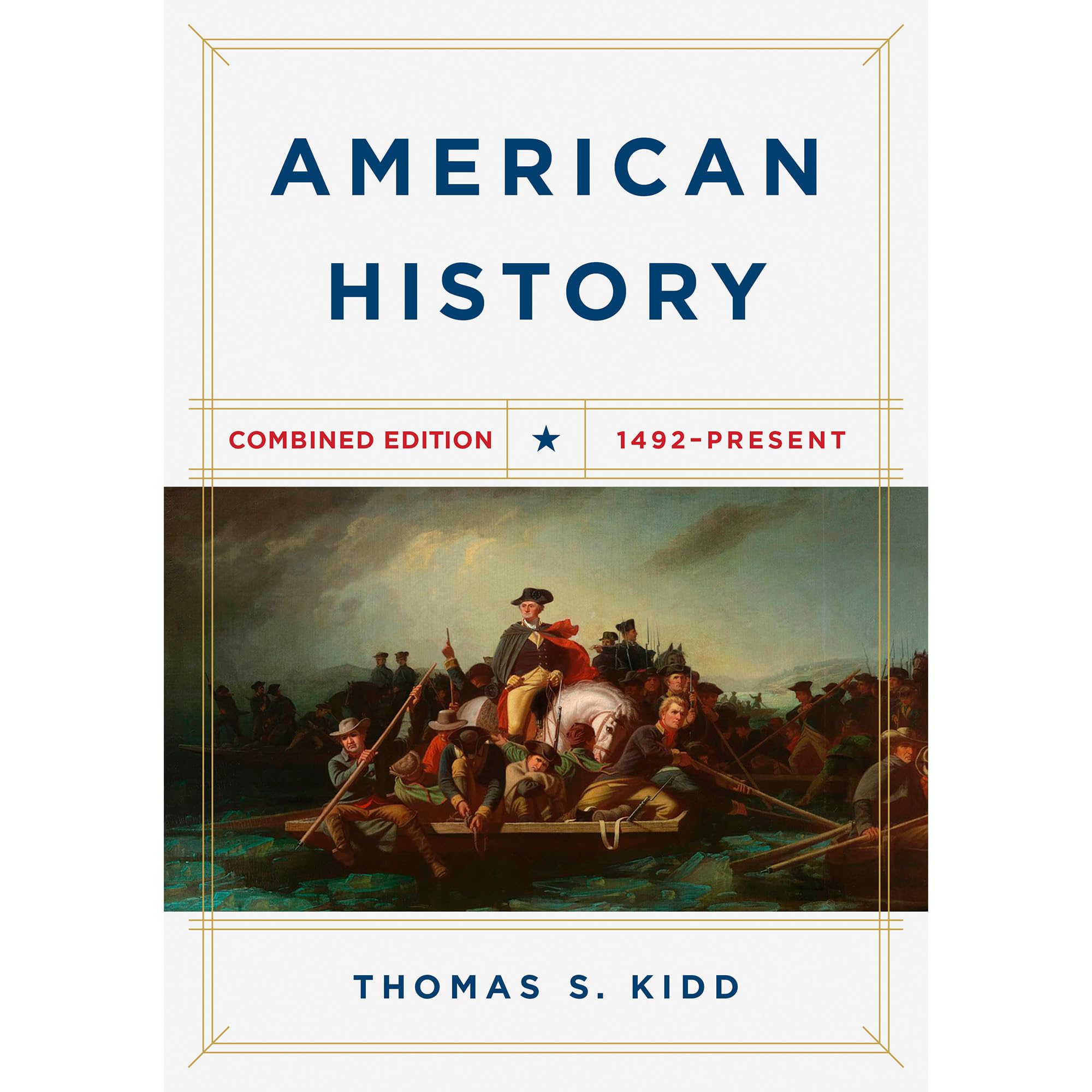
American History, Combined Edition: 1492 - Present


L**P
Reliable, factual, comprehensive
I bought this book as an option for homeschooling my high schooler with Ambleside Online. As a former American History teacher, to say that I am "picky" about the types of history books my kids read is an understatement. Kidd's writing reflects a balanced view of the religious and historical forces in the founding and early colonial period- not falling into common tropes or hobby horses as those eras seem to inspire among Christians and non-Christians alike. This book may not be the best choice for a teacher who wants to present the view of the US as a religious monolith (e.g., "all the Founding Fathers were Christians").Also, most (nearly all?) history texts have sidebars, callouts, and other visual disruptions on the printed page- this does not! There are carefully selected pictures, but no "eye candy". The focus is on the *text*, and good for building long-form reading skills. The book includes events through the election of 2016.While we have only worked through the first few chapters this year (I've skimmed the rest), I can heartily recommend it as an excellent source and look forward to using it for many years.
K**T
Same as itbsays
Hood
G**K
an excellent unbiased account of our great nation
This book does read like a text book, but a great one. Kidd chunks out important subjects through chapters and through sub chapters it a nice way that keep things moving and interesting. its a long one, and it took me about 2 months (reading 15 min to an hour a day) to read it cover to cover.Some people wont like this book as it has a ton of unbiased religious discussion, but I'm not actively religious and I found it fascinating. This country truly was founded on some religious footing, and it's necessary to accept that in order to truly understand American history.Also, this book is unbiased in nature. Some will be upset that it isn't rooted in American Exceptionalism, but it's not like it makes you sad to be an American. Quite the opposite actually, as you learn about all the progress we've made as a country. It's a time frame by time frame description of what actually happened, bad or good, and that is what Americans should strive to have knowledge of.
R**S
Learning tool
My goal for 2025 was to learn (or re-learn) more throughout this year and in the future. I am 62 and have forgotten much of what I learned in school. Lol I chose American History as my first subject to start out and narrowed it down to this book. It’s straight forward, doesn’t seem to have an agenda and focuses on the events without too many dates to shuffle through. It does have some dates and timelines but not so much as to overload. So far I am liking this book and have even learned a lot that I never knew, and renewed what I already knew. I would recommend.
U**C
Finally a straight down the middle, politically unbiased approach to US History
Kidd has written a superb analysis of US History that details the greatness, as well as the black-eyes, of US History. Democrats and Republicans are treated fairly, discussing both their successes and their failures. Most textbooks dismiss the role religion played in US History, but Kidd incorporates America's religious aspect into this history. He describes the concerns of the working class, the praying class, and the elite in a remarkably balanced survey that is refreshing to see in a college-level textbook. As an AP US History teacher, this textbook will detail the Contextualization, Comparisons, and the Continuity and Change Over Time that is essential to pass the APUSH exam in May. I highly recommend this textbook if you are searching for a better balance than what you normally find in US History textbooks.
J**N
Too condescending, too much religion
I bought this history book because I thought it was the most unbiased history book available that includes the last 40 years of US history. (Based on recommendations and reviews.) I read it aloud to my high school students. I am about 1/3 done and will upgrade my review if the following issues improve: 1. the author *will not* let up noting at every forced opportunity that Indians and blacks were not consulted about political boundaries, fair working conditions, etc. Every time he states that an event happened, he adds a sentence about minorities not being consulted on their feelings about the event/action. WE KNOW about Indian mistreatment and WE KNOW about issues regarding slavery and WE KNOW about civil rights. It is really as though the author expects the book to be read by 6 year olds who cannot grasp the basics of US---and world---history because in their 6-year-old world, nobody is racist or hateful. All I want are the facts. 2. I am a Christian yet I feel that the author overdoes details about religious life in America to the detriment of other topics he does not detail. For example, we all remember the term "Monroe Doctrine" from 6th grade history, right? We may not remember exactly what the Monroe Doctrine was, though. Well, you'll have to Google it if you want to know what it means after reading the two paragraphs "about" the Monroe Doctrine in this book because the author never explains it. At all. However, I now know the names of at least a dozen early American preachers and denominations. He even references Church of Christ which is a verrrry tiny denomination and one I am aware of only due to having been brought up in that denomination. I believe the author has ties to Pepperdine so that is likely how he knows about it as well. I very much like having a history text that *includes* religious life as part of the story, but this honestly is getting to be more like a Christian homeschool text than the meaty US history I was expecting.
J**G
All teachers should use this text.
All teachers should teach from this text. This is a great book.
S**S
College level text book, we'll written.
Wish I would have had this text book when I was in school. Very well researched material.