We remain fully operational. Our teams are working around the clock to ensure your deliveries continue safely.

下载应用程序


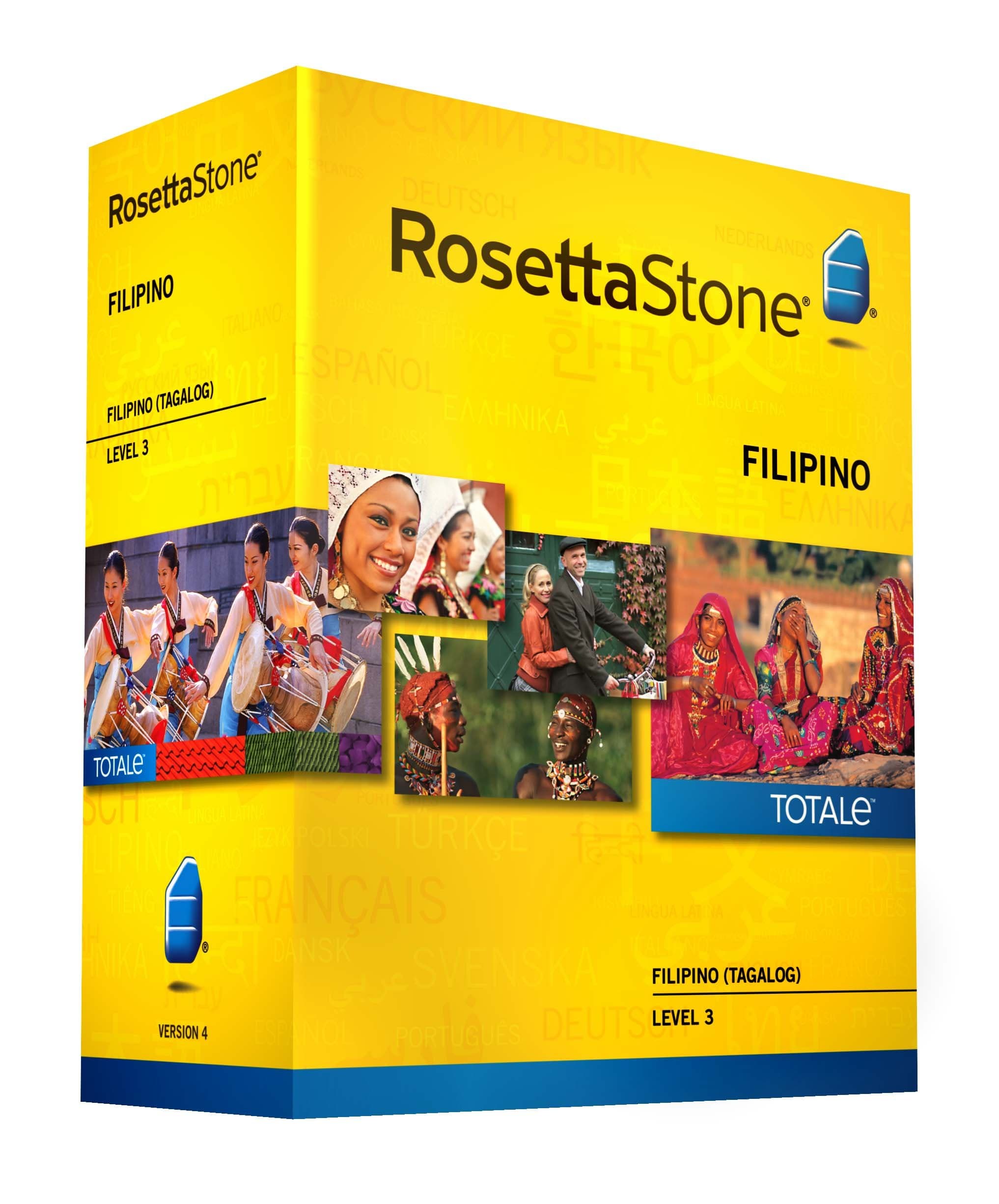
Product Description Connect with the world around you by building on the language fundamentals and conversational skills you developed in Levels 1 and 2. Learn to share your ideas and opinions, express your feelings, and talk about everyday life – your interests, your work, current events, and much more. desertcart.com Connect with the world around you by building on the fundamentals and conversational skills you developed in Levels 1 and 2. Learn to share your ideas and opinions, express your feelings and talk about everyday life, work, current events and much more.What Will I LearnThis level will help you:Engage in advanced-level conversationsLearn to share your ideas and opinions, express your feelings and talk about everyday lifeMove toward fluencySample topics include:Emotions and life milestonesOpinion and judgmentsCurrency exchange and transactionsPolitical, media, business, and religious termsWhat Do I Get?Interactive SoftwareOur award-wining version, complete with proprietary speech recognition technology.Audio CompanionFor your CD or MP3 player so you can review while on the go.Headset with MicrophoneFor use with our state-of- the-art speech-recognition software.Live Online Lessons Practice sessions led by native speaking tutors.Games & Community Language-enhancing games move you towards real-world proficiency.Mobile Companion Learning application for your iPhone or iPod Touch device.Our MethodRecreate the natural way you learned your first language and reveal skills that you already have using Dynamic Immersion. This award-winning method has been adopted by countless organizations, schools and millions of users around the world.Learn Naturally: Discover how to speak, read, write, and understand--all without translating or memorizing. Our award-winning solution recreates how you learned your first language, unlocking your natural abilities.Speak Confidently: Perfect your pronunciation with speech-recognition technology. Gain the confidence in your new voice as you practice with other learners in our exclusive online community and participate in online sessions coached by native tutors.Immerse Yourself: Be surrounded by your new language. From core lessons to online sessions, Rosetta Stone gets you engaged and interacting with others.Stay Motivated: Experience accomplishment with each moment of achievement; with dedicated success agents you will never lose sight of your language-learning goals.Your Natural Ability. Awakened.Natural DiscoveryLearning your first language is as natural as smiling. Effortless. Rewarding. Every step in Rosetta Stone feels like that. Clear, compelling images appear precisely, in juxtaposition, conveying meaning. Intuitively, you just know what it means.Our puzzle-like environments--a systematic presentation of sounds, images, and text--help learners absorb meaning intuitively. Rosetta Stone's award-winning software, where you will interact by speaking, clicking, selecting phrases and writing. Speech Activation Rosetta Stone's proprietary speech-recognition technology provides immediate and ongoing feedback. Build your confidence and polish your pronunciation skills with state-of-the-art speech-recognition technologies and success-filled dialogues.Our software provides immediate and ongoing assessments of your speech through Actionable Feedback, which helps you pronounce syllables, words and sentences correctly and easily. Based on a collection of literally millions of speech samples, our proprietary speech-recognition algorithms and speech models were engineered with a singular purpose--to help you communicate with accuracy, confidence and ease. Native Socialization Language-learning games will keep you motivated along the way. Practice with native speakers in our live interactive sessions and our online community. Every conversation gives you the confidence to communicate in your new language.For many, traditional language-learning fails because it lacks real conversation. With Rosetta Stone you'll play games and chat with native speakers and other learners in our online language community. Hundreds of native-speaking tutors trained in the Rosetta Stone method are ready to help reinforce the language you're learning through live, online conversations. From Day One you'll be speaking your new language with confidence and ease. Review: Try other options first, by the time you reach level 3, maybe moot - There are many different ideas on the best way for adults to learn a foreign language. Much depends on the student, their goals, and their self-discipline. Dealing with a tonal language or a language with a different script, the student need make some big decisions about how they want to learn, and how much. Relatively speaking, Filipino/Pilipino/Tagalog is easy. I learned Spanish as an adult. I am now fluent at a professional/business level. About 10-15% of Tagalog is Spanish, and the spelling of Tagalog words are all based on Spanish sounds. I learned to read Thai. I can write some, but my vocabulary is very small. 90% of my Thai came from taking private one-on-one classes while living in Thailand for 6 months. I studied some Tagalog, some Korean, and some Thai using Rosetta Stone. If you just want to learn some Tagalog to get around as a tourist, enough people speak excellent English in the Philippines you will probably never be able to use it. The Filipinos who don't speak English will typically avoid speaking to you, even when you try to speak Tagalog. Regardless, an immersion product, like Rosetta Stone, is probably not as useful because much of the vocabulary and context is not related to what you will want to know (do you really need to say the boy is under the soccer ball?). Of course, at level 3, you are already past that point. If you want to seriously learn the language to be able to carry on casual or business conversations, commit early and realize there is far more work involved. To really practice Tagalog, you will need to go to less savory parts of Manila, or plan on getting outside of Manila, Cebu, away from the red light districts in Olongapo and Angeles, and avoid the resort areas like Puerta Galera and Boracay. To really use Tagalog, you need to go to areas where those who don't speak English are willing to make an effort to understand you. For me, I first needed to learn the alphabet. Since spelling is based on Spanish phonetics and the Roman alphabet, this was easy for me with Tagalog. For other languages, like Thai, you CANNOT consistently pronounce Thai correctly using Romanized phonetics. T one rules are only consistent in Thai script. Among other challenges, the Romanization is wildly inconsistent. You learn it one way, and then another source using different phonetics mires you in confusion. The same is probably also true of Korean, as it is also a phonetic language. Learning Chinese will likely be different. This part of Tagalog is easy though. Second, I realized for me, I need to take notes. As adults we want to take notes to help remember key points. If you take the notes in English, you are handicapping yourself. This is more difficult, and far more important, in languages with their own script. Third, again for me, I knew learning translation would create a permanent handicap. Early on, translation is easier, later on translation must be unlearned as it stilts actual conversation and thinking. You just can't translate fast enough. Even now, being fluent in Spanish, translating gives me a headache and frustrates me. I either have a conversation in Spanish, thinking in Spanish, or I have a conversation in English thinking in English. If I know a word in one language and not the other, my whole train of thought is derailed. Avoiding learning translation is where Rosetta Stone shines. I like the idea of Rosetta Stone. If you are disciplined enough to do the lessons regularly, you will expand your spoken vocabulary rapidly. You will remember what you learn. For reading and writing, Rosetta Stone is limited. I doubt it will do much for reading and writing with non-Roman scripts. Like any learning tool, disciplined study yields results. For those who reached level 3, Rosetta Stone might be the only game in town. Rosetta Stone is very expensive. Competing products like L-Lingo or products using different methods like Pimsleur, TellMeMore.com, Assimil, or Fluenz (supposedly the best, but only in a few languages) are a fraction of the cost of Rosetta Stone. Many of the different methods will work better for some people than others. Assimil is translation based. Pimsleur is hard to describe, but has a very good fluency success rate (supposedly). Look up Fluenz also, as the method and reviews suggest it is very effective in the few languages they offer. Besides cost, what is the other drawback to Rosetta Stone? The drawbacks are legion. Version 2 is good. Version 2 is how Rosetta Stone grew into a powerhouse. The voice recognition is very primitive. Version 3 is a refinement of version 2 with improved continuity, a smoother interface, better quizzes, and the ability to get rid of the stupid "must have CD with you at all times" limitation. You can also advance or return to the exact spot where you left off earlier. Unfortunately, Rosetta Stone dropped support for Version 2. Even though they were selling version 2 from their own website in 2012, they dropped support. Mac users are especially impacted as Mac OSX Lion will no longer run PPC apps, and Rosetta Stone never ported Version 2 to Intel. So, if you bought Version 2 in 2012 to use on a Mac, you were ripped off by Rosetta Stone. Join the crowd. Windows users should not be too smug about the situation, as the end of Version 2 support means your product will have all sorts of issues too, unless you downgrade to WinXP. Version 3 runs on current platforms, and is supported (to the extent Rosetta Stone supports any product). Version 3 is easily the pinnacle of the Rosetta Stone application. Given so many users prefer version 3 to version 4 though, don't be surprised if they pull a Microsoft and force users to their new product nobody wants. Total 4e, is a disappointing retrograde of Rosetta Stone. To be fair, if you are always connected -- literally 100% of the time, never a lost packet -- and live your life via social media, Total 4e might work for you. Don't expect to use the highly touted iOS apps on your iPhone or iPad though unless you are connected 100% of the time with those devices also. The whole idea of quickly practicing while in line or waiting in an office...yeah, that doesn't conform to the Rosetta Stone licensing model. Speaking of which, Rosetta Stone now has two components and two licensing models. There is the software application and the online social media part. The application can be run as long as they support it on current platforms. The online social media component is now on a subscription basis. You pay for every month in which you want to participate. You can still use the app on your computer, but you just paid a premium for online access you aren't using unless you continue to pay the subscription. Given there are many free or lower cost websites where learners can interact and practice language skills, why pay Rosetta Stone a monthly premium for less content? Therein lies the reason so many people look at Total 4e and then try to find version 3 before supplies run out. How about another suggestion? Try L-Lingo. L-Lingo uses a very similar learning model to Rosetta Stone. The interface actually has more features than Rosetta Stone and you can customize the interface to use Roman phonetics or native script. They have iPad and iPhone/IPod Touch iOS apps which you can use on a plane, or anywhere else, with or without Internet access. Best of all, all of their programs together (Win or Mac desktop, iPad, iPhone/iPod Touch) are less than half the cost of Rosetta Stone Level I. L-Lingo specializes in Asian languages. They are probably a superior option to Rosetta Stone Total 4e for most users. L-Lingo offers a free trial for their desktop application, and also for their iOS applicastions for some languages. There are other good options listed above, particularly Fluenz and Pimsleur which use different methods. Be sure to check them out before buying anything published by Rosetta Stone.
| ASIN | 1608299937 |
| Customer Reviews | 1.0 1.0 out of 5 stars (1) |
| Date First Available | September 14, 2010 |
| Item model number | 27777 |
| Language | English |
| Manufacturer | Rosetta Stone |
| Package Dimensions | 7.64 x 6.46 x 3.15 inches; 1.25 Pounds |
B**R
Try other options first, by the time you reach level 3, maybe moot
There are many different ideas on the best way for adults to learn a foreign language. Much depends on the student, their goals, and their self-discipline. Dealing with a tonal language or a language with a different script, the student need make some big decisions about how they want to learn, and how much. Relatively speaking, Filipino/Pilipino/Tagalog is easy. I learned Spanish as an adult. I am now fluent at a professional/business level. About 10-15% of Tagalog is Spanish, and the spelling of Tagalog words are all based on Spanish sounds. I learned to read Thai. I can write some, but my vocabulary is very small. 90% of my Thai came from taking private one-on-one classes while living in Thailand for 6 months. I studied some Tagalog, some Korean, and some Thai using Rosetta Stone. If you just want to learn some Tagalog to get around as a tourist, enough people speak excellent English in the Philippines you will probably never be able to use it. The Filipinos who don't speak English will typically avoid speaking to you, even when you try to speak Tagalog. Regardless, an immersion product, like Rosetta Stone, is probably not as useful because much of the vocabulary and context is not related to what you will want to know (do you really need to say the boy is under the soccer ball?). Of course, at level 3, you are already past that point. If you want to seriously learn the language to be able to carry on casual or business conversations, commit early and realize there is far more work involved. To really practice Tagalog, you will need to go to less savory parts of Manila, or plan on getting outside of Manila, Cebu, away from the red light districts in Olongapo and Angeles, and avoid the resort areas like Puerta Galera and Boracay. To really use Tagalog, you need to go to areas where those who don't speak English are willing to make an effort to understand you. For me, I first needed to learn the alphabet. Since spelling is based on Spanish phonetics and the Roman alphabet, this was easy for me with Tagalog. For other languages, like Thai, you CANNOT consistently pronounce Thai correctly using Romanized phonetics. T one rules are only consistent in Thai script. Among other challenges, the Romanization is wildly inconsistent. You learn it one way, and then another source using different phonetics mires you in confusion. The same is probably also true of Korean, as it is also a phonetic language. Learning Chinese will likely be different. This part of Tagalog is easy though. Second, I realized for me, I need to take notes. As adults we want to take notes to help remember key points. If you take the notes in English, you are handicapping yourself. This is more difficult, and far more important, in languages with their own script. Third, again for me, I knew learning translation would create a permanent handicap. Early on, translation is easier, later on translation must be unlearned as it stilts actual conversation and thinking. You just can't translate fast enough. Even now, being fluent in Spanish, translating gives me a headache and frustrates me. I either have a conversation in Spanish, thinking in Spanish, or I have a conversation in English thinking in English. If I know a word in one language and not the other, my whole train of thought is derailed. Avoiding learning translation is where Rosetta Stone shines. I like the idea of Rosetta Stone. If you are disciplined enough to do the lessons regularly, you will expand your spoken vocabulary rapidly. You will remember what you learn. For reading and writing, Rosetta Stone is limited. I doubt it will do much for reading and writing with non-Roman scripts. Like any learning tool, disciplined study yields results. For those who reached level 3, Rosetta Stone might be the only game in town. Rosetta Stone is very expensive. Competing products like L-Lingo or products using different methods like Pimsleur, TellMeMore.com, Assimil, or Fluenz (supposedly the best, but only in a few languages) are a fraction of the cost of Rosetta Stone. Many of the different methods will work better for some people than others. Assimil is translation based. Pimsleur is hard to describe, but has a very good fluency success rate (supposedly). Look up Fluenz also, as the method and reviews suggest it is very effective in the few languages they offer. Besides cost, what is the other drawback to Rosetta Stone? The drawbacks are legion. Version 2 is good. Version 2 is how Rosetta Stone grew into a powerhouse. The voice recognition is very primitive. Version 3 is a refinement of version 2 with improved continuity, a smoother interface, better quizzes, and the ability to get rid of the stupid "must have CD with you at all times" limitation. You can also advance or return to the exact spot where you left off earlier. Unfortunately, Rosetta Stone dropped support for Version 2. Even though they were selling version 2 from their own website in 2012, they dropped support. Mac users are especially impacted as Mac OSX Lion will no longer run PPC apps, and Rosetta Stone never ported Version 2 to Intel. So, if you bought Version 2 in 2012 to use on a Mac, you were ripped off by Rosetta Stone. Join the crowd. Windows users should not be too smug about the situation, as the end of Version 2 support means your product will have all sorts of issues too, unless you downgrade to WinXP. Version 3 runs on current platforms, and is supported (to the extent Rosetta Stone supports any product). Version 3 is easily the pinnacle of the Rosetta Stone application. Given so many users prefer version 3 to version 4 though, don't be surprised if they pull a Microsoft and force users to their new product nobody wants. Total 4e, is a disappointing retrograde of Rosetta Stone. To be fair, if you are always connected -- literally 100% of the time, never a lost packet -- and live your life via social media, Total 4e might work for you. Don't expect to use the highly touted iOS apps on your iPhone or iPad though unless you are connected 100% of the time with those devices also. The whole idea of quickly practicing while in line or waiting in an office...yeah, that doesn't conform to the Rosetta Stone licensing model. Speaking of which, Rosetta Stone now has two components and two licensing models. There is the software application and the online social media part. The application can be run as long as they support it on current platforms. The online social media component is now on a subscription basis. You pay for every month in which you want to participate. You can still use the app on your computer, but you just paid a premium for online access you aren't using unless you continue to pay the subscription. Given there are many free or lower cost websites where learners can interact and practice language skills, why pay Rosetta Stone a monthly premium for less content? Therein lies the reason so many people look at Total 4e and then try to find version 3 before supplies run out. How about another suggestion? Try L-Lingo. L-Lingo uses a very similar learning model to Rosetta Stone. The interface actually has more features than Rosetta Stone and you can customize the interface to use Roman phonetics or native script. They have iPad and iPhone/IPod Touch iOS apps which you can use on a plane, or anywhere else, with or without Internet access. Best of all, all of their programs together (Win or Mac desktop, iPad, iPhone/iPod Touch) are less than half the cost of Rosetta Stone Level I. L-Lingo specializes in Asian languages. They are probably a superior option to Rosetta Stone Total 4e for most users. L-Lingo offers a free trial for their desktop application, and also for their iOS applicastions for some languages. There are other good options listed above, particularly Fluenz and Pimsleur which use different methods. Be sure to check them out before buying anything published by Rosetta Stone.
TrustPilot
2天前
2 周前